
Dozens of missing-person cases in metro-east represent families seeking answers
Debra Wilkerson, whose daughter was reported missing two years ago, finds it difficult to answer one of the most basic questions of motherhood: “How many children do you have?”
Wilkerson, 67, didn’t know immediately what to say when someone asked her recently. Her adult daughter, Brittany Moeser, disappeared in April 2024 from their home in Clarmin, an unincorporated community in Washington County near Marissa and the St. Clair County border.
“I couldn’t answer because ‘How many children do I have?’ Do I say I have four children and let it go?,” she said. “Do I say I have four children but one I don’t know because that brings up a whole conversation that I don’t want to have. Do I say I have three? I don’t know.”
Moeser’s story is one of dozens behind a Belleville News-Democrat review of missing-person cases across the metro-east.
The BND compiled the list with information from local law-enforcement agencies and two national databases.
Moeser’s case stands out because it was not listed in the National Missing and Unidentified Persons System, or NamUs — a public database intended to help investigators and families across the country identify patterns and generate leads.
The list, which the News-Democrat will update as cases are added or resolved, begins with the most recent reports.
Omission in national database
Moeser’s case has not been listed on the National Missing and Unidentified Persons System, or NamUs, as required by Illinois law, according to a review of the database by the Belleville News-Democrat.
After learning that Moeser’s case was not on the national database, Washington County Sheriff’s Office Detective Brent Klingeman said Monday he was in the process of uploading the case to the organization’s website.
Law-enforcement agencies can add information to the database but the general public is not allowed to do this.
“I was just wiped out when you told me that she wasn’t in NamUs,” Wilkerson said in an interview with the News-Democrat.
That meant for two years, people across the country who checked the system didn’t see the report on Moeser’s disappearance.
Wilkerson said “the most basic, basic step was missed.”
Two years ago, Wilkerson and other members of Moeser’s family raised concerns about the amount of manpower available from the sheriff’s office to investigate the case.
They also have said there is a geographical complication because their home on Edward Street in unincorporated Clarmin in Washington County is also near the border with St. Clair County to the west and Randolph County to the south. The Washington County Sheriff’s Office is the agency in charge, but leads from other counties are turned over to Illinois State Police and the family has said there wasn’t a “central command.”
Wilkerson, a retired nurse, said the omission of Moeser’s report from the national database was emblematic of how the investigation has been handled.
She added that, “I’m not bashing the Washington County Sheriff’s Department. They’re doing the best they can with what they have.”
At the time of Moeser’s disappearance, the sheriff’s office did not have a detective, although someone was appointed to the position a couple months after Moeser went missing.
Klingeman, who is the county’s only detective, was appointed to the position in December and has been monitoring Moeser’s case since then.
“I wish I could get one good tip that could do something good,” he said.
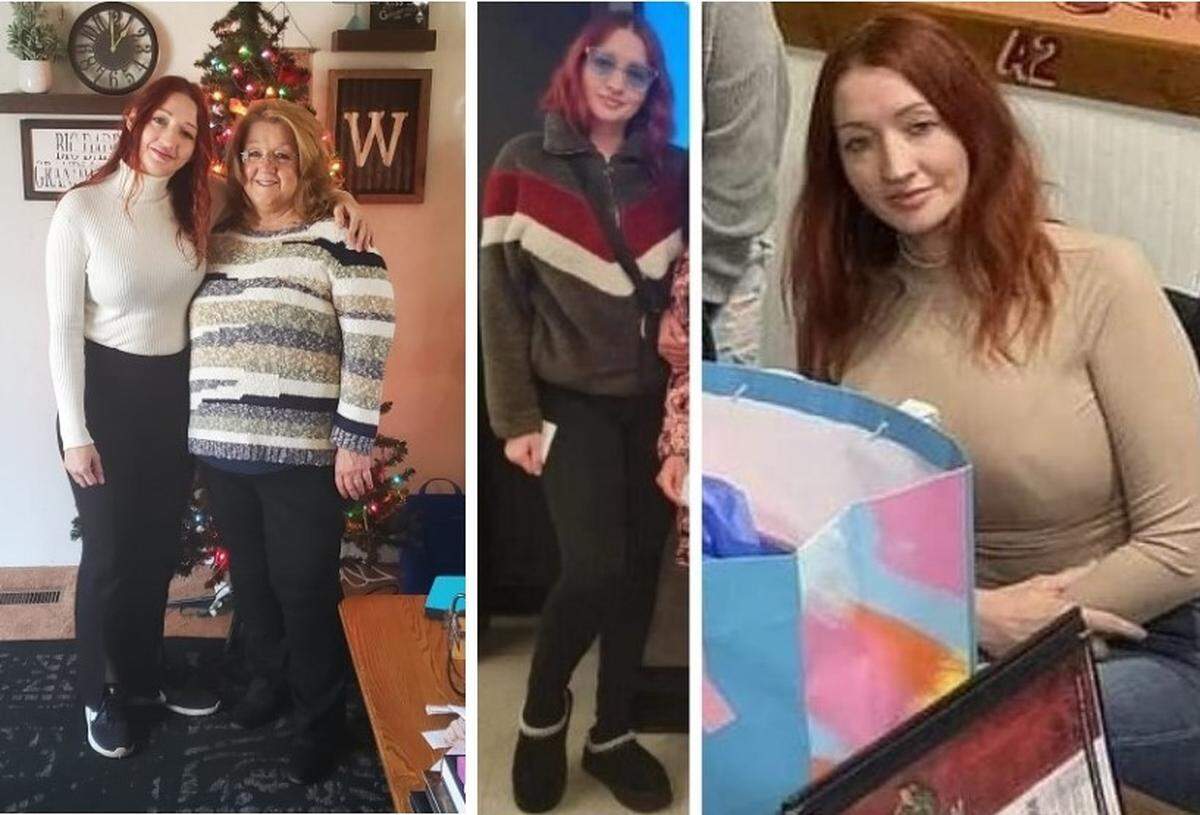
Moeser was 36 when she was last seen April 13, 2024.
She left a note saying she was going for a walk from her family’s home.
A handgun was discovered missing from the home. Moeser also had struggled with an eating disorder, alcoholism and depression, attempted suicide and spent time in psychiatric hospitals, her mother said. She had lived in Chicago for about 15 years.
Multiple searches for Moeser were conducted in the area and the family has offered a $20,000 reward, which was raised by Moeser’s family and from a donation. Wilkerson maintains a Facebook page called “Justice for Brittany Moeser.”
Klingeman said about 80 people have been interviewed by investigators on the Moeser case but “nothing solid” has been developed in the search. “We really want to bring Brittany home,” he said.
Moeser’s disappearance has been difficult for her family.
“It’s something that’s on every one of our minds every day,” Wilkerson said.
Wilkerson said her daughter Jill struggled for “a long, long time” in coping with her sister’s disappearance.
“The toll on her was just so astronomical.”
How to help in missing persons cases
Law enforcement agencies in Illinois use two national clearinghouse groups to share information about missing people with the public.
These groups are the National Center for Missing & Exploited Children and NamUs.
You can find information from the National Center for Missing & Exploited Children by calling 800-843-5678 or online at www.missingkids.org. The homepage has a “Search Missing Posters” box and a place to give tips. This group receives financial support from the U.S. Department of Justice but is a private, nonprofit organization, according to its website.
NamUs is funded by the U.S. Department of Justice. To get information about missing people, go to the agency’s website at namus.nij.ojp.gov. If you’re using a phone, click on “menu” on the upper right, then “dashboard.” At this point, hit “missing persons.”
If you’re on a laptop, click on “dashboards” on the upper left and in the dropdown menu, click on “search missing persons.” You will then see a search field with multiple options to use. Hit the blue “search” bar on the lower right.
If you know someone who could be added to the BND’s list of missing persons in the metro-east, send an email to newsroom@bnd.com. Put “BND missing persons” in the subject line. The software used for this list allows it to be updated for future postings.
Regulations for police departments in missing persons cases
Illinois police officers must follow multiple laws regarding missing persons.
Here’s a Q&A:
Does the state require Illinois police departments to take a report for all people reported missing?
Yes. “Law enforcement agencies shall accept without delay any report of a missing person,” according to state law.
Can police departments establish a “waiting period” before taking a missing person’s report?
No.
Does the state require Illinois police departments to file all missing persons reports with law-enforcement databases?
Yes. Illinois police officers are required to enter missing persons cases into two databases that are used by law-enforcement officers: One is the National Crime Information Center, or NCIC, which is operated by the FBI. The other is the Illinois Law Enforcement Agencies Data System, or LEADS, which is operated by Illinois State Police. These two databases do not have public access.
Are Illinois police departments required to send missing person reports to a national database that offers public access?
Yes. If a person remains missing after 60 days, police officers must send a report to the National Missing and Unidentified Persons System. This database is open to the public. For missing people under 18, officers are required to give the person making the report contact information for the National Center for Missing and Exploited Children.
Belleville News-Democrat reporter Teri Maddox contributed information for this article.
This story was originally published April 30, 2026 at 5:30 AM.