
Boeing completes first test of new naval drone in metro-east. What’s next?
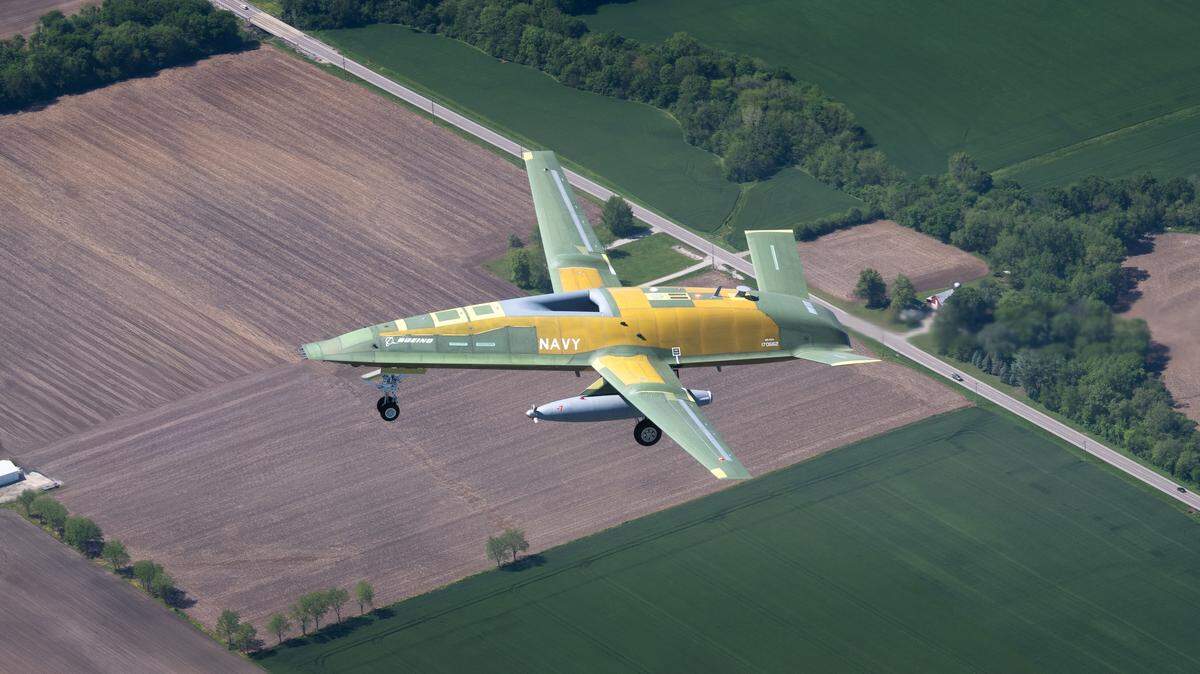
The autonomous naval refueling aircraft being manufactured by Boeing in the metro-east recently completed its first test flight successfully, according to the aerospace giant.
The flight last month, which found no errors or flaws, means Boeing will move the MQ-25A Stingray’s production at MidAmerica St. Louis Airport along as the unmanned plane awaits further testing by the Navy. Being autonomous means it’s not be piloted remotely by a human like other unmanned drones.
“It’s been a journey,” said Troy Rutherford, vice president of the MQ-25A program at Boeing. “It’s a testament to the team that they got the right engineering solution, and there’s confidence behind this airplane.”
The defense contractor announced plans in 2021 to manufacture the autonomous aircraft in the metro-east when the company won an $805 million contract from the Navy, which could use the plane for the next 30 or 40 years.
When production ramps up over the next several years, the Mascoutah facility will employ 300 people. It will build 76 aircraft under the first contract. The first airplane that will be built from start to finish in Mascoutah is making its way through the factory right now, Rutherford said.
Boeing is building the autonomous plane to extend the range of the Navy’s aircraft carriers and replace the F/A-18 Super Hornet fighter and attack jet as the refueler.
Using an autonomous airplane, which relies on predetermined flight paths, to refuel offers a host of advantages for both the Super Hornets and the Navy, Rutherford said.
“If you can alleviate them from that mission by using an MQ-25 Stingray for that mission, it helps lengthen the life of those Super Hornets that are in the fleet,” he said. “But it also puts them back into that strike fighter aircraft mission and puts more of them out there in the fight.”
It will also keep the 5,000 sailors onboard aircraft carriers safer because the MQ-25A can refuel at longer ranges, keeping the carrier farther from harm’s way, Rutherford said.
The MQ-25 has continued to fly at MidAmerica to further test the plane since the first two-hour flight in late April.
Boeing will next ferry the plane to a naval air station on the Chesapeake Bay in Maryland to prepare and test the MQ-25’s ability to take off and land on an aircraft carrier.
Boeing expects the Navy to award what’s known as a low-grade initial production contract for the plane later this year, and the St. Louis-based manufacturer will reach full production over the next couple of years, Rutherford said.
“The MQ-25 Stingray really is the first foray for the Navy into what they call, ‘air wing of the future,’” Rutherford said. “We will fundamentally reset naval aviation and the way they operate autonomous systems. What we’re doing here locally in St. Louis and Boeing’s piece of this is really setting carrier aviation for the future, which is just really exciting for us and the entire team.”