
Nearly half of St. Clair County taxing districts levied higher taxes in 2025
Municipalities and school districts take pride in keeping their property tax rates steady — or even lowering them — but that doesn’t always mean your tax bill will be less.
In fact, you’re probably paying more this year than last year. That’s largely because housing prices have risen across much of the metro-east. That can push up your home’s market value and, in turn, increase the assessed and taxable values used to calculate property taxes.
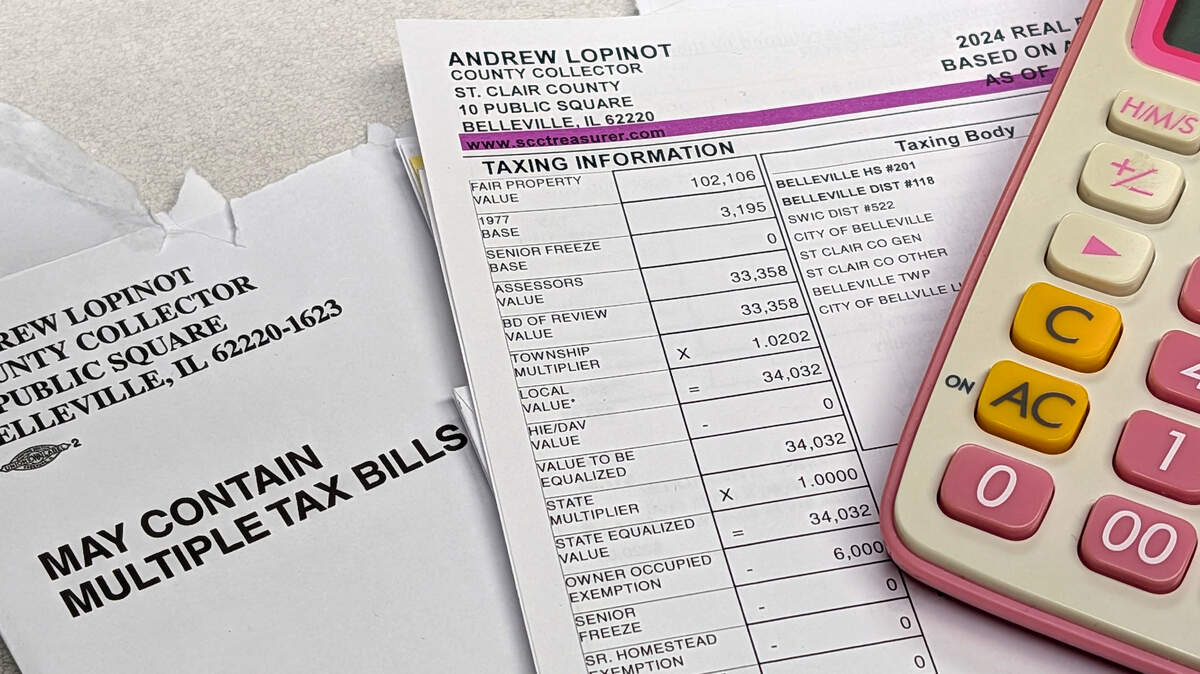
Your home’s taxable value starts with its assessed value, which in Illinois is generally about one-third of its market value. That figure is then adjusted by the state equalization factor and reduced by exemptions and other adjustments.
If your home’s taxable value is increasing, your neighbors’ likely is, too. When taxable values rise across a district, its total equalized assessed valuation, or EAV, increases — and that can allow the district to collect more tax revenue without raising its rate.
Taxing districts levy property taxes to pay for government services. Cities and villages have their own taxing districts, and separate districts also fund schools, infrastructure and other services.
A levy is the dollar amount a district seeks to collect. The amount it actually collects is determined later, once the EAV is set. The tax rate is then calculated based on the levy and the district’s EAV.
Across taxing districts in St. Clair County, total EAV rose an average of 5.5% in 2025. That means many districts could keep their tax rates steady while still collecting more tax dollars.
The district with the largest dollar increase in its 2025 levy request was Southwestern Illinois College, which requested nearly $4.4 million more than the previous year.
But the district also saw a $393 million increase in its EAV, enabling it to keep its tax rate steady.
For example, if you owned a home in 2024 worth $200,000, you paid roughly $227.40 to SWIC Community College District 522. Based on the averages, your home is worth 5.5% more this year, meaning you’ll pay about $20 more because the district is applying essentially the same rate to a higher taxable value.
School districts often make up the largest share of property tax bills and frequently increase levy requests. Some base their requests on a higher EAV than they expect, knowing they may later abate the levy so residents are billed less than originally requested. Districts can reduce a levy after filing, but they cannot increase it.
Nearly half of the taxing districts in the county increased their levies in 2025, including every school district. The largest school-district increase was Grant Community Consolidated School District 110, up 32.59% — a jump of more than $2 million from last year.
The Millstadt Public Library District had the largest percentage increase in its levy request: a 68.2% jump, or about $100,000 more than last year.
Some municipalities levy no property tax for general corporate purposes and rely more heavily on sales taxes, such as Fairview Heights.
Tax-increment financing districts, authorized under Illinois law, use growth in tax revenue within a designated area to spur economic development and support special projects. They often target under-resourced areas and focus on redeveloping vacant buildings, improving public infrastructure, cleaning up pollution and revitalizing downtowns.
Find the EAV, levy request and tax rate changes in your taxing district: