
Collinsville has half the money needed to fix water plant for ‘forever chemicals’
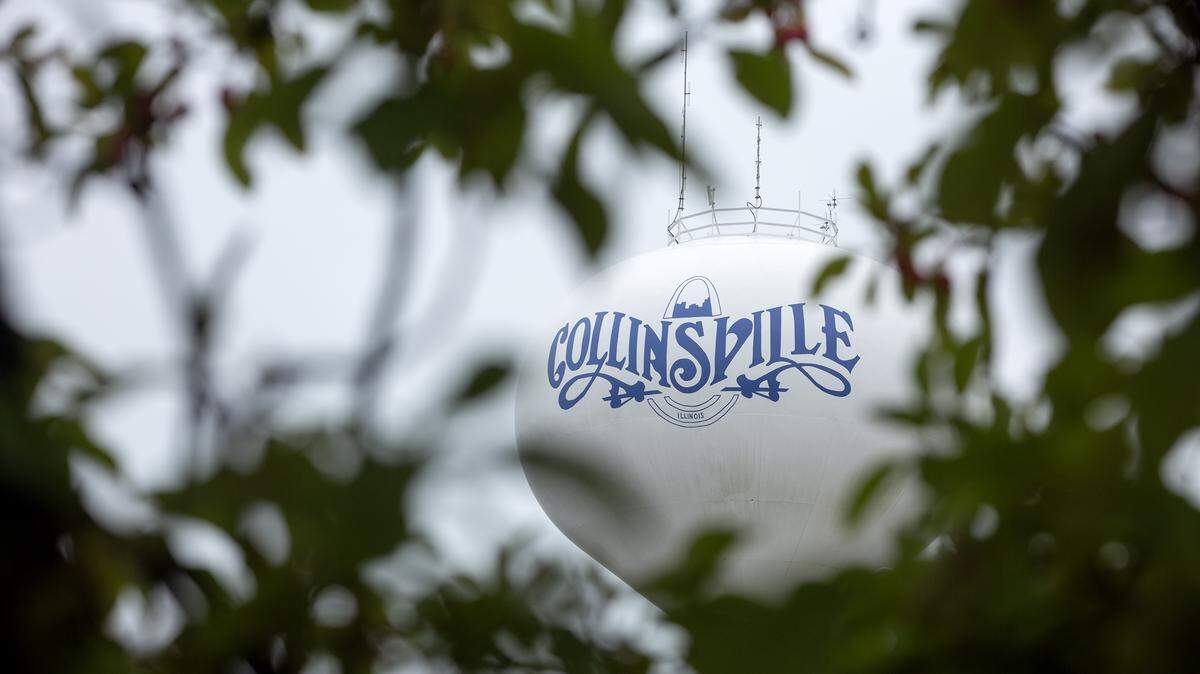
The City of Collinsville has accounted for roughly $5.7 million of the $11.5 million needed to renovate its water treatment facility after tests last summer confirmed the tap water contained so-called forever chemicals.
Testing found PFAS, short for perfluoroalkyl and polyfluoroalkyl, at levels higher than the federal Environmental Protection Agency allows. These chemicals take a long time to deteriorate, and some can cause health problems when people are repeatedly exposed.
The revelation prompted City Hall to start the design work to retrofit its plant to remove PFAS before the water is piped out to homes and businesses. That work is expected to be complete by summer 2029, said Public Works Director Troy Turner.
“(We’re) making sure the water is safe and free of contaminants in the future,” Turner said. “We’re making every effort to make sure we meet or exceed the guideline and the timeline” set by the Illinois and federal governments.
Tentatively, Turner and City Manager Derek Jackson are planning that the city council will vote on a contract with the engineering firm WHKS on July 14. That will allow WHKS to make a final determination on how to retrofit the water treatment plant.
The leading contender is using what’s called a granulated activated carbon system that would filter out PFAS molecules.
“The purpose here is to determine what’s going to be the most efficient path to treat PFAS, but considering long-term operational costs, too,” Jackson said. “We want to be smart with enterprise taxpayer funds.”
The Illinois Environmental Protection Agency will need to approve that design before the city can start construction, which is anticipated to begin in February 2028.
A bulk of the $5.7 million comes from a class-action lawsuit from PFAS manufacturers like 3M. The good-faith estimate, a legal term used to describe what’s expected from a settlement, is roughly $4.8 million for the city.
Another nearly $750,000 will likely come from federal funds. U.S. Rep. Nikki Budzinski, D-Springfield, included it in her priority projects for the U.S. House under Community Project Funding. The initial request of $2 million got whittled down and passed out of committee. The full House will need to approve it, as would the Senate. It’s expected to be finalized by Congress in the fall.
Another $100,000 will come from funding in Illinois’ budget for the fiscal year that began July 1. State Sen. Erica Harriss, R-Glen Carbon, and state Rep. Katie Stuart, D-Edwardsville, asked for the grant.
Collinsville applied to an IEPA loan program that could cover the remainder, but city officials are not banking on getting that this year. That decision is expected later this month. If the city is denied this year, Jackson and Turner said the city will have a better application next year.
“With the design started, it puts us in a higher rating next year when we go to apply for the loans,” Turner said.
There’s another grant program through the U.S. EPA that they can apply for when the city is further along with the project, Jackson and Turner said.
The testing led the city to recommend that residents individually filter the water they use to drink and cook until the treatment plant can be renovated by 2029.
As of now, the city has not found a financially viable option to purchase individual filters for lower-income residents and senior citizens. City staff didn’t find a company that offered bulk or discounted pricing, Jackson said.
One round of individual filters could cost $200,000, and those would need to be replaced several times before 2029. Without extra funding or cheaper options, the city would need to buy those filters with water department funds, which would lead to everyone’s rates increasing, Jackson said.
“If we do continue to be successful with capturing these third-party dollars at the federal, state, or county level, I think that comes back on the table for us to take a look at,” he said.
The announcement last summer set off concerns from residents about whether the city’s drinking water presented an immediate health risk and if paying for individual filters would be an expensive proposition for them.
PFAS, chemicals designed to be hard to break down, can’t be boiled out of water since its boiling point is higher than water. That’s led to confusion among city residents, especially when a water main break causes the city to issue a boil order that could be needed to treat bacteria, Jackson said.
While Collinsville is not the only Metro East municipality to be grappling with PFAS, city officials understand that some confidence has been lost. Surveying conducted every three years shows a drop in satisfaction.
In 2023, 59% of Collinsville residents rated the city’s utility infrastructure as excellent or good. This year, that figure has dropped to 33%, Jackson said.
“It was a gut punch for the city because we took a lot of pride in what we’re doing at our water treatment plant,” Jackson said.