
O’Fallon library referendum language revised, tax impact outlined
While the debate continues over advancing a $17.5 million bond advisory referendum for a new O’Fallon Public Library, residents and aldermen agreed on one thing during a recent public session: The ballot language needs to be clearer — and shorter.
On July 13, the O’Fallon Public Library Board approved a revision to its original draft. The revised language includes the estimated tax impact and specifies that $5 million in reserves would be used. The draft has been reviewed by Mayor Eric Van Hook, City Administrator Grant Litteken, Bernardi Securities and Miller Canfield, bond counsel.
“Shall the City of O’Fallon, St. Clair County, Illinois, use $5 million of reserves and increase property taxes to repay general obligation bonds in an amount not to exceed $17,500,000 for the purpose of constructing and equipping a new public library? If approved, the estimated additional cost for the median-valued O’Fallon home ($296,000) would be approximately $127 per year (about $10.60 per month). Actual amounts will vary based on a property’s assessed value, future interest rates, and changes in the City’s equalized assessed valuation.”
The sample ballot language is the result of direct feedback from O’Fallon City Council members during the June 29 Committee of the Whole meeting. It is not on the July 20 council meeting agenda, but the council could act on it at the Aug. 3 meeting.
Under the Illinois election timeline, the council must approve the referendum language no later than Aug. 16 for the question to appear on the Nov. 3 ballot. Once approved by the city, the final filing must be submitted to St. Clair County no later than Aug. 28.
Council members requested that new language be drafted beginning with the word “Shall.” They also asked that the word count be reduced by trimming details about services and resources the new library would provide.
Library Director Ryan Johnson said the new draft meets all criteria for a nonbinding referendum.
The original draft was:
“For purposes of providing quiet areas for adults and children, learning areas for children, multipurpose space for meetings of community groups and organizations, study rooms for all ages, makerspace areas for STEM (science, technology, engineering and math) and arts and crafts projects, flexible areas that can be adapted for future programs, and space for other library programs and classes, shall the City of O’Fallon, St. Clair County, Illinois, construct and equip a new public library? Since the current library opened, the population of O’Fallon has more than doubled. O’Fallon Public Library has saved $5 million to use for construction of a new library thus lowering the overall cost by that amount. This proposal enables the City to issue general obligation bonds in the amount of not to exceed $17,500,000 to help fund the project, with the bonds repaid through an increase in property taxes.”
At that June 29 meeting, several aldermen stressed their cooperation did not mean they were endorsing bonds. The ballot referendum would be advisory; only the council can approve issuing bonds.
Johnson said the proposal asks the city to issue $17.5 million in general obligation bonds to help fund the project, with the bonds repaid through an increase in property taxes.
Two percent of a property owner’s total tax bill supports the library, or 2 cents of every dollar paid, Johnson said. Under the ballot language estimate, the additional cost for the median-valued home would be about $10.60 per month.
If the advisory question is approved, plans for a 38,000-square-foot library at a site on Seven Hills Road next to the Public Safety Building could move forward.
Background
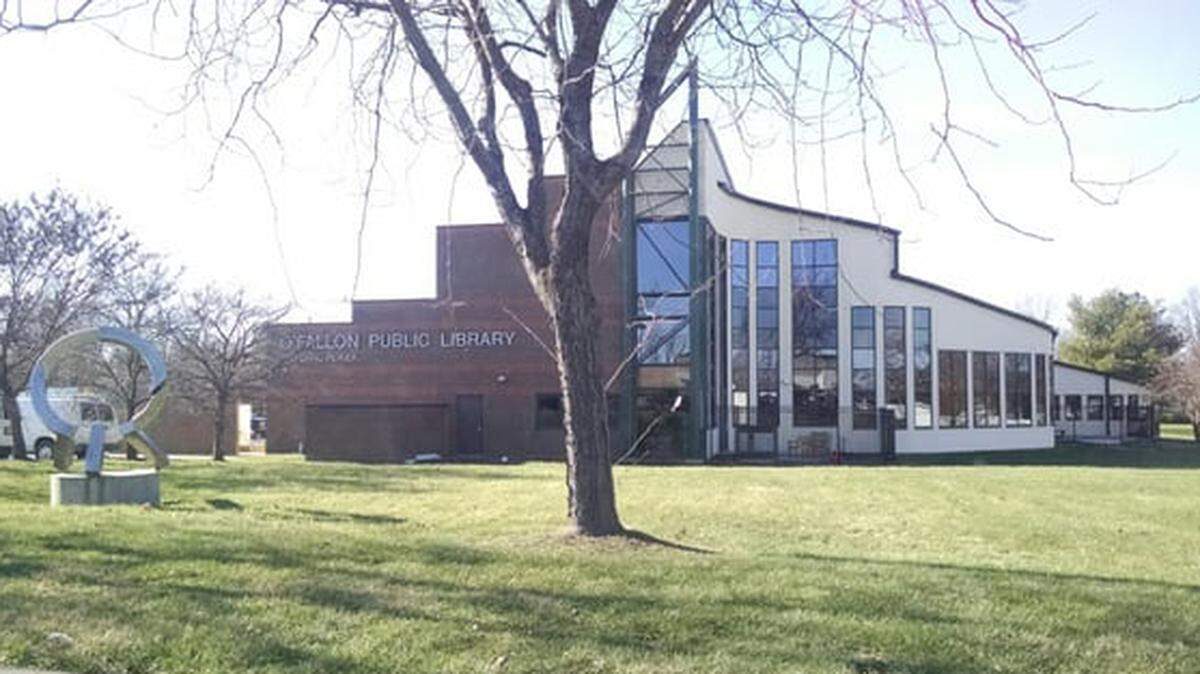
The current library opened in 1994 at 120 Civic Plaza, behind the U.S. Post Office on Lincoln Avenue. Since then, O’Fallon’s population has more than doubled, Johnson said.
Johnson said the library has more than 130,000 annual visits, 12,000 event attendees and more than 200,000 checkouts each year.
The 2022 Library Master Plan found space is insufficient across all areas — events often fill up quickly, study rooms and seating are limited, and outdoor seating is lacking.
The community survey indicated most respondents favored a new building (58.2%) while 29.9% were opposed, with the remainder undecided.
More than 81% disagreed with the statement that public libraries are no longer needed because of technology in homes.
Public comments
During the June 29 meeting, Kate Howard suggested a branch location to supplement the current library, noting similar practices in other nearby library districts.
Another resident said more research was needed to avoid duplicating services, such as programs at the Cavins Community Center and those scheduled by schools and recreation programs.
Vern Malare proposed combining plans for a fieldhouse and a library into one facility.
Another frequent library user said the library needed to be more transparent about property taxes and ensure outreach included that information. The resident also suggested the library could meet the community’s needs by planning a one-story building.