Here’s how the marijuana industry may boost Belleville’s economy
After seeing other metro-east cities get a taste of the state’s burgeoning legal marijuana industry, aldermen on Monday will consider granting permits to the first marijuana-related business seeking to operate in Belleville.
Shalondria Simpson, a pharmacist from Texas, is asking the city for a special-use permit to operate an indoor pot farm that could have up to $6 million in annual gross revenue, according to her “conservative” estimate listed in her application.
The marijuana would not be sold to the public at the farm. Instead, Simpson is asking for a special-use permit to deliver the weed products to dispensaries that sell the cured and processed marijuana to the public. Simpson also needs approval from the state.
The pot growing business is officially known as an “adult-use cannabis craft grower organization” and the delivery business is known as an “adult-use cannabis transporting organization,” according to state law.
Simpson could not be reached for comment.
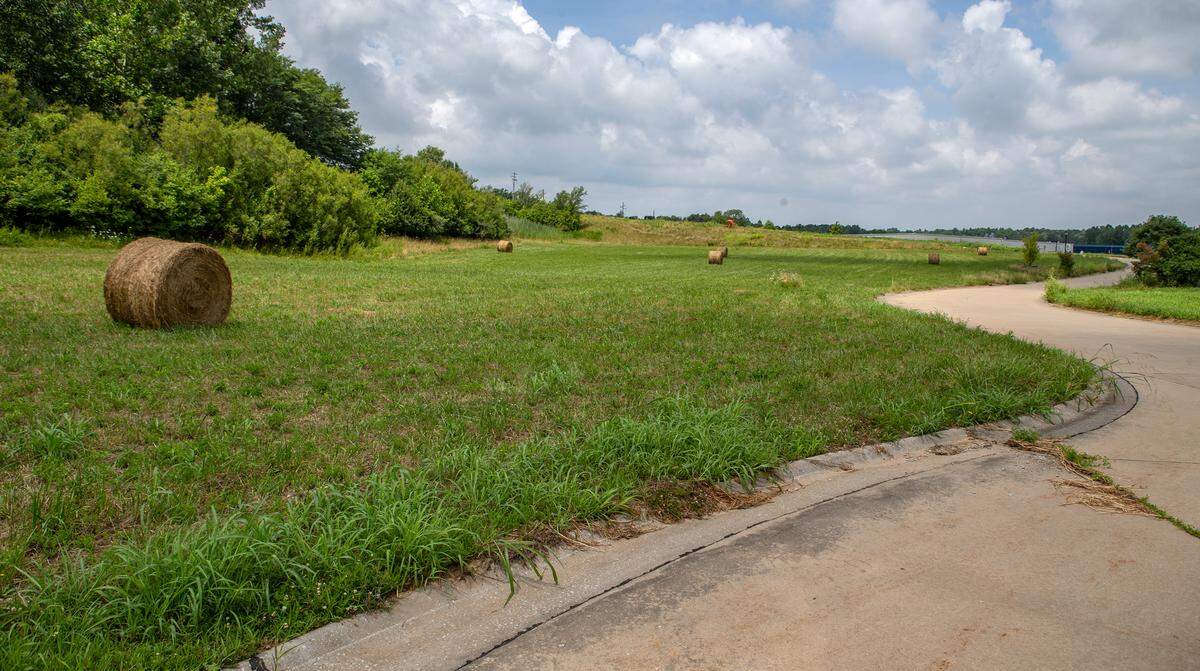
The proposed site for the farm is on vacant land in the 8900 block of Bevo Court off Illinois 15 on the west side of the city near the large “Welcome to Belleville” sign. It’s in the Eagle Pointe Office Park that already has two businesses, Grey Eagle Distributors and KBR Performance.
Illinois has allowed marijuana sales to adults since Jan. 1. It previously had allowed people to buy cannabis for medical reasons.
Marijuana dispensaries have already opened in Collinsville and Sauget. Also, an indoor marijuana farm is in Anna.
The Belleville City Council is scheduled to consider the request at 7 p.m. Monday. The city’s Zoning Board of Appeals previously voted 4-2 to recommend the City Council approve Simpson’s request.
Marijuana farm permit application
Simpson plans to build a 22,500-square-foot facility, according to her application filed with the city. She has not yet released whether this will be in one building or multiple buildings.
Here are highlights of her plan:
▪ Produce a projected $6 million in gross revenue.
▪ Hire 20 to 40 employees for the facility, which will be open 7 a.m. to 7 p.m.
▪ Create a “skills training program for marginalized communities.”
▪ Give unspecified amounts of donations to area nonprofit groups.
▪ Build a fence around the facility and maintain on-site security guards at all times.
▪ Occupy the six remaining lots in the Eagle Pointe Office Park on both sides of Bevo Court. The lot addresses are 8955, 8956, 8973, 8974, 8991 and 8992 Bevo Court. The parcels total 8.65 acres and the zoning is light industrial.
“There will be no negative impact to the public health, safety and welfare of the surrounding neighborhood,” Simpson stated in her application, which the News-Democrat received as part of a Freedom of Information Act request with the city.
If the special-use permits are granted, Simpson would still have to get approval from the city’s Planning Commission and the City Council before construction of the facility could begin.
Marijuana revenue
If Simpson’s plan is approved, the city expects to receive sales tax revenue from the business, according to Annissa McCaskill, the city’s director of economic development. However, McCaskill said the city does not yet have an estimate on how much sales tax revenue the city would receive.
Simpson also would have to pay a $5,000 annual fee for each of the two special-use permits she is seeking, McCaskill said.
The city also could see additional property tax revenue after the facility opens.
In the first six months of this year since recreational weed sales began on Jan. 1, dispensaries have sold over $239 million in products across the state, Gov. J.B. Pritzker has announced in a news release.
These sales yielded $52 million in tax revenue, Pritzker said.
Here’s a breakdown of the revenue:
▪ $34.7 million comes from excise taxes.
▪ $18 million comes from sales taxes.
The news release said “25% of revenues collected from recreational cannabis sales will be either reinvested through the Restore, Reinvest and Renew (R3) Program in communities that have been disproportionately impacted by the justice system, directed to address substance abuse and prevention and mental health concerns, or allocated to local governments to support their own crime prevention programs.”
Pritzker’s news release described the communities to receive aid as the ones hit hardest by the “failed war on drugs.”
Pot growing regulations
The state law that legalized recreational marijuana sales says a craft grower can have up to 5,000 square feet of plants but the Department of Agriculture may allow increases of up to 14,000 square feet of cultivation space depending upon market need and a business’ history of compliance.
Also, the state law had called for the Department of Agriculture to issue up to 40 craft grower licenses by July 1 but the department announced that this action has been delayed by the coronavirus pandemic.
The law authorized the department to issue up to 60 additional craft grower licenses by December 2021.
“All cultivation of cannabis by a craft grower must take place in an enclosed, locked facility at the physical address provided to the Department of Agriculture during the licensing process,” the law states.