Squatters will be last to live in 1884 mansion that city of Belleville plans to demolish
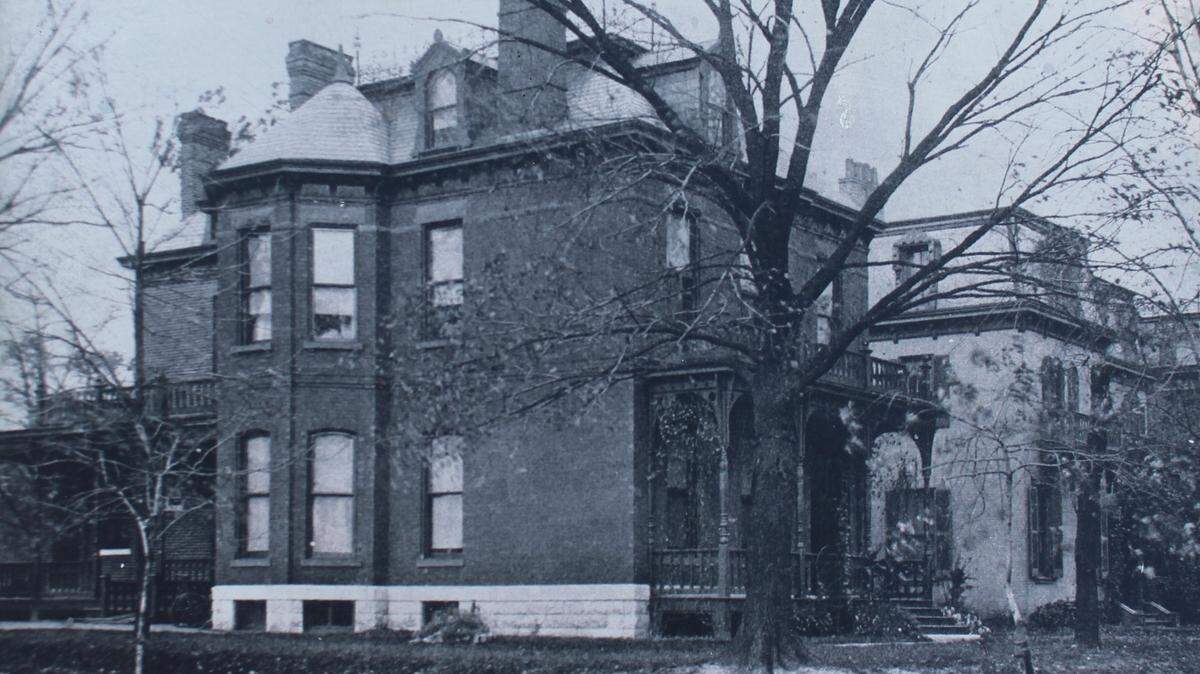
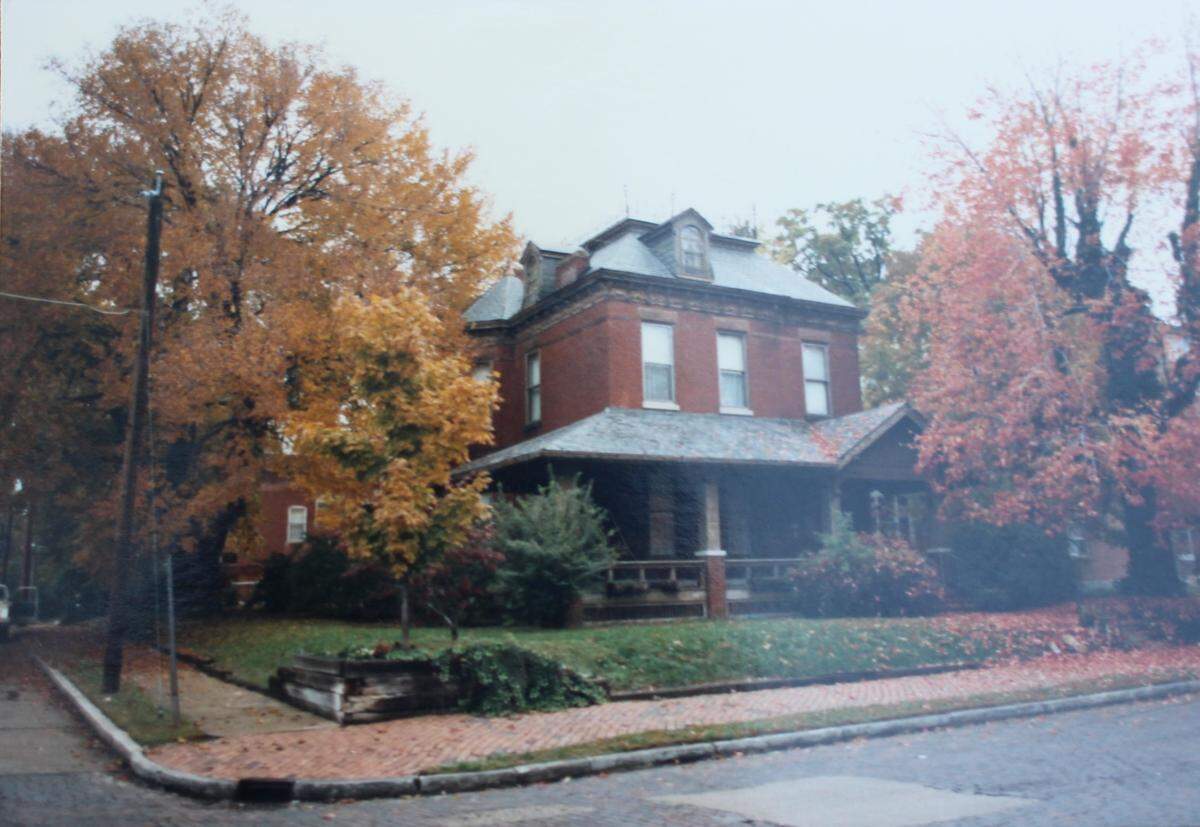
News that a stately brick home near downtown Belleville will be demolished is disturbing to people who value history, craftsmanship and the stability of a key neighborhood.
For Mary Lee Poole, it’s personal.
Her parents, the late James Young and his wife, Phyllis, now 94, restored the two-story home at 107 E. D St. in the early 1970s and lived in it for 18 years.
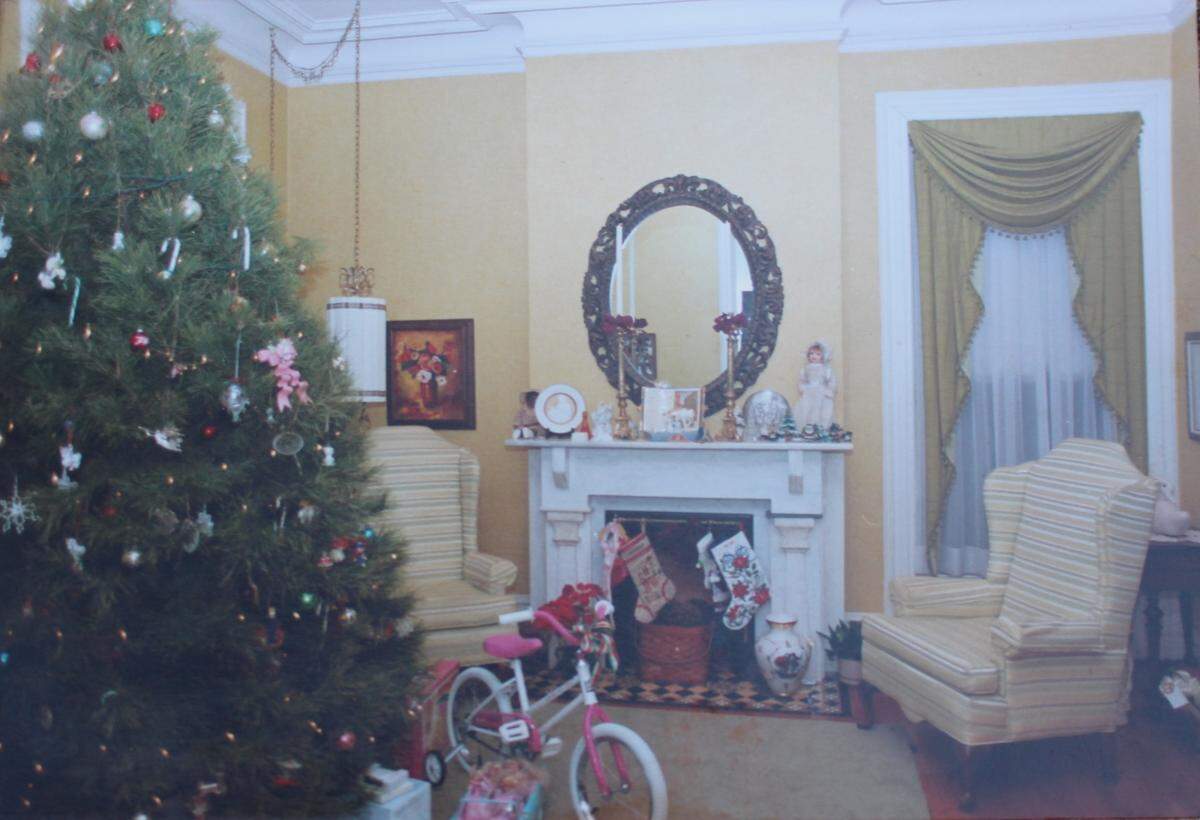
Poole and her sister, Christina Keck, played among the home’s three marble fireplaces, grand staircase, 12-foot-high ceilings, giant windows, pocket doors, stained glass, transoms, massive woodwork and marquet flooring made of chestnut, oak and mahogany.
“That widow’s walk was the best place to be during a snowstorm,” said Poole, 57, of Belleville. “You could look out over the whole city, and it was quiet and covered in snow. It was just magical.”
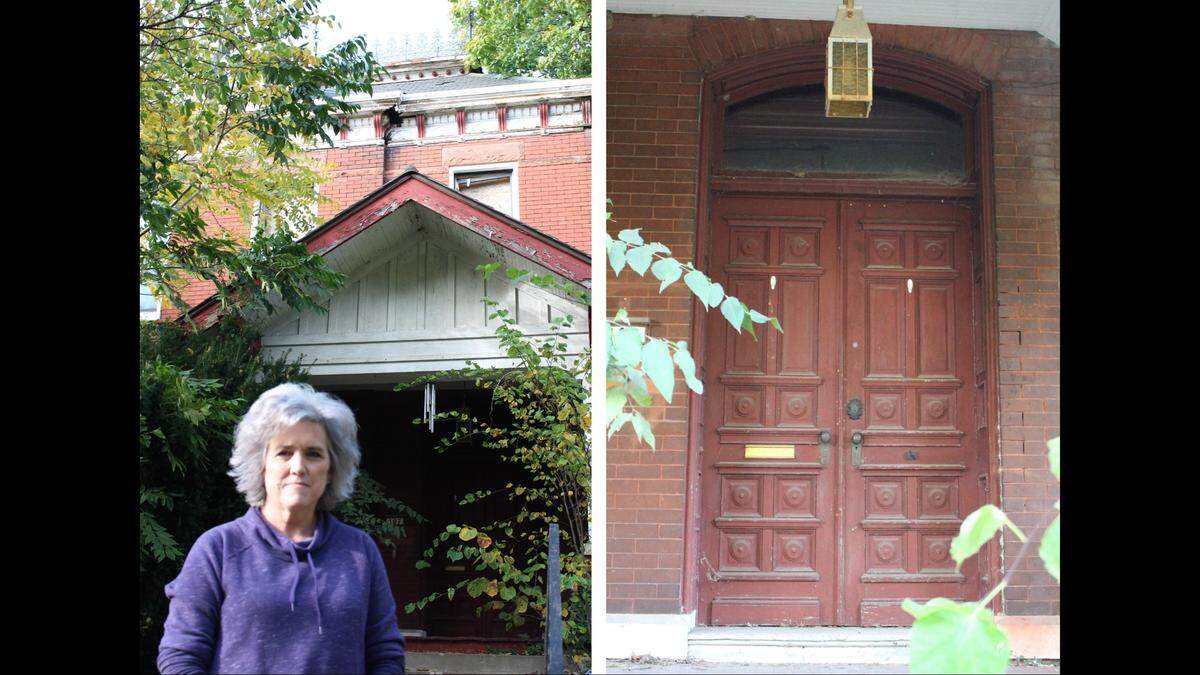
Poole didn’t feel much magic last week, when she stopped by the now-condemned home for the first time since learning that the city of Belleville is planning to tear it down.
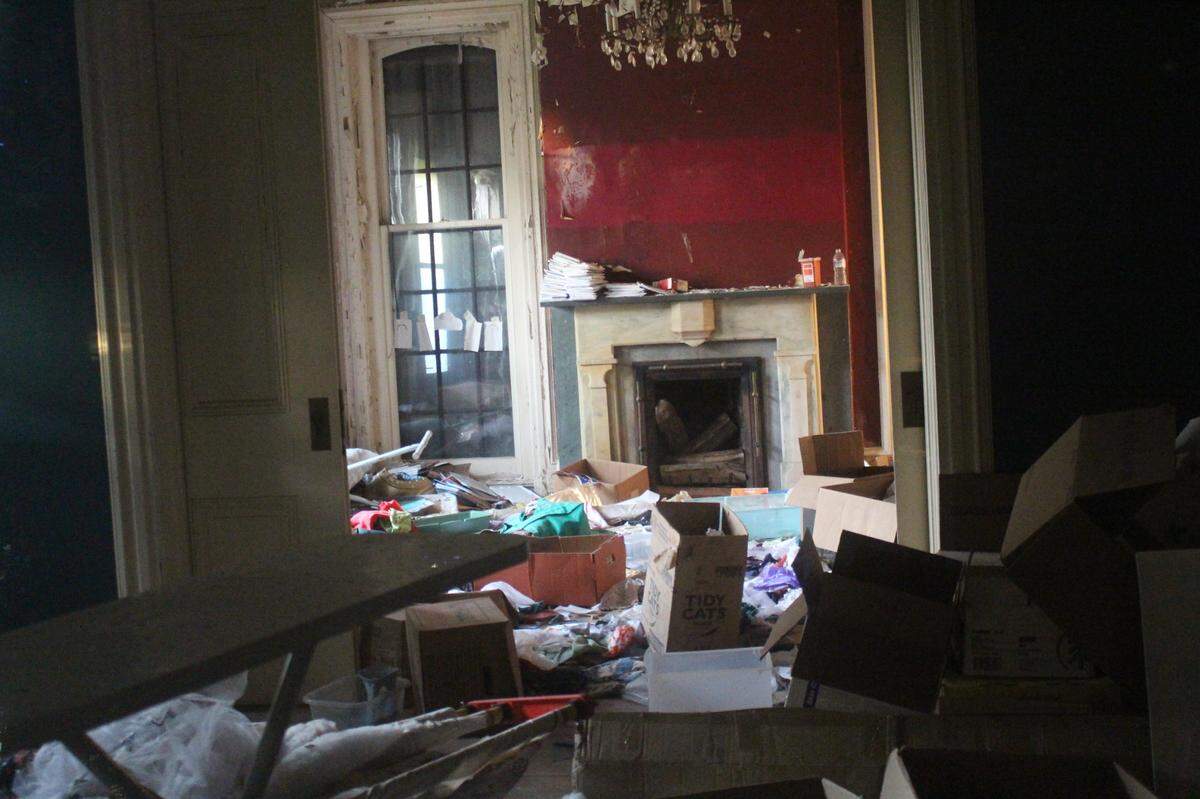
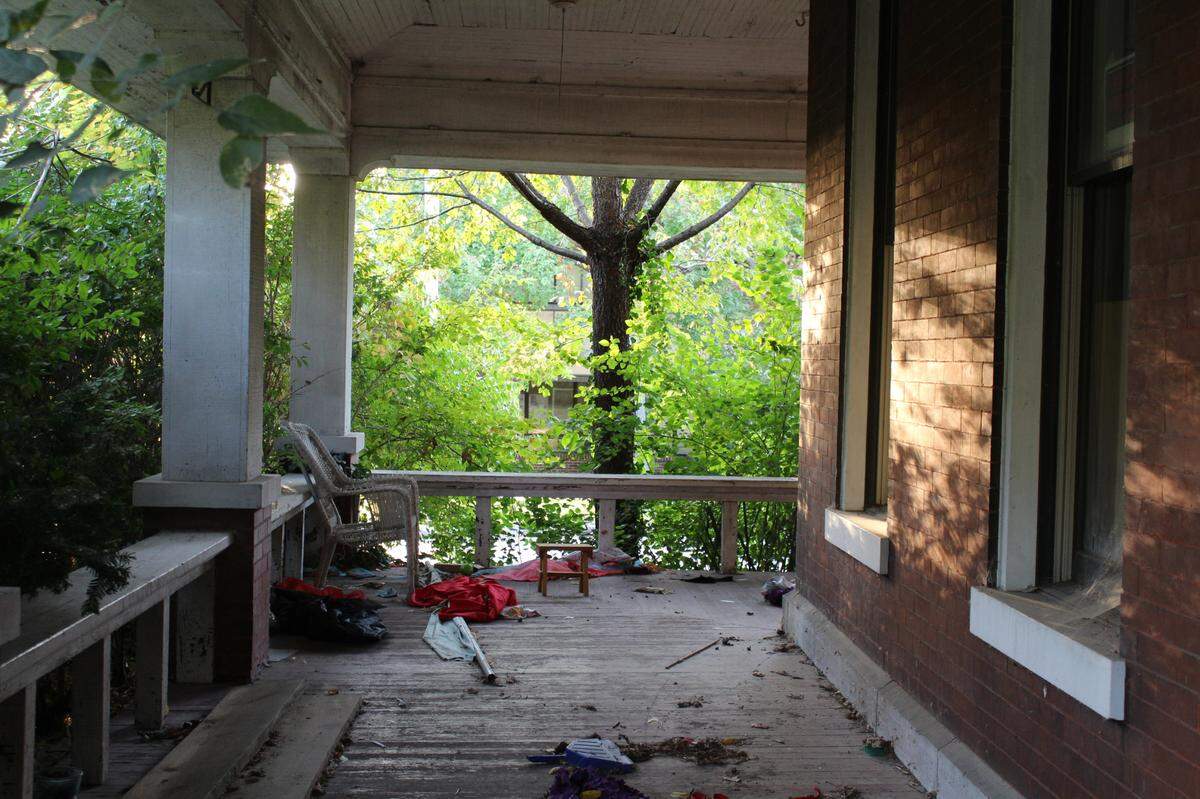
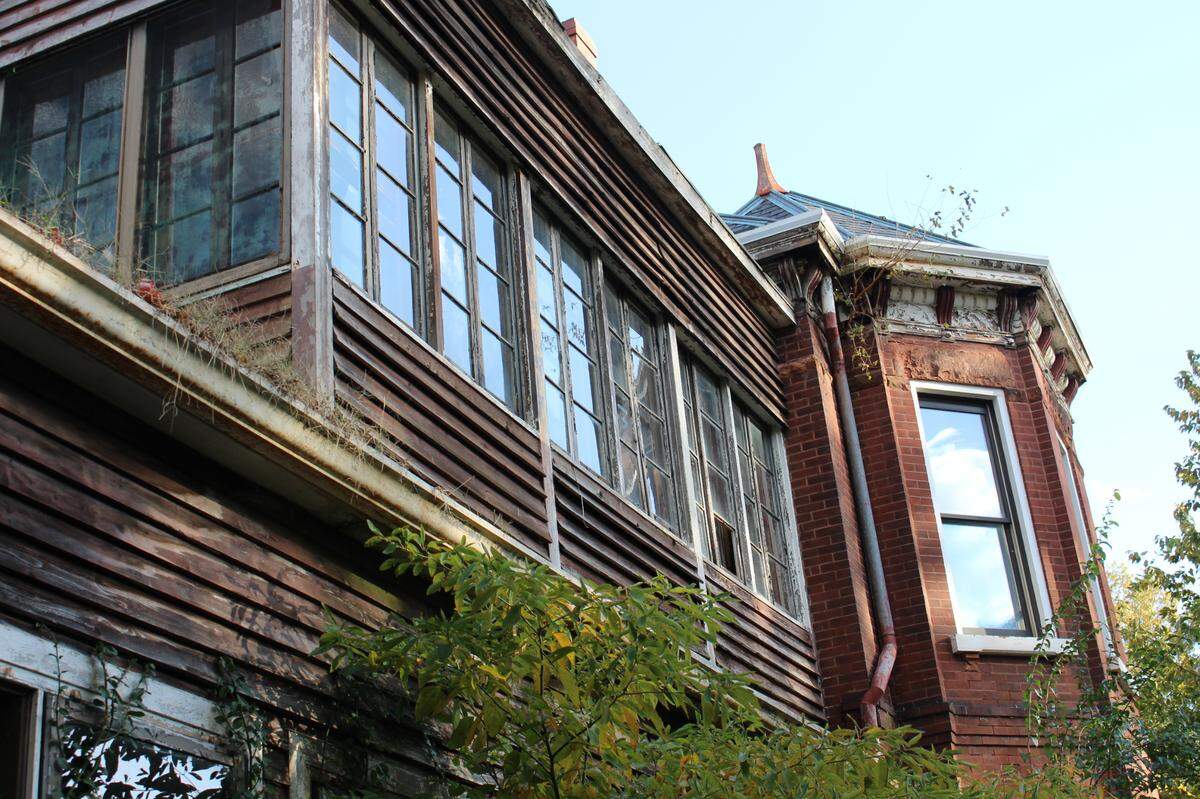
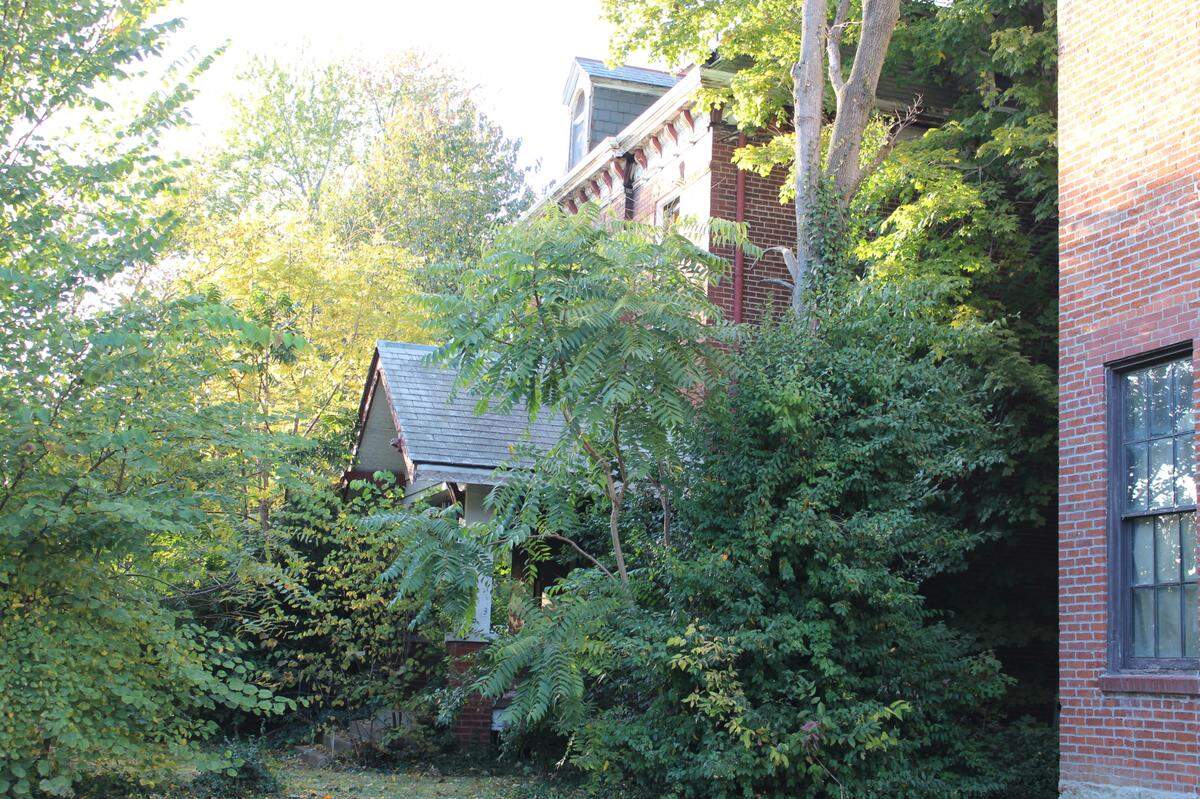
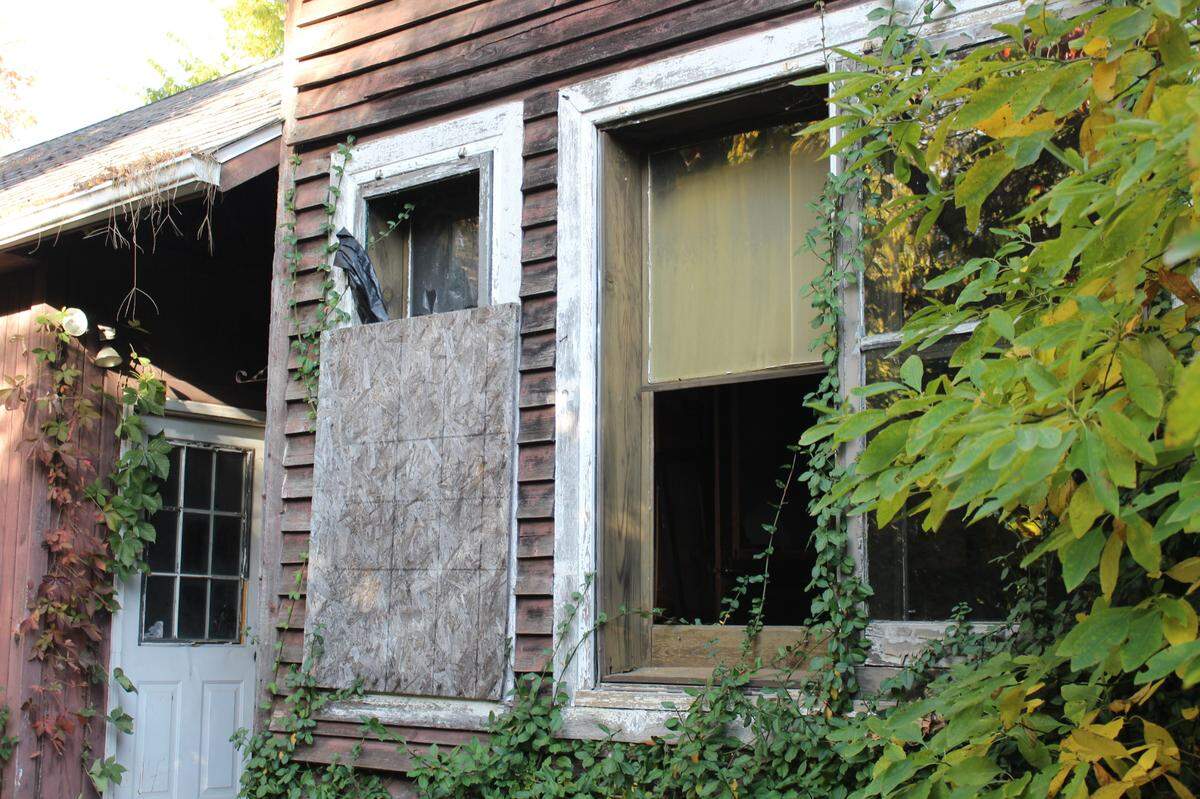
Overgrown trees and bushes hide the wraparound porch. Paint peels from window frames with broken panes. Weeds grow in gutters. Insulation hangs from ceilings. Rooms are filled with trash from homeless people who’ve been squatting on the property.
John Siemens, a neighbor across the street, didn’t know about the demolition.
“That’s a shame,” he said. “I haven’t been in there in quite awhile, 15 years at least. I didn’t think it was that bad.”
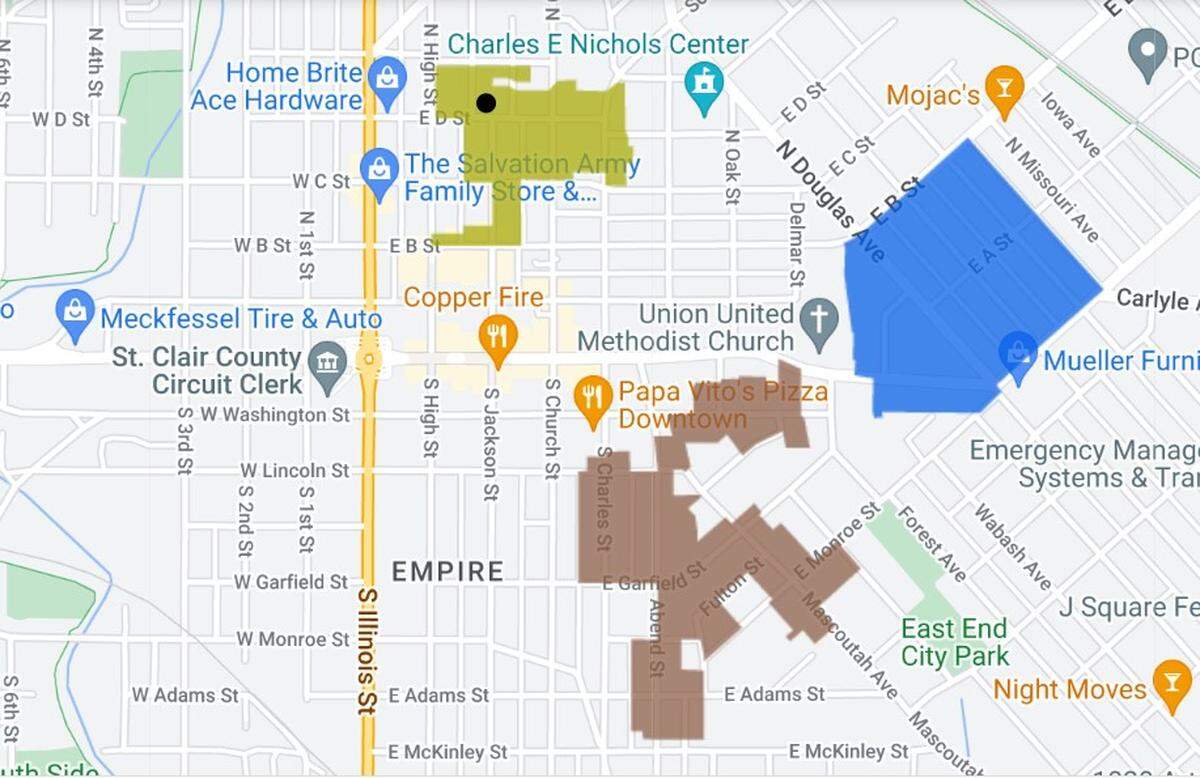
The home is in Belleville’s Hexenbuckel Historic District. The city bought it from St. Clair County earlier this year for $795. The last owners abandoned it and forfeited ownership for back taxes.
City officials condemned the home because it’s unsafe and beyond repair due to damage caused by an open roof, according to Scott Tyler, director of health, housing and building.
“It was a beautiful home at one time,” he said.
Built for a mule dealer
Amson and Sadie Baer were the home’s first residents, according to Belleville historian Bob Brunkow.
In those days, it was considered a mansion.
Amson Baer and his brother, Aaron, had immigrated from Wurttemberg, Germany, in the 1860s and went into the horse- and mule-trading business. In 1886, they established Baer Brothers, which became the largest mule dealer in Illinois.
“To reflect his prominence and to provide a home for his new bride, Amson had the Italianate-style brick house with its widow’s walk and cresting constructed in 1884,” Brunkow said.
The wraparound porch on the main level and screened-in sleeping porch on the second floor were added later. Today, there’s a two-car detached garage in back.
Much of the Baer Brothers stable still stands around the corner at 314 N. High St.
“For a few years in the early 20th century, there were three Baers living on the same block,“ Brunkow said. “(That includes) Aaron at 113 East D and David, Aaron’s son, at 421 Court St.
“By 1910, the Baers were gone from 107. By 1912, physician Frank Auten and family were at the address and continued through 1915 and perhaps 1916 or into 1917.”
Next came the Twitchell family, which owned the home for more than half a century. Dr. Benjamin Twitchell practiced medicine for 67 years and served as president of the St. Clair County Medical Association, according to his 1958 obituary. His wife, Emma, died in 1934. They had four children.
Daughter Ruth Twitchell, a Belleville teacher, lived in the home until her death in 1969, according to Brunkow.
For a time, the home doubled as Dr. Twitchell’s office.
“He was involved in civic affairs, including the Belleville Board of Trade, and was part of the effort to snare Scott Field for the region,” Brunkow said.
Family’s labor of love
James Young, who owned Young Electric, and his wife, Phyllis, a homemaker, bought the home at 107 E. D St. in 1970. They spent nearly two years restoring it before moving in.
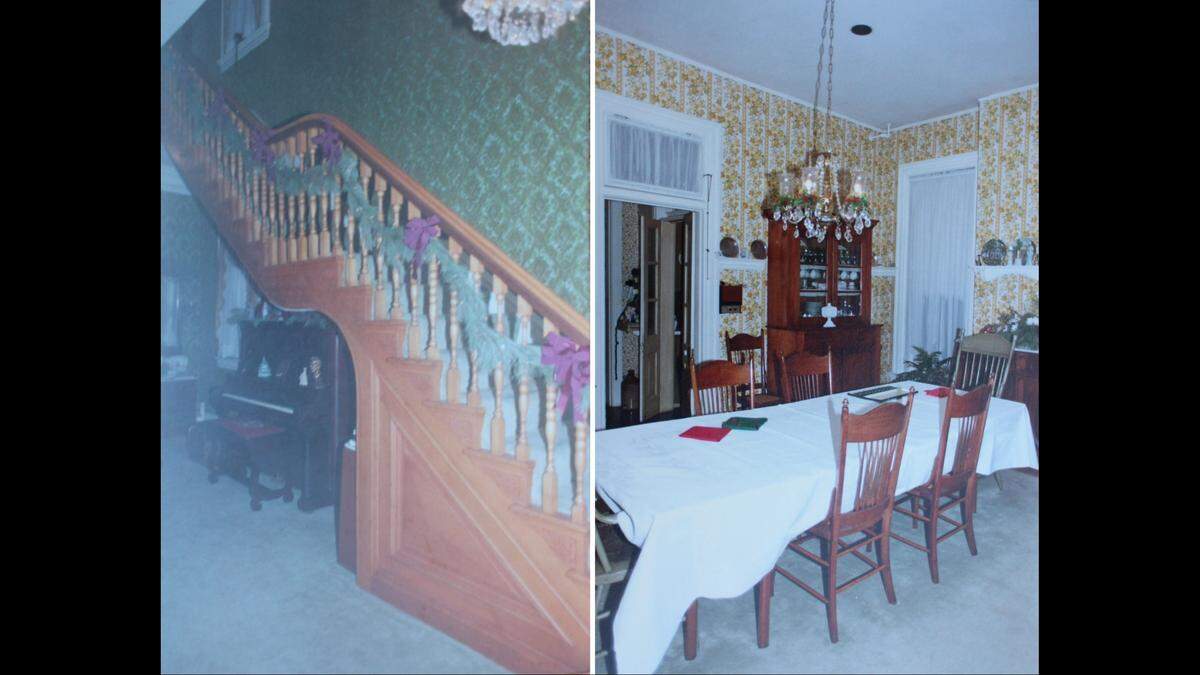
“(The staircase banister) had three different types of wood,” said Poole, who works at her sister’s store, Muttley & Me. “Mom stripped it and sanded it. It was so ornate that she had to use nail files. She also did all the wallpapering.”
‘”We used to have people who had heard about the banister stop and ask to see it, and we’d say, ‘Sure.’”
Poole remembers her father gardening in the basement with grow lights during the winter. Her mother hung ferns and Swedish ivy on the porch in the summer. The family sat outside and watched neighborhood activity from two curved bamboo swings.
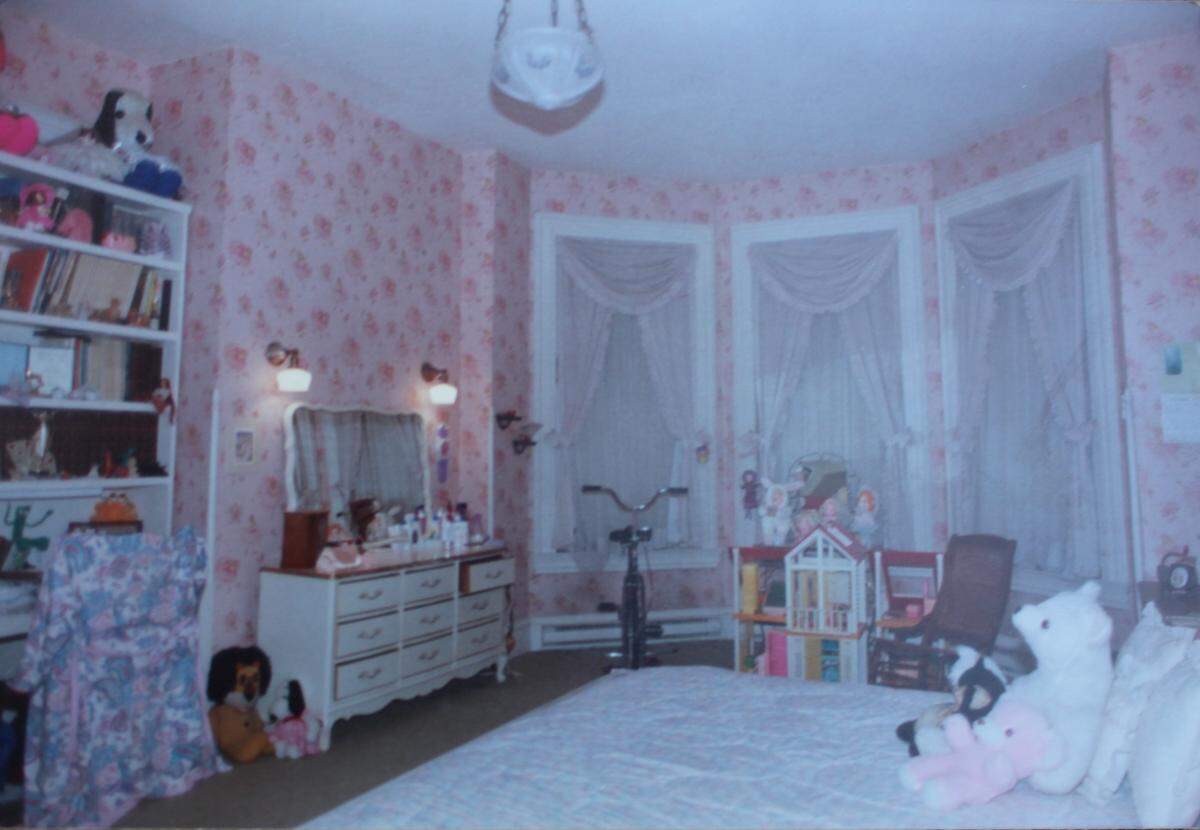
James and Phyllis Young had one of the three marble fireplaces in their bedroom. The girls shared a pink bedroom with canopy beds.
The former “ice house,” which predated refrigeration, had been converted into a bathroom. The family tore down the old carriage house, which had fallen into disrepair, according to Poole.
“It was a great house to grow up in with all the room, and even though it was fancy, it was home,” she said.
As a young woman, Mary Lee Poole lived in the home’s third-floor attic apartment with her husband, David, and daughter, Jessica (now Herzig). The family moved out in 1989 and sold the home to a Marion man. By that time, James and Phyllis had divorced.
According to St. Clair County records, the home was:
- Sold to a private party in 1995 for $140,000.
- Sold to a private party in 2002 for $147,000.
- Foreclosed on by the Bank of America in 2016.
- Sold to a private party in 2017 for $31,500.
- Acquired by the St. Clair County trustee in 2021 for back taxes.
- Sold to the city of Belleville for $795 earlier this year.
City officials have invited the Belleville Historical Society board to take one last look in the home and see if there are any items they would like to salvage before demolition later this year.
“Right now, we’re having an asbestos study done on the home and getting utilities shut off,” Tyler said. “There’s been homeless or squatters living there for quite a while. The place is just filled with trash.”
The Historical Society would be interested in original doors, art-glass windows and other architecturally significant items, but it’s unlikely the three marble fireplaces can be saved, according to President Larry Betz.
“You think about all the craftsmen who worked on that house,” he said. “It probably took a year. That was before hydraulics and many of the tools we have today, power nailers and such. It was all handcrafted, and it’s going to go down in a day. That’s the part of it that bothers me the most.”
This story was originally published October 20, 2022 at 6:00 AM.