West Belleville subdivision weighs pros and cons of creating historic district
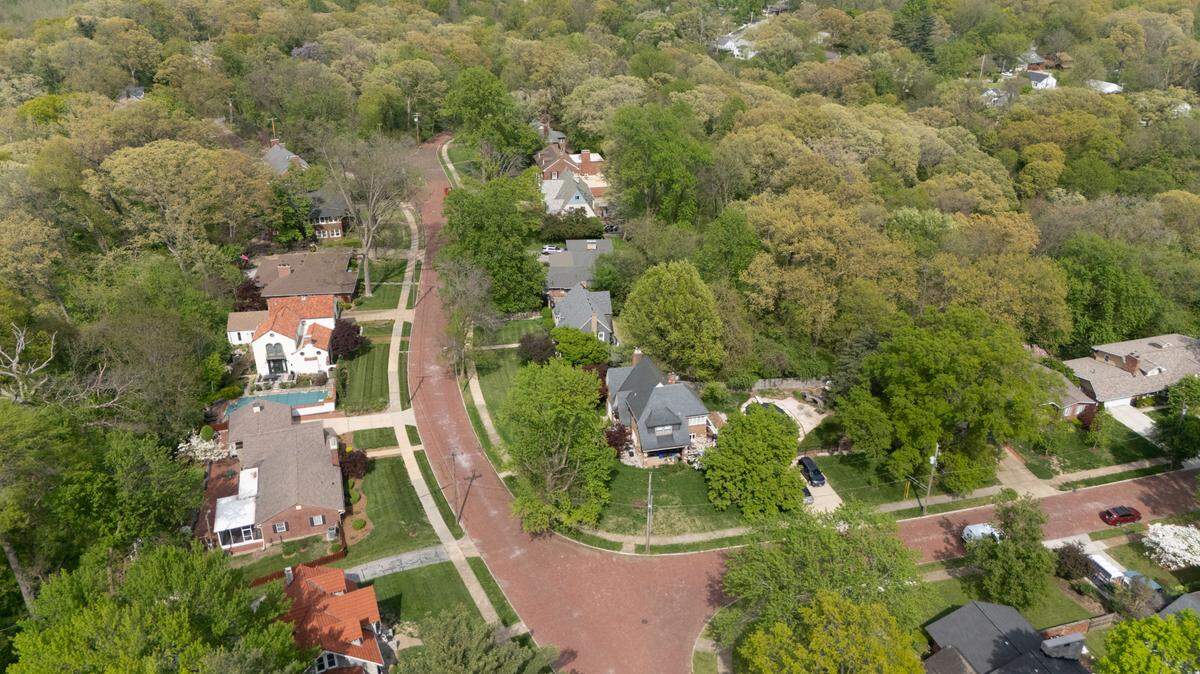
Belleville Historical Society is proposing that residents of a 100-year-old subdivision known as Oak Knoll take steps to protect its architecture and history by asking the city to designate it as a historic district.
An estimated 35 people attended a meeting last week to learn more from Eric Schauster, the city’s assistant director of economic development, zoning and planning.
“There was no action taken,” he said. “I don’t know if it’s going to go anywhere. There were a lot of questions, a lot of discussion. But it’s a situation where, if these folks want this, they would have to petition the city, and then there’s a process that we’d have to follow.”
Belleville has three historic districts, all in the downtown area. Zoning ordinances require home and other building owners to maintain the historic character of their properties by following certain guidelines when doing exterior renovation or construction.
The city’s Historic Preservation Commission reviews project designs and approves, denies or suggests alternatives. Interior and non-visible backyard changes aren’t restricted.
“I think it would be good for the (Oak Knoll) neighborhood,” said Historical Society President Larry Betz.
“It would give a sense of status. It would provide some protection so that people can’t come in and do weird things to their houses or, worse yet, tear them down and build condominiums or something.”
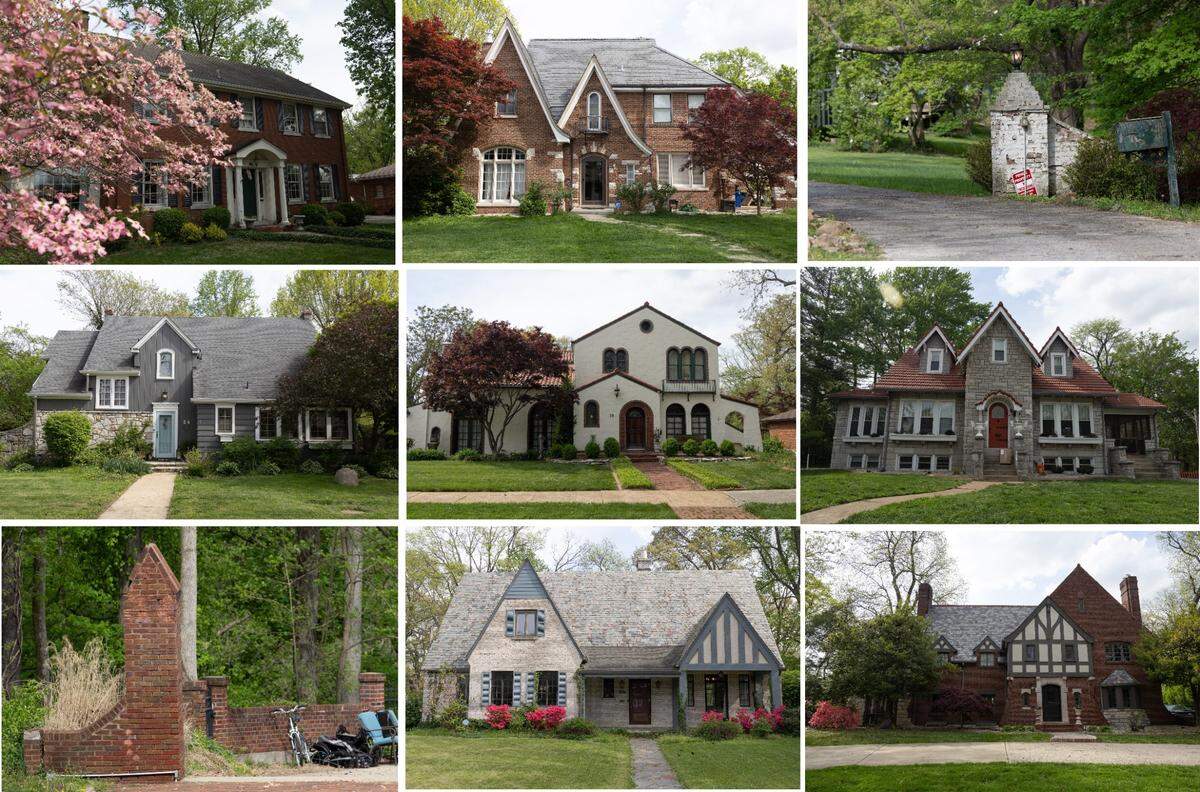
Known for architectural styles
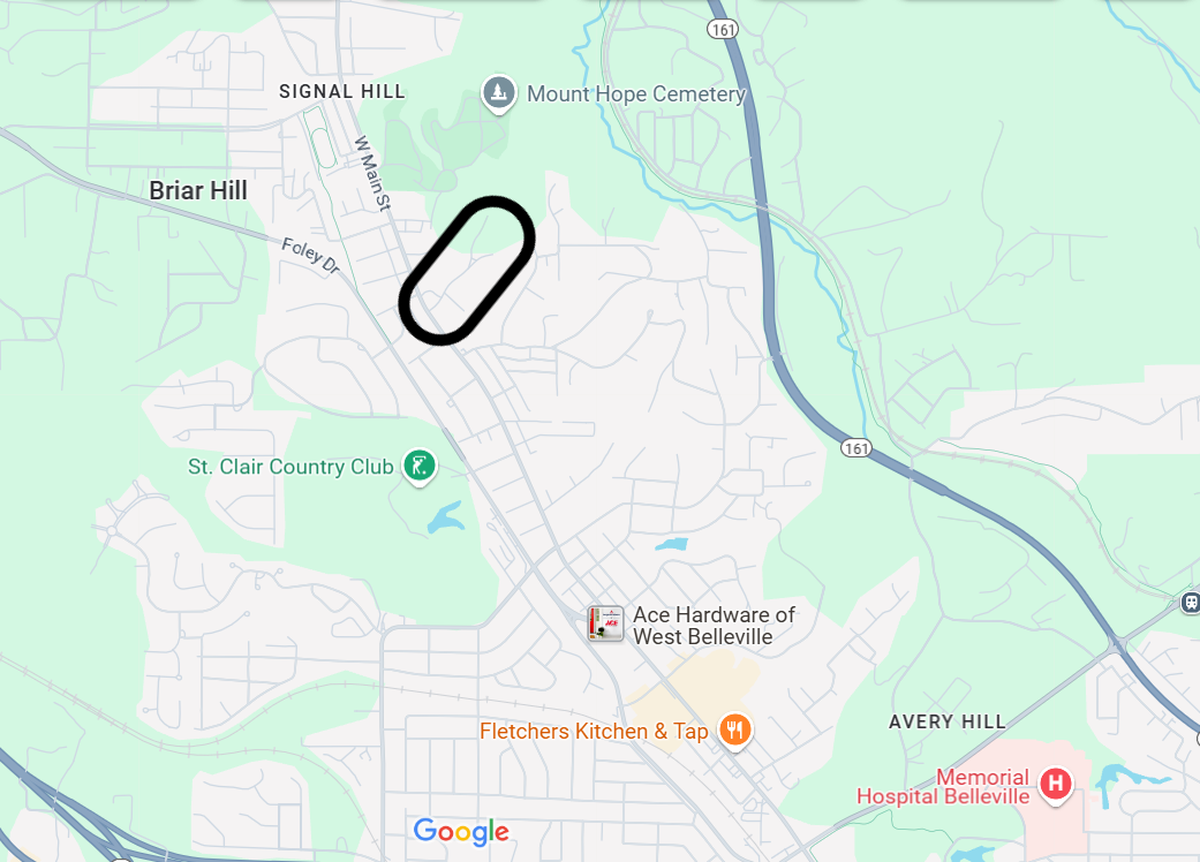
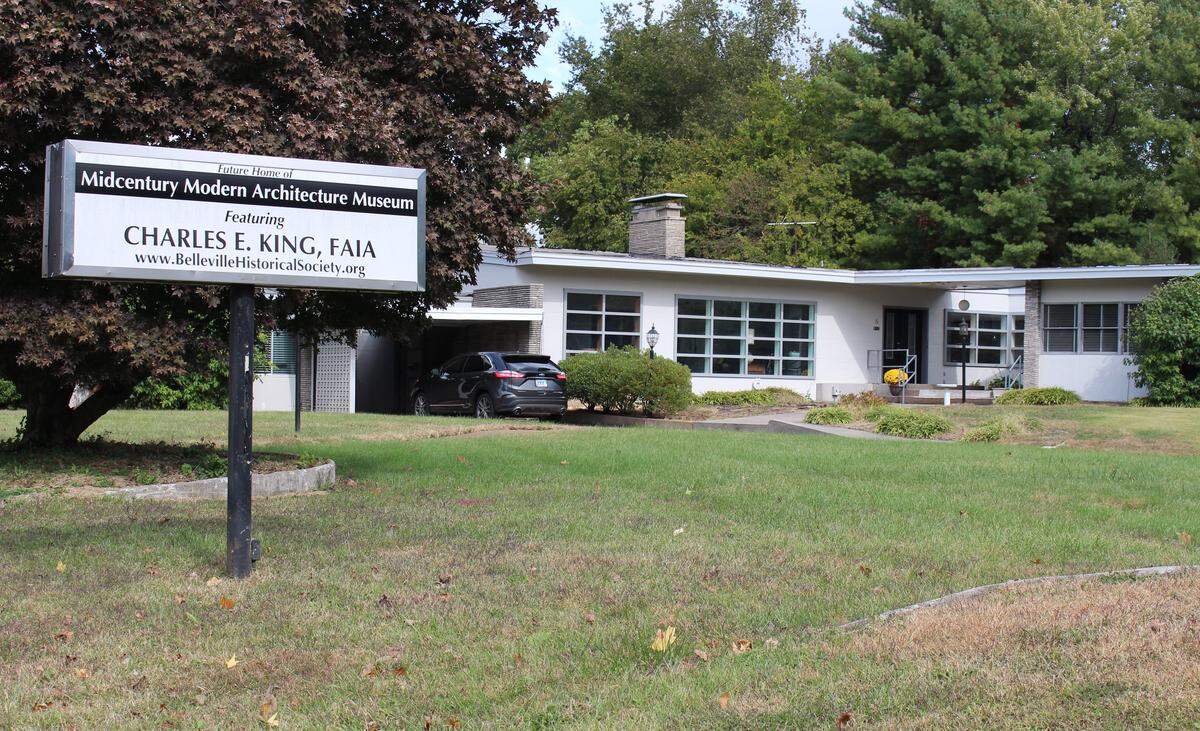
Oak Knoll is off West Main Street at 85th Street. It consists of about 30 homes. At the entrance is the Blazier House, designed by Belleville architect Charles King and built in 1952. The Historical Society uses it for the Museum of Mid-Century Modern Architecture.
The subdivision is known for its wide variety of architectural styles, ranging from English tutor to Colonial, mid-century modern to bungalow.
It was platted in 1925 and promoted as a “high-class” place for executives and their families to live, according to a history prepared by Bob Brunkow, historian for Belleville Historic District. Lots with at least 100-foot frontages and depths of up to 200 feet lined the winding street.
“Life in the subdivision was sheltered from the bustle of modern life by preserving as a reserve 14 acres of virgin woodland from Oak Knoll’s 35 acres to surround the lots,” Brunkow wrote.
“Yet life was not to be rustic. Lots came complete with sewer, water, and gas lines, all laid under the parking strip between the curb and sidewalk to prevent having to damage the street to make utility repairs.”
The street was laid using the latest technique for non-rigid construction, setting bricks over a layer of sand covering a concrete foundation. It also was excavated low enough to create a terraced effect for lots.
“To protect property values, the subdivision was strictly residential,” Brunkow wrote. “Only one family residence could be constructed on each lot, and it would have to cost at least $10,000 to build.”
Early residents of Oak Knoll included stockbroker M.R. Esherwood, believed to be Belleville’s first millionaire, and his wife, Blanche. But a fire destroyed their home in 1933, and they moved to East St. Louis.
Process begins with petition
The Oak Knoll meeting took place on Wednesday night at the museum. It was attended by neighborhood residents, Historic Preservation Commission members, the two Ward 4 aldermen and Mayor-Elect Jenny Gain Meyer, who will be sworn in Wednesday.
“The consensus among neighbors (on the historic district) is probably split,” Betz said. “There were some people who seemed pretty excited about it, and there were some who were like, ‘Don’t tell me what to do with my property.’”
People asked how a historic-district designation would affect property values and taxes and how much zoning restrictions would limit homeowners doing repairs or renovations.
Schauster gave the example of original wood windows that needed replacement. If wood is prohibitively expensive, he said, commission members might allow vinyl in the same style.
“They essentially want to protect the look,” he said.
Existing Belleville historic districts include Old Belleville Historic District, Hexenbuckel Historic District and Oakland Historic District.
The process of designating a neighborhood, street or block as a historic district begins with a petition from property owners. It must be reviewed by the Historic Preservation Commission and discussed at a public hearing before the City Council approves a zoning ordinance.
Schauster emphasized that he appeared at the Oak Knoll meeting only to answer questions, not to advocate for a new historic district.
“I see the value in it, but for me, it’s up to the property owners,” he said.
This story was originally published April 28, 2025 at 6:00 AM.