City at risk of legal action over solar farm at Belleville cemetery, opponent says
An opponent of the Mount Hope Cemetery solar farm has sent a 36-page legal memorandum to the mayor and other Belleville officials, maintaining that the city’s plan violates state law.
Jesse Berger, who lives nearby, stated that he’s prepared to seek “judicial relief” to stop the project, but he asked officials to instead void an agreement that would allow a private company to lease and clear-cut 25 acres of woods to install solar panels at the city-owned cemetery.
“Because the memorandum identifies serious legal exposure, including Illinois Supreme Court precedent confirming that cemetery roads may not be opened to third-party commercial access, the responsible course is for the City to rescind the agreement immediately,” he wrote.
The memorandum cites an 1875 act that limits the sale or lease of cemetery land in Illinois and other state and federal laws and court rulings that have prohibited commercial activity in cemeteries, protected their character or upheld rights of lot owners.
Belleville Mayor Jenny Gain Meyer acknowledged receiving Berger’s memorandum last week but declined to comment, except to say she would discuss it with the City Council.
“I can’t respond, really, because there could be possible litigation,” she said.
In the past, Meyer has noted that aldermen already approved the agreement with Belleville Solar LLC, and the city, which acquired the abandoned cemetery last year, needs money to pay for its upkeep. The public works department spends $100,000 a year for mowing and trash pick-up.
Under a recently amended agreement, the city would lease 25 acres (about the size of 12 city blocks) for $50,000 to $55,000 a year for 35 years.
Rachael Cornick, director of operations for Shine Development Partners, a private, Texas-based company that owns Belleville Solar LLC, declined comment, saying she hadn’t seen Berger’s memorandum and isn’t an attorney.
Solar-farm supporters say the lease revenue would help with badly needed repairs to roads, the chapel and mausoleum, and the city wouldn’t have agreed to take over the cemetery without it.
Opponents argue that such a large tract of green space and wildlife habitat in a heavily-developed urban area should be used for a community park or nature preserve and that a solar farm would destroy the sanctity and character of the historic cemetery.
Lawsuits stopped similar projects
Berger, 39, who works in artificial-intelligence training, also authored a petition called “Save Mount Hope Cemetery” on the Change.org website. It has accumulated more than 600 signatures since early May.
Berger cites two court cases with direct parallels to the Mount Hope project in his memorandum: Bushers v. Graceland Cemetery Ass’n of Albion, Ill., and CES Hawthorne Solar LLC v. the Town of Mount Pleasant Planning Board in New York state.
Like the city of Belleville, cemetery owners in both cases determined that revenue from energy production could help pay the bills.
In 1958, Mary and Barney Bushers sued in federal court after Graceland leased cemetery land for oil drilling near their son’s grave and allowed heavy equipment to drive on its roads to get to the well.
“Applying Illinois law, the federal court permanently enjoined the lease and awarded damages for the severe mental anguish the parents suffered when they returned to mourn their son and found an oil pump churning near his headstone,” Berger wrote in the memorandum.
“The court held that the association had ‘trespassed upon the property rights or easement of the plaintiffs as lot owners,’ because dedication of cemetery land creates a trust that neither outsiders nor the proprietor itself may disturb.”
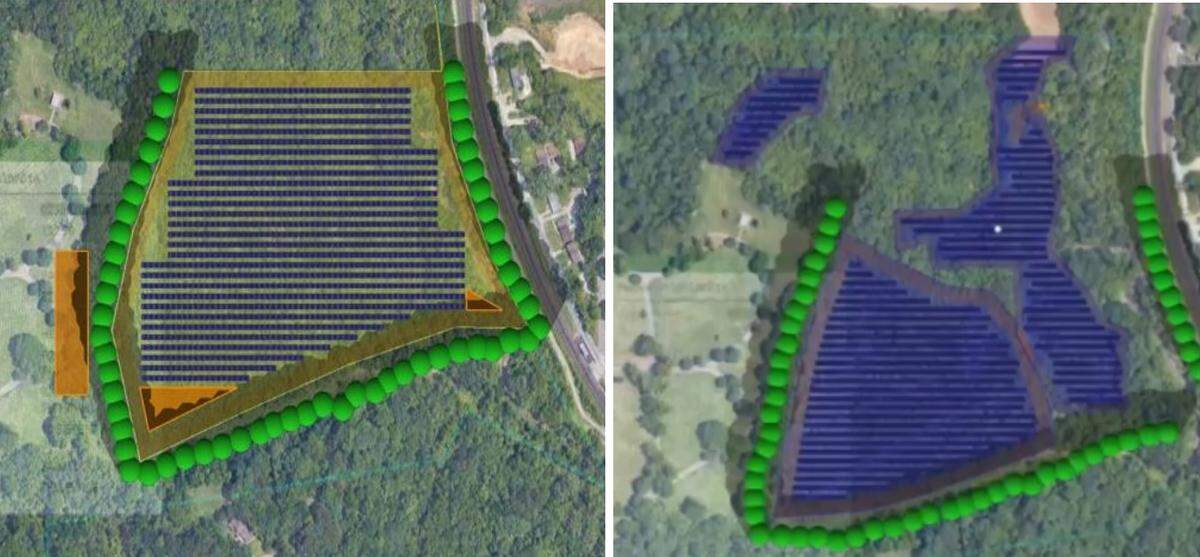
In Belleville, officials have argued that the 5-megawatt solar farm would be built in an unused back section of the 132-acre Mount Hope property and promised that a “buffer zone” of trees would hide solar panels from public view. Opponents say that’s impossible.
In the Hawthorne case, the New York Supreme Court of Westchester County ruled in 2022 that a planning board was “rational” to consider environmental factors in denying a special-use permit to clear-cut 26 acres of forested land at a Catholic cemetery to make way for a solar farm.
The board had relied heavily on a recommendation by Pace Energy and Climate Center that stated:
“It is essential that local communities deploy clean energy in a manner that safeguards natural resources such as forests. While recognizing the importance of advancing solar in New York State, (Pace) does not recommend clear-cutting healthy tree stands to clear land to install solar PV arrays.
“Trees are important for sequestering carbon and, also for protecting biodiversity, preventing heat island effects, and providing a healthy environment in urban and suburban areas.”
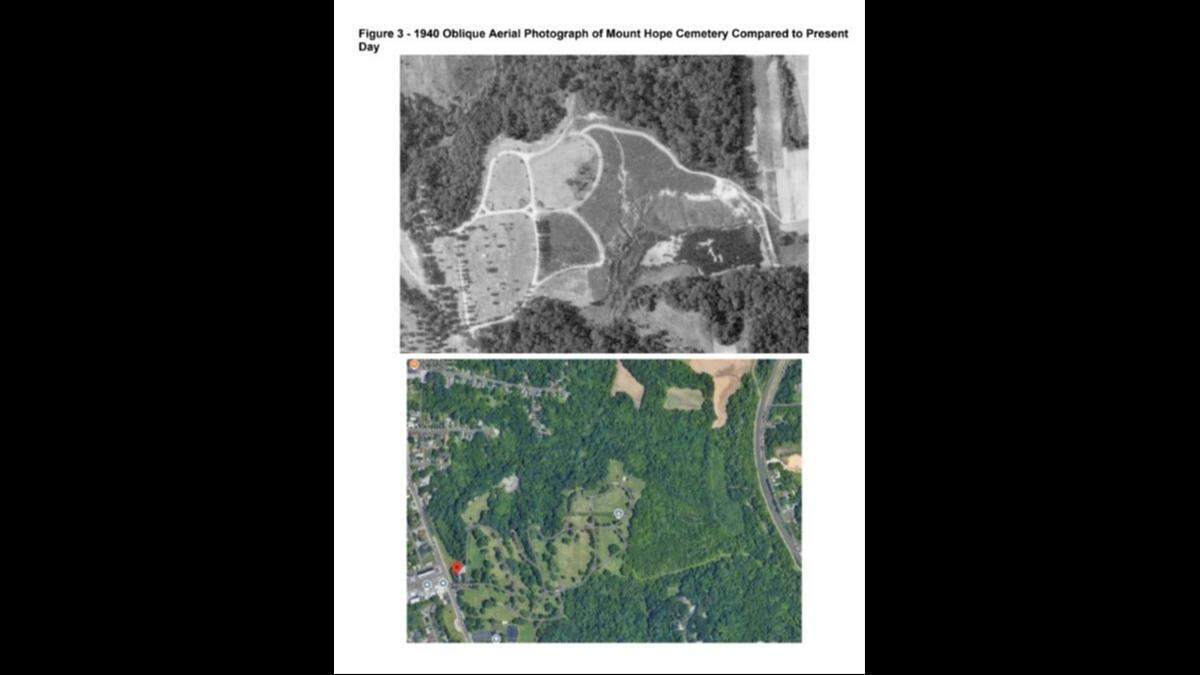
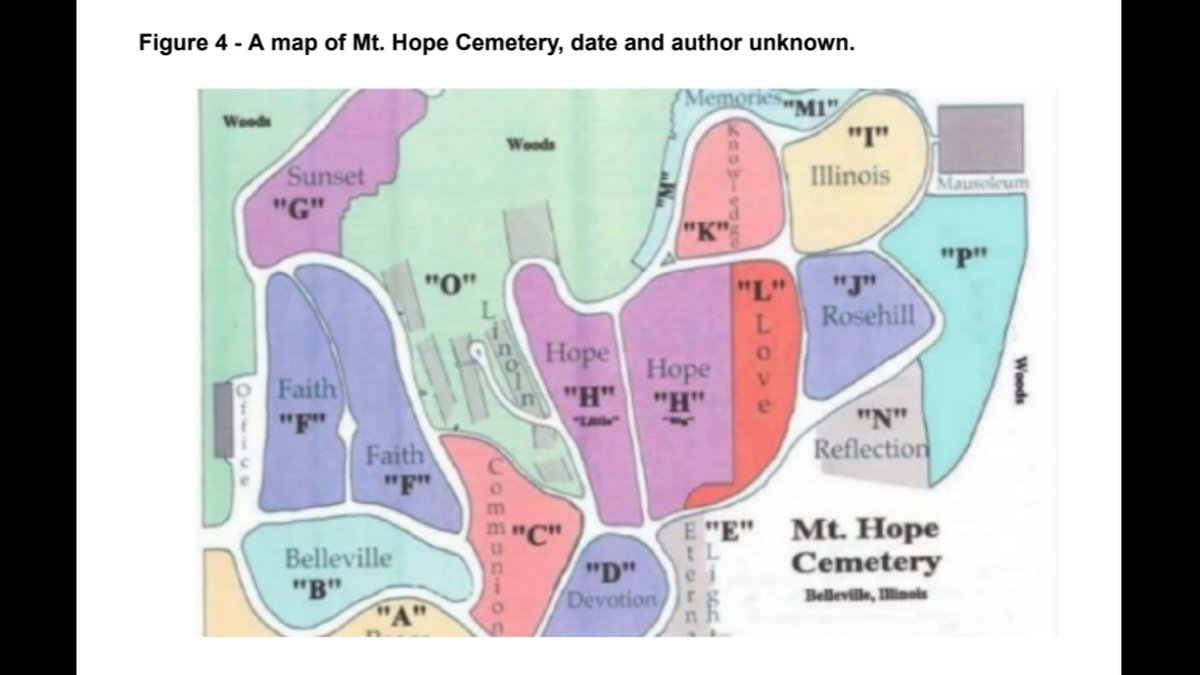
Berger said aerial photos and an old map of Mount Hope he attached to the memorandum show that the solar-farm site was “informally dedicated” as part of the cemetery’s common area before it grew back wild, and that this gives it extra legal protection.
Before the city issued a special-use permit for the solar farm, the back section of the property was zoned for two-family residential use.
Project involves state incentives
Shine is set to receive financial incentives for the solar farm through the Illinois Shines program, which is designed to help the state meet its renewable-energy goals. Last year, Cross estimated the incentives at $2 million. It’s unknown if that amount has changed.
Illinois Shines is administered by the Illinois Power Agency. The BND asked for interviews with agency experts, including Chief Legal Counsel Kelly Turner, Senior Adviser Anthony Star and Director Brian Granahan. The independent state agency’s public-relations staff refused to make them available to answer questions about the Mount Hope project.
An email from Media Relations Specialist Jenny Whidden stated that the Part II application is “in progress,” meaning it’s in the Illinois Commerce Commission “approval stage.”
“We just have really limited information we can share with you,” said Megha Hamal, Illinois Power Agency’s chief strategy and communications officer.
The Illinois Department of Financial and Professional Regulation oversees the regulation and licensing of cemeteries. Officials with the state agency declined to comment on rules regarding commercial activity on cemetery land in general or the Mount Hope project in particular.
“We encourage anyone who suspects wrongdoing or potential wrongdoing by a licensee to report it to IDFPR by filing a complaint online,” said Chris Slaby, public information officer.
A representative of the Illinois Cemetery & Funeral Home Association declined to weigh in on the local controversy. She referred a BND reporter to Illinois property tax codes, noting that commercial activity on cemetery land could lead to revocation of tax-exempt status.
“All property used exclusively for cemetery purposes is exempt,” the law states.
“(That) includes cemetery grounds and improvements such as offices, maintenance buildings, mausoleums, and other structures in which human or cremated remains are buried, interred, entombed, or (inured) and real property that is used exclusively in the establishment, operation, administration, preservation, security, repair, or maintenance of the cemetery.”
Because the Mount Hope project is categorized as a “community-driven” solar farm, it requires community input during the planning and development process, according to the Illinois Shines website.
Opponents have accused the city of lack of transparency, failing to keep the public informed and making major decisions at two special City Council meetings, one whose agenda didn’t identify the issue being discussed. Officials said the meetings were required to meet state deadlines.
Controversy over use of roads
One of Berger’s main legal arguments against the solar farm involves an issue that has been particularly controversial: The use of narrow roads in the park-like cemetery that wind around grave stones and tall trees.
When the project was first discussed publicly, opponents expressed concern that construction and maintenance vehicles would damage Mount Hope roads and disrupt the peaceful environment.
Cliff Cross, the city’s former director of economic development, planning and zoning, who left last month to take another job, addressed this at a City Council meeting in January 2024.
“There will have to be at some point a dedicated-access drive to get back there,” he said, according to meeting minutes.
The issue didn’t come up again in public until September 2024, after the city had signed the lease agreement with Belleville Solar LLC. Officials announced at a community meeting on the solar farm that construction and maintenance vehicles would use existing roads through the burial grounds, prompting boos from the crowd.
Officials “walked it back” during a second community meeting in December, according to Natalie Wilson, who administers a Facebook page for Friends of Mount Hope Cemetery. She helped Berger launch the campaign against the solar farm this spring.
At the December meeting, Ward 4 Alderman Raffi Ovian, who has family buried at Mount Hope, stated that he would vote “no” on any plan without a separate solar-farm entrance and exit.
“The access drive to the rear, yeah, we’ve talked about that, how do we handle that,” Cross told Ovian, according to a meeting video.
“It’s something logistical ... Once the arrays are identified and how you access it, we’ll look at the best possible way to get there without impacting ... You know, nobody wants to drive through the middle of the cemetery to get (to the solar farm) if we don’t have to.”
No secondary access established
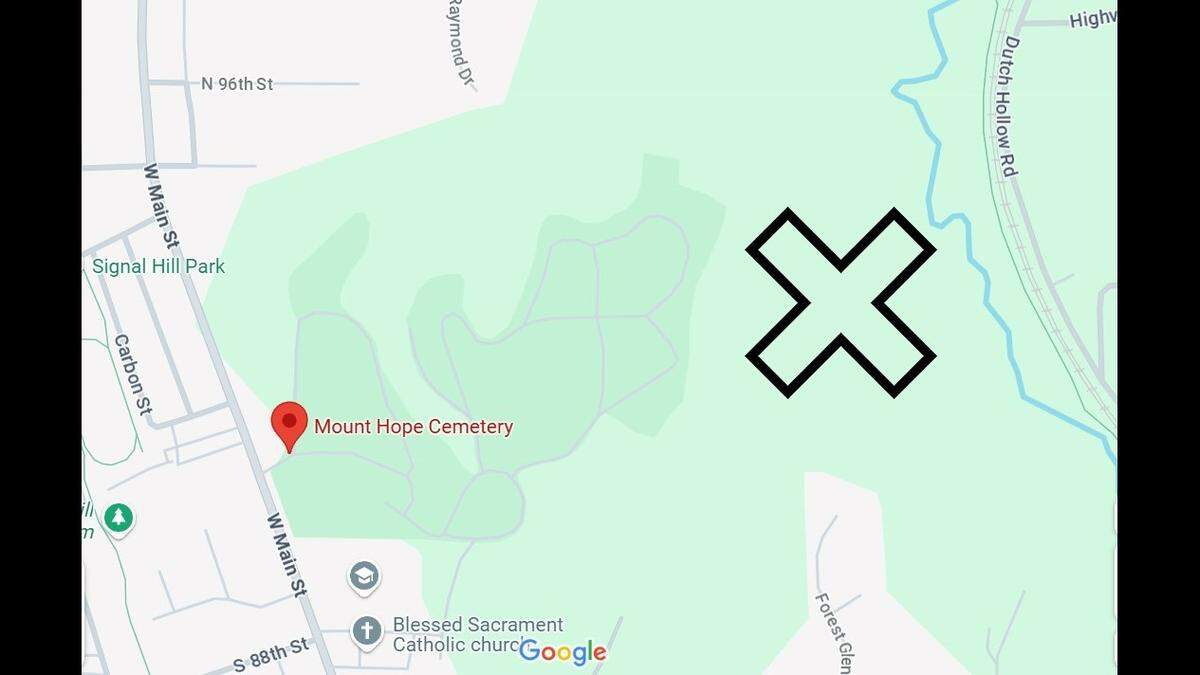
This spring, Cornick confirmed to the BND that Shine and its local partner, StraightUp Solar, had determined that they couldn’t establish a secondary-access route to the solar farm.
Some of the cemetery property to the west has steep terrain, and it’s separated from Dutch Hollow Road (Illinois 161) by Schoenberger Creek, MetroLink tracks and MetroBikeLink Trail.
According to Cornick and Cross, solar-farm construction would last only a few months, Shine would improve Mount Hope roads afterward and follow-up maintenance would be minimal, requiring trucks no bigger than those used for burials and cemetery upkeep.
Last month, Ovian voted with the City Council’s 12-1 majority to approve the amended lease agreement. He said he didn’t like the solar-farm plan but saw it as the only way to fund vital cemetery improvements. Ward 1 Alderwoman Lillian Schneider was the sole “no” vote. Three aldermen were absent.
Wilson, who has about 40 family members buried at Mount Hope, called the commercial use of cemetery roads “very wrong.”
“They’re going to destroy the roads and the tree lines,” she said. “I’m worried about the trees actually falling down from the destruction of the roads. The soil will erode. There are so many people who walk the cemetery.
“They’re going to be bringing in excavators, bulldozers, semis, bush hogs, dump trucks. This is very heavy equipment. These roads were designed in (the late 1800s). They were not designed to handle the weight of this equipment.”
Berger’s memorandum maintains that it’s “settled law” in Illinois that cemetery land and roads can’t be used for commercial purposes. He cited the Bushers case, as well as Mount Hope Cemetery Ass’n v. New Mount Hope Cemetery Ass’n and Bogner v. Villiger.
The Mount Hope case involved a Champaign County cemetery not related to the one in Belleville. The Illinois Supreme Court ruling in 1910 established that cemetery roads were not “public thoroughfares,” and they’re held in trust for lot owners, according to Berger.
In Bogner, the Appellate Court of Illinois, Third District upheld in 2003 a lower-court ruling that granted a permanent injunction after the owner of farmland surrounding a cemetery ran an irrigation system through it, causing damage without regard for its “sacred and sentimental character.”
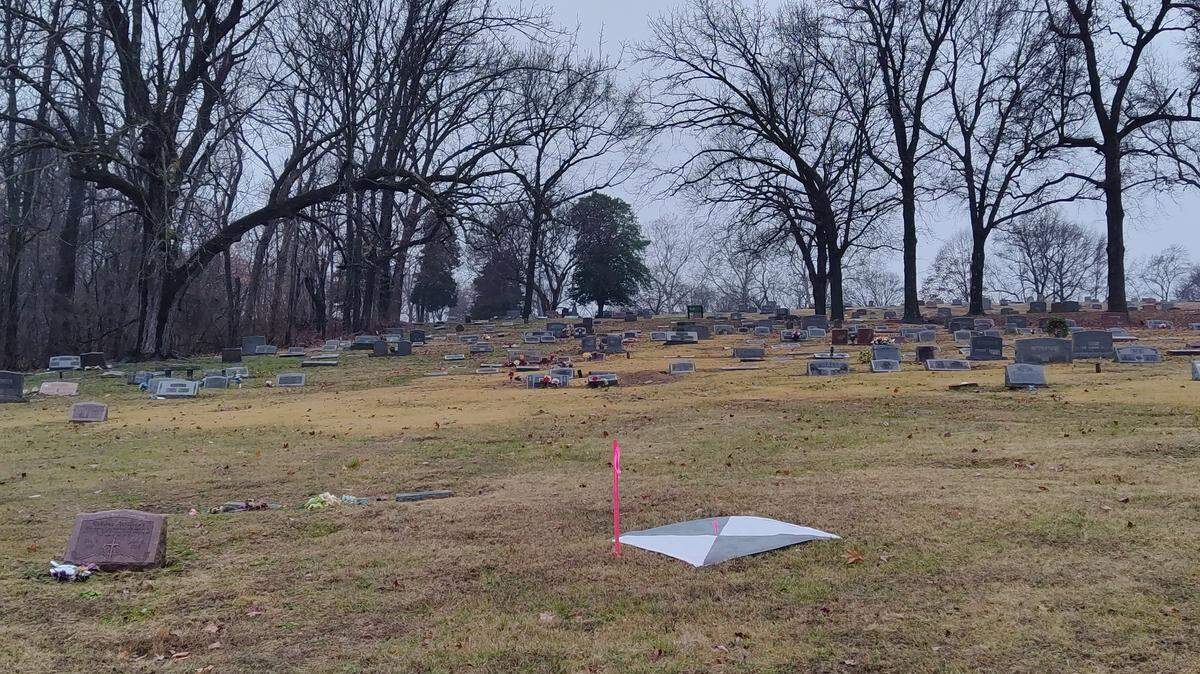
Berger argues that Belleville Solar LLC, which has placed pink stakes and gray aerial targets used for drone surveying and mapping among grave stones in Belleville’s Mount Hope, already has negatively impacted the cemetery’s character.
Friends group remains divided
People in the Friends of Mount Hope Cemetery group remain divided over the solar farm, judging by posts on its Facebook page.
The group’s founder, E. Gayle Schneider, 78, who lives in North Carolina but plans to be buried at Mount Hope with other family members, supports the project. She encourages people to be grateful that the city agreed to take over the cemetery and came up with a way to fund it.
As for Berger’s memorandum, “I thank Jesse Berger for bringing this important information up, but I’m not legally trained, and I don’t think Jesse is, either,” said Schneider, who’s skeptical of his conclusions.
Schneider said she has a hard time believing that city and solar-company officials would have moved forward with a plan without making sure it was legal. She recalled visiting a central Illinois cemetery that leased land for a cellphone tower to raise money, and no one seemed to mind.
It was the administration of former Mayor Patty Gregory that initiated the solar-farm project and negotiated the lease agreement with Belleville Solar LLC. Meyer was serving as city clerk at the time.
It’s believed that nearly 27,000 people are buried at Mount Hope, which dates back to the late 1800s. The most recent owner abandoned it about 20 years ago, leading to receivership and neglect.
Last year, the city bought the 132-acre property, including about 55 acres of burial grounds backed by woods, for $1 in a foreclosure auction at the St. Clair County courthouse.
The Mount Hope solar farm would allow low- to moderate-income residents to get a 20% discount on electricity costs and other “subscribers” to get a 10% discount, according to officials. Berger maintains that such projects often fall short of expectations.
Belleville budgets more than $300,000 a year to operate its other cemetery, Walnut Hill Cemetery.
This story was originally published July 10, 2025 at 5:30 AM.