Interested in a historic fixer-upper? Belleville may have a deal for you.
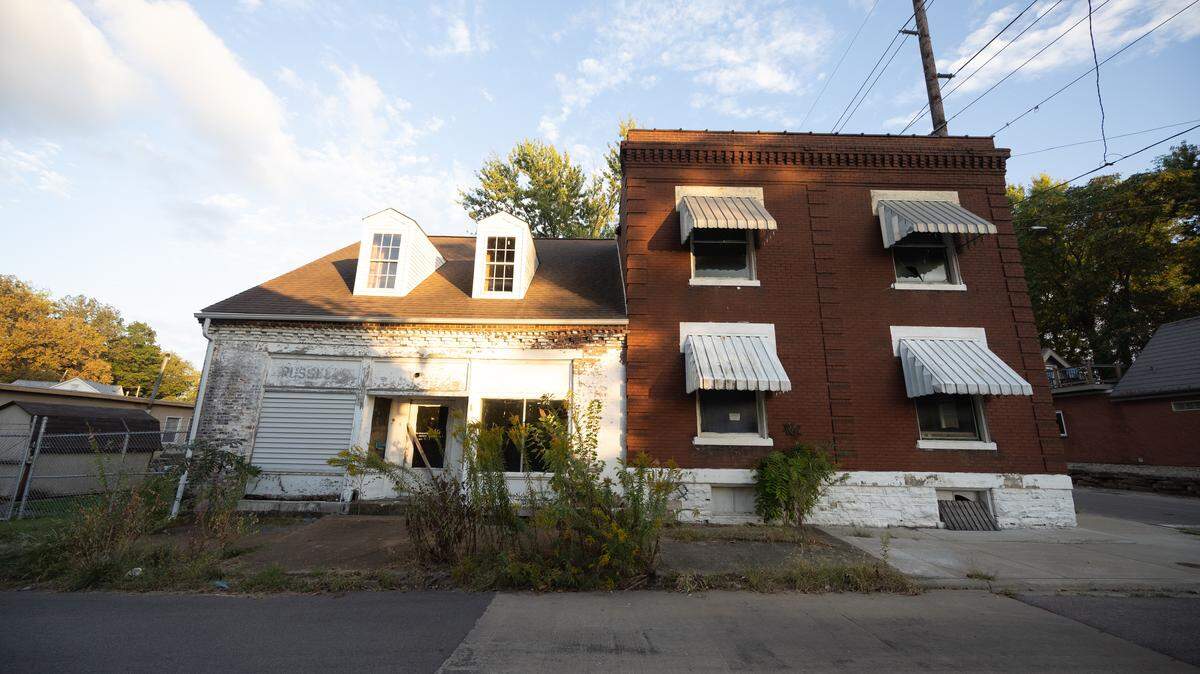
The city of Belleville is buying two historic brick homes from St. Clair County’s delinquent tax agent with plans to either demolish or sell them, depending on local interest.
Officials see the home at 102 N. 11th St. as the one most likely to become part of the infill program, which allows people to buy city-owned derelict buildings for $1 if they agree to renovate them.
A prominent butcher built the two-story prairie foursquare in 1901. It features a built-in china cabinet, art-glass windows and a wooden staircase that a Belleville historian called “spectacular.” But the home has been vacant for more than two decades.
“Architecturally, it’s a cool building,” said Scott Tyler, director of the city’s health, housing and building department. “And with its history, there may be some interest in it.”
The other home is at 614 E. McKinley St. It’s a German American folk house, built in the 1860s, county parcel records show.
The home, which is painted yellow with white trim and black shutters, has been vacant since a fire several years ago. It’s been broken into many times and damaged by squatters.
“That one will most likely be a demolition,” Tyler said. “It’s just so small. I don’t think there’ll be much interest in it. But who knows?”
Belleville City Council voted Monday night to buy both homes for $1,572. They had been forfeited to the county due to years of unpaid property taxes, parcel records show.
The purchases are part of a city effort to take control of “troublesome” buildings before they fall into irreversible disrepair and encourage renovation, according to Tyler.
“We don’t want to tear down houses,” he said.
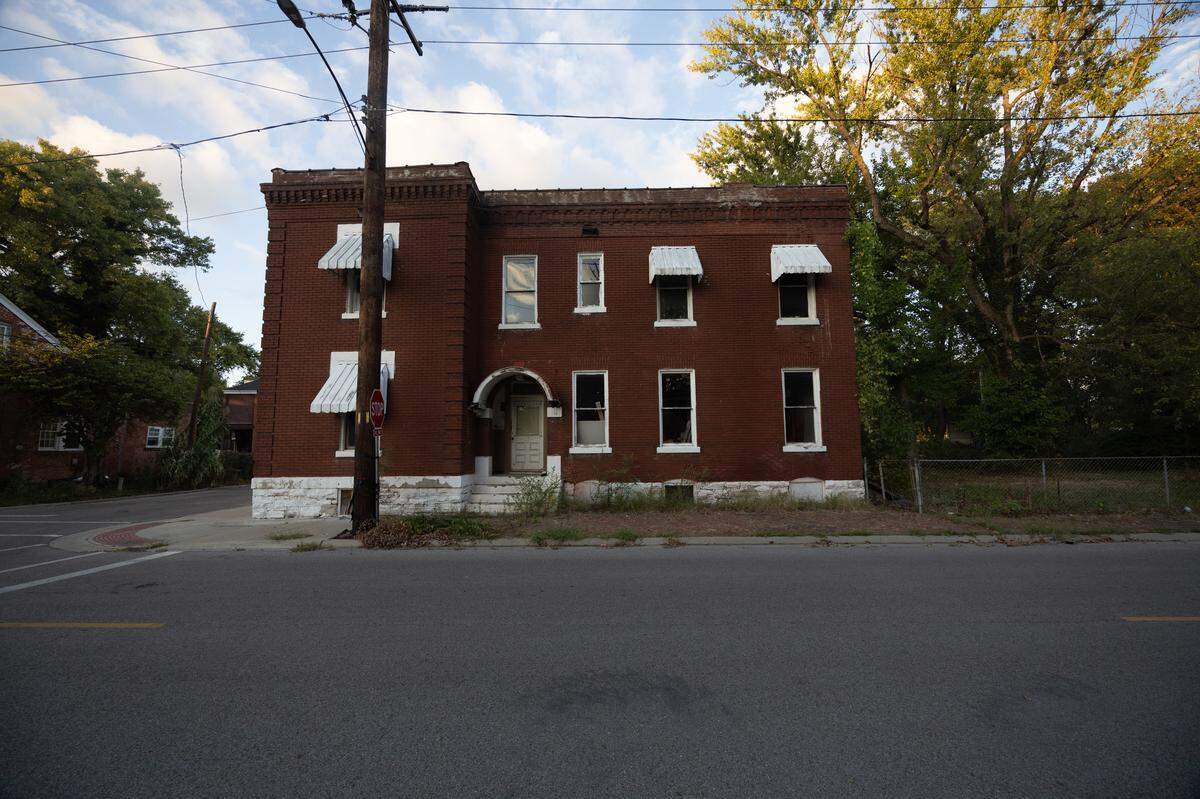
The foursquare on North 11th Street is attached to a German American folk house. The latter was built in the 1870s as a train station and saloon in the former village of West Belleville, according to Bob Brunkow, historian for Belleville Historical Society.
Julius Heinemann moved upstairs in 1893 and converted the lower level into his butcher shop, installing a fancy meat cooler with hardwood appliqué embellishments. He later built the foursquare to provide a larger residence for his family.
“He was a very successful butcher,” Brunkow said. “He had his own smokehouse and chicken coop.
“He was very active in the Turnverein movement. His son (Gustav Heinemann) became an instructor and went off to Pennsylvania. He was the women’s gymnastics coach for the American team in the 1936 Olympics.”
Julius Heinemann also was a charter member of Belleville Township High School’s board. His daughter, Selma Heinemann Kissel, worked as a local dance instructor for 63 years.
This isn’t the first time the foursquare and former butcher shop on North 11th Street have been endangered. They were on the city’s demolition list in 2013. The historical society went to court and asked for an injunction to keep it from being torn down.
The former owner donated the buildings to the historical society, which spent about $40,000 to install a new roof and otherwise stabilize them before listing them for sale, according to President Larry Betz.
“That was a major battle for us with the city,” he said.
The historical society sold the foursquare and former butcher shop for $36,000 in 2021, county parcel records show. The new owner reportedly planned to renovate them and create a Midwestern gathering spot for family members scattered across the United States.
“The lady who bought it lived in San Diego,” Betz said. “She was going gung-ho for a couple of years, and then she just quit. She hasn’t paid taxes on it. I don’t know what happened.”
Betz said the woman’s daughter emailed him on Monday and asked if the family could donate the property back to the historical society. He forwarded the email to Mayor Jenny Gain Meyer.
Cropped.jpg "10.06.2025_614 e McKinley_ (1)Cropped.jpg")
Brunkow believes the German American folk house on East McKinley Street was built before 1863. Early residents included Reinhold Jenger, a stove mounter at a foundry, in the early 1890s and Michale Reichling, a member of the flour mill employees union, in the early 1900s.
“So a German American folk house was occupied by the German American working class, it seems,” Brunkow said.
The Heinemann family continued to occupy the foursquare on North 11th Street nearly until Kissel’s death in 1987. The Russell family then lived in it for about 20 years.
After Julius Heinemann died in 1931, the former butcher shop housed two other meat markets before its 40-year run as a grocery store operated by John Schaefer, Frank Gramann and finally Oscar Weygandt. Next came antique stores and Russell’s Upholstery, which closed in 2006.
Beyond the new roof, historical-society improvements to the building included new roof trusses, new dormers, asphalt shingles, a new second floor and stairs leading to it.
“Most of the first floor has been replaced or repaired,” Brunkow said. “(The historical society replaced the) back door with a period-appropriate door. Tuckpointing was done.
“Improvements to the foursquare residence include rubber roofing, repairs to the dining room floor and tuckpointing.”
This story was originally published October 7, 2025 at 6:00 AM.