
A paralyzed Belleville firefighter hopes robotic legs will help him walk again
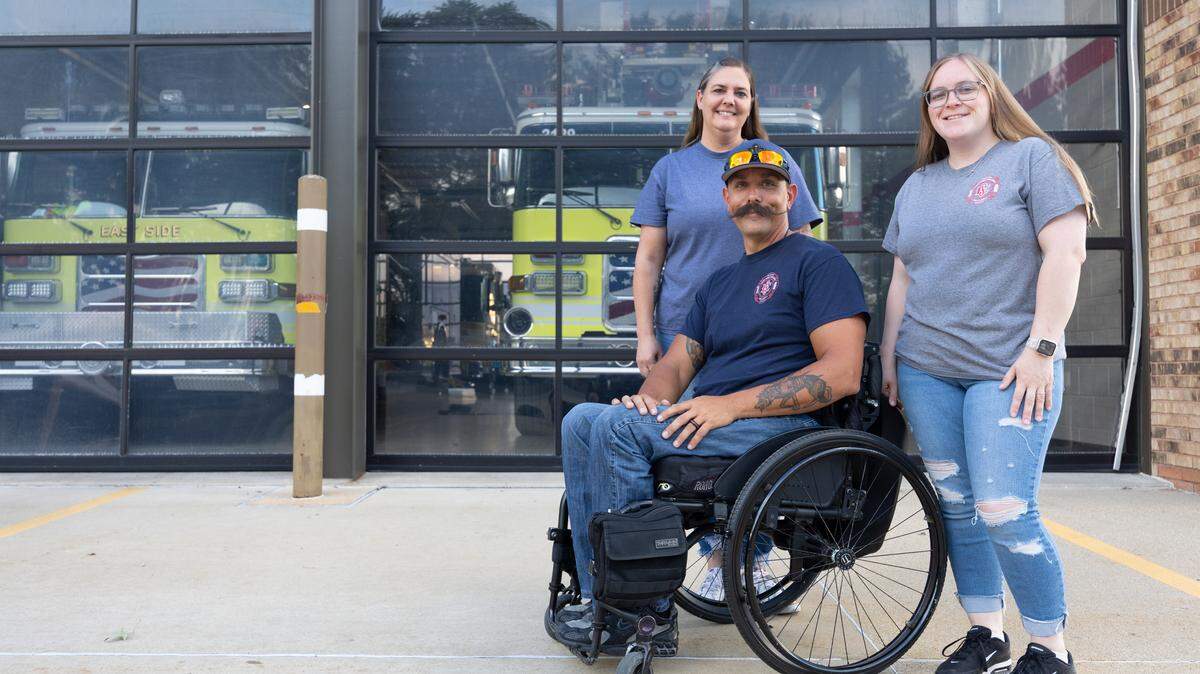
On Oct. 2, 2021, firefighter Brad Henke had just returned from Louisiana, where he and other volunteers from Belleville’s East Side Fire District were doing cleanup after Hurricane Ida. He’d only been back for two weeks and decided to pass some time riding his motorcycle.
But hurricane rains were still trickling into Illinois, and when Henke hit a slick sheet of pavement, his life changed forever.
“I hit a wet spot, ended up offroad and hit a cable that holds up a telephone pole,” Henke recalled, “It hit me right in the midsection and right around my belly button my back became two very separate pieces.”
Henke is now paralyzed from the waist down and requires the use of a wheelchair to get around. Right away, he knew falling into despair would only be counterproductive to his recovery.
“It could’ve been better, could’ve been worse,” Henke said. “I might have been willing to kill for some legs, but there were other guys in rehab with me who would’ve killed for my arms. Really puts things into perspective.”
When he was first paralyzed, Henke reached out to Brett’s First Responders, a nonprofit specifically designed to help public safety workers and their families after accidents occurring outside the line of duty. Brett’s First Responders was founded in 2020 by the family of Swansea firefighter Brett Korves after he was killed by a person evading police on the way home from a fire.
Founder Todd Korves said organizations like BackStoppers doing “incredible work for first responders,” but only if they’re affected in the line of duty, thus creating a gap he and his family felt compelled to fill.
“These people put their lives on the line every day, so we knew we needed to help,” Korves said.
Though Brett’s First Responders is based in Swansea, the organization never had contact with Henke prior to his accident. Reaching out to them was essential to getting his life back on track.
“Without them, I think I might have had to sell the house,” Henke said.
The nonprofit helped him cover some of his medical expenses, creating one less worry for the injured firefighter, whose first concern was his recovery.
But Henke has never been one to simply let life happen to him, and with the help of his wife, Patty and daughter Zoey Blanchard, he spent his recovery finding a niche in his new life. He found a routine, scheduled doctor visits and worked to identify his strengths and weaknesses.
“He really didn’t let it get him down,” said Patty Blanchard, “He just kept going, didn’t let it define him.”
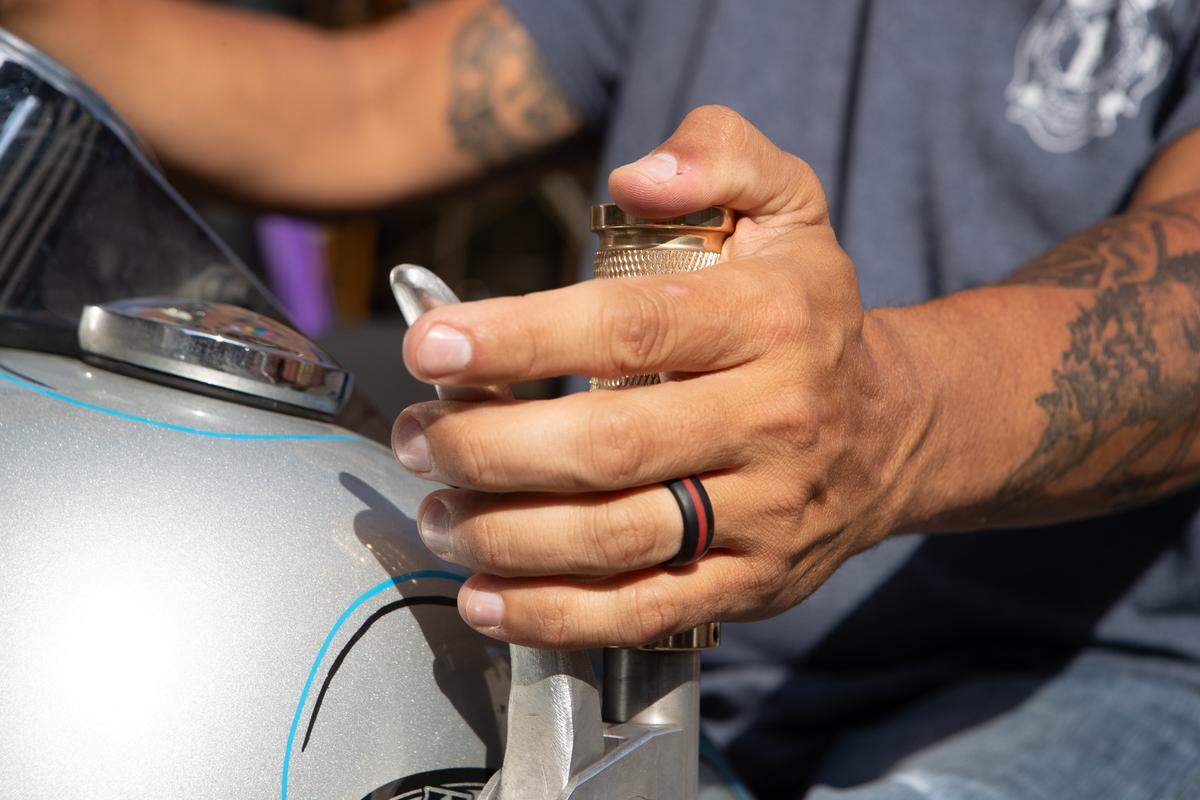
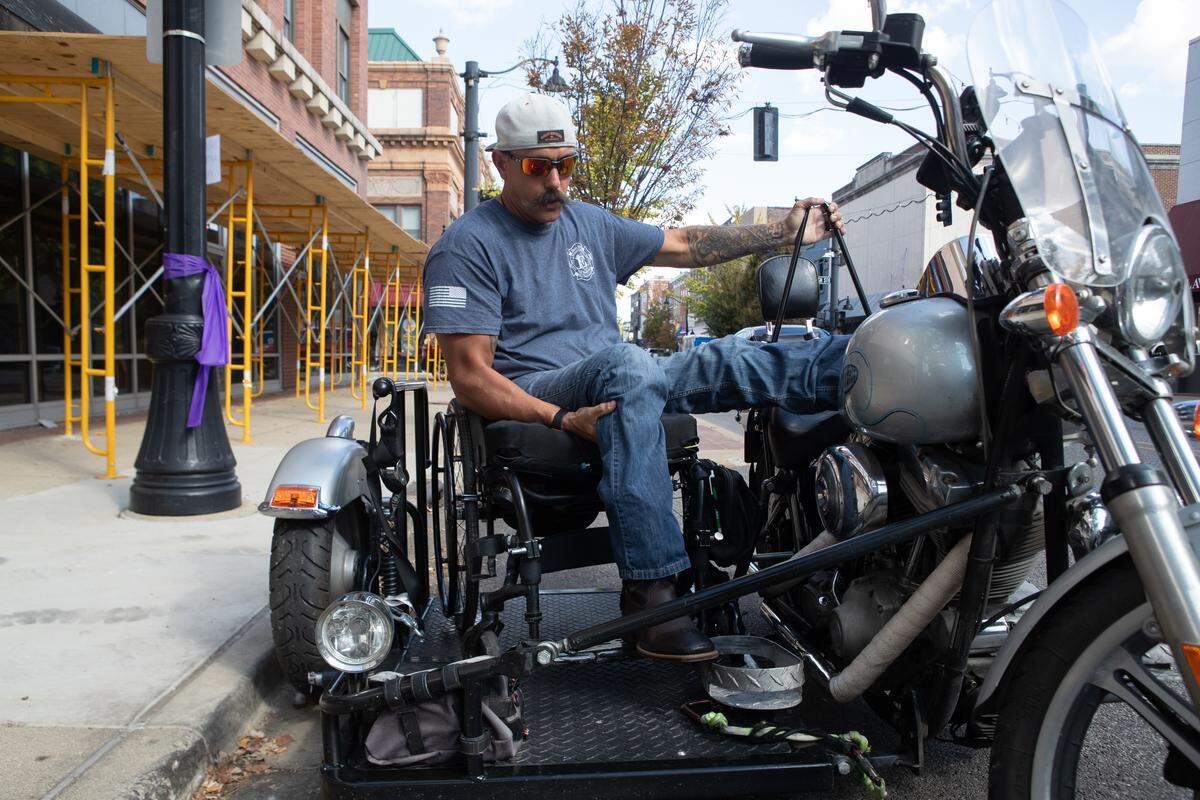
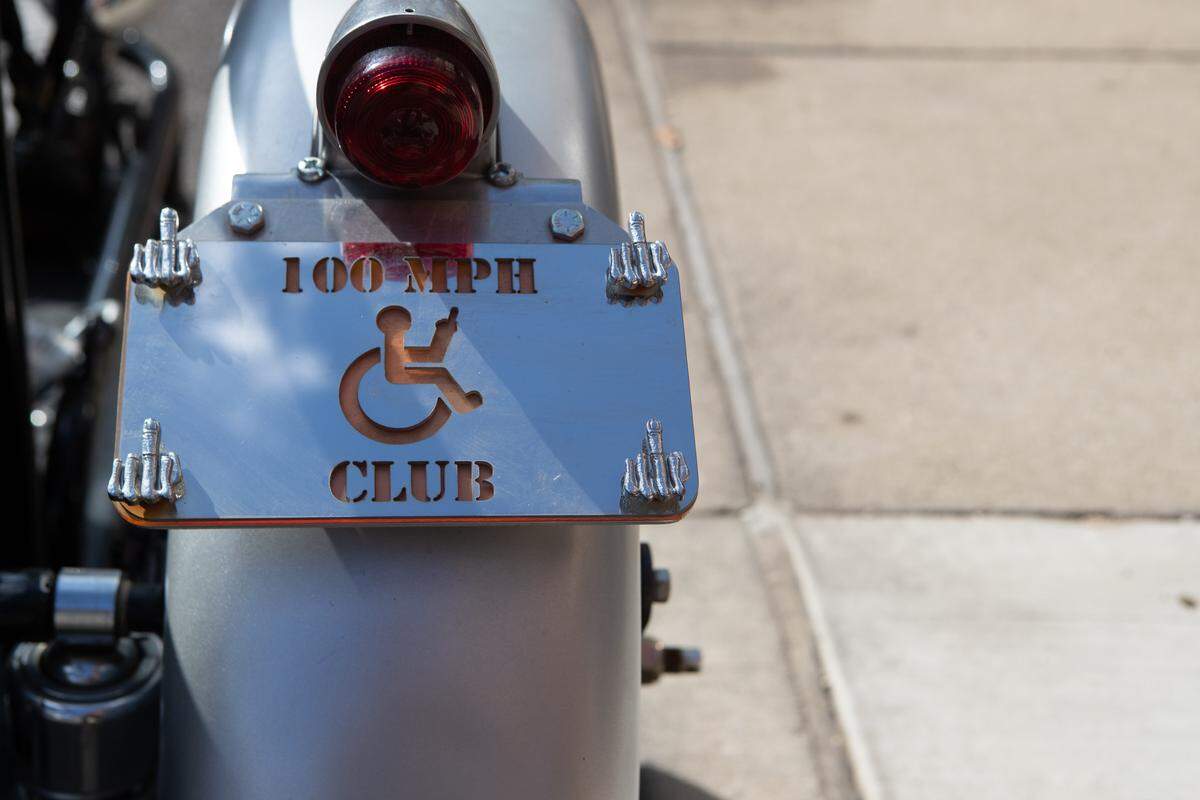
A special hand brake was built into his car, allowing him to drive without the use of his legs. A year after the incident, he and a friend finished a custom-built sidecar for his motorcycle that essentially turns it into a three-wheeler. It offers a platform for Henke to carry his wheelchair and easily mount from the rider’s seat.
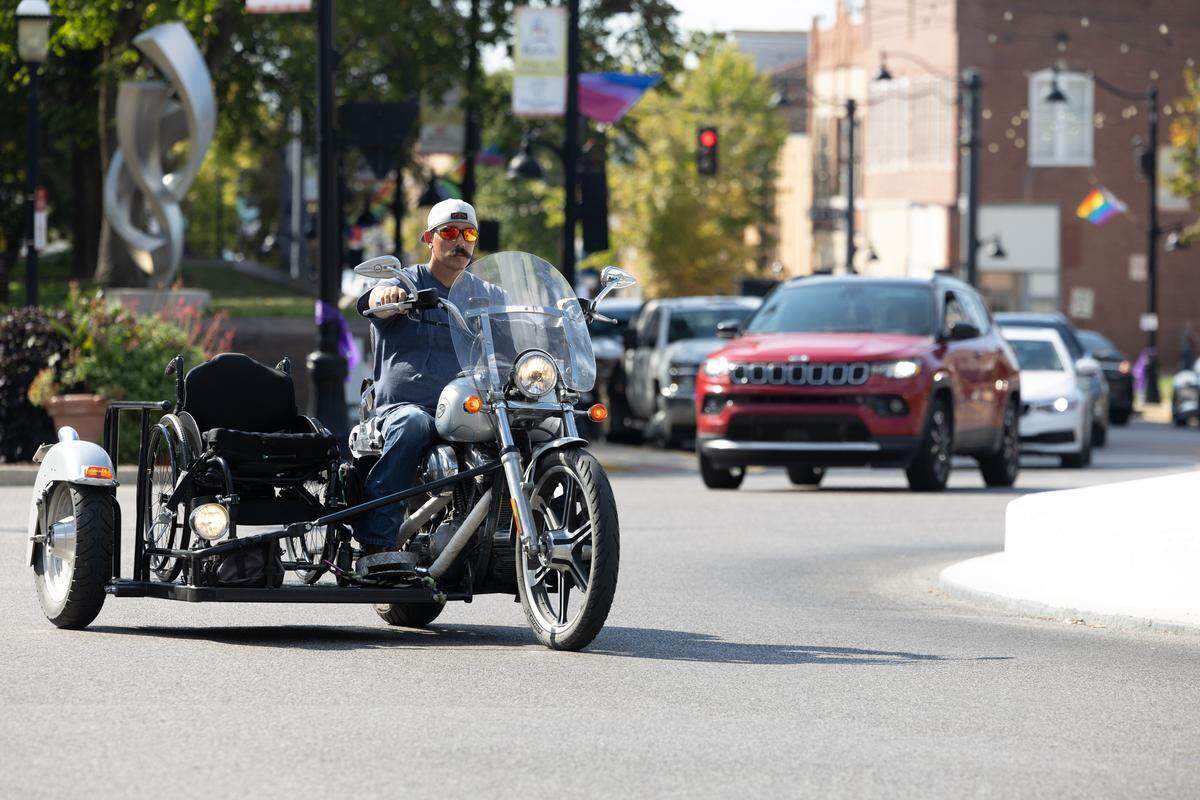
“Being able to ride really made me feel like I had a part of my life back,” Henke said.
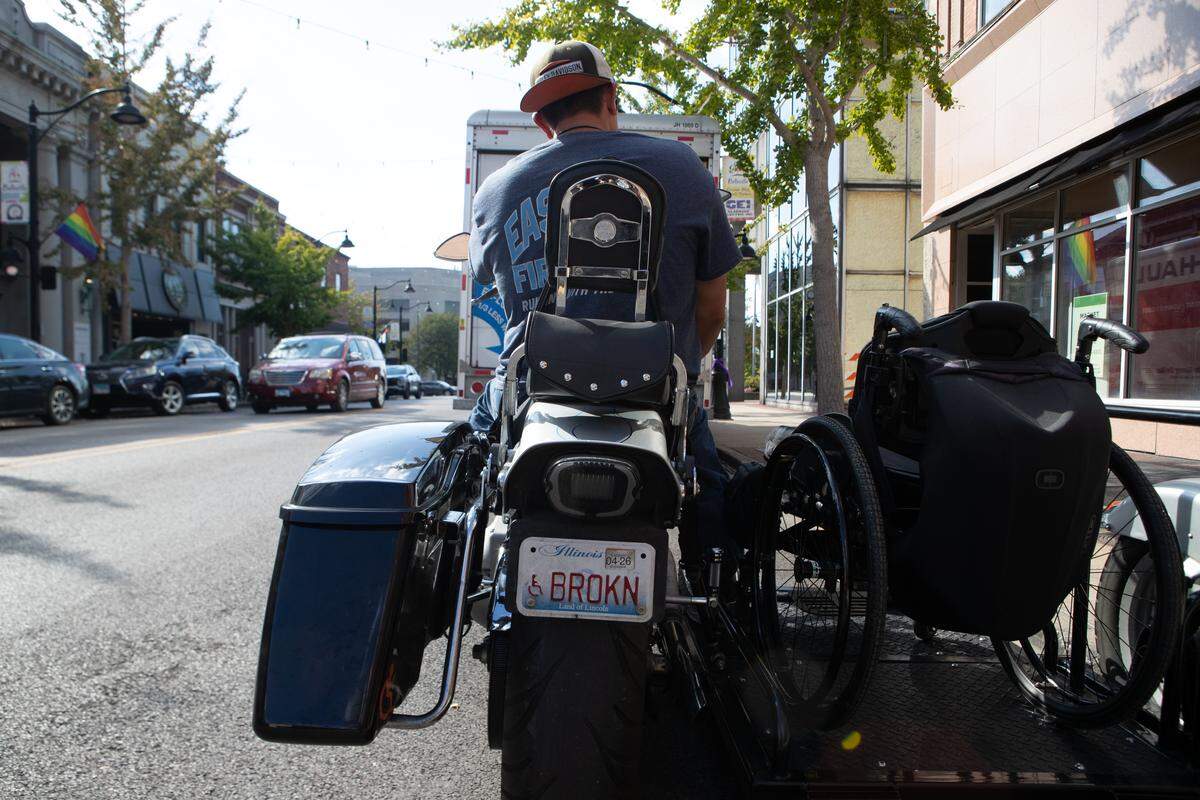
The custom motorcycle and sidecar made it all the way from Belleville to Kentucky. There, Henke raced a sports car against other people with disabilities in an eight-hour long endurance circuit and finished somewhere in the midfield.
“It was definitely one of the coolest things I’ve ever done,” Henke recalled with a smile.
With Henke’s old hobbies tailored to fit his new life, he now finds himself focused on a new goal — performing, at least in part, a 9/11 stair climbing event to honor the firefighters who responded to the collapse of the twin towers. He plans to do the event next September, though he’s not sure if he can “do the whole thing.”
“This time next year I’m going to be climbing those stairs,” Henke said. “Even if I can’t do it all, I can say I climbed them, despite it all.”
But in order to perform such a feat, he needs a pair of legs that can get him there.
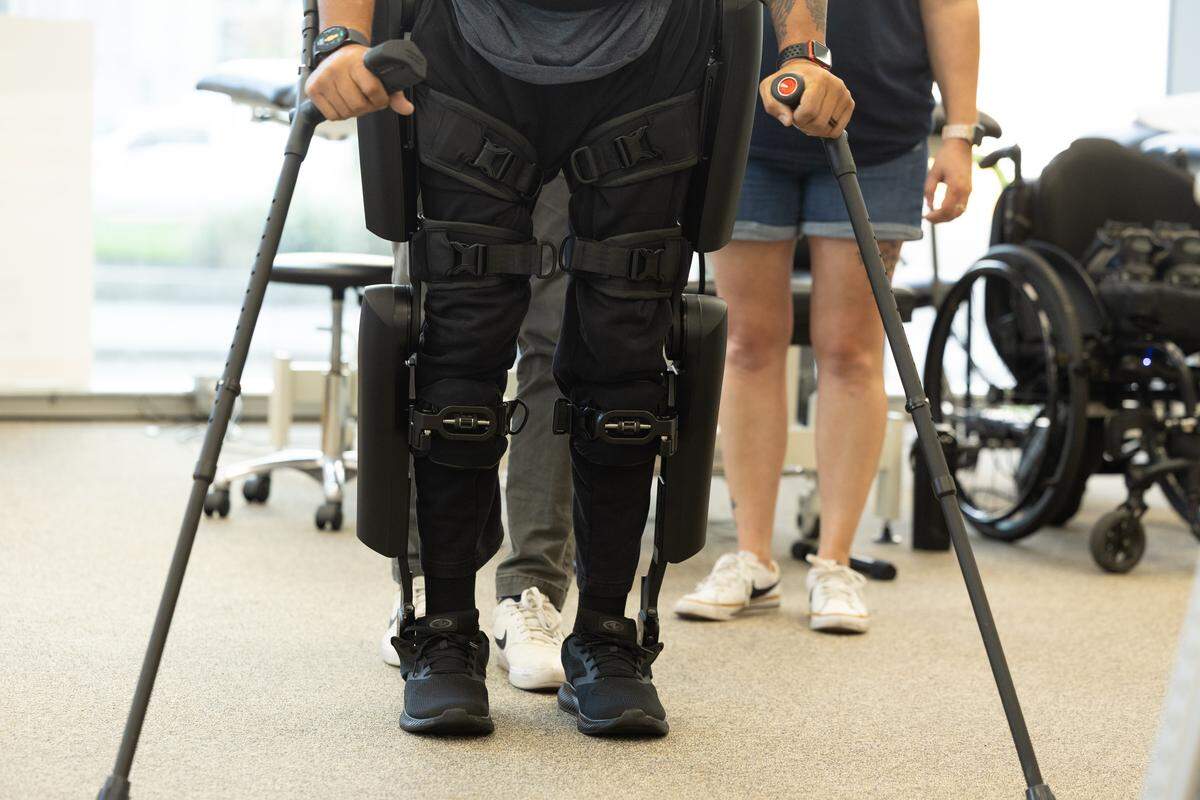
Henke learned about robotic exoskeletons while attending his weekly physical therapy.
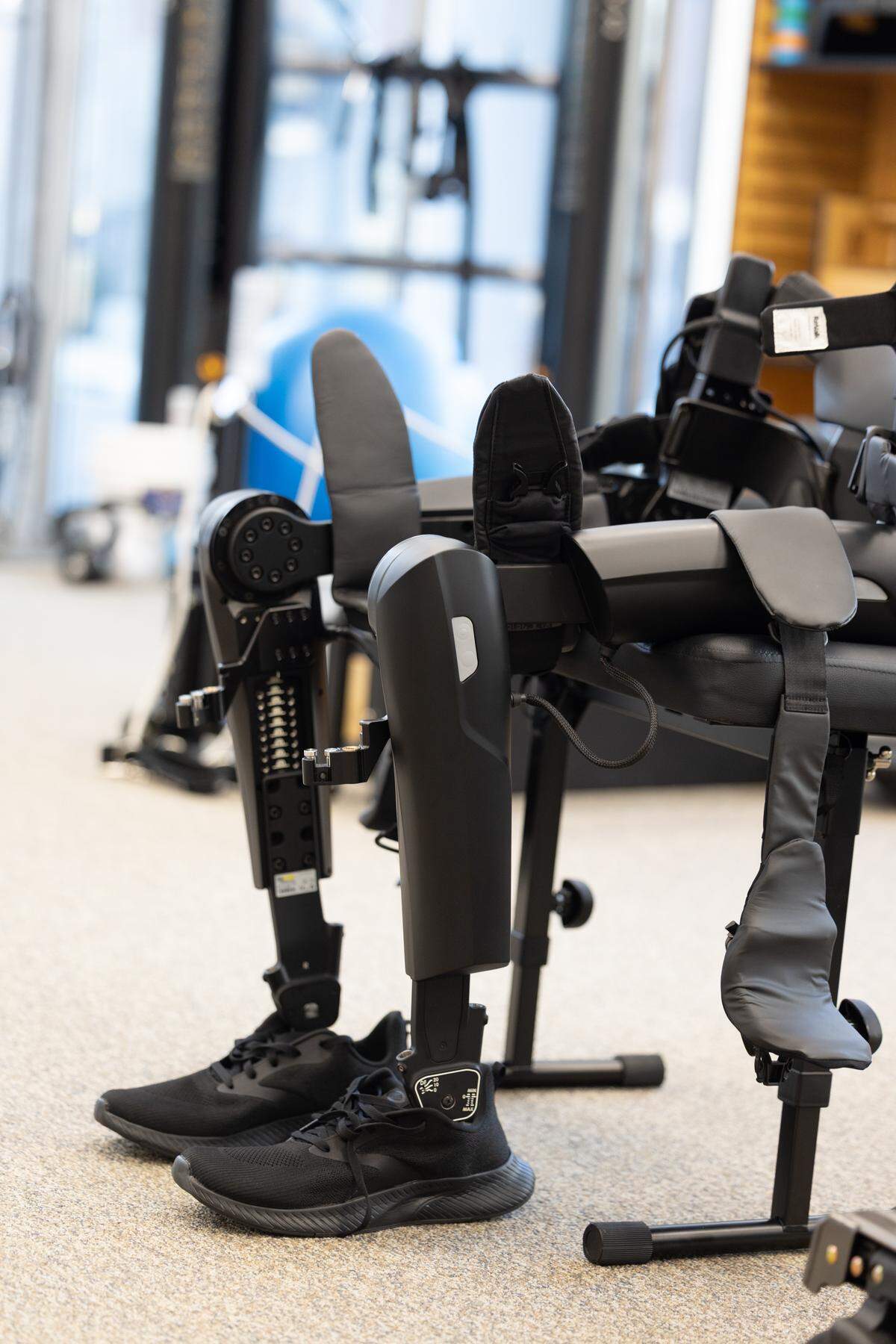
These high-tech systems consist of metal brackets supporting the legs, feet and torso, with straps securing the frame to a person’s body. The legs are controlled by an electronic cane or phone and have a battery life of more than six hours. With hydraulic power and a lot of physical therapy, a person experiencing bodily paralysis could expect a limited walking range.
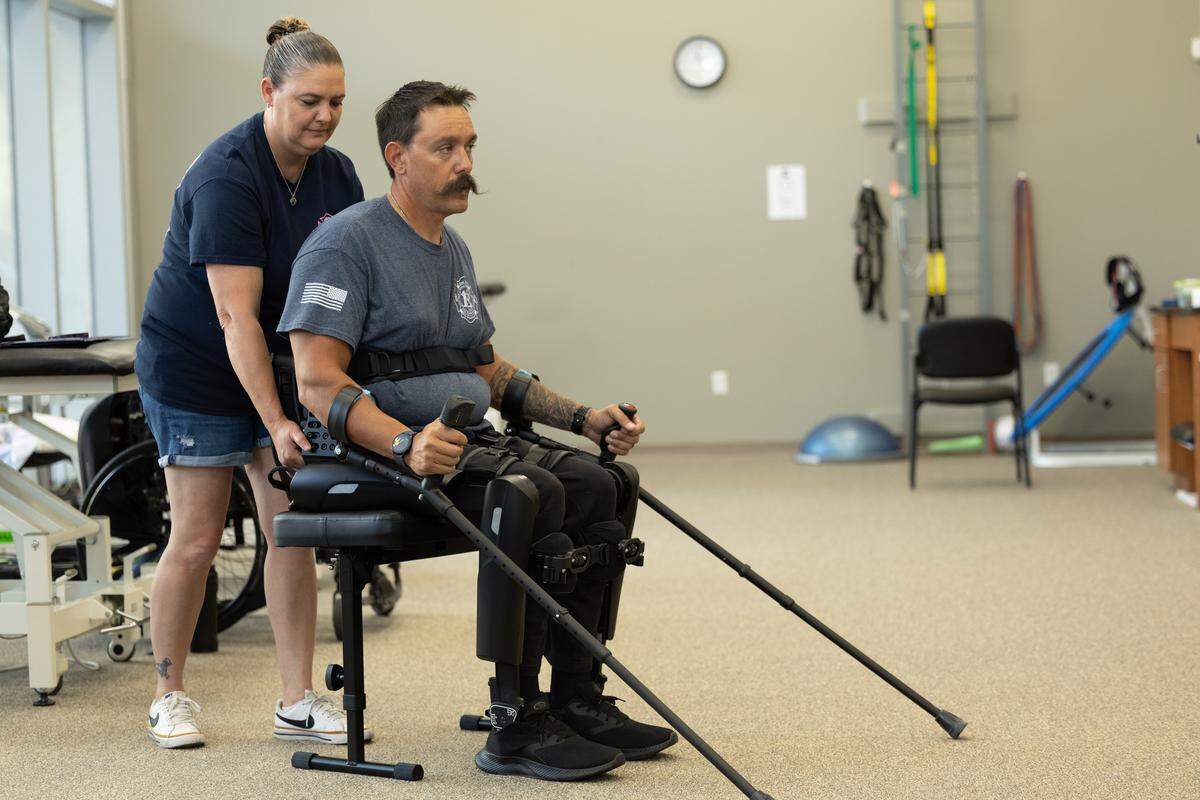
However, for Henke to qualify for the robotic legs, he had to meet several prerequisites.
At his full height, Henke is 6-feet and has dropped from an average of 260 pounds to a personal low of 180. Then came a series of qualifying tests to earn his robotic legs.
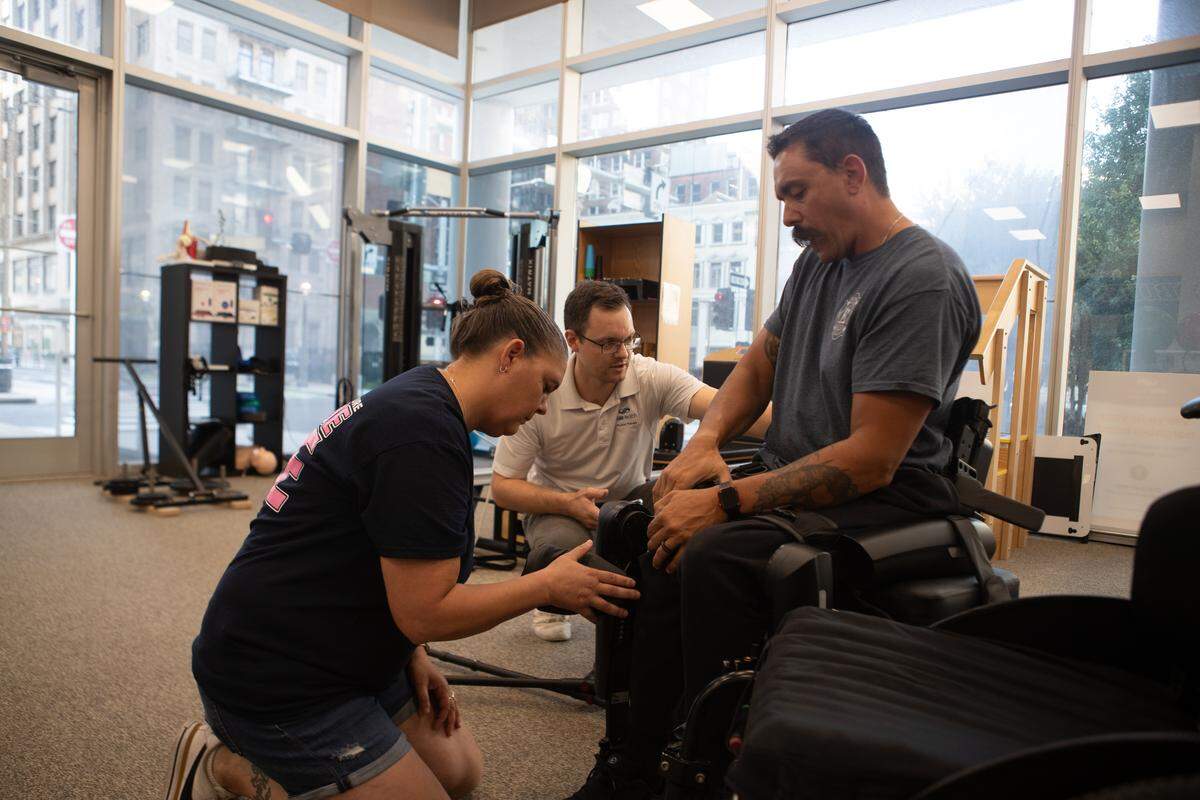
“I’m normally around 220, but when I got home from the accident, food tasted good and I got up to 260,” Henke recalled, “Medicare told me I needed to get down to 225 if I wanted to qualify, so I started taking it really seriously. Now I’m hovering around a solid 180.”
Now, he must regularly attend training sessions at SSM Health in St. Louis to master the tools, and progress is slow but steady.
“The first session was about three and a half hours and a bit of a struggle,” said Kevin Murray, Henke’s physical therapist.
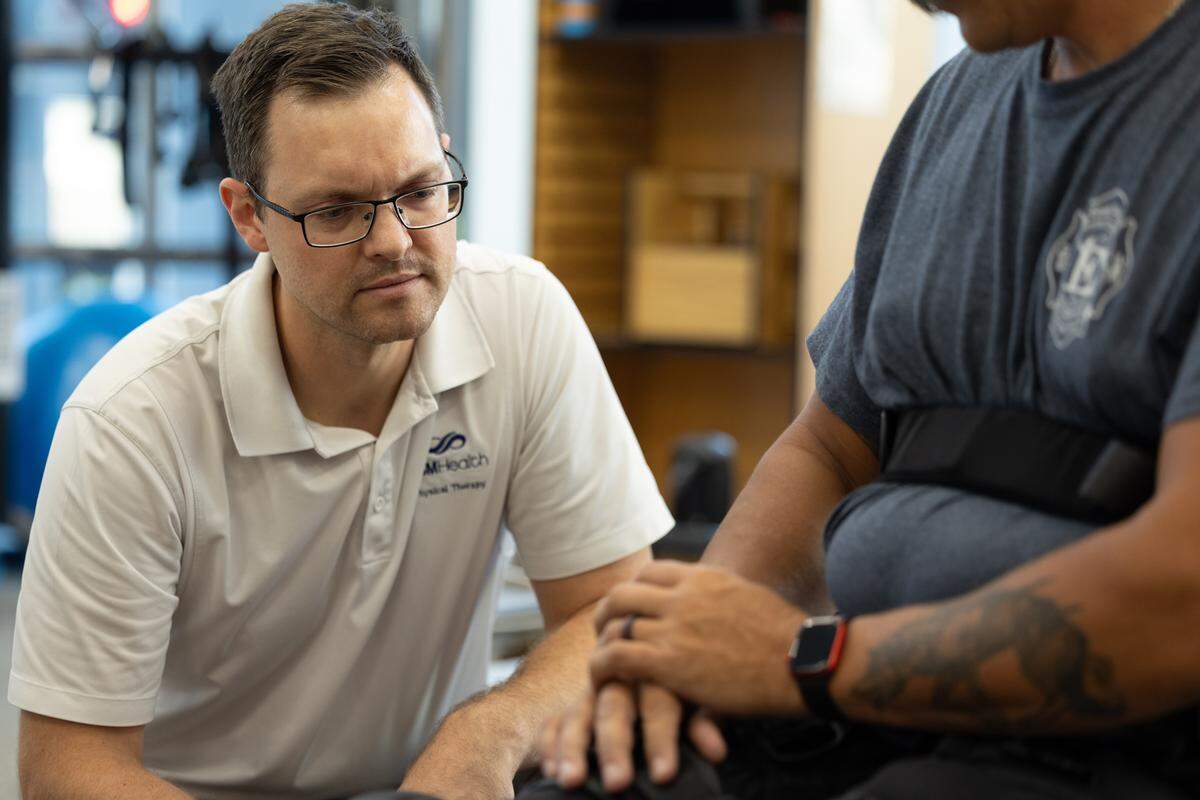
“But the progress since then has really been amazing. Some days are better than others, but it’s steadily getting better.”
Henke’s new legs are a somewhat recent technologic development. Murray said a representative for the company, ReWalk Professionals, had to come and train him how to use the special equipment.
The manufactured exoskeletons are becoming more common in tech hubs like the West Coast, at health care facilities such as Veterans Affairs hospitals . Their use is expanding, but Henke’s legs are the first of their kind at the St. Louis SSM Health location and are not particularly common in the metro-east or the St. Louis metropolitan area.
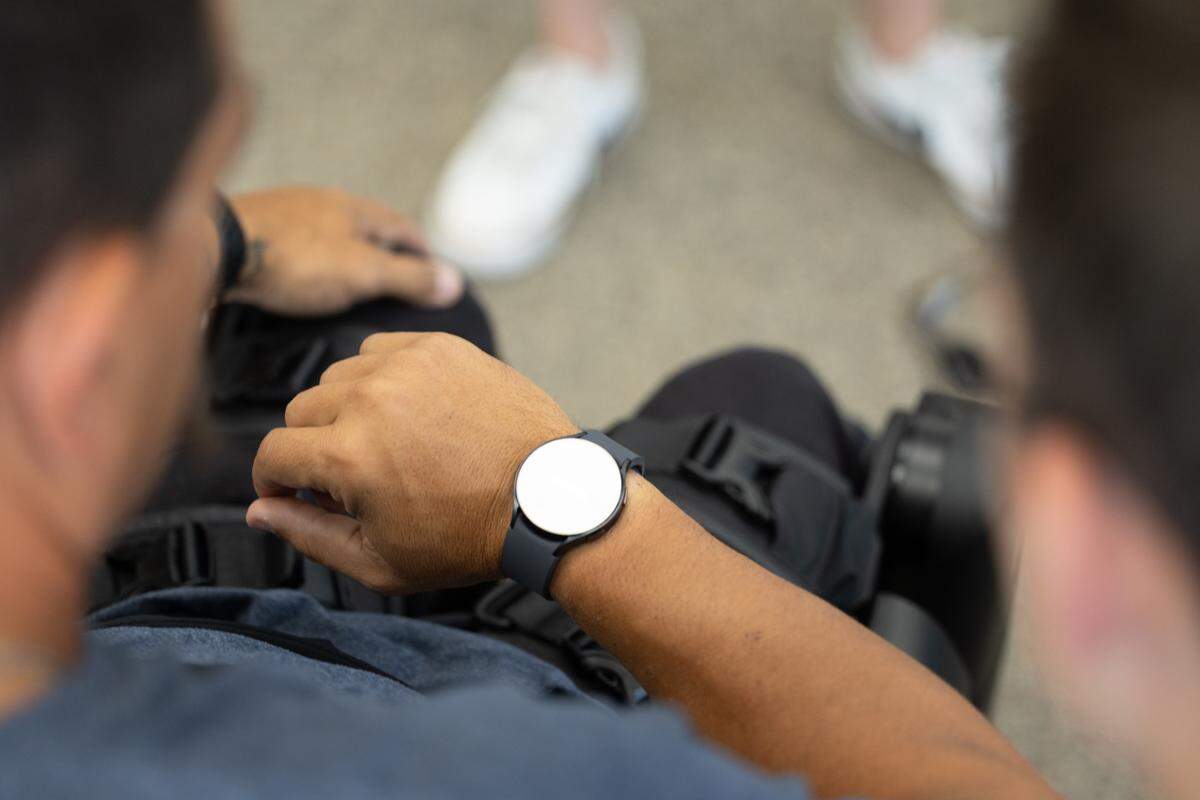
At a recent therapy and training session, Henke used his legs to stand and spent the rest of the time adjusting to make it more comfortable. With the legs he can stand and move, albeit with some difficulty. That difficulty will be lessened with practice and familiarity with the technology, according to his physical therapist.
The exoskeleton isn’t cheap, and according to Henke, “probably costs more than most cars.”
His insurance is covering his therapy and part of the skeleton, but other medical costs associated with the exoskeleton is a constant worry. Brett’s First Responders has been instrumental in helping the family stay afloat and pay for rehabilitation, but donations to make the transition and therapy easier are still needed.
The majority of the funding is going to go toward rehabilitation, repair and preventative maintenance costs, which Henke says are ongoing expenses. Family members say they’re grateful for all they’ve been given in the recovery process and are intent on maintaining a positive mindset.
“We went out to dinner the other day and kind of talked about everything we’ve been through, remembering when I was lying on the bed feeling half dead,” said Brad Henke. “We were driving a year later and now I might actually get a new pair of legs. Like I said, it could have been better, but it definitely could’ve been worse.”
To donate to the family’s GoFundMe, visit this link.
This story was originally published October 8, 2025 at 5:30 AM.