
Sentinel of the cemetery: Belleville’s ‘champion’ maple draws celebration, concern
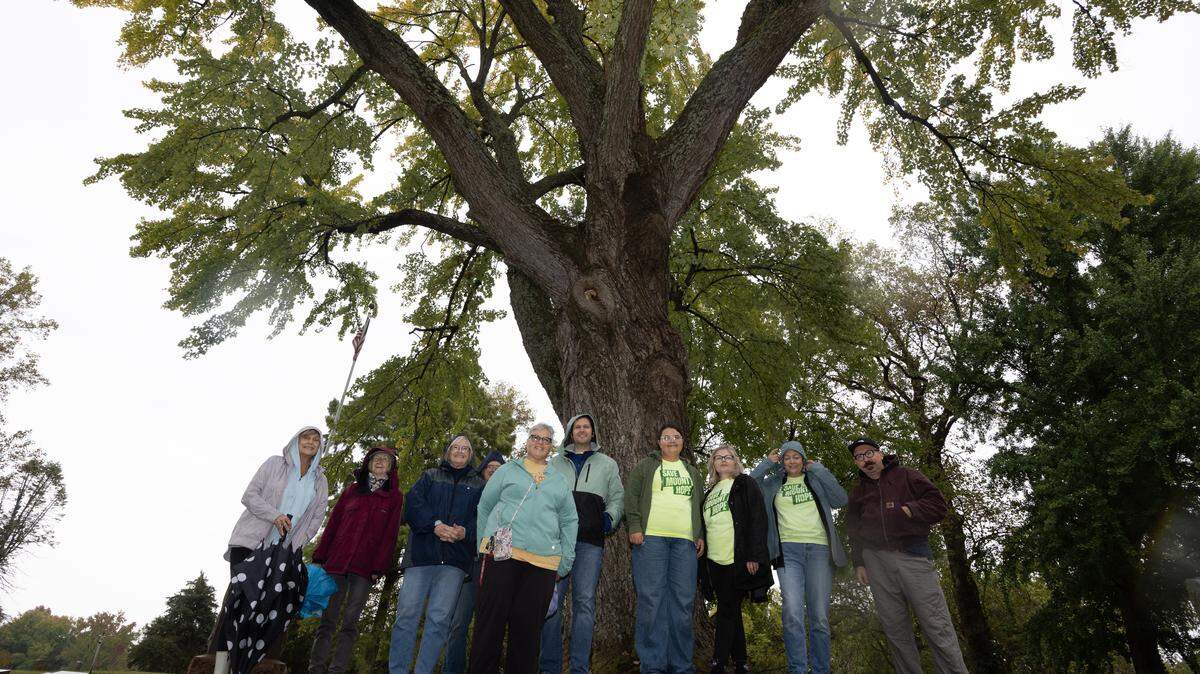
On the rainy afternoon of Sunday, Oct. 26, a group of 10 Belleville residents visited Mount Hope Cemetery for a celebration. It wasn’t in remembrance of a deceased loved one, but to celebrate a really big tree.
The tree is a 250-year-old “champion” red maple, so deemed by the University of Illinois for being the largest of its species known in the state. Many state universities with extensive forestry programs have champion tree programs, and Illinois’ has been running since 1962 as a citizen-led research and registry program.
The red maple, along with many others in the area, was nominated by Bill Fiedler, a local resident and registry enthusiast. Fiedler has been involved in the documentation and nomination of many other trees in the Metro East.
“Anyone can submit a tree to be considered for nomination,” Fiedler said, “Simply query Illinois Big Tree Register, complete the form correctly, add images and submit. Be sure to read and follow all instructions. Most common mistakes include misidentification of a tree, incorrect measurements and not clear images. If a mistake is possible, I have been guilty. You just keep going. Keep looking.”
Fiedler says he found the tree by simply taking a walk at Mount Hope. Acknowledging the size of the tree, he took it upon himself to measure the large tree and found it was larger than the previous champion. With a circumference of 14 feet, a height of 73 feet and a 96-foot spread, the massive red maple standing tall amid a sea of graves proved to be the largest known one in the state.
There are 184 trees listed in the registry and all are native to Illinois. Not all of them are “big,” such as the champion sandbar willow, which is only 30 feet tall and 20 inches in circumference, but they are the largest and likely oldest in their clade. Like Fiedler, many have taken to identifying these trees as a bit of a pastime.
“The majority of our champion trees are yet to be discovered — it’s kind of like a treasure hunt,” said Justin Vozzo, extension specialist in forestry for the University of Illinois at Urbana-Champaign. “A lot of people have taken it up as a hobby and become these sort of treasure hunters.”
There are six other champion trees in Belleville — a mockernut hickory, a white basswood, a green ash and a scarlet oak. All except two are located in parks or cemeteries, a feature common to many champion trees.
“A lot of trees can do well in a park setting, so in a cemetery or park they might have less competition and they don’t face the same threats,” Vozzo said, “Those trees can kind of last a long time because they have people taking care of them and watching them pretty closely.”
Vozzo says that light and water are also more abundant in places with open settings, such as parks and cemeteries. Here, the trees don’t have to grow past understories and have groundskeepers who regularly provide preventative and corrective maintenance.
The red maple is a five-minute walk from the entrance of Mount Hope and can be seen if one knows what they’re looking for. During Sunday’s celebratory event, a small crowd of cemetery-goers moved from the maintenance building near the entrance and walked through the rain to celebrate the tree.
Many of those in attendance Sunday were members of Save Mount Hope, a local group dedicated to the preservation of the cemetery. While the group normally advocates for care and natural appreciation of the property, lately they’ve been organizing resistance against the city’s plan to build a solar panel array on the cemetery. “I think this just really shows why it’s important to protect the cemetery,” said Natalie Wilson, who is involved in the group and has been outspoken against the array’s development.
While the tree isn’t in the area where the solar panel is being developed, it sits very near the road where construction vehicles will travel to get to the site.
Members of Save Mount Hope are concerned that such an old tree might have long roots that could be damaged by construction equipment traversing the narrow roads, which citizens and former city zoning inspector Cliff Cross cited as concerns in the past. At a recent August meeting between developers and residents, a representative for the solar company said that any roads being damaged would be repaired in the future at the company’s expense.
If a service road is developed, as former zoning inspector Cliff Cross suggested in a 2024 city council meeting, it will still pass near the tree, since it is central to virtually all points.
Amy Clark, who is also in the Save Mount Hope group, says the tree is more than just a champion tree, but a symbol of the cemetery itself worthy of conservation.
“The tree stands right in the middle, you can’t go anywhere in the cemetery without passing by it,” Clark said. “It’s like the sentinel of the cemetery.”