Belleville roundabout plan approved after 15 years; four alderpersons vote no
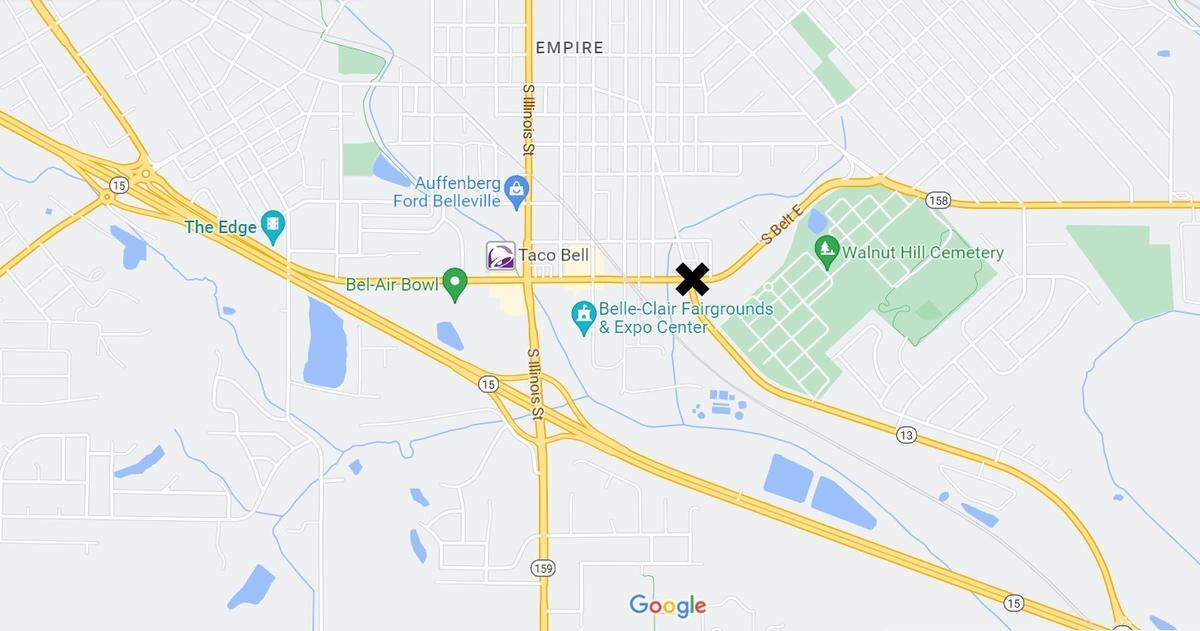
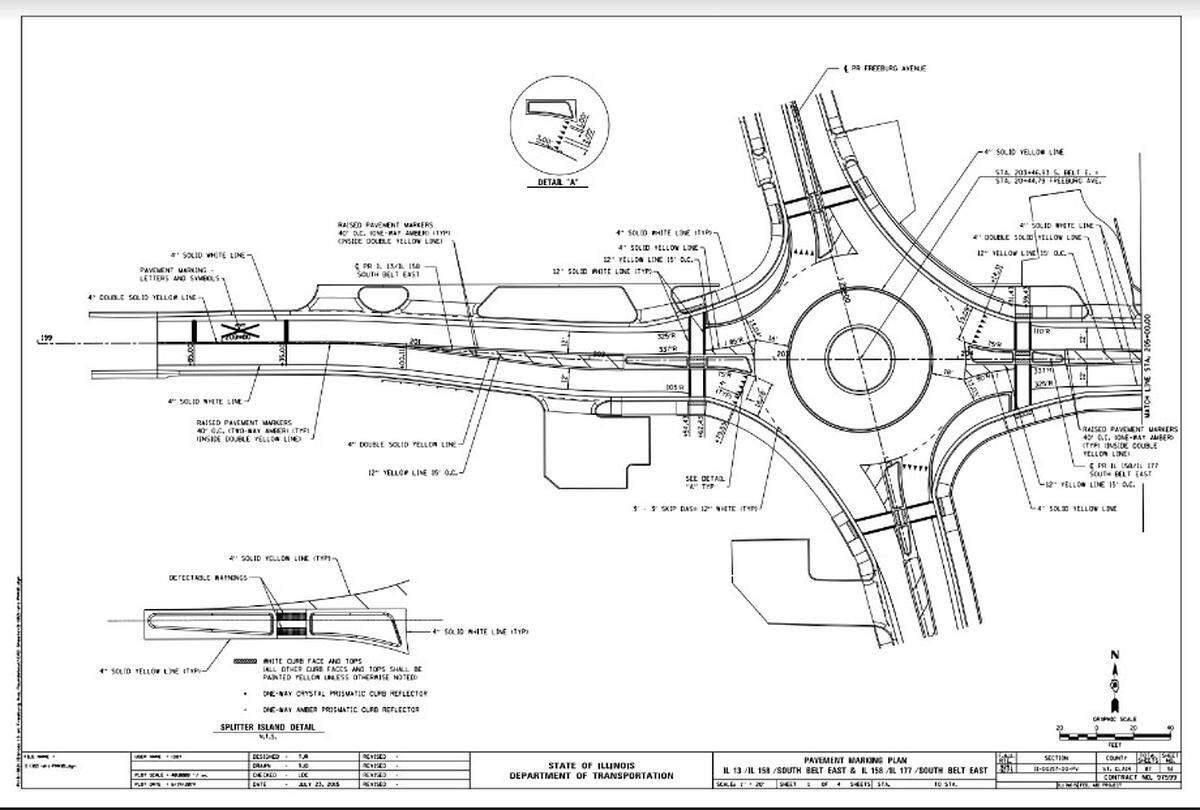
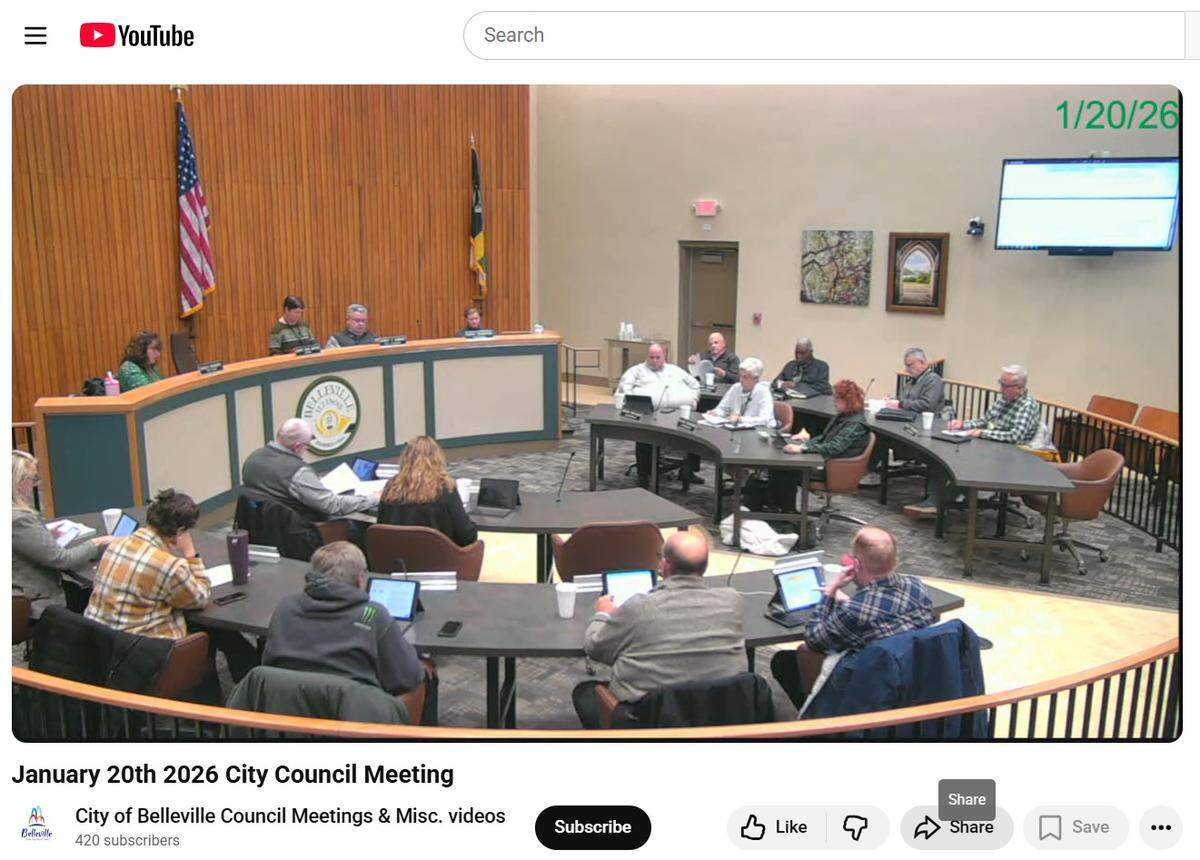
Belleville City Council voted 10-4 this week to give final approval to a plan to build a roundabout at the intersection of South Belt East and Freeburg Avenue, near Walnut Hill Cemetery.
Construction on the nearly $4.73 million project will begin late this year or early next year, according to officials.
The roundabout has been on the city’s drawing board for 15 years. Hurdles ranged from budgetary constraints to changes in state requirements to a contract dispute with a local engineering firm.
City Engineer Scott Saeger said the plan will become a reality this time because the Illinois Department of Transportation increased its funding, and contractors will completely close the intersection for periods of time to reduce construction costs.
“I like roundabouts,” Saeger said. “I think they help traffic flow, and it is needed (at that location). There are school buses that go through there, and traffic gets backed up when people are waiting for trains.”
Saeger also noted that activity in the area is expected to increase with the revitalization of nearby Belle-Clair Fairgrounds Park.
The intersection now is a four-way stop. Three legs are under IDOT oversight because Freeburg Avenue doubles as Illinois 13 and South Belt East is part of Illinois 13, Illinois 158 and Illinois 177.
Open-ended agreement
Four Belleville City Council members voted “no” on four roundabout-related action items at their meeting Monday night. At least two opposed open-ended language in a cost-sharing agreement with IDOT.
Ward 1 Alderpersons Bryan Whitaker and Lillian Schneider have described the agreement as “like a blank check.” Whitaker couldn’t be reached for further comment.
“They can come back and ask for more money if they need it,” Schneider said Thursday.
Belleville and its engineering contractor, Kaskaskia Engineering Group, estimate total construction costs at $4,728,000. That includes $3,500,000 from the state, $748,000 from a federal grant and $480,000 from the city.
However, the agreement requires the city to pay more if the construction contractor’s bid comes in higher.
Whitaker brought this up as an issue of concern at the last City Council meeting on Jan. 5, and Saeger agreed to discuss it with IDOT. This week, Saeger said the state’s position remained firm.
“They said it’s typical for this type of agreement that the city would make up the difference between the engineer’s estimate and the contractor’s bid,” Saeger said. “It’s not unique.”
Alderman questions necessity
Also voting “no” on the roundabout Monday night were Ward 2 Alderwoman Gigi Dowling Urban and Ward 4 Alderman Raffi Ovian. Urban couldn’t be reached for comment.
Ovian said arguments in favor of the project at a Streets and Grades Committee meeting seemed to focus on money that the city had already spent to plan it, not on whether it was really needed.
Ovian said traffic problems at the intersection are largely limited to times when trains cross South Belt East, and the city never tried a less-expensive, “old-fashioned” approach.
“Why don’t we install a red light and see how that works?” he asked.
The four roundabout-related action items approved Monday night included a motion to appropriate the $480,000 in funds from the city’s “TIF 3” tax-increment-financing district and a motion to enter into the cost-sharing agreement with IDOT.
Alderpersons also voted on a second agreement with IDOT, taking responsibility for maintenance of streetlights, curbs and gutters, storm sewers and a retaining wall at the intersection. The fourth action item was a resolution allowing tax money to be spent.
Voting in favor of the roundabout were Ward 3 Aldermen Kent Randle and Scott Ferguson, Ward 4 Alderman Johnnie Anthony, Ward 5 Alderpersons Ed Dintelman and Kathy Kaiser, Ward 6 Alderman Chris Rothweiler, Ward 7 Aldermen Phil Elmore and Dennis Weygandt and Ward 8 Alderwomen Kara Osthoff and Nora Sullivan. Ward 2 Alderwoman Carmen Duco and Ward 6 Alderwoman Mary Stiehl were absent.
Strategy for closures
Bryan Donze, Kaskaskia’s vice president of engineering, said officials were able to significantly reduce construction costs for the roundabout with a strategy of closing the intersection for periods of time instead of leaving lanes open.
Donze said the state is prohibiting closures at times when Belleville Public Square is blocked off for parades or festivals, so the contractor will have to work around those activities.
Donze expects the project to go out for bids in June.
“It would potentially be late this year that construction would start,” he said, noting that preparations such as tree-trimming and utility work would be first on the agenda.
The roundabout proposal originated with a $748,000 federal grant that the city of Belleville acquired through the Congestion Mitigation and Air Quality Improvement Program.
Kaskaskia designed the roundabout in 2011 and redesigned it four years later, based on new IDOT requirements and changes requested by adjacent property owners.
Budgetary constraints and other city priorities delayed the project, according to officials. Then the administration of former Mayor Patty Gregory got into a contract dispute with Kaskaskia.
The roundabout seemed to be back on track in 2023, when officials were planning to request bids that fall and start construction the following spring. But that never materialized.
Saeger said rising construction costs had increased the city’s responsibility from about $1.8 to $3.7 million, out of a total $5.5 million estimated at the time, so officials needed more time to consider design changes and look for alternative funding sources.