Belleville’s historic courthouse columns may reappear as backdrop to new park
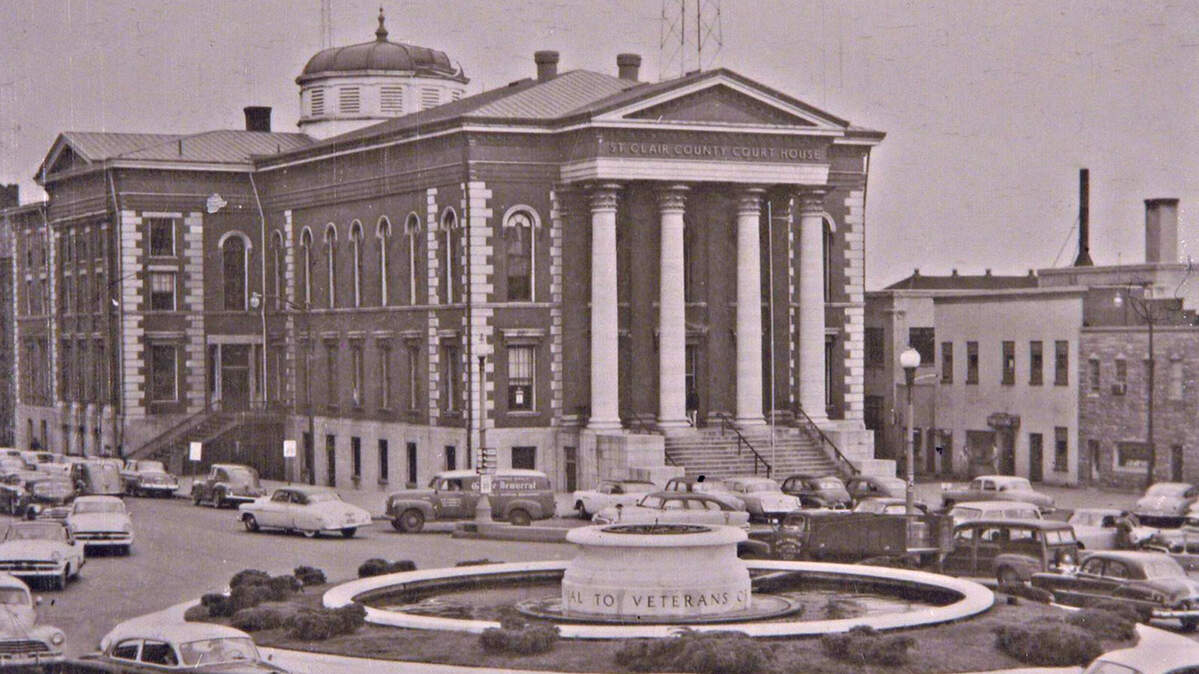
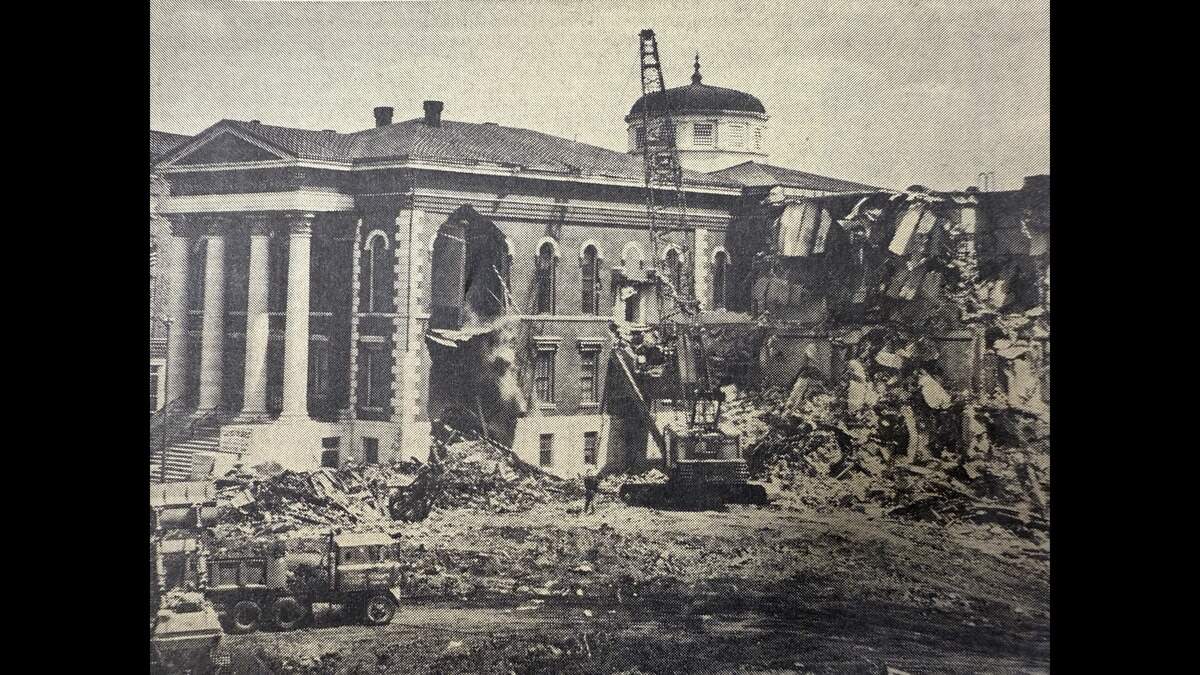
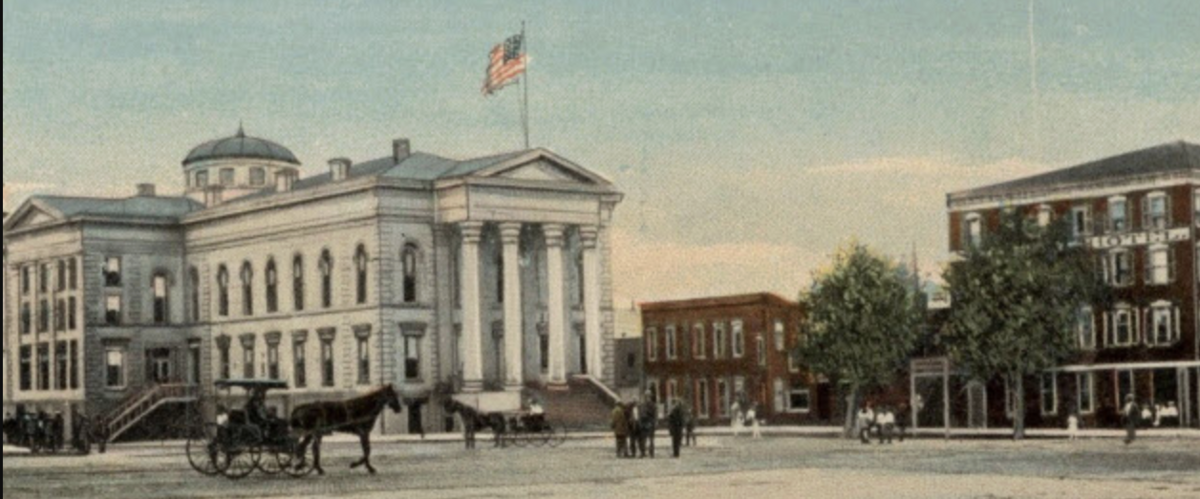
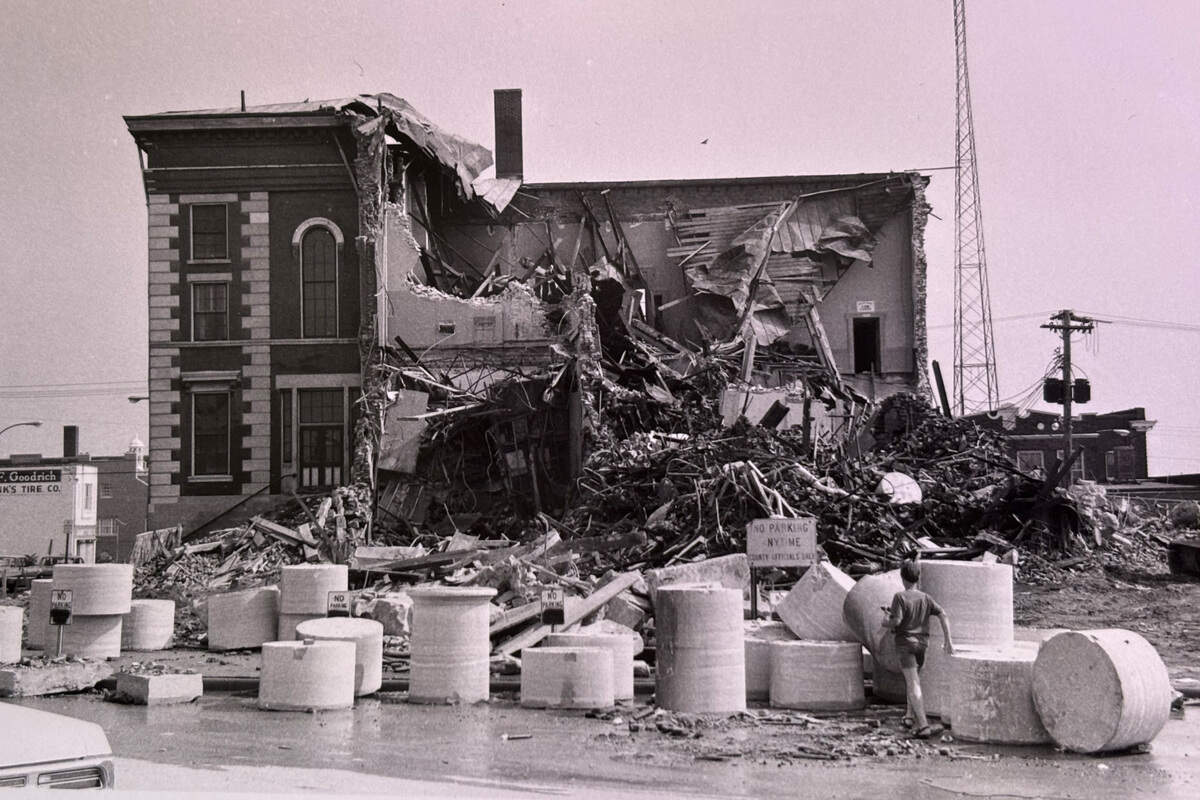
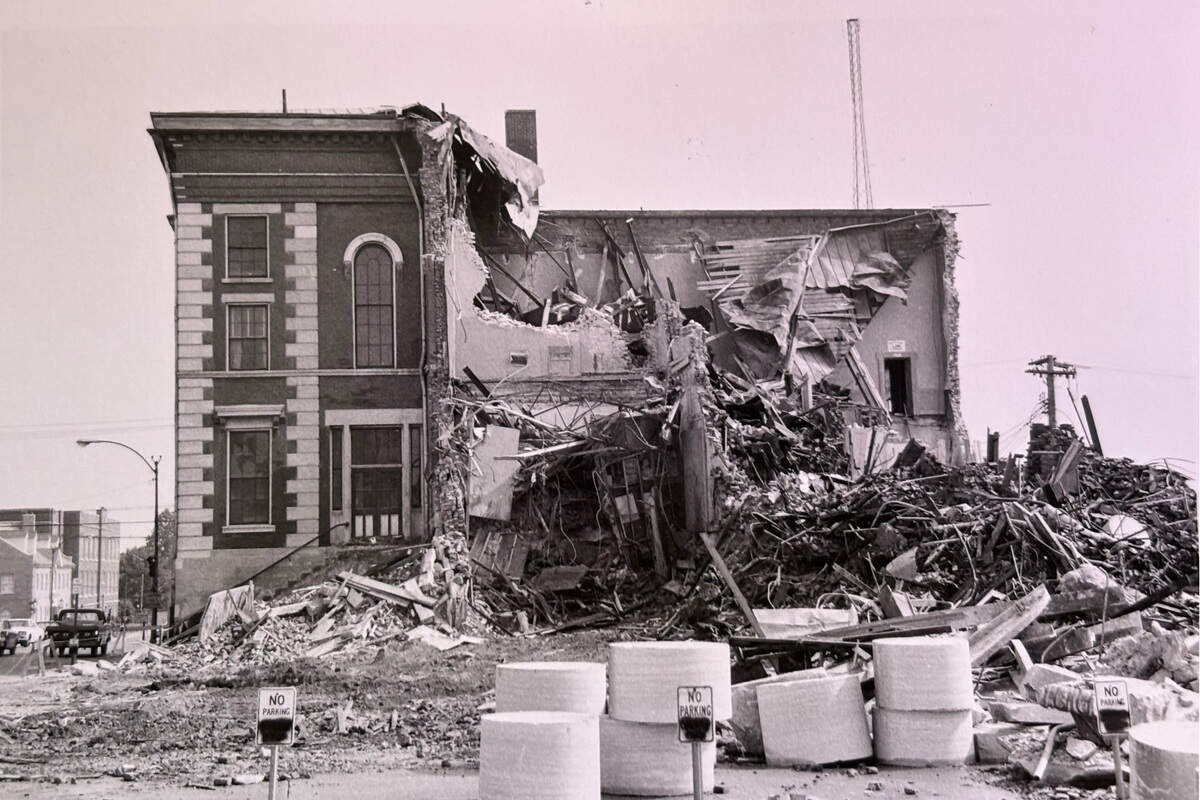
Before the 19th-century St. Clair County Courthouse in downtown Belleville was demolished in 1972, thousands of residents signed a petition urging officials to save it.
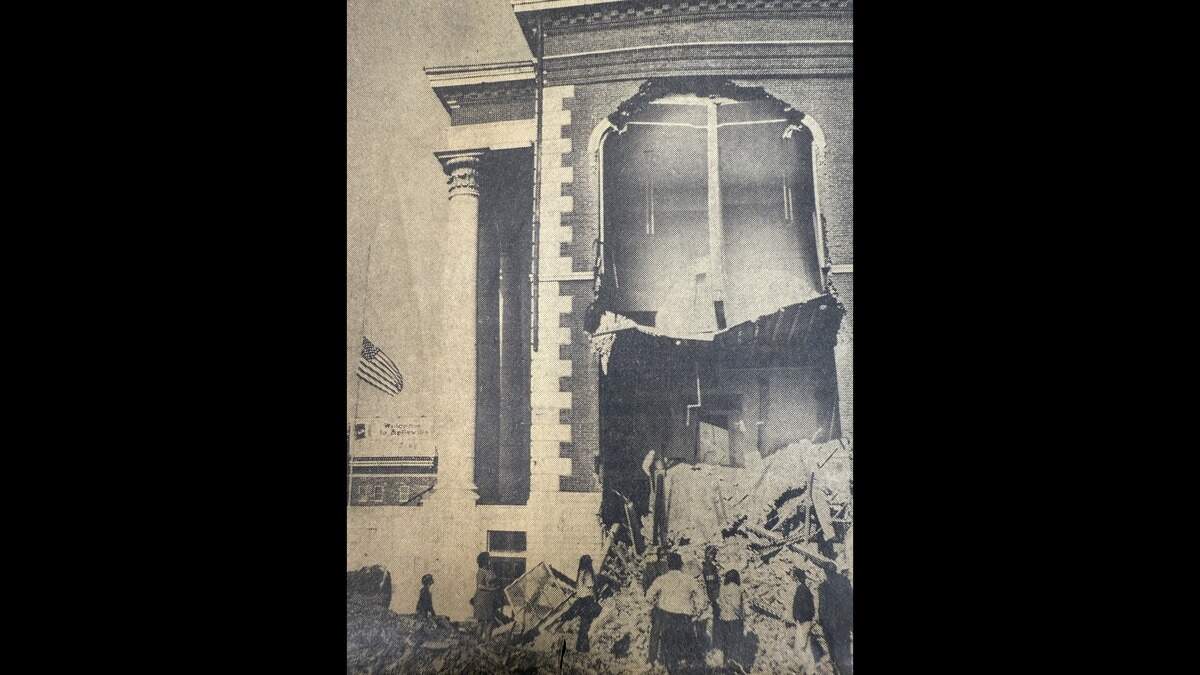
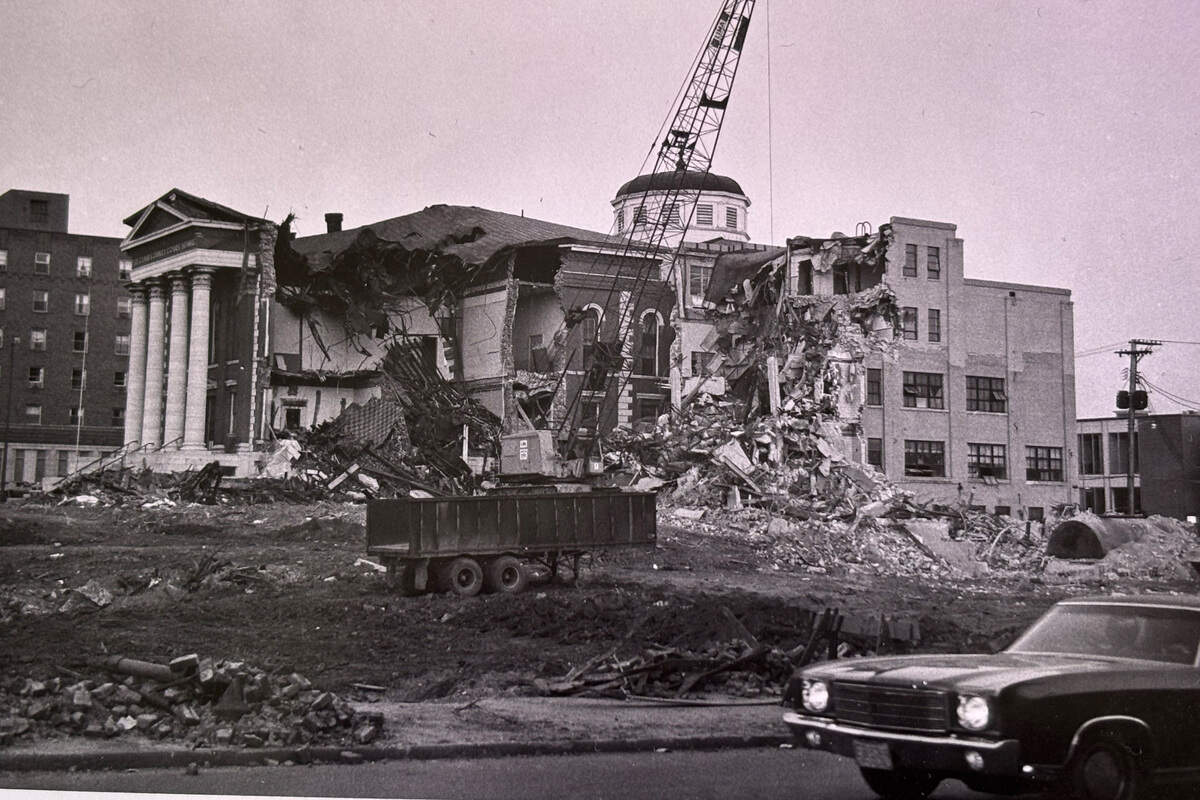
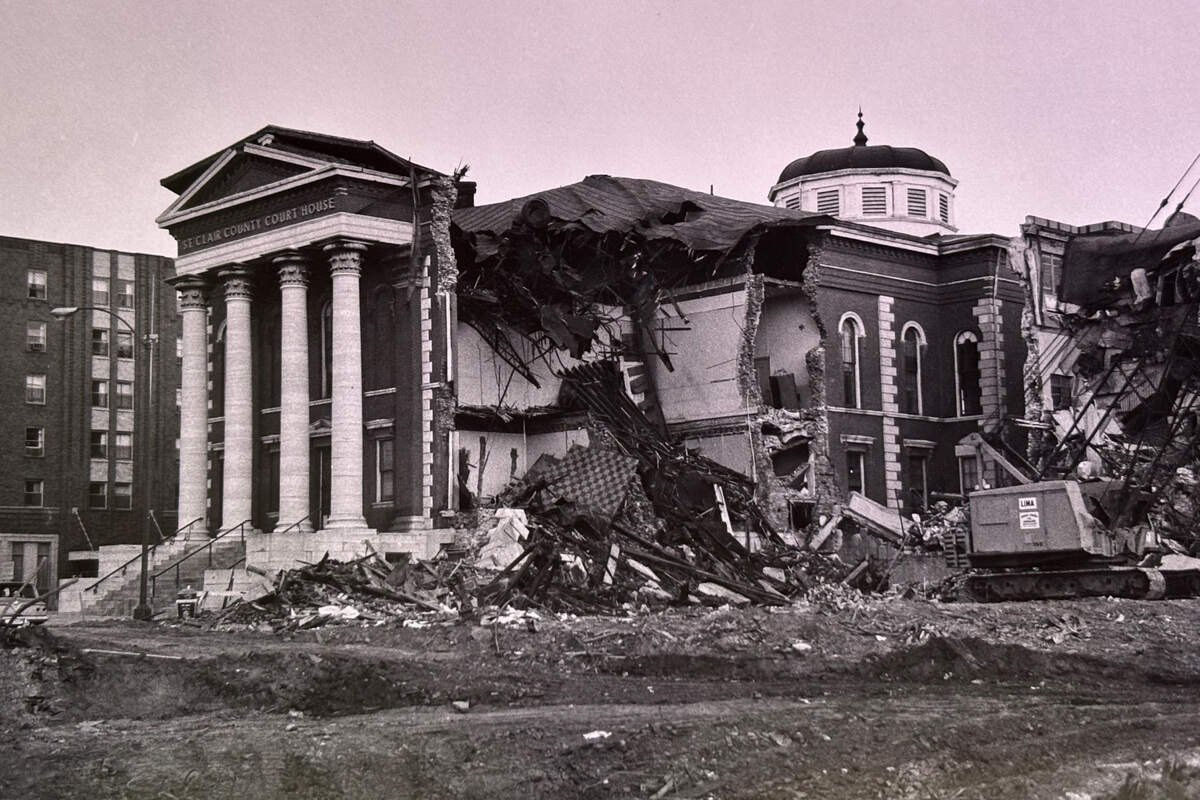
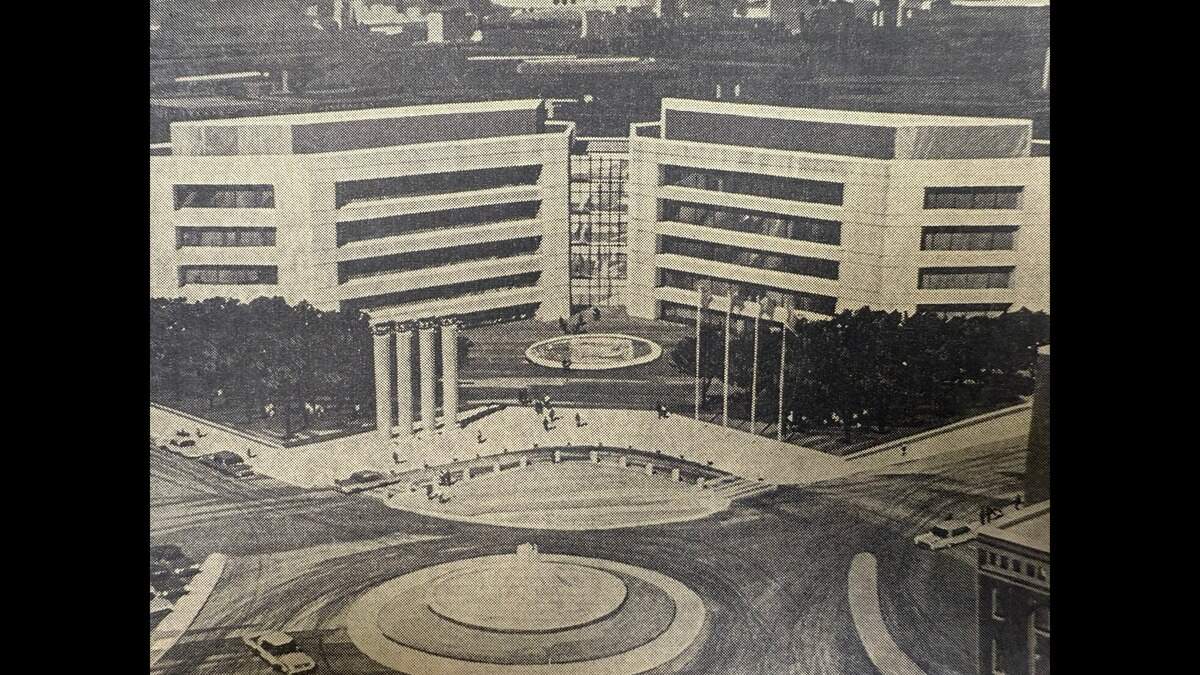
But the legal fight launched by the Citizens Courthouse Committee was unsuccessful, and the courthouse that towered above the Public Square was torn down to make way for the new St. Clair County Building.
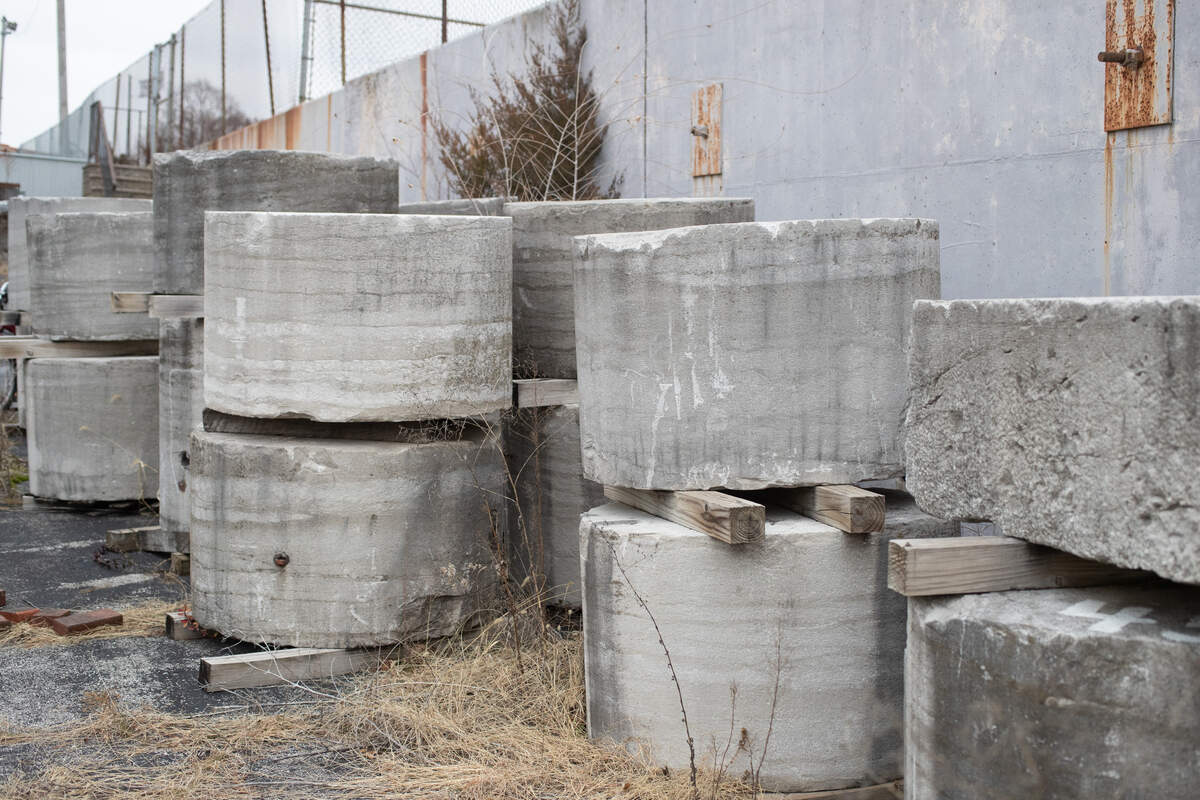
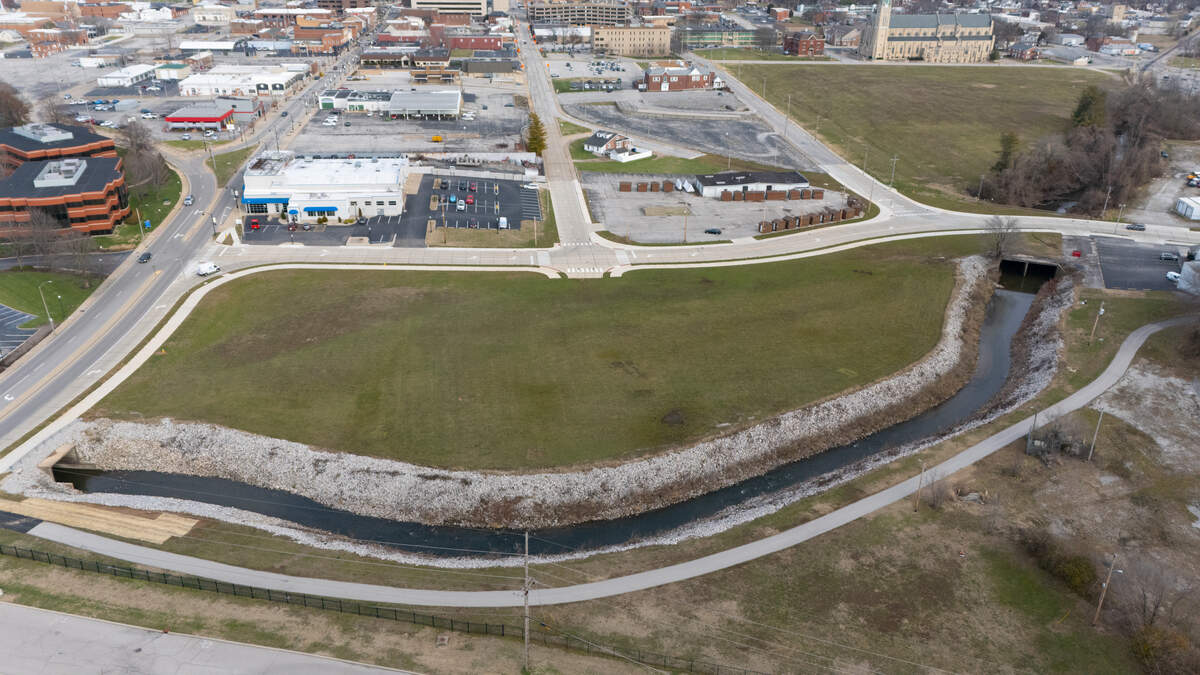
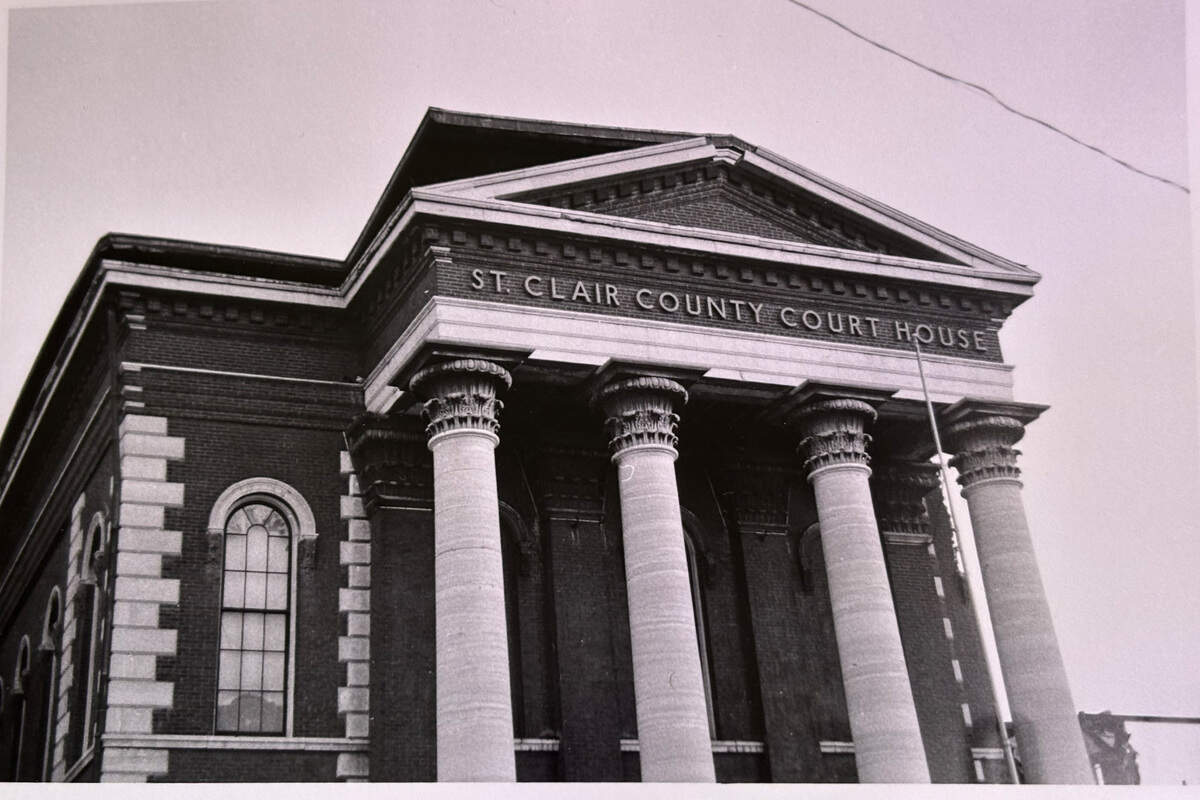
Segments of the 1861 courthouse’s four limestone columns on the portico were salvaged from demolition. After years of urging by historic preservationists, they may yet find a home in a new park being discussed by city officials on about six acres of city-owned land in the 600 block of West Main Street.
A “concept only” rendering from late last year shows some of the limestone segments stacked to form four columns about 14 feet high. They would then serve as a backdrop for a performance venue called the “Old Courthouse Memorial Stage.”
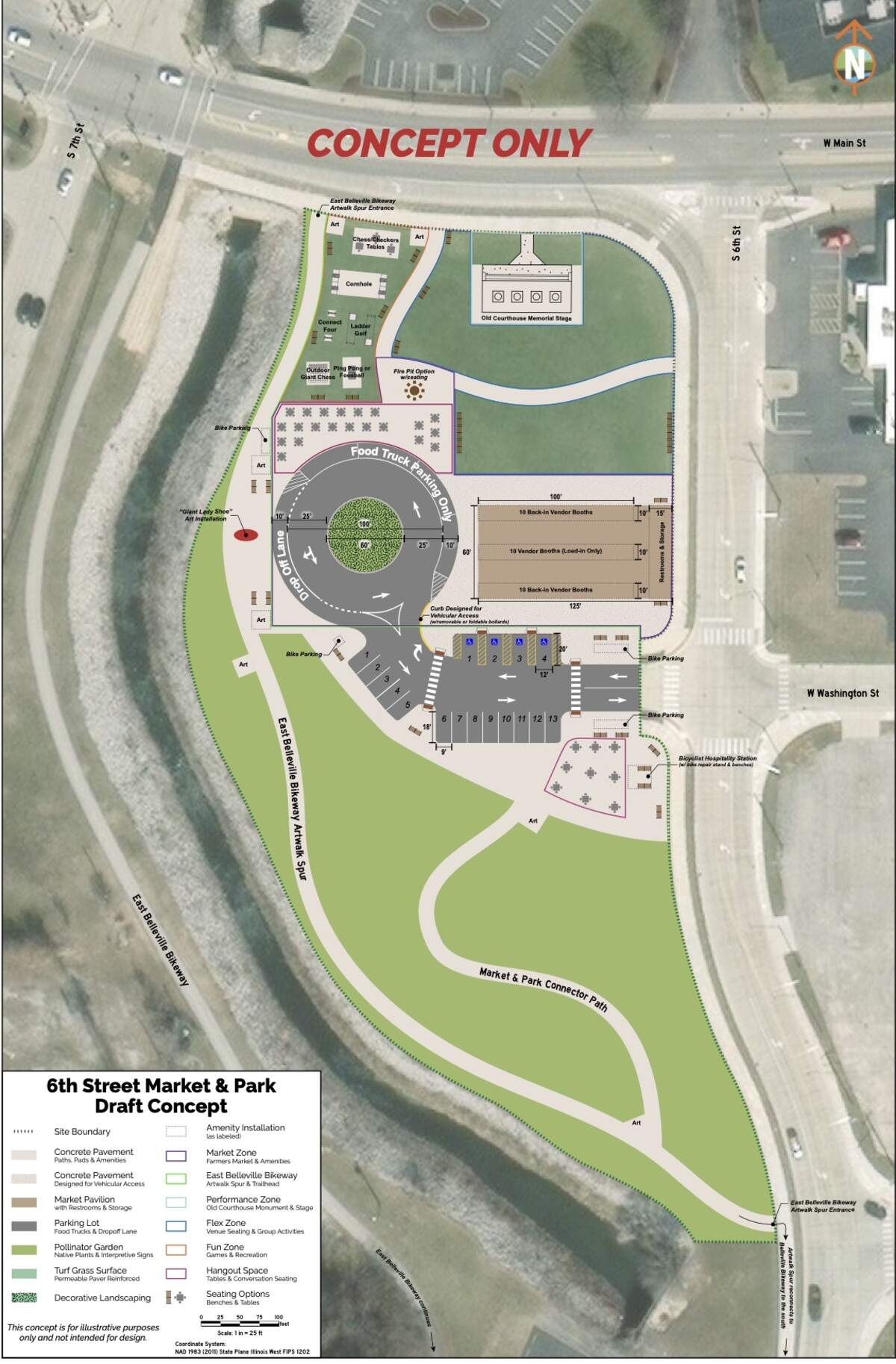
Other possibilities for the park include tables and equipment for activities such as chess, checkers, cornhole and pingpong. Bike and walking paths would complement a new parking lot with space for food trucks.
The rendering includes public art displays and a “graffiti wall” where spray-paint graffiti would be allowed.
A second conceptual rendering that was recently completed includes the courthouse columns, stage and outdoor activities, plus a pavilion with space for an outdoor farmers market. This rendering did not include the graffiti wall.
The two renderings were commissioned by the city and produced by Oates Associates, an engineering company with regional offices, including one in Belleville.
Outlook for a new Belleville park
While Mayor Jenny Gain Meyer said the creation of a new park remains “a goal” for city leaders, a timeline has not been set.
The city is waiting on a full cost estimate for park construction and still must apply for grants to help fund the project. City leaders also will have to choose which elements from the two conceptual plans it wants to include.
“It’s definitely something the city is excited about to have a park there, especially to be able to incorporate the old courthouse columns,” Meyer said. “It’s just something we’re going to have to work toward with maybe acquiring some grants and other financial incentives to be able to proceed.”
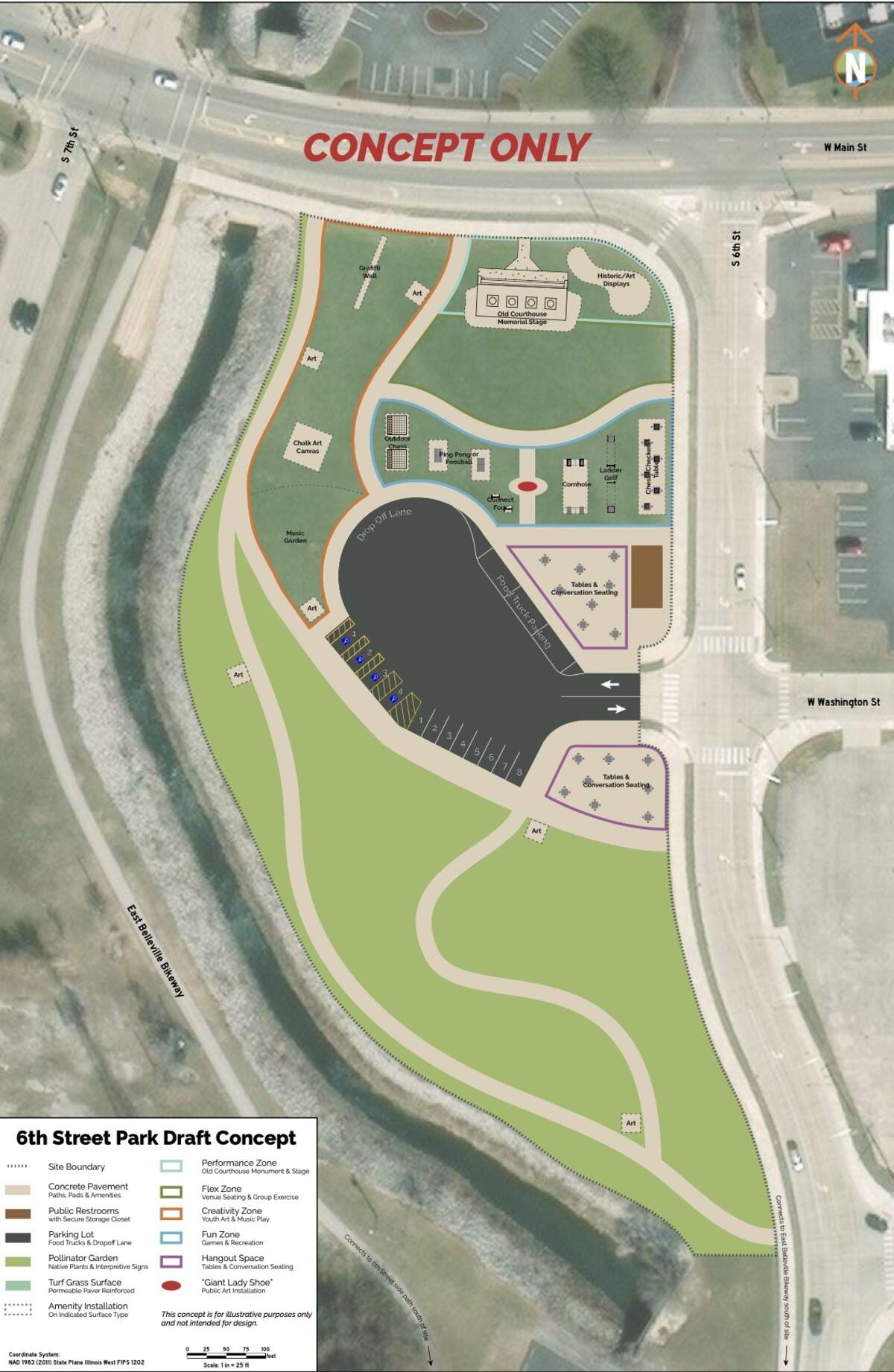
The one element consistent on each concept is the use of the courthouse columns as part of a stage.
The surviving column segments were donated to the city. More than 20 of them are stored behind the city’s Parks and Recreation Department building across the street from the proposed park site. The cylindrical sections vary in size from about 24 inches to 26 inches in diameter and height.
Jason Poole, director of the city’s public works and parks departments, said it would be easier to obtain grants for the proposed park if it included recreation components, such as a stage, as opposed to a simple display of the courthouse pillars.
The city could apply for a state grant through the Open Space Lands Acquisition and Development Program or for a regional grant from the Metro East Park and Recreation District, which gets revenue from a sales tax. The city likely would have to match any amount of funding that is granted.
One of the working titles for the park has been “Heritage Park” but Poole said a final decision has not been made for the name.
The city recently has authorized $25,700 to pay for services from Oates Associates.
The largest fee was $19,700 for a design plan for reconstruction of the courthouse columns and installation. Engineers estimated last year this process would cost $257,000.
Oates was paid $6,000 to produce the two conceptual designs. The company also has been asked to give the city an estimate of how much it would cost to fully develop a park.
The land is where the former Belleville Gas Light and Coke Co. produced gas from coal for streetlights. The coal-tar byproduct from this process was in the soil, but in 2019 Ameren Illinois finished a multiyear remediation of the ground. The site is bounded on the west by Richland Creek, which has flooded throughout the city’s history, including a June 1957 flood that killed 10 people. The most recent serious flooding occurred in July 2024.
Poole said the improvements envisioned for the park site would make it able to withstand high water, leaving it to city workers to hose down the site once the flood receded.
On the north side, the proposed park site is bounded by West Main Street, and on the east by Centreville Avenue, which formerly was known as South Sixth Street. The city rerouted Centreville Avenue to West Main Street after the Ameren remediation project was completed, Poole said.
Belleville farmers market location
One possibility for what city records sometimes call the “courthouse monument project” is whether an outdoor farmers market pavilion would be included in the proposed park site.
Before that decision is made, the city has to decide how it will use a $424,850 state grant it received to help pay for an indoor-outdoor market.
The grant, which has to be matched by the city, was intended for a city-owned building near the corner of South Illinois and West Lincoln streets next to City Hall. This project, which was dubbed “City Market,” was initiated by former Mayor Patty Gregory.
City officials recently scrapped those plans, however, and are still looking for a new location to revive the market.
Meyer said the $424,850 state grant cannot be used for an outdoor-only farmers market at the proposed courthouse-columns park because state officials issued the grant with the understanding that the market would have an indoor component.
That won’t be an option at the proposed new park because the site is in a floodplain, Poole said.
The state has extended the deadline for using the grant from the end of 2025 to the end of 2026.
Historical significance of courthouse columns
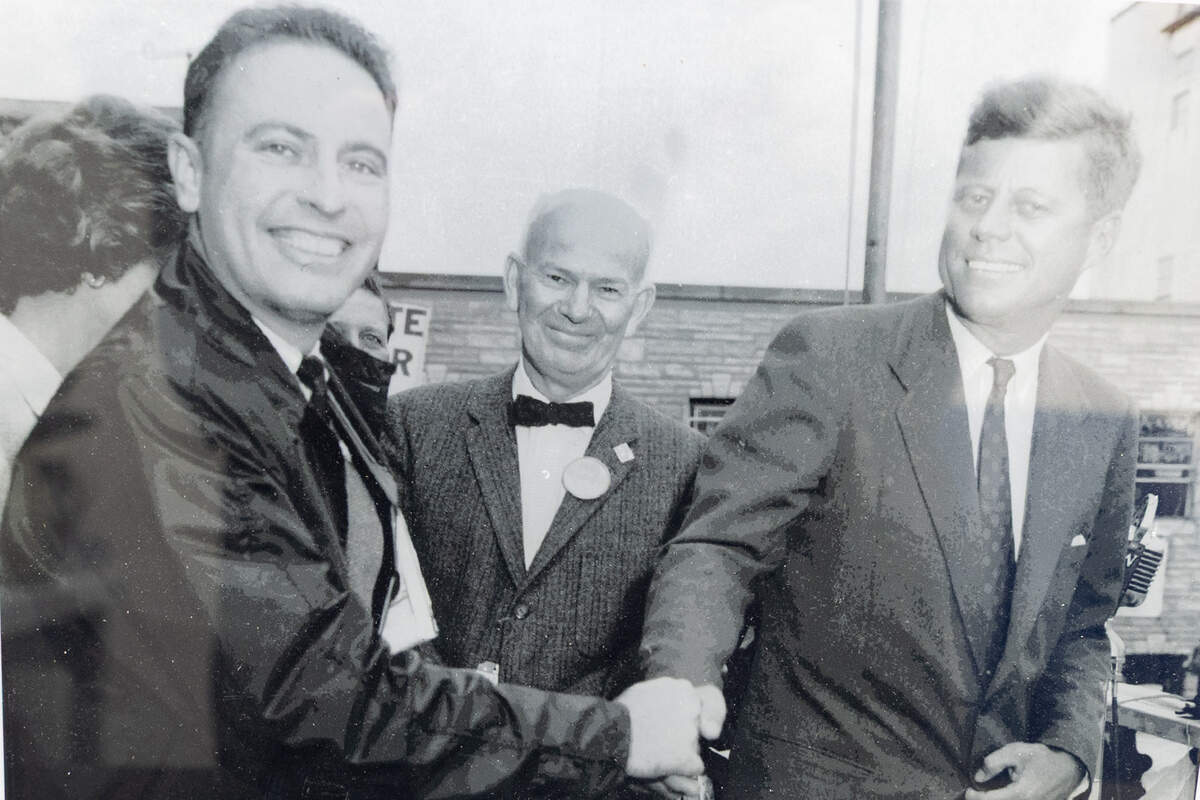
For a generation of Belleville residents, one of the most significant days in the city’s history occurred on Oct. 3, 1960, when a buoyant crowd of about 5,000 watched then-Sen. John F. Kennedy give a presidential campaign speech in front of the old St. Clair County Courthouse and its columns.
A dozen years later, in 1972, they witnessed their demolition.
Count 74-year-old Bill Hausmann of Belleville as one of them.
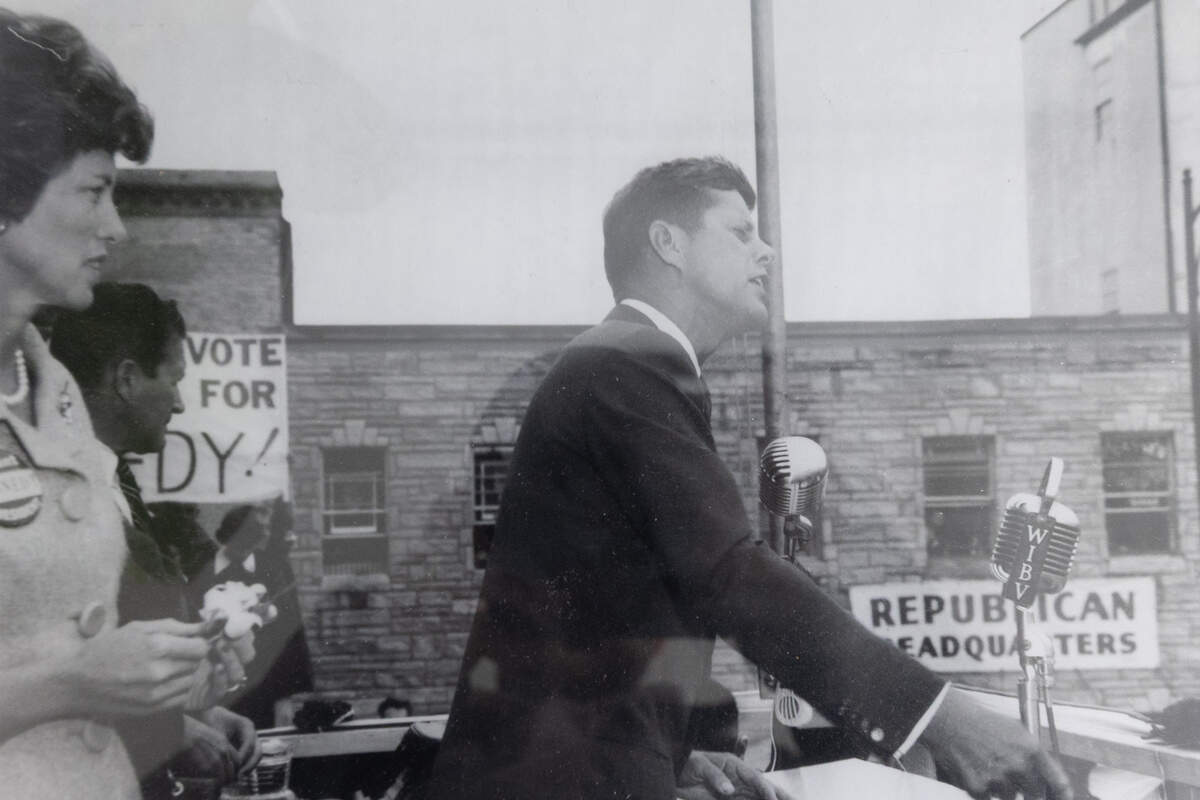
“I was sorry to see the courthouse go, being kind of a history buff,” he wrote about his experience. “I was in the crowd when then-Senator John F. Kennedy spoke on the steps.”
Hausmann, who served as a B-52 navigator and bombardier and later as a target intelligence officer in the U.S. Air Force, recently retired after working for music stores as a school services representative and instrument repair tech.
When he was home from college in the summer of 1972, Hausmann took a series of black-and-white photos of the courthouse demolition. His late uncle, the architect Gene Hausmann, assisted with construction of the new St. Clair County Building, which was dedicated in 1976 as a replacement for the old courthouse.
Gene Hausmann told local historian Jack LeChien in 2022 that he did not think it was feasible to save part of the old courthouse and join it with new construction, according to LeChien’s 43-page report on the history of courthouses in St. Clair County.
LeChien praised the family of the late real estate agent Bill Tayon for donating the sections of the courthouse columns to the city. Tayon bought them from the wrecking company and displayed them at his North Belt East office, which he dubbed the “East End Courthouse.”
“He was a history lover,” LeChien said in an interview.
In 1971, a rendering of the new county building indicated that columns from the old courthouse would be displayed on the front plaza of the new building, but those plans were dropped.
Nearly 54 years after the demolition of the multistory courthouse, LeChien and other local preservationists still long for a new home for the limestone pillars.
LeChien is a former member of the city’s Historic Preservation Commission that was created in the wake of the controversial demolition of the courthouse. He says it is important to recognize and honor why the city was created as the county seat.
The county seat was moved from Cahokia to Belleville in 1814 after George Blair promised to donate an acre of his 200 acres to the county as the first step to found a new city.

LeChien said Blair’s land “had no other natural attractions that would make it a town but when they moved the courthouse from Cahokia to this cornfield, and named it Belleville, that’s why there is a Belleville.”
LeChien noted that if Blair’s 200 acres were measured out today, they would include the site of the proposed new park.
The park would also be near two historic sites that visitors could check out. One plaque at Ninth and West Main streets marks the founding of the American Miners’ Association, which has been credited with launching the modern labor movement. Another at South 11th and West Main streets commemorates the former Village of West Belleville.
“I just think it’s an opportunity to help that part of town with a feature that may attract some interest and tell the story, ‘Why is there a Belleville?,’” LeChien said.
“To me the columns represent authority, civil government. This is how we settle our disputes, you come to the courthouse, you know, and you fight it out here.
“So it’s the icon, really, for the city of Belleville.”
Belleville News-Democrat reporter Teri Maddox contributed information for this article.
This story was originally published April 27, 2026 at 5:00 AM.