Belleville’s Koerner House gets major repairs after years of fits and starts
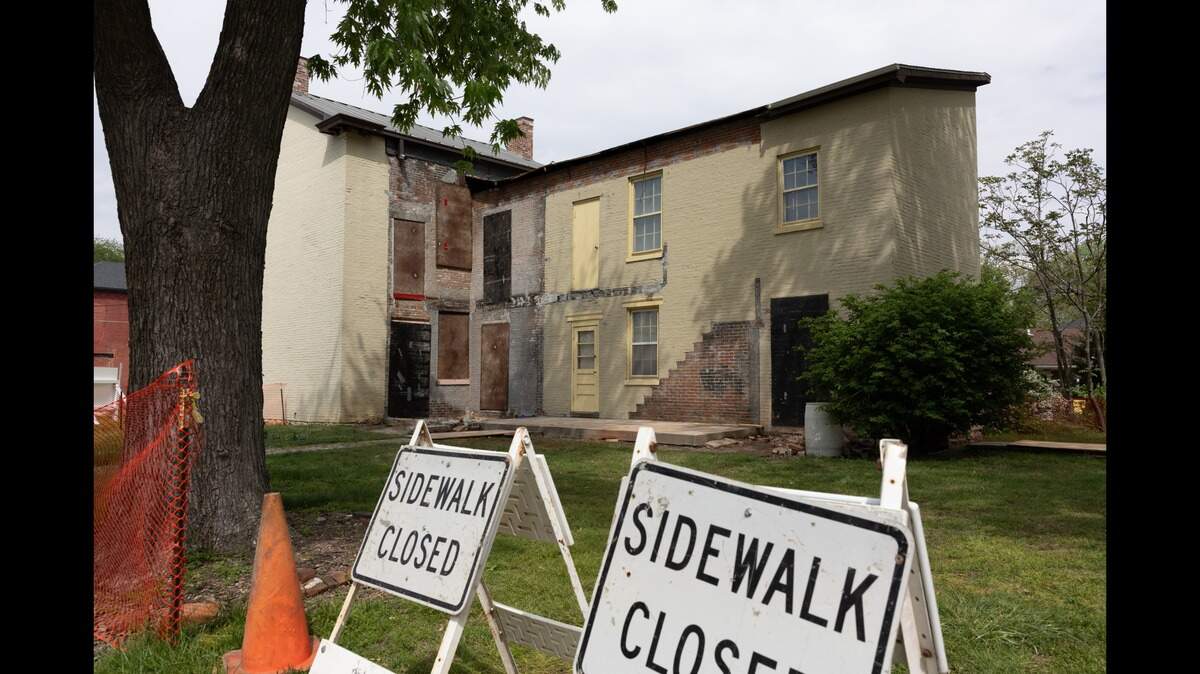
Efforts to restore one of the most important historic landmarks in Belleville have been on a rollercoaster ride for 25 years, with highs and lows usually dictated by cash on hand.
Today, the Gustave Koerner House is on a high, thanks to $500,000 in state grants, an 80-year-old volunteer bursting with energy and a group of citizens launching a fundraising campaign.
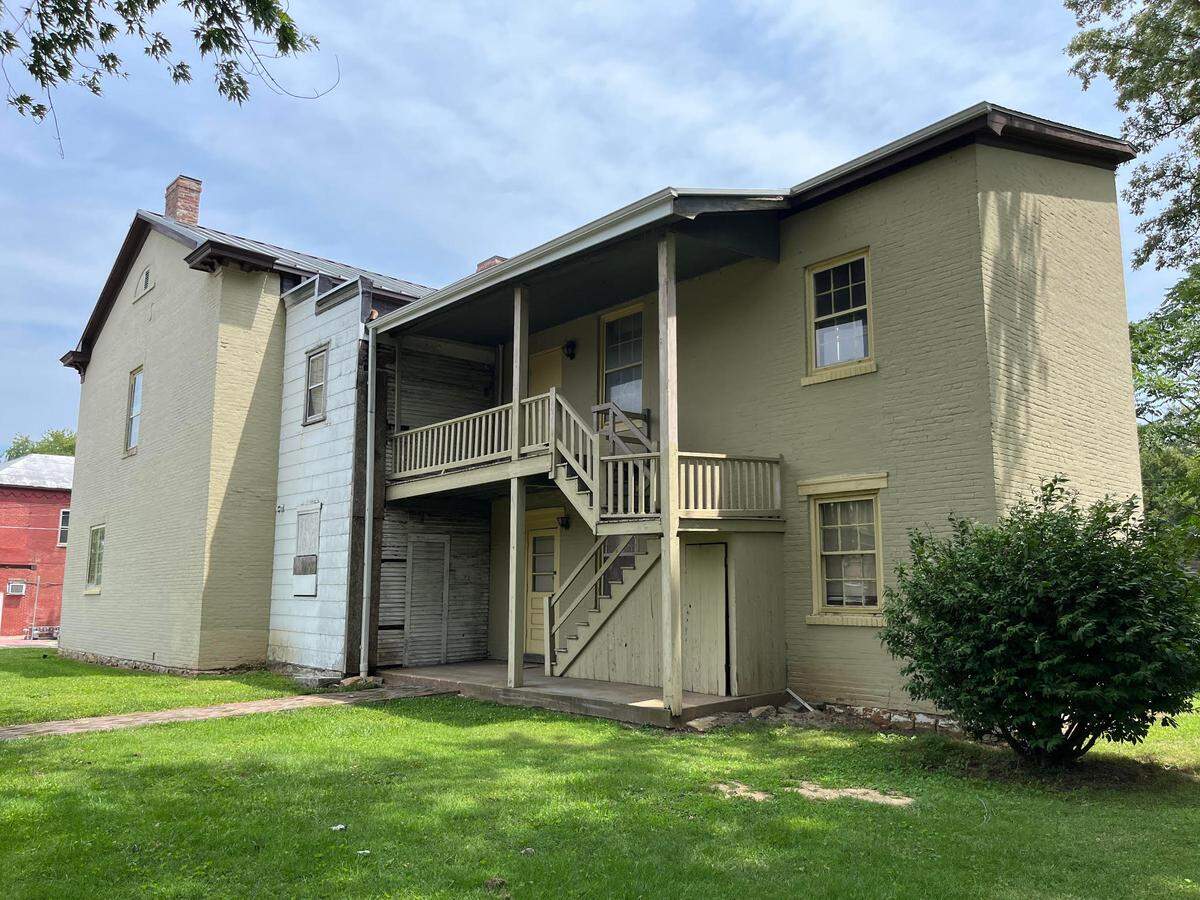
The grants are paying for contractors to remove and replace a dilapidated two-story porch on the west side of the 1854 Greek Revival-style home, which is owned by the city. They’re also eliminating a section that was enclosed about 1910 to accommodate indoor plumbing.
“(The porch project) is a big step in terms of finishing the exterior, and it’s also an improvement appearance-wise for the neighborhood,” said Jack LeChien, co-chair of the restoration committee with Molly McKenzie.
LeChien noted that neighbors in the Old Belleville Historic District have complained about the porch’s condition.
The disrepair was in full view of Barb Swantner, who lives across Abend Street and frequently walks by on her way to Charlie’s Place, the corner restaurant and bar she co-owns.
“I’m thrilled,” she said. “That’s the only word for it. I think everybody on the street is very happy.”
The city received three grants – one for about $250,000, one for $150,000 and one for $100,000 – from the Illinois Department of Commerce and Economic Opportunity, according to Eric Schauster, Belleville’s director of grants and special projects.
Beyond the porch, the money will help pay for reproduction doors and windows in that area, a handicap-accessible back sidewalk, new water and sewer lines, plumbing for a bathroom and utility closet, a first-floor heating and cooling system, insulation and masonry.
“It’s a big deal,” Schauster said, noting the money will go further than might be expected because of donated materials and labor.
Some people may see the porch as only an architectural feature, but it also provides information about life for prominent Belleville residents, such as Koerner and his wife, Sophie, at the time.
The home originally had no interior doors between the front half, with its parlors and family bedrooms, and the back half, where the dining room, kitchen and servant’s quarters were located. The porch provided covered, exterior walkways that connected the two.
“(In the front half), you had refined parlors,” McKenzie said. “Back there, you had women chopping up chicken, so there were smells and grease and noise and clatter.”
Nonprofit to raise funds
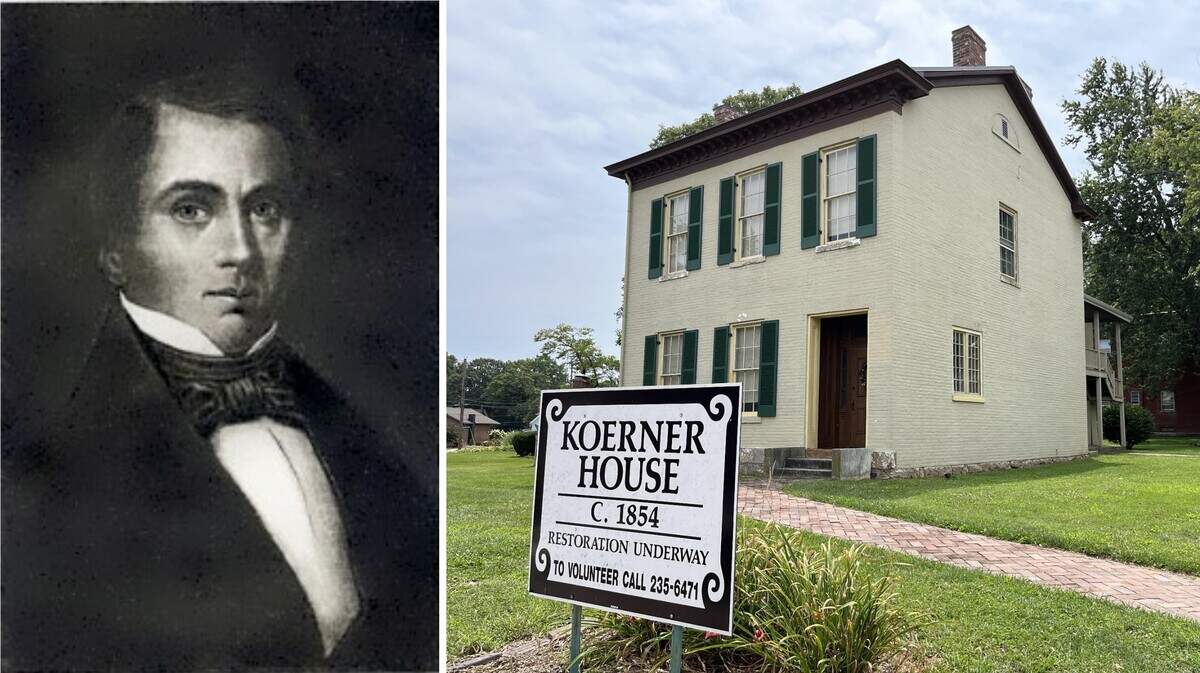
Born in 1809, Koerner was a German immigrant, attorney, judge, politician and journalist. He became close friends with Abraham Lincoln, helped him get elected president and worked for his administration in the 1860s.
Koerner also was instrumental in establishing the Republican Party and developing its anti-slavery platform.
“He is the most significant historical figure in Belleville, and I would argue St. Clair County and southwestern Illinois,” said Belleville attorney Bill Enyart, a former U.S. representative and Illinois adjutant general.
Enyart, who lives in the Old Belleville Historic District, and other community leaders are forming a nonprofit foundation to support the Koerner House. They hope to raise enough money to finish interior restorations so it can be opened as a museum.
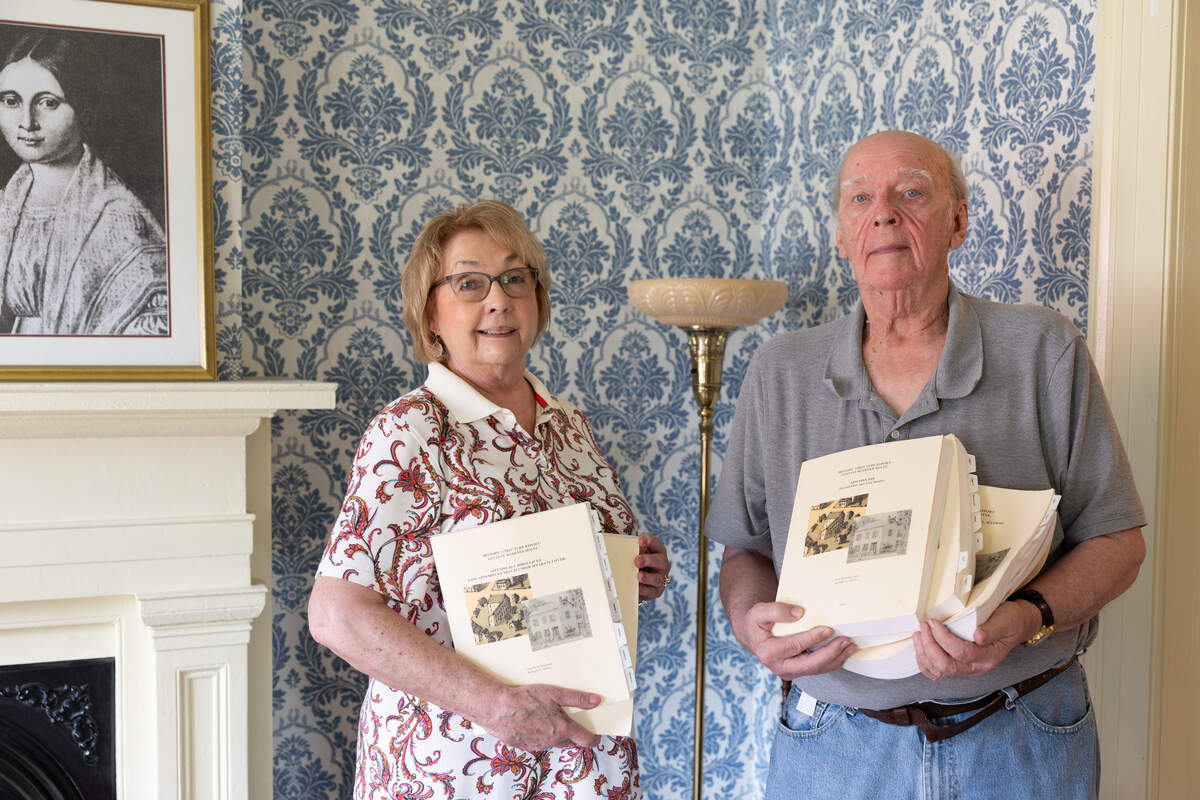
Key to the effort is volunteer Tom Bell, 80, a retiree who operated an electrical supply company in Belleville for four decades. He cut grass on the property as a teenager.
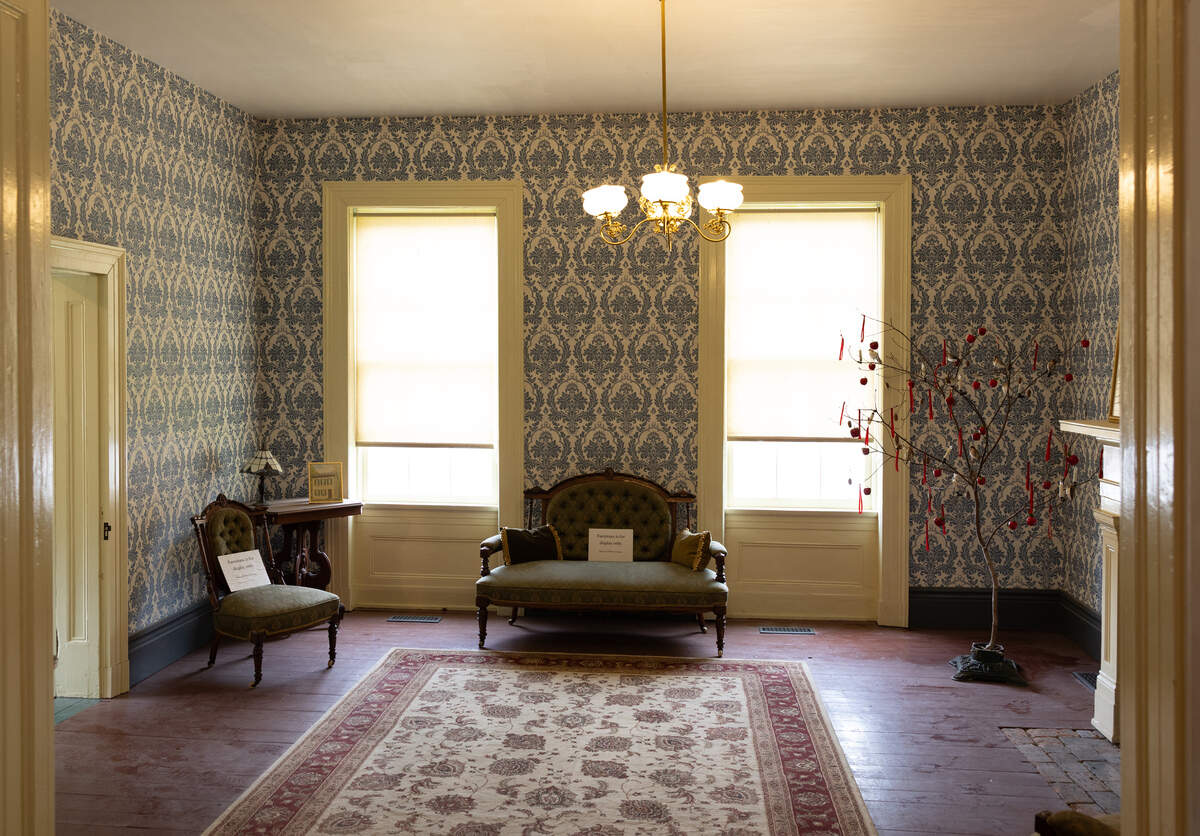
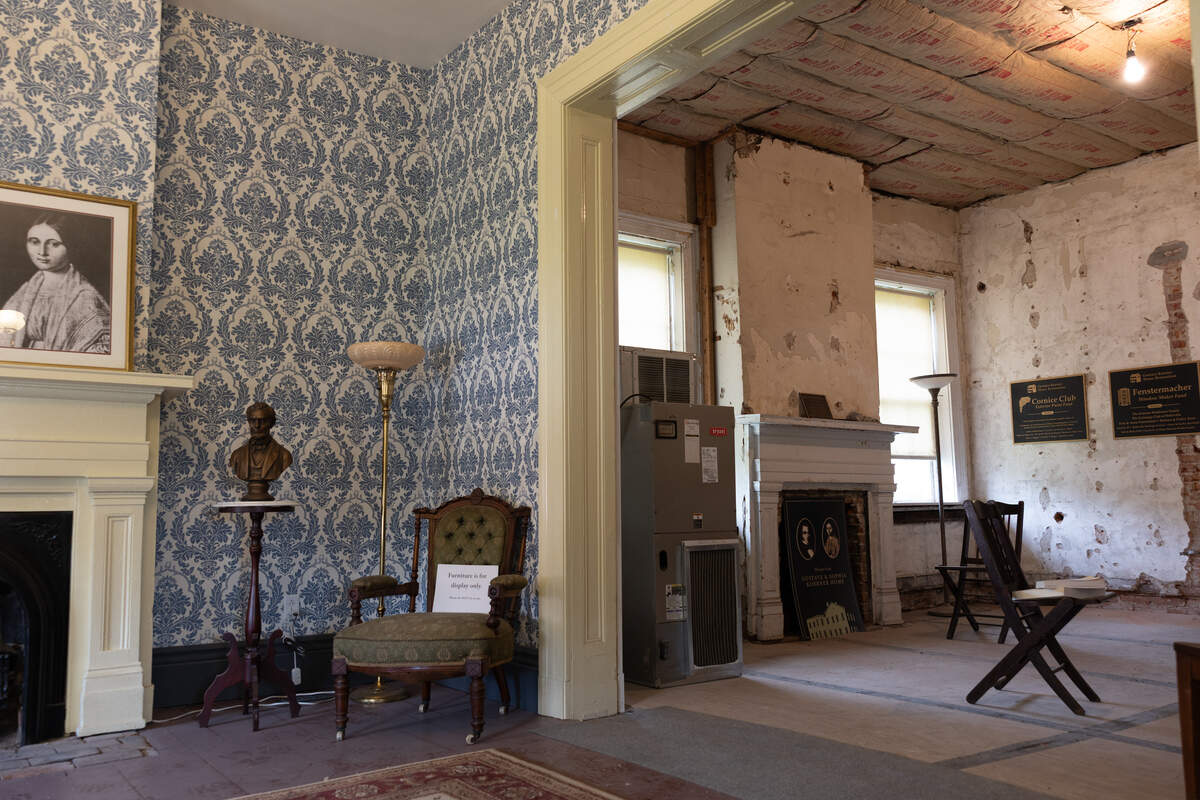
In the past two years, Bell has almost single-handedly restored the home’s formal parlor, downstairs hallway and staircase. He had to follow strict requirements outlined by a Historic Structure Report that determined what they looked like in the 1870s.
“To me, it’s not work,” Bell said last week. “It keeps me busy. It keeps me active. I enjoy it.”
McKenzie ordered Victorian-style wallpaper for the parlor to fit the period, featuring a naturalistic pattern in blue and silver. It was made in Italy and shipped through London to Chicago.
McKenzie is used to people being amazed at the time and effort put into the smallest details, such as paint colors, and the high cost of antique and reproduction materials. Occasionally, the committee must make adjustments to meet city ordinances.
“In Koerner’s day, doors swung in,” McKenzie said. “But under current code, they swing out.”
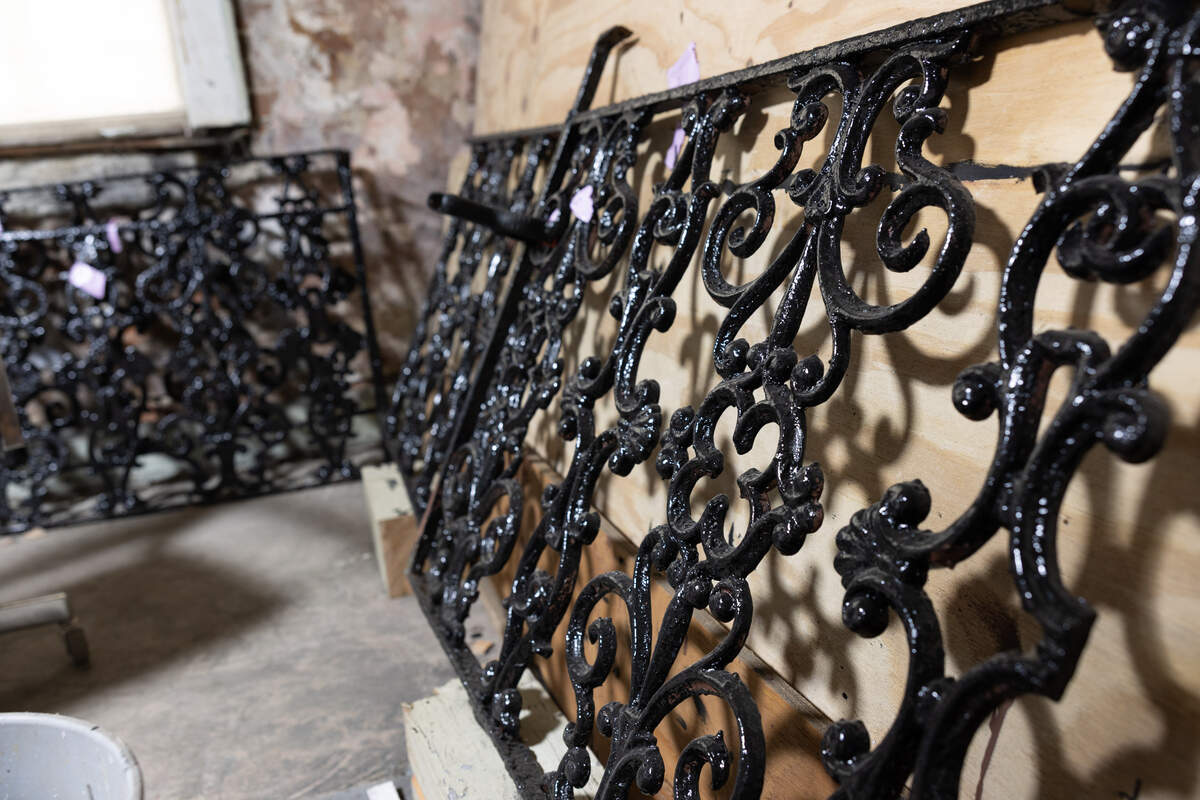
LeChien recently found an 1870s iron railing from the LaSalle Park neighborhood of St. Louis at a salvage shop and bought it for $4,500. It will be used to reproduce a balcony off the upstairs master suite.
Costs estimated at $2 million
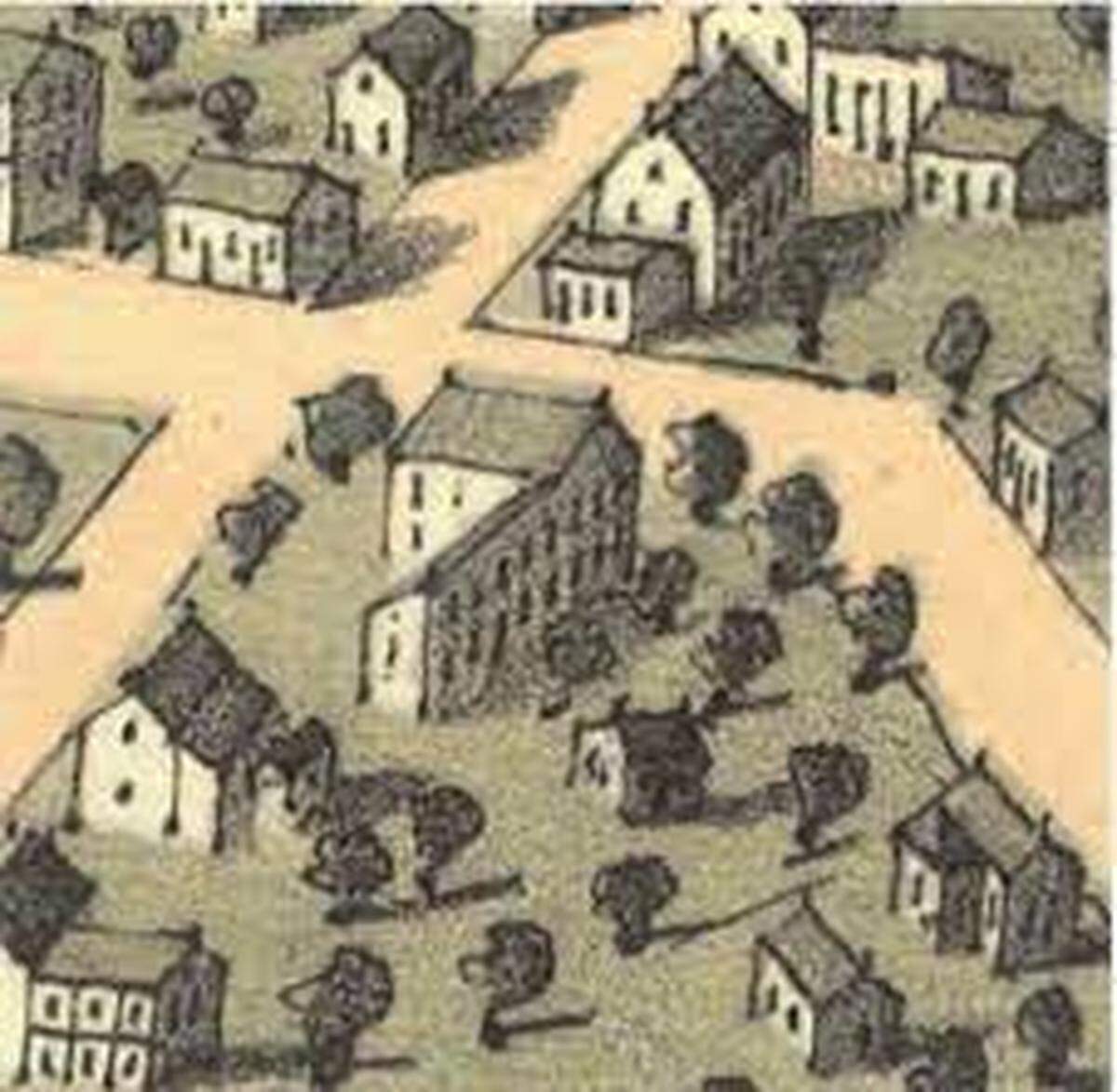
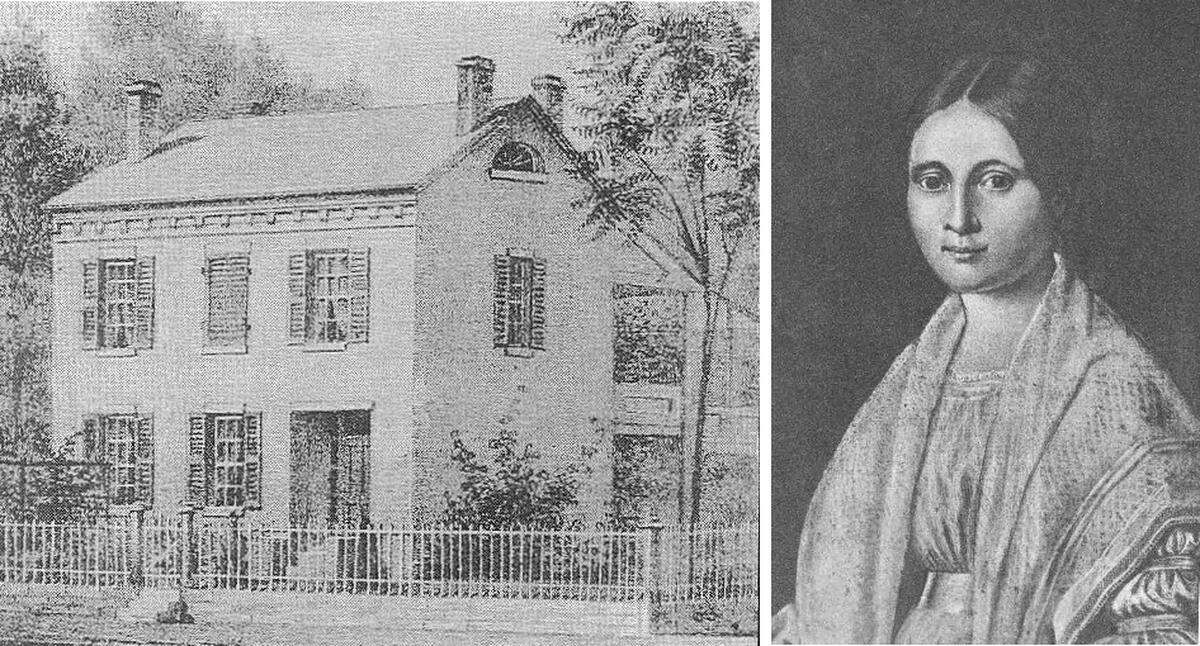
Koerner and his wife, the former Sophie Englemann, built their first two-story Greek Revival-style home at Abend Street and Mascoutah Avenue (formerly Shawneetown Road) in 1849, but it was largely destroyed by fire. They rebuilt in 1854 and added Italianate details in the 1870s.
The committee selected that period for restoration purposes.
“That’s when Koerner was back home after having an illustrious career in politics and the diplomatic corps,” LeChien said. “He ran for governor in 1872 and did not win. That was his last foray into politics.”
Koerner owned the home at 200 Abend St. until his death in 1896. It was later converted into two apartments and then four apartments. The city bought the building in 2000, knowing that local historians wanted to see it restored and turned into a museum.
Supporters initially estimated that the restoration would cost $500,000, but LeChien now estimates that the total will surpass $2 million because of fundraising challenges and rising costs.
”What really shocked us is how much prices went up during (the COVID pandemic),” he said.
LeChien and McKenzie give credit to Illinois Sen. Christopher Belt, D-Swansea, for obtaining the three state grants, with help from Illinois Rep. Jay Hoffman, also D-Swansea.
Eventually, the restoration committee and its supporters would like the Koerner House to become part of a statewide trail, leading visitors to Lincoln-related historic sites throughout Illinois. They recently published a new brochure with this theme.
“Koerner was a significant figure, not only in Belleville but in the country,” Schauster said.
“He was a confidant of Abraham Lincoln. He helped develop the anti-slavery platform. He was a pallbearer at Lincoln’s funeral. So there’s a pretty significant connection.”
The Koerner House is one of several historic sites that will be open to the public on June 20 as part of “One City, Many Stories: Belleville History Field Day,” organized by the St. Clair County Historical Society.
In addition, the restoration committee is inviting people to participate in its annual fundraising raffle. Tickets cost $25 each or three for $50 for a chance to win an iPod.