Belleville begins forced cleanup of property after owner fails to meet deadline
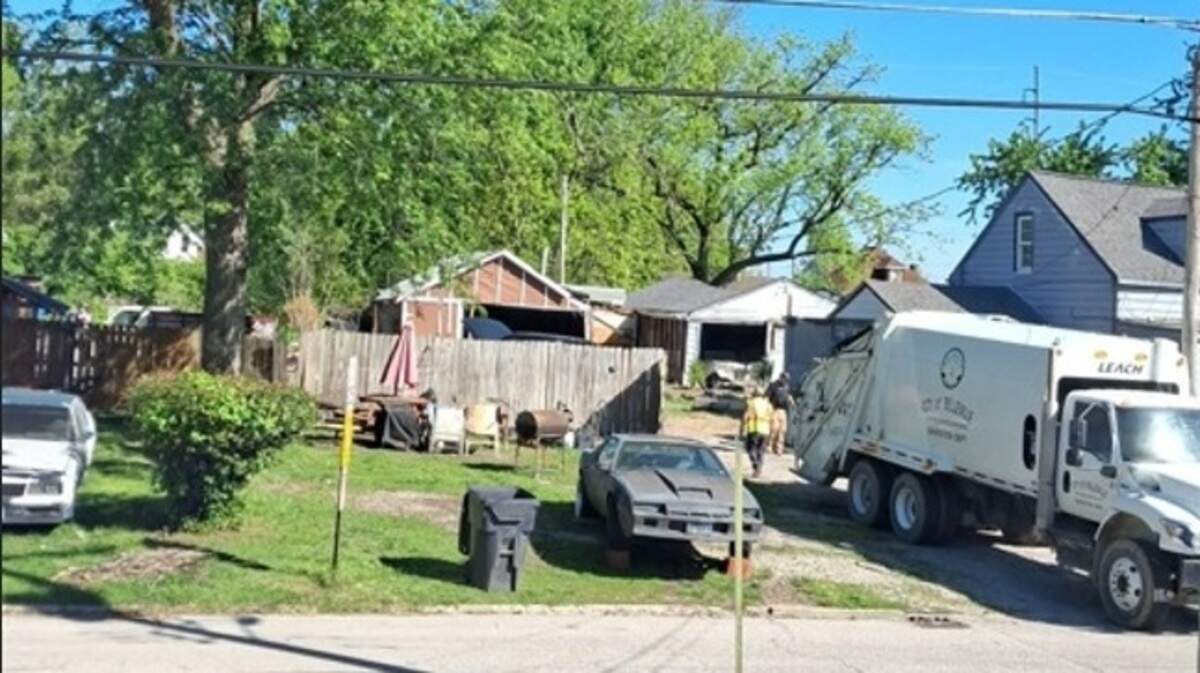
A battle between the city of Belleville, a resident of South 19th Street and his neighbor across the street has escalated.
Last week, the city began a forced cleanup of three properties owned by George Green that, according to neighbors and officials, for years have been filled with junky furniture, construction debris, trash and vehicles in various stages of disrepair.
Green failed to follow a municipal court order to clean up the properties this spring, said Police Sgt. Sam Parsons, the city’s code enforcement officer. Under the order, the judge ruled, the city could do the work itself and send Green the bill.
“He was not in compliance with the court order,” Parsons said Friday, noting the order set a deadline of April 17.
Parsons arranged Wednesday for five vehicles to be towed from Green’s properties. He deemed them “derelict” because they were inoperable, unlicenced or unregistered. Others were allowed to remain.
At the same time, two sanitation workers filled a trash truck with items from 411 S. 19th St., 503 S. 19th St. and 507 S. 19th St. The adjoining properties include two homes, one where Green lives with his wife, Debra, and one that’s vacant and dilapidated.
The workers quickly realized they would need to return with heavy equipment to finish the job, according to Parsons, Assistant City Attorney Lloyd Cueto and Director of Public Works Jason Poole.
“When we go back, we’re going to have to get the street department to take dump trucks and backhoes because there’s a bunch of stuff that we can’t easily pick up by hand,” Poole said.
Green couldn’t be reached for comment.
Police have issued Green about 20 citations since he moved to South 19th Street in 2004 for violating property-related ordinances and unlawfully operating an auto-repair business in a residential neighborhood. He’s been arrested and jailed for missing court dates. He owes about $4,000 in fines. The city towed away seven vehicles on or around his properties in 2024.
Property owner ‘not happy’
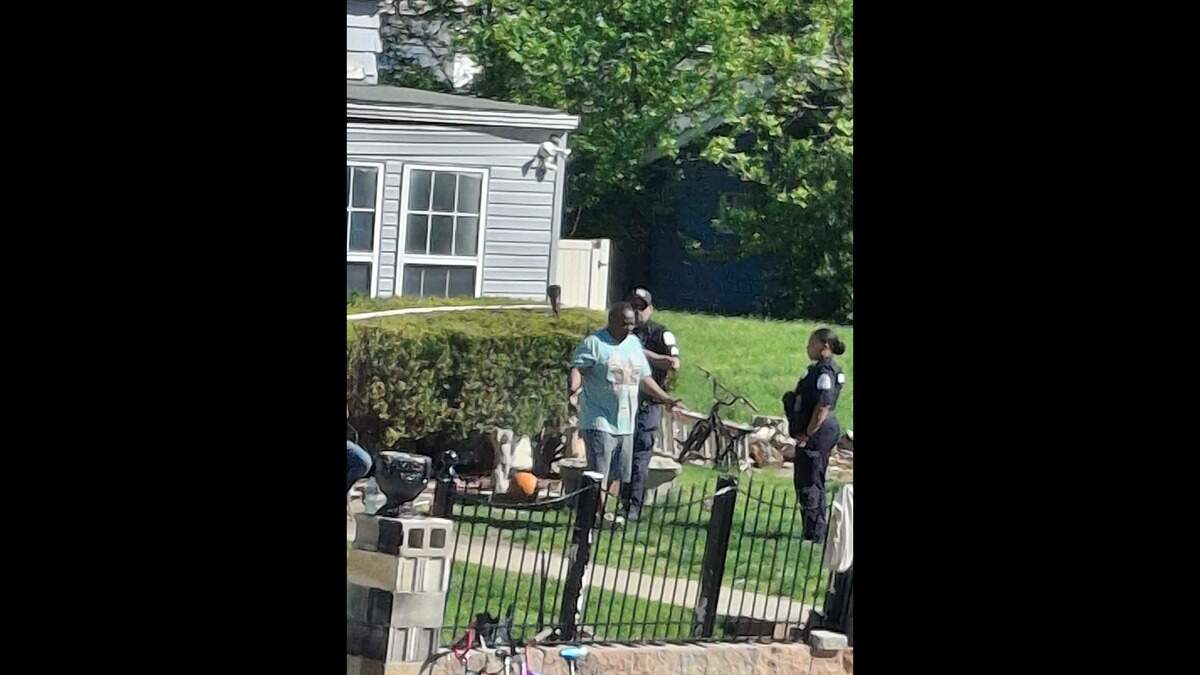
Parsons and Cueto said Green was unhappy with the city intervention Wednesday, particularly the idea of workers using heavy equipment, and he strongly disagreed with officials on what constituted “trash.”
“There were no hands on,” Parsons said. “Nobody was arrested. Mr. Green was just not happy that we were there.”
Belleville’s municipal court is staffed by St. Clair County Circuit Court judges. Cueto said Green appeared Thursday for a status conference in his case and told officials he planned to hire an attorney to contest the city’s interpretation of the court order.
A hearing is scheduled for May 7, pausing the cleanup.
“The city’s position is that we’ve been granted by the court access to the property to bring it into compliance by whatever reasonable means that requires,” Cueto said. “That may mean two days (of cleaning) instead of one or bringing in some industrial equipment because some of the hazardous materials and trash require it.”
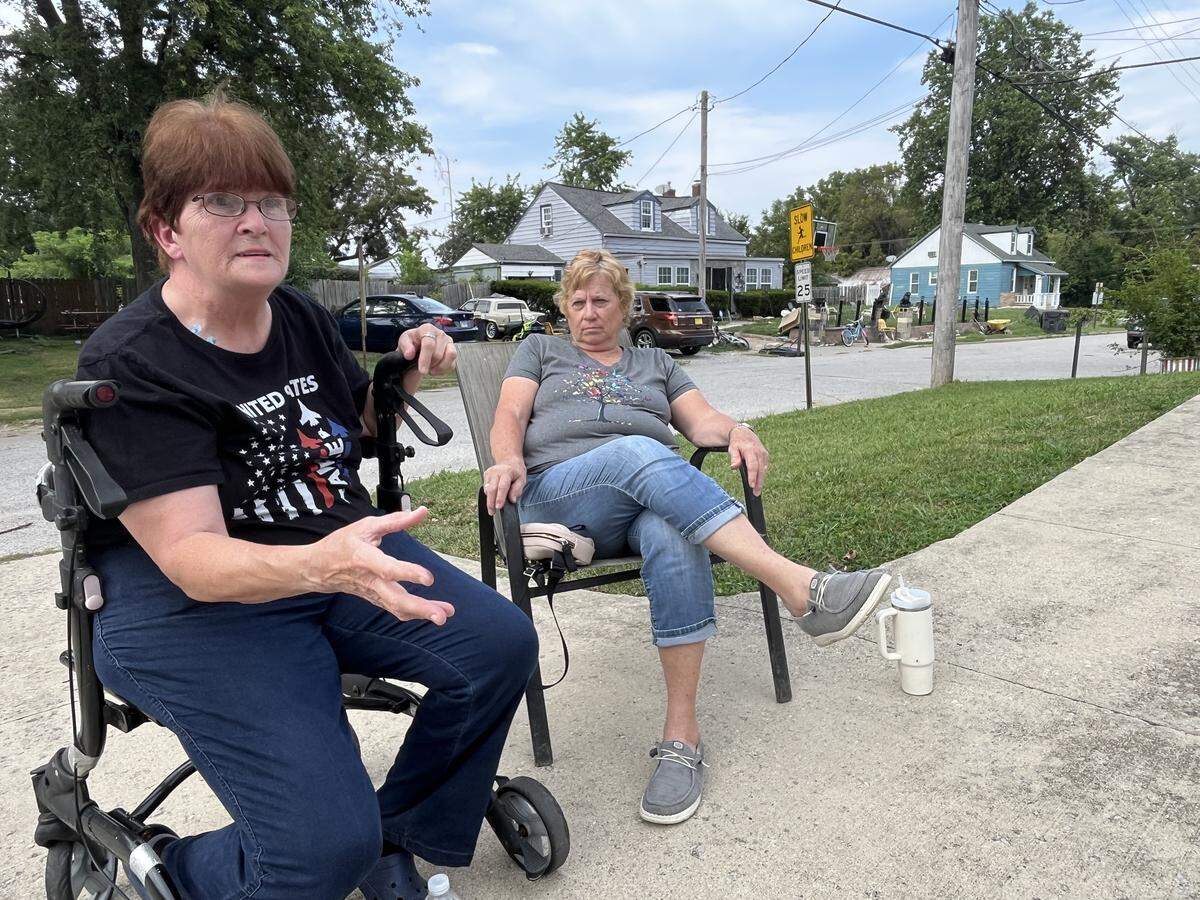
Green and Kathy Draper, his neighbor across the street, have been feuding for years over the condition of his properties. She has filed hundreds of complaints with the city’s health, housing and building department.
Draper has long argued that officials haven’t been aggressive enough in forcing Green to follow ordinances.
Draper said she was thrilled to see trash and tow trucks Wednesday morning, but her joy turned to frustration when she learned that workers weren’t going to finish the job that day.
“(Green) had 30 days to clean it up, from March 19 to April 21, and he didn’t do it,” she said. “I thank code enforcement for taking away what they did, but it didn’t solve my problem. I still have to look at this shit.
“I’ve been dealing with this off and on for 20 years. I want it cleaned. I want it done. I want it stopped.”
.jpeg "GreenCleanUp_fitted (2).jpeg")
Process can be ‘time-consuming’
Beyond the condition of Green’s properties, Draper said he also parks customers’ vehicles on South 19th Street and Bunsen Avenue, leaving some with their hoods up, on jacks or leaking fluids.
Under city ordinance, people can’t operate auto-repair businesses in residential neighborhoods without special-use permits, but there are exceptions, according to Scott Tyler, director of health, housing and building.
“(Green) claims that he’s working on family members’ vehicles, which would be allowed,” Tyler said last fall.
Debra Green told the BND last fall that her husband had obtained several vehicles that he was fixing up for some of his 13 grandchildren to drive, and that many of Draper’s complaints were trivial and racially motivated. The Greens are Black, and Draper is white.
Draper said race isn’t a factor, and the neighborhood has been integrated for decades with no problems.
City officials have said they must follow the law in such cases, balancing the rights of property owners and the community; go through the court process, which takes time and requires patience; and rely on tools such as fines to encourage compliance in noncriminal cases.
“Working through the court system and code enforcement can be time-consuming,” Poole said. “Everybody has rights, and what may be a treasure to me is junk to someone else.”
In September, George Green and city officials reportedly entered into an agreement in which he promised to clean up his properties by Oct. 9 in exchange for leniency on fines for past violations.
As that deadline approached, police reported that Green had made progress, so with the city’s blessing, the judge gave him more time.
“We were trying to afford him the opportunity to do it on his own, without court or city intervention,” Cueto said in March. “But we’re pretty much past the point of making those overtures.”
That’s when the city asked the judge for permission to clean up Green’s properties if he didn’t do it himself by April 17 and send him the bill. Lack of payment could result in liens on his titles.
This story was originally published April 27, 2026 at 5:00 AM.