
Planner has recommendations for making Highway 50 in O’Fallon ‘the next great street’
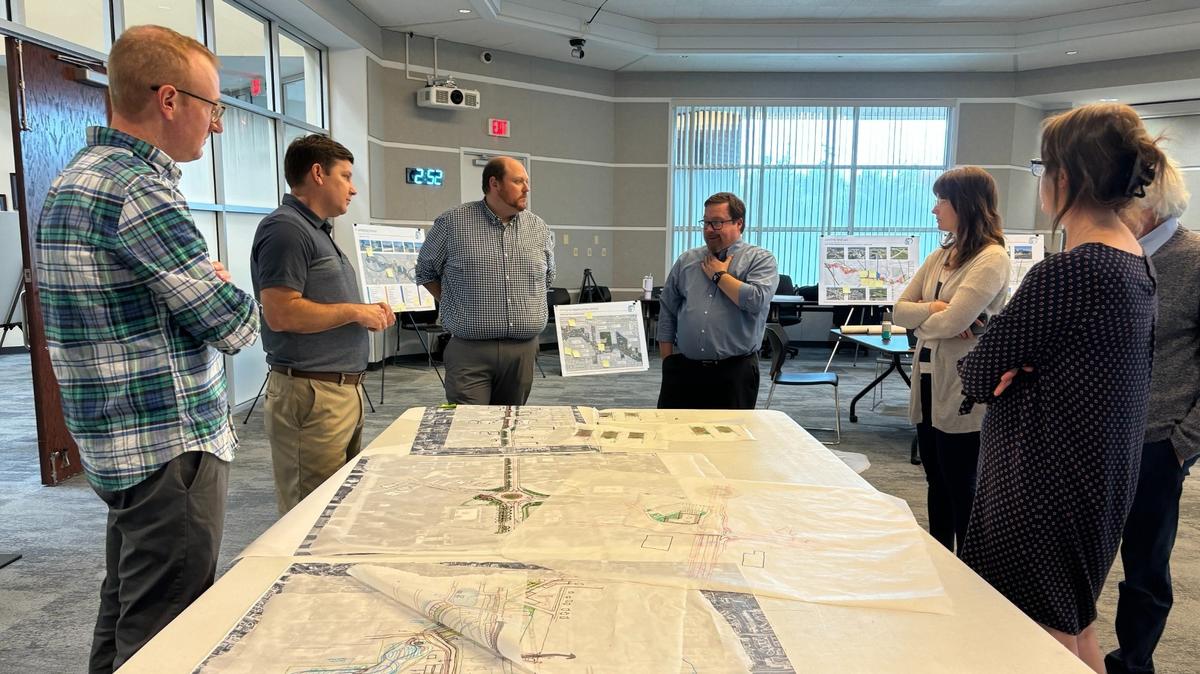
Recommendations for making U.S. Highway 50 “the next great street” by strengthening its functions and appearance will be unveiled during a final open house on April 24.
A public meeting to wrap up Forward 50, the Great Streets project in O’Fallon, will take place from 5 to 7 p.m. in the council chambers at City Hall, 255 S. Lincoln, O’Fallon.
City staff, elected officials and project team members will present the findings on the future of this main road through O’Fallon. Community members are encouraged to give their input. The project is expected to wrap up in June. As a part of the East-West Gateway Council of Government’s Great Streets Initiative, the city has been developing new concepts through public design workshops and planning meetings.
This highway study is funded, in part, through a grant from the U.S. Department of Transportation through the Illinois Department of Transportation.
A year ago, the city received a Great Streets grant for a detailed plan for Highway 50 from Exit 14 to Exit 19 and a portion of Lincoln Avenue. The grant was up to $500,000 and the city’s portion was $100,000.
They defined the areas of interest as between I-64 and West 3rd Street/Cambridge Boulevard in the west, between West 3rd Street/Cambridge Boulevard and Weber Road in the central part, between Weber Road and Scott Troy intersection in the east.
Residents will be able to see the emerging concepts in a storyboard format, said Community Development Director Justin Randall.
He said O’Fallon residents’ ideas, concerns, and preferences have been taken into consideration for refining the concepts.
Highway 50 was the main thoroughfare through O’Fallon until Interstate 64 was built in 1975, and its function has changed over the years.
While it continues to support local access to businesses, schools, neighborhoods, health facilities, and parks for the city’s 32,000-plus residents, the town’s leadership believes segments of the corridor can operate better, especially when it comes to land use and mobility.
“Great Streets programs are often an endeavor to do some place making and space making along with economic development,” Randall said.
Randall said the study is to ensure the community is connected and supported throughout all the neighborhoods, look at market demands and potential changes in land use, identify strategies to improve safety for all modes of travel, and imagine aesthetic improvements to strengthen the area’s appeal.
RDG, a national planning and design group with an office in St. Louis, is the project director.
RDG has had ongoing conversations with city leadership and residents on mobility, land use and design, infrastructure, economic development and environment and parks. RDG Senior Manager Cory Scott said those talks have been crucial to bringing the best ideas to life.
“One of the best features of this work is the conversations we have with community members across the Midwest,” he said.
Focus groups met last summer – businesses, churches, educational groups, and civic and service organizations gave input.
“These are areas of real interest, corridors that have more potential than realized,” said Shukert, principal at RDG. “We develop ideas with the community in mind, the connectivity that will benefit the district. We want to make it functional for everybody.”
This story was originally published April 18, 2024 at 10:50 AM.