
O’Fallon City Council vote on property tax levy delayed by clerical snafu
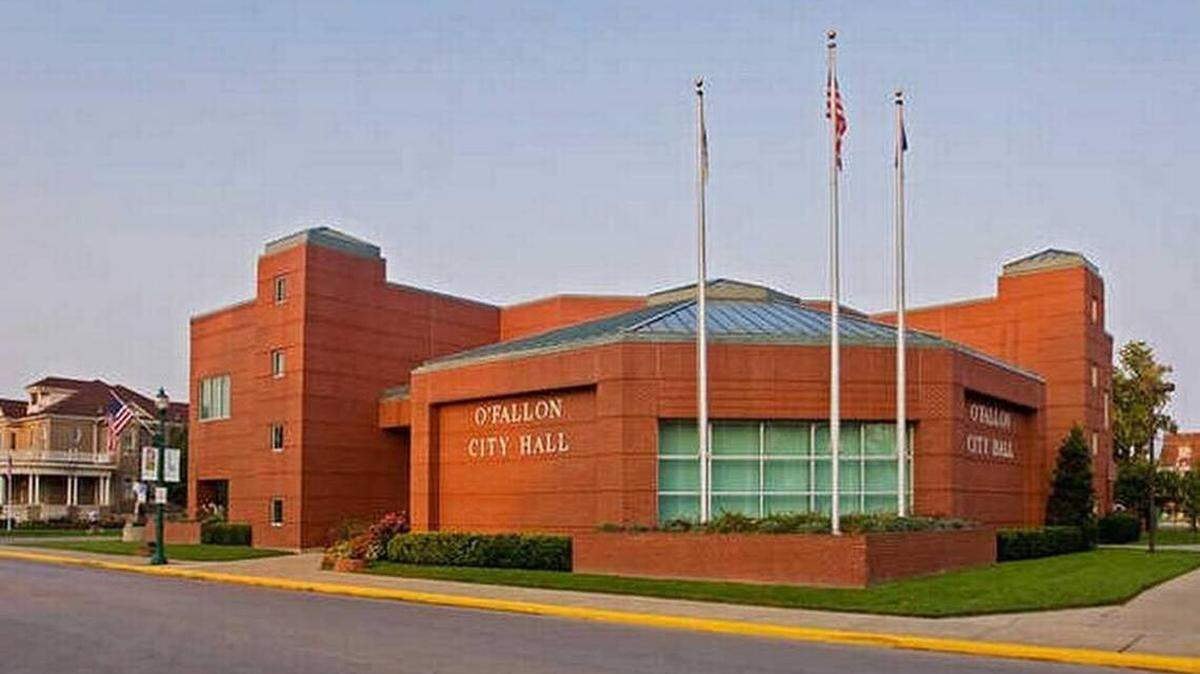
A paperwork snafu means that the expected vote to advance the 2024 property tax levy at Monday’s O’Fallon City Council meeting has been pushed back to Dec. 16.
The ordinance, to be acted on for a first reading, was accidentally left off the Dec. 2 meeting agenda, Mayor Herb Roach said.
The annual tax levy must be filed with St. Clair County by the last Tuesday in December, which means Dec. 31.
Because there must be a 48-hour advance notice, the action couldn’t be added to Monday’s agenda and will instead be considered Dec. 16. Because that is the last meeting of the month, the council will have to act on waiving first reading and going straight to the second reading for approval.
Roach said they have consulted legal advice, and that they will follow proper rules and regulations.
“There have been no changes since the finance committee,” Roach said.
The rate-setting EAV is the base for next year’s estimate as provided by the county, which is currently estimated to be $899,708,116. Last year’s was $843,908,272.
Finance Director Sandy Evans had reported the 2024 figure at the council’s last Finance and Administration Committee meeting Nov. 25.
The current disabled veteran’s exemption totals $152,483,132, which represents a 18% increase from the previous year. Disabled Vet exemptions now represent 17% of the residential EAV, Evans said.
The county has estimated a 1.1211% multiplier for O’Fallon Township and a 1.1181% multiplier for Caseyville Township, an average of 1.1196%, thereby increasing the EAV by $9,983,746.
Evans said because of the number of petitions that again could be filed with the Board of Review to review property assessments, the projected EAV was reduced by $2 million. Therefore, O’Fallon’s estimated rate setting EAV for the 2024 tax levy is $899,708,116, which is currently less than the 2023 Final Rate Setting EAV of $907,164,742.
As stated at the October Finance and Administration Committee meeting, the county is continually adding property to the tax rolls and staff expects the EAV to continue to increase.
The city is requesting an increase in all the funds compared to last year’s request except for IMRF. Because there is still a small surplus in the IMRF fund, the amount requested for this year’s levy is reduced by $50,000.
The Library Board has requested a tax levy amount of $1,407,000, which represents a 4.94% increase. Based on our preliminary calculation of the estimated EAV, the requested rate is 0.8158, compared to last year’s certified rate of 0.7738.
The tax levy is based on dollar amount, not by rate. Therefore, if the estimated EAV is higher than projected, the tax levy rate will be lower, and if the EAV is lower, the tax levy rate will be higher.
“Since these are preliminary numbers and are constantly changing, we anticipate the EAV will be higher than this current projection,” Evans said.
Last year’s Disabled Veterans Property Tax Relief Program provided $272,848 to the city, which was put in the General Fund reserves. The Library received $66,608.
“Unfortunately, the state did not include the $15 million allocation in its FY25 budget, so funding from the program this year is uncertain. Since we are unsure whether there will be reimbursement from the state next year, staff recommends not to decrease the levy amount requested for the FY 24 levy request,” Evans said.
“If we were to reduce the amount now and the state does not include in the current budget, then the city would then have to ‘make up’ that amount the following tax levy year which would then put the amount of request over the 5% which would then require a Truth in Taxation hearing. Therefore, our recommendation is to propose the levy amount calculated as we normally do which in our current proposal would be a 4.19% increase for City and 4.94% from the Library, with a combined increase of 4.48%,” she said.
The county normally distributes the final tax valuations by the end of March that the city must approve.
“By this time, we will know if the state has added this allocation back into the budget. If they do, we can then abate the amount differential requested for the city portion and then distribute from the city’s reserve the amount each fund had requested above the previous year’s levy,” Evans said.
For example, currently in the proposed 2024 tax levy, they requested an additional $248,149. For the ambulance fund, they are requesting an increase of $99,397.
“Should the state approve the reimbursement, the city would then abate the $99,397 and request only $1 million, the same amount as the previous year. This will then reduce the tax levy request which would put the money back in the taxpayer’s pocket but still make the funds request whole,” she said.
City staff contacted the county to verify the process for abating since the city has not done this before and was informed that it is a very easy process and agreed this would be an appropriate way of handling, she said.
The county also informed staff that the other two eligible counties did not participate in seeking reimbursement this last time and that the municipalities in St. Clair County received over $10 million of the $15 million cap in the first year’s reimbursement of 50%.
“So even if the program is funded in this year’s state budget, taxing bodies would not receive the full 90% reimbursement for years 2-5,” she said.
At Monday’s meeting, Ron Zelms, a candidate for treasurer, is advocating for greater tax relief for residents. After contacting State Rep. Jay Hoffman and State Sen. Christopher Belt regarding the Disabled Veterans Tax Exemption, he received a copy of the letter they sent to affecting taxing districts about how to best obtain supplemental appropriation. He also passed along an email reply he received.
“We believe this will be accomplished if local units of government can follow the example of Mascoutah School District by using the program this year to provide tax relief to your constituents.”
Zelms explained that the Mascoutah School District lowered their property taxes by 7%, but it was because of the offset funds in the pilot program provided last year. No funding yet this year, but Hoffman and Belt believe that if other taxing bodies followed Mascoutah School District, then funding would have a better shot at approval.