
O’Fallon officials consider consequences of dropping 1% grocery sales tax
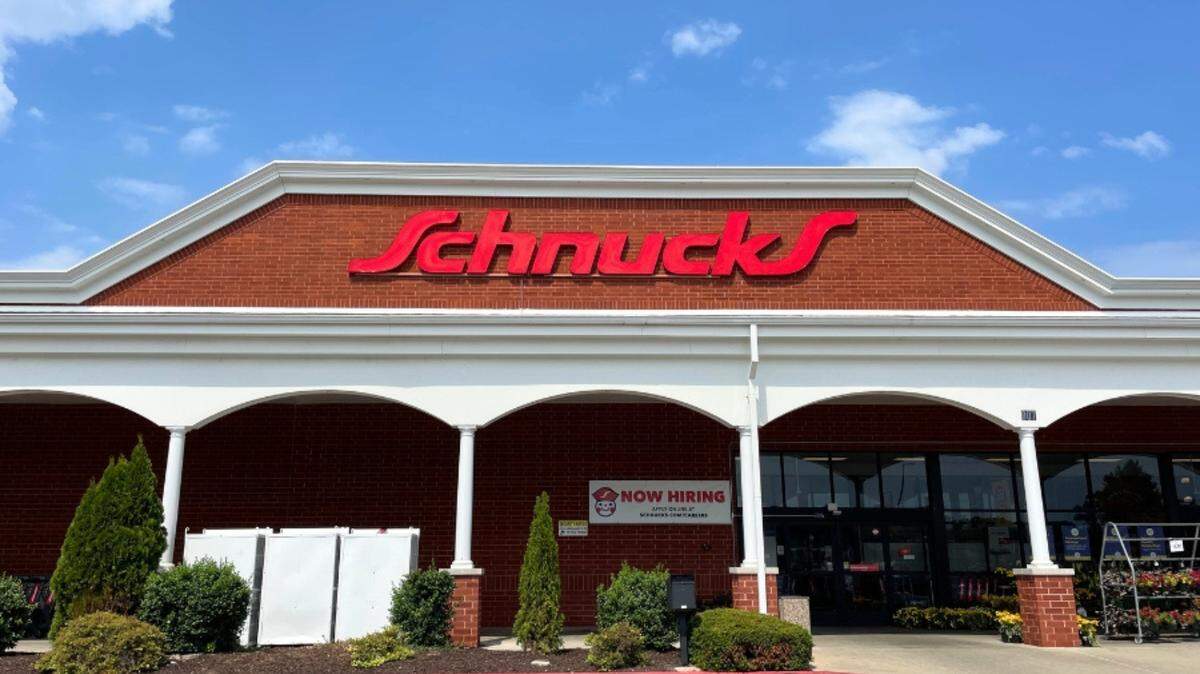
Citing a possible $1.2 million deficit in the city’s general fund, O’Fallon will consider keeping a 1% sales tax on groceries at its next council meeting, July 7.
If the ordinance is approved July 21, the city will join other Illinois municipalities who have decided to keep it. Finance Director Sandy Evans said the funds are crucial to the city’s operations
“This will be a substantial loss if is not retained,” she said.
She said public safety, public works and community development projects could be affected.
“This is drainage projects, street repairs, the Venita Bridge widening, Highway 50 improvements, adding a police officer, Downtown District streetscaping,” she said.
Officially called Municipal Grocery Retailers’ Occupation Tax, the state will stop imposing the sales tax on Jan. 1, 2026. In May, the Illinois General Assembly approved repealing the state grocery tax, which was part of Gov. JB Pritzker’s fiscal year 2025 budget.
Pritzker noted its impact on low-income residents and how he wanted to lessen the burden on families.
However, a provision in the state budget bill allowed municipalities to implement their own local grocery taxes without voter approval. For 35 years, the state has distributed this revenue to the municipalities.
O’Fallon is following an ordinance draft prepared by the Illinois Municipal League, which recommended keeping the tax.
To date, in the metro-east, 16 have voted to collect and others are still in discussions about it. They include: Belleville, Shiloh, Fairview Heights, Swansea, Collinsville, Edwardsville, Glen Carbon, Lebanon, Freeburg and Highland. Five have voted no.
“All of our neighbors are retaining it,” Evans told the O’Fallon City Council’s finance committee Monday
Evans estimated that O’Fallon could lose $1.2 to $1.4 million from Aldi, Schnucks, WalMart and Sam’s Club receipts.
If O’Fallon retains the tax, residents will see no change on their grocery receipts.
“This is not a new tax. It will be the same dollars on their grocery bill, there will be no difference,” Evans said.
Low-income residents who receive SNAP and EBT benefits are not taxed for groceries, she pointed out.
In a 4-1 vote, aldermen on the committee advanced the ordinance to the next council meeting.
Siding with Pritzker’s reasoning, Alderman Todd Roach said he was against keeping it.
“It’s taking away from our residents. This affects our most vulnerable residents,” he said.
Roach suggested finding other sources.
“Aren’t there other taxes that would be less impactful? I think we should consider other revenue options,” he said.
Alderman Jim Campbell reminded the committee that O’Fallon lost about $900,000 in sales tax revenue after Auffenberg moved its automotive dealership group to Shiloh.
“If you add that to the $1.2 million, that’s $2 million. I think we should be mindful of that,” he said.
Alderman Jessica Lotz, in favor of the tax, said she considered it a rollover and supported the role of the grocery tax. She cited the $9 million public safety budget that could see reductions.
Aldermen Nathan Parchman and Jim Blackburn were in favor of keeping the tax.
Evans explained that there were other taxes but that they were not as substantial.
Because O’Fallon is a Home Rule community, the city implemented a sales tax increase for the Build O’Fallon Trust Fund. That was two years ago, and it added 1.5% for the parks.
Roach wondered if the city could add a small increment to other taxes.
Evans said less than 1% in quarterly increments could be added if the council agreed. She also noted that the Illinois Department of Revenue wants paperwork by Oct. 1 so there will be a smooth transition and no interruption on Jan. 1.
Evans said last year, the general fund transferred $8.1 million for the Community Park Enhancement Project rather than having to bond for those additional monies, saving millions of dollars in interest.