
News from around Scott Air Force Base, April 5 update
The following is news involving Scott Air Force Base:
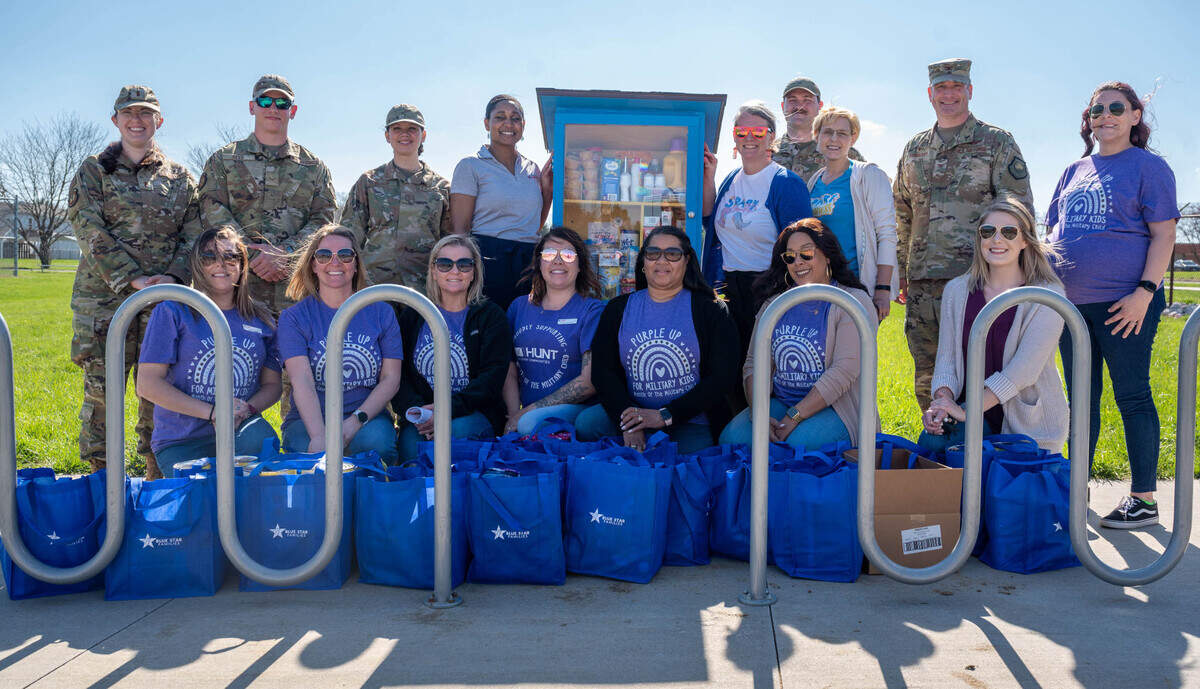
Team Scott partners with community to install Blessing Box
Airman 1st Class Shelby Rapert
375th Air Mobility Wing Public Affairs
Team Scott held a ribbon cutting ceremony for the base’s new Blessing Box near the Scott Elementary School on Monday, April 3.
The Blessing Box is stocked with non-perishable foods and hygiene items that families can take from or replenish. In an effort to combat food security issues for military families, base leadership coordinated with Spark Adolescent Resources, Blue Star Families and Lowe’s Home Improvement to create and fill the Blessing Box for everyone to use.
Civilian women’s contributions to Scott Air Force Base in World War II
By Kris Matthews
375th Air Mobility Wing Historian
While today’s military has long acknowledged the impact of gender diversity in its ranks, there was a significant period where that was not the case.
The Army Air Corps, the Army Air Forces, and the Air Force had various obstacles in place preventing women from truly serving alongside men. Throughout World War II and the first half of the Cold War, women stepped up to serve in the various capacities that enabled Scott to accomplish its multiple missions.
Civilians have a long history of excellent support to Scott Air Force Base, and the World War II era was no exception. With our nation on a total war footing, women filled the ranks of many industries, including Civil Service jobs at Scott Field. Women also served in administrative roles such as secretaries, like Maxine Grazian, who made the front page of the base’s Broadcaster newspaper in April 1942 by receiving a ticket for breaking the post’s bicycle speed limit of eight miles per hour.
Americans during World War II felt a distinct threat to the homeland, with many different efforts to harden Scott’s local defenses. Scott civilians enjoyed no exemptions from this readiness focus, with even office employees receiving chemical warfare training. A 1943 article in The Broadcaster shows civilians working in the finance office donning gas masks. The instructors then filled the office with smoke and tear gas, pushing the civilians to figure out how to continue working in these adverse conditions.
A much lesser-known group of civilians directly enabled Scott’s mission of training communicators for war. The AAF cross trained its radio operators and mechanics as aerial gunners; a radioman may find himself in the skies of Europe fending off German fighters seeking to shoot him down. Women seeking this kind of service were blocked due to War Department policy banning women in combat roles.
However, the radio school’s policy of keeping top graduates of the ROM course at Scott to serve as instructors proved untenable as the war heated up. In July of 1942, Scott’s director of training put out the call for women who met established criteria to serve as radio instructors. Although AAF policy prevented them from serving on the front line, women who had professional or amateur radio licenses were encouraged to apply, along with women who had six hours of college physics and 20 hours of college mathematics.
By August of that same year, women were beginning a three-month instructor training course, earning a starting salary of $1650 per year with a raise to $2000 after graduating the course. In October, they graduated and were tasked with teaching immediately, as the ROM course had also expanded to seven days a week to get the men trained and ready for war. By the end of 1942, they had become known as WIRES: Women in Radio Electronics School.
Among the WIRES were women who had notable achievements even before they came to Scott. Elizabeth Hampel lived in Moscow while her husband served on the U.S. Embassy staff. Keeping a diary of the experience, she turned it into a book titled “Yankee Bride in Moscow,” which was published and became a bestseller while she served as a teacher in the St. Louis Public Schools system.
Mrs. Hempel combined the radio knowledge she picked up from her husband with her teaching experience to join the WIRES. With her husband serving abroad as a naval officer, she viewed the WIRES as a way to support her country as well. “After all, I can’t have Al (her husband) carrying the whole load,” she declared to The Broadcaster.
The women in the civilian workforce served Scott with distinction during World War II; these determined efforts helped build an unbeatable military force that shattered the Axis in Europe and the Pacific. Their legacy of honor continues today in civilians who serve in either the 375th Air Mobility Wing or one of its many mission partners.
U.S. Army Nurses of Scott Field in World War II
By Kris Matthews
375th Air Mobility Wing Historian
While the previous installment of this series focused on the work of civilian women at Scott Field during the 1940s, women were not completely barred from the military. There were many obstacles in place restricting the capacity of their service but thousands of women found a way to aid their country during World War II. The most prominent of the early World War II-era at Scott Field were the Army nurses.
The U.S. Army Nurse Corps predated not only World War II, but also World War I. Although women had served as nurses since the Revolutionary War, they were not made an official part of the military until the Army Reorganization Act of 1901. Even then, certain inequities remained; women nurses would be appointed to an officer rank, but not commissioned, which led to them receiving lesser rights and privileges than a man wearing the same rank insignia, such as base pay.
The explosive growth of the Army Nurse Corps matched the rest of the military components. In 1940 there were only 942 in active service; by 1942 that number was 12,475 and a year later the number had grown to 36,607. The specific amount of those women who were stationed at Scott Field is unknown, but we do have some indication of how prominent they were on post by looking at the artifacts of the time period.
Women’s History Month: Katie Thaxton Lends a Helping Hand
By Airman 1st Class Madeline Baisey
375th Air Mobility Wing Public Affairs
All Airmen need someone to rely on when they are in need, whether it be helping a wingman get resources when in a time of struggle, or having someone to talk to when they feel unsafe.
Scott Air Force Bases Violence Prevention Integrator Katie Thaxton ensures all of these resources are available to all Scott personnel at a seconds notice.
“We focus primarily on prevention, which is getting after issues before they actually become issues,” Thaxton explains about her position. “In the violence prevention world, we focus on interpersonal violence, as well as self-inflicted violence.”
She is a mom to two children, and has her masters in Social Work. Before her position at Scott, she was a military and family life counselor.
Thaxton considers herself a people person, and loves talking in front of others. Her favorite part of her job is making connections with the people she is able to meet.
Her goal at work is to provide people with what they need, preferring to meet with units in person to give training, and providing service members verbally with resources.
She relates her past experiences, learning from Airmen at Scott and a few overseas missions she has been on to expand her opinions and knowledge on people, making what is best for them her top priority. Learning takes precedence in her life as well.
“We should always be lifelong learners, and we should use every opportunity that we have to grow and learn,” she explains. “Be a sponge in the sense of observing how other people are interacting, just always taking in information and understanding that you never know everything.”
The advice Katie would give other women during Women’s History Month is to never be afraid, take calculated risks, as nothing will happen if you don’t go for it and try.
“Build your confidence by doing things you’re afraid of.”
HQ CCC: ‘Providing the Reins of Command’ for 80 Years!
By Dan Williams
Cyberspace Capabilities Center History Office
When Lt. Col. Henry H. “Hap” Arnold led his flight of ten Martin YB-10 bombers, July 19, 1934, from Washington D.C. to Fairbanks, Alaska and back, he could never have realized that today’s Cyberspace Capabilities Center would exist as a direct result of that mission.
In addition to showing to the world that the United States could quickly come to the defense of its territory, the new YB-10s had specialized communications and navigation equipment and Arnold wanted to test these systems over these vast distances. A series of difficulties due to bad weather and unreliable communications convinced Arnold of the need for an integrated, centrally managed military airways communications system.
It took four years to convince the Army, but on Nov. 15, 1938, the United States Army Air Corps established the Army Airways Communications System (AACS) to operate all fixed Air Corps radio facilities in the continental United States. Placed as a staff function of Headquarters Army Air Corps Directorate of Communications, within the Training and Operations Division, this was a system and not an established organization. Because of this, the system has no “official” lineage and honors dating from 1938 despite the significant accomplishments of the organization before and into World War II.
The official lineage and honors of today’s Cyberspace Capabilities Center (CCC) begins April 26, 1943, with the establishment of the AACS Wing. Assigned to the newly created Flight Control Command, its first station was the Asheville, North Carolina City Hall building where it remained until the end of the war.
Like most military organizations, post war demobilization brought significant reorganization. With its wartime strength seeing a high of nearly 50,000 personnel dedicated to communications and air traffic control, post war demobilization brought AACS down to just 8,635 by June 1946, and with it more change.
Scott Showcase Tour
375th Air Mobility Wing Public Affairs
Today’s Cyberspace and Information Technology (C&IT) professionals are well acquainted with frequent and fast-moving change, this was just as true eighty years ago.
Team Scott invited AFJROTC, AFROTC cadets, High School Students, and members of the Delayed entry program from 16 schools and universities to attend various demos, displays, mission overviews, and a tour of Scott Air Force Base, Illinois, March 22, 2023.
They had the chance to see what it was like inside a C-40C, KC-135 Stratotanker, C-21 aircraft while learning about the 932nd Airlift Wing, 458th Airlift Squadron, and 126th Air Refueling Wing missions.
The students interacted with various local agencies and introduced items from their unique missions which included medical equipment, mobility gear, and new weather technology.
The students also had the opportunity to hear from and talk to senior leadership at Scott Air Force Base.
The tour was an opportunity for each cadet to meet with military personnel, learn how Airmen ensure rapid global mobility at Scott and showcase various careers to recruit future leaders of the United States Air Force.
Scott AFB conducts MARE to prepare for 2023 Airshow and STEM Expo
By Airman 1st Class Shelby Rapert and Airman 1st Class Madeline Baisey
375th Air Mobility Wing Public Affairs
The 375th Air Mobility Wing conducted a Major Accident Response Exercise to exercise their ability to respond to any base emergency. A MARE, while required by the International Council of Air Shows, allows a base to demonstrate a rapid and effective response to any situation that may arise.
The MARE not only tested emergency responders’ capabilities, but also allowed Airmen to practice their search and recovery skills. Units practiced responding to large-scale incidents so personnel are primed for any base emergency. Members partnered with the nearby community’s first responders and trained to maintain preparedness in the event of an aircraft incident at the upcoming Airshow and STEM Expo on May 13-14.
Units set up locations for evacuation, medical care and strategic communication to make sure the mission was met safely and efficiently.
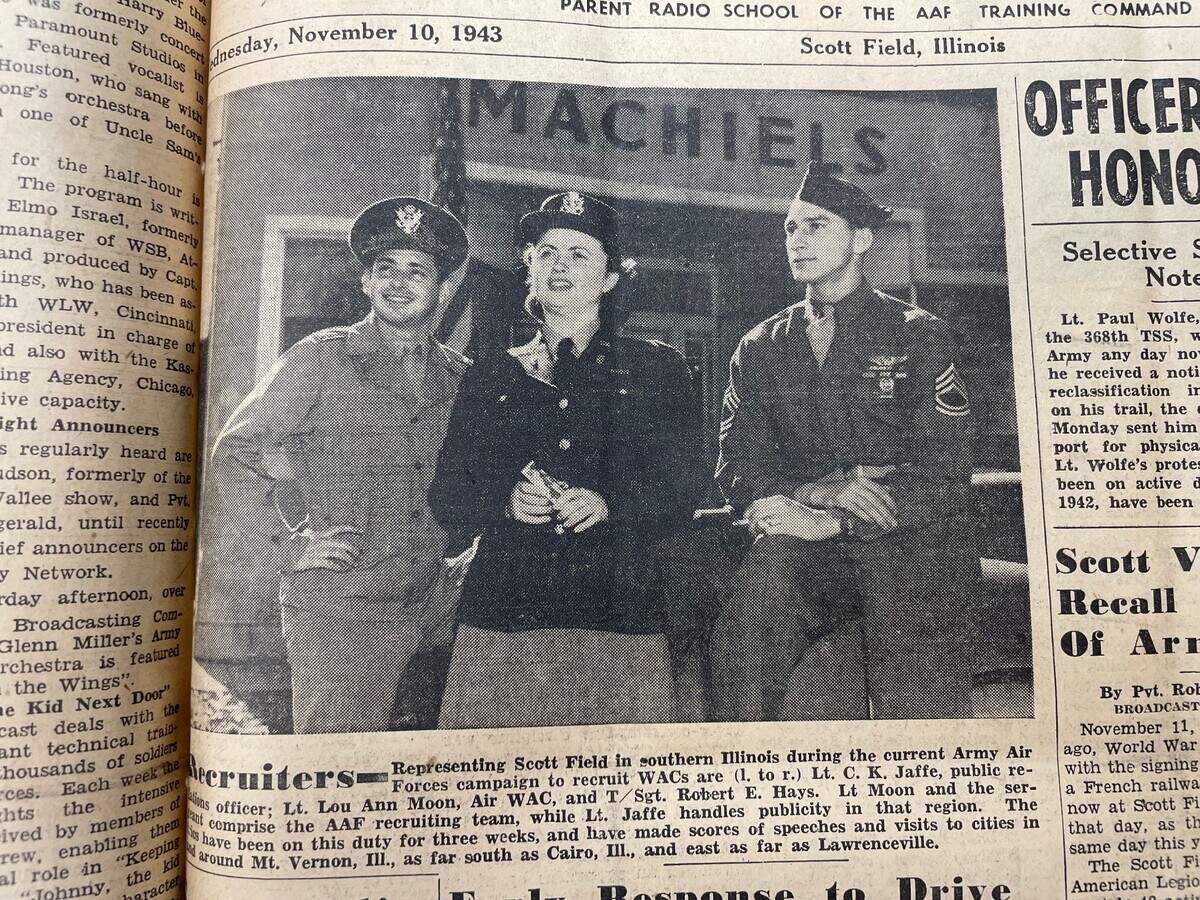
The WACs of Scott: Women’s Army Corps in World War II
By Kris Matthews
375th Air Mobility Wing Historian
As stated in previous parts of this series, the women of the World War II-era were not free to serve in the same capacity as men but had the same desire to do so. In earlier installments, we discussed civilian women supporting the Scott Field mission and the members of the Army Nurse Corps. Another group of women also found a way to serve America here: the Women’s Army Corps, or WACs.
The Women’s Army Auxiliary Corps (WAAC) was proposed in 1941 before the U.S. entered the war by Representative Edith Rogers of Massachusetts. Representative Rogers had been a volunteer in London and France during World War I, and saw firsthand the treatment of women who directly supported the military during that conflict.
Because they had no official status with the Army, they had to procure their own food and lodging; they also received no legal protections or medical care during the war. After the end of World War I, they were denied veteran status, which barred them from benefits.
These experiences shaped Rogers’ passion for veteran affairs when she was elected to fill her husband’s congressional seat in 1925. As the new war in Europe and the Pacific grew in the late 1930s and early 1940s, Rogers proposed the creation of an official auxiliary service as part of the U.S. Army, inspired by British Army women that she had met from 1917 to 1922.
Public opinion was behind the concept of a women’s auxiliary but there was still significant resistance in Congress from men. The resulting compromise was signed into law by President Roosevelt in May 1942, a full year after Rogers first proposed it; the concept did not get serious attention until after the Japanese attacked Pearl Harbor in December 1941.
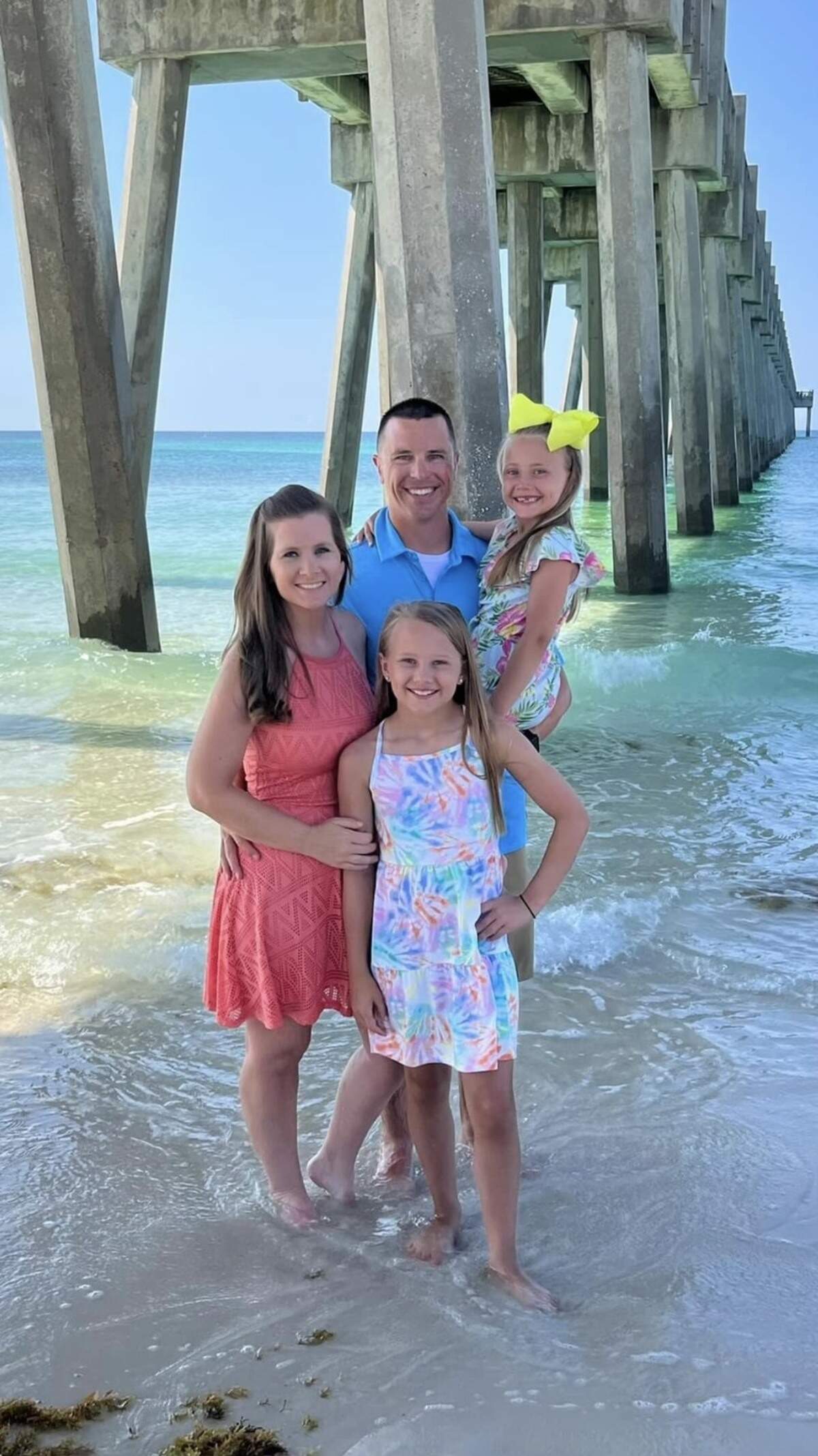
Women’s History Month: Amanda McCarty gives back
By Airman 1st Class Madeline Baisey
375 Air Mobility Wing Public Affairs
Whether it’s working alongside service members, making a major impact on the Team Scott community, or being a reliable mentor to other spouses and families, Mrs. Amanda McCarty will be there helping military families.
Scott Air Force Base’s recent Annual Key Spouse award winner, McCarty has worked to bring this drive and selflessness to Team Scott each and every day.
“I believe volunteering is a huge key in making everyone’s life happy,” said McCarty. “You have to wake up full of gratitude. You have to be thankful for the day that you have and make the best of it.”
McCarty describes herself as a very happy person, someone with a positive outlook and a person that can be relied on.
As a key spouse in the 375th Civil Engineer Squadron, it’s one full of responsibility, as she is in charge of reaching out to new families moving to Scott AFB.
“I get to be that first person our families can come to,” said McCarty. “I’m hugely involved in everything I can, everyone knows they can count on me. I don’t care if I’m running on three hours of sleep.”
McCarty and other military spouses constantly find time to give back. Two ongoing projects McCarty takes a key role in are making deployment care packages and meal trains for military families. She began making the packages when her own spouse was deployed.
When not dedicating her time to specifically being a key spouse and helping families, McCarty organizes and participates in volunteer events. Her dedication to making spouses feel welcome expands beyond just Scott AFB.
This story was originally published March 24, 2023 at 2:15 PM.