Edwardsville murder trial on hold, but court records hint at evidence, defense reaction
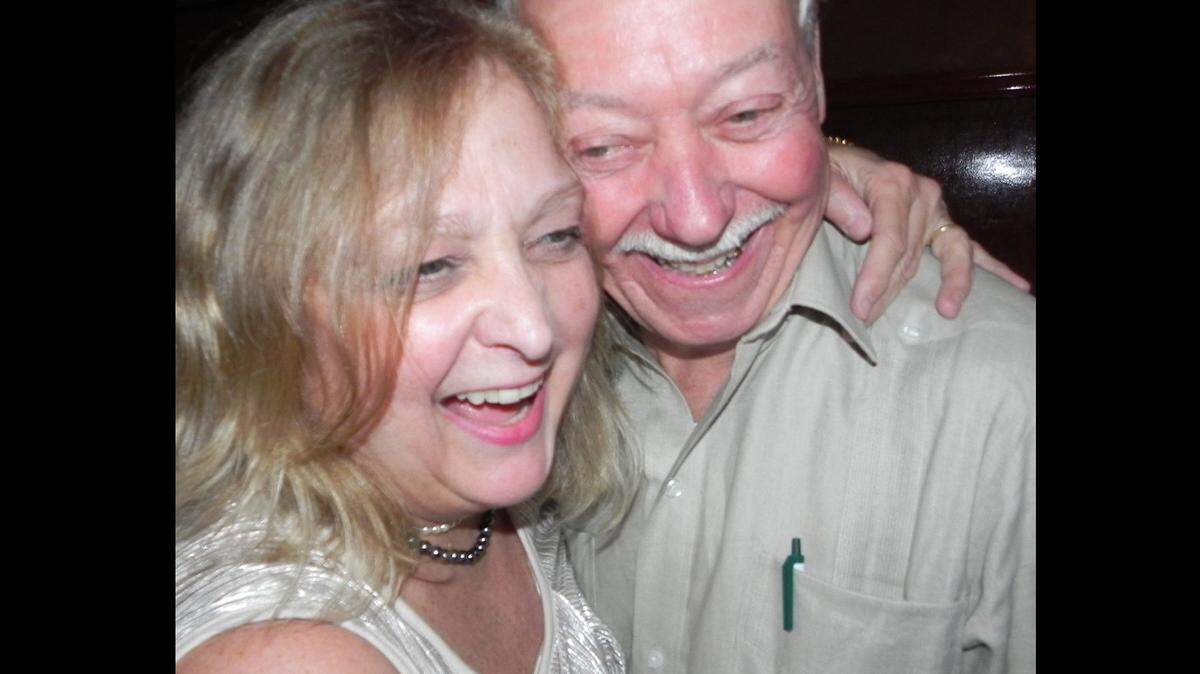
Family and friends of an Edwardsville couple who were stabbed to death in their home three years ago won’t see forensic reports or hear witness testimony anytime soon.
That’s because a Madison County judge ruled June 6 that Zachary Capers, the man charged with the murders, is unfit to stand trial and will receive mental-health treatment through the Illinois Department of Human Services, based on an evaluation by a court-appointed psychologist.
The trial had been set for Oct. 18, 2021, then moved to April 18, 2022, and now it could be a year or more before Capers, 26, faces a jury of his peers, according to officials.
But court filings leading up to the former trial dates provide a glimpse of evidence collected by the offices of State’s Attorney Tom Haine and Public Defender Mary Copeland, who is representing Capers.
Most of the motions and responses were filed over issues of contention between the two sides, everything from whether search warrants were properly obtained to speculation on alternative suspects and the use of autopsy photos.
Prosecutors and defense attorneys were essentially asking Associate Judge Neil Schroeder to lay ground rules for what could be introduced or discussed during the trial.
The bodies of chiropractor Lois Ladd, 68, and her husband, contractor Michael Ladd, 79, were found Monday, March 18, 2019, after Lois didn’t show up for work. They had last been seen in public on Saturday, March 16, at a St. Patrick’s Day party at the Stagger Inn Again in Edwardsville.
Capers, a homeless man who formerly lived in Glen Carbon and Collinsville, was arrested on the morning of March 17, 2019, in Staunton on an outstanding warrant related to a different incident. He was later charged with four counts of first-degree murder and indicted by a grand jury. He pleaded not guilty.
Prosecutors originally submitted a list of more than 100 potential witnesses that was later pared down to about 40. The defense has reserved the right to call all of them and one additional person.
Unrelated ‘bad acts’
Defense attorneys filed a motion last fall asking the judge to prohibit the Staunton police officer who arrested Capers in a church parking lot from testifying about Capers’ claim that he was “going to church” and to bar evidence that he had a cannabis pipe in his 2005 silver Kia Sorento.
The prosecution’s response described the circumstances leading up to Capers’ arrest on March 17, 2019. It stated that:
- Madison County deputies were called to a rural Worden home about 10 a.m. for a report of trespassing and suspicious activity. The resident was a sheriff’s department employee.
- Deputies learned that Capers had arrived in the Kia Sorento, which had front-end damage. He got out of the car, approached the home on foot and looked in the windows.
- When the resident went outside to make contact, Capers got in his car, started backing down the driveway and, when asked what he was doing on the property, made inconsistent statements.
- The resident asked Capers for identification, called county dispatch and learned that Capers had an outstanding warrant. While the resident was making the inquiry, Capers fled in reverse at a high rate of speed.
- A short time later, another off-duty law-enforcement officer reported that Capers’ vehicle was driving recklessly on Renken Road, approaching Staunton.
- A Staunton police officer, after being notified of the reckless-driver report, observed the car turn into a church parking lot and made contact with Capers, who provided inconsistent statements about his whereabouts and what had occurred.
- Capers was arrested, handcuffed and taken into custody. Officers found a smoking pipe containing burnt cannabis residue in his car.
- During phone calls and visits at the Madison County Jail, Capers spoke of using cannabis on the night of the murders and “blacking out.”
“At trial in this matter, the above-mentioned bad acts evidence would prove motive, opportunity, intent, preparation, plan, knowledge, identity, or absence of mistake or accident,” the prosecution’s response argued.
“In this case, admission of this evidence is critical because it contains facts necessary for the jury to understand the circumstances surrounding the murders of Michael and Lois Ladd and to likewise show the defendant’s state of mind when he murdered them.”
In his order, Schroeder agreed with the defense that police officers are prohibited from expressing their personal opinions on believability of a defendant’s statements.
On the issue of the cannabis pipe, the judge ruled that its discovery by police would be relevant and allowed if prosecutors introduced evidence of alleged statements by Capers that he smoked cannabis the night of the murders and blacked out.
Blood on clothing
The defense filed motions last fall objecting to search warrants used to collect some evidence in the Capers case, arguing that the affidavits submitted to justify them contained false statements by police related to probable cause.
Edwardsville police were being assisted by the Major Case Squad of Greater St. Louis in the investigation’s early days.
The evidence collected included Capers’ hair, saliva and other biological specimens.
The affidavits stated that Capers had blood on his clothing March 17, 2019, when the Staunton police officer arrested him in the church parking lot.
According to a prosecution response, the officer noticed a red blood-like stain on the side of his squad car after Capers had leaned up against it for handcuffing. The officer suspected it was blood from Capers’ clothing and photographed it.
“This belief was especially reasonable in light of the fact that suspected blood splatter was on the Defendant’s boots,” the response stated. “This blood on the Defendant’s boot was later confirmed to match the DNA of victim Michael Ladd.”
Defense attorneys argued in motions that investigators found no blood on Capers’ clothing, so the affidavits contained a false statement.
“There is no information anywhere in the discovery which would lead any rational person to an honest belief that there was blood transfer from Defendant’s clothes to the arresting officer’s squad car,” one motion stated.
In his order, Schroeder ruled for the prosecution, determining it was reasonable for the affidavits to include a belief by investigators that blood may have transferred from Capers’ clothing to the squad car.
Latex gloves
Affidavits submitted to justify search warrants also included a police statement that Capers’ car contained bleach and white latex gloves that were substantially similar to pieces of gloves found at the Ladd home.
Defense motions argued that this claim was false after examining prosecution evidence.
“There were no latex gloves among the exhibits other than partial latex gloves purportedly found at the crime scene,” one motion stated.
A prosecution response stated that a Madison County Sheriff’s Department inventory of the car’s contents included several pairs of white plastic/rubber gloves that were photographed.
In his order, Schroeder ruled for the prosecution, noting that the term “latex” is often used generically and could describe gloves made of different materials with different appearances.
The judge also mentioned other information in the affidavits, including police reference to Capers’ car having front-end damage that was consistent with striking an object, and that an object near the Ladd home apparently had been struck by a silver car.
Alternative suspects
Prosecutors filed a motion last fall asking the judge to prohibit Capers, his attorneys or any witnesses from discussing “irrelevant speculation concerning alternate suspects” in the case.
“In the course of this investigation into the Ladds’ death, numerous ‘leads’ were explored, some of which were based on speculation from family, friends and associates of the Ladds as to possible suspects involved with their deaths,” the motion stated.
“But none of these investigative ‘leads’ explored by the Major Case Squad resulted in admissible evidence.”
According to follow-up court filings by both sides:
- Several friends and family members told investigators that two of Michael Ladd’s relatives were persons of interest because they were “lowlifes” with drug and alcohol problems and they were constantly asking him for money.
- One of Michael Ladd’s employees recalled him saying, “I’m done giving those sons of bitches money.”
- In an interview, one of the two relatives told police that he and a friend had gone to the Ladd home on March 17, 2019, to say “hello” and knocked on the door, but no one answered, so they left and went to another friend’s house to chop firewood.
- The relative called police later, admitting that he lied during the interview and that he actually went to the Ladd home to ask for money before leaving to buy drugs in Missouri.
- Another family member submitted a ledger showing that Michael Ladd had been regularly giving money to the relative, with the last payment about a week before the murders.
A defense response maintained that police interviews with the relative “seemed to be directed at establishing a connection between (Capers) and decedents rather than to explore the possibility that (the relative) was involved in their deaths.”
The response argued that the police “failure” to follow up on this lead doesn’t make it irrelevant or inadmissible.
The charges against against Capers are based on “questionable circumstantial and forensic evidence” that doesn’t provide a motive, the response stated. “Despite ongoing attempts, the Major Case Squad and the state have been unable to establish any connection between Defendant and the decedents.”
In a January order, Schroeder called it “premature” to rule on this issue. He asked defense attorneys to inform him if they decide to put forth an alternative suspect at trial so it can be discussed outside the jury’s presence.
‘Gruesome’ photos
The defense filed a motion last fall asking the judge to prohibit prosecutors from introducing photos of the Ladds’ bodies at the crime scene or during autopsies, calling them “especially gruesome and inflammatory.”
Lois and Michael Ladd were stabbed multiple times.
The photos would cause prejudice against Capers by “inflaming the passions” of jurors and appealing to their sympathy for the victims, according to the motion.
“The state can establish, through the testimony of a doctor/coroner, the cause of death for each victim,” it stated. “The photographs would not help the jury decide any of the issues in dispute.”
Schroeder’s order stated that the motion would be addressed at a later time.
Toxicology
Prosecutors filed a motion asking the judge to prohibit Capers, defense attorneys or witnesses from referring to evidence or argument that the Ladds used controlled substances or that lab analysis had revealed their presence.
“Dr. Kamal Sabharwal conducted an autopsy of Michael and Lois Ladd including toxicology,” the motion stated. “Lois Ladd’s toxicology indicated the presence of cocaine in her bloodstream.
“The presence of any controlled substance including but not limited to cocaine is not probative of any fact at issue, and would be confusing and misleading to the jury. Any discussion of use of controlled substances by either victim is completely irrelevant and would speak only to prior bad acts, which are inadmissible.”
In his order, Schroeder ruled for the prosecution without objection.
Shoe impressions
Defense attorneys filed a motion in March asking the judge to prohibit prosecutors or witnesses from referring to two partial shoe prints found near the Ladds’ bodies.
An Illinois State Police lab analyst found that the impressions were similar to Capers’ right boot, but he concluded that “insufficient identifying characteristics” kept him from making a comparison, according to the motion.
“Any reference to these shoe impressions as being similar to the shores worn by the Defendant would be highly prejudicial, mislead the jury and contradictory to the reports provided,” it stated.
Schroeder’s decision on this issue is pending.
Prior conviction
The defense filed a motion last fall objecting to the prosecution’s plan to impeach Capers, if he chose to testify, with a prior felony conviction for possession of a stolen vehicle in Scott County in early 2019.
In his order, Schroeder ruled that this would be allowed after “weighing the probative value versus any prejudicial effect.”
This story was originally published June 14, 2022 at 6:00 AM.