Family remains divided as judge sentences Troy man for killing mother
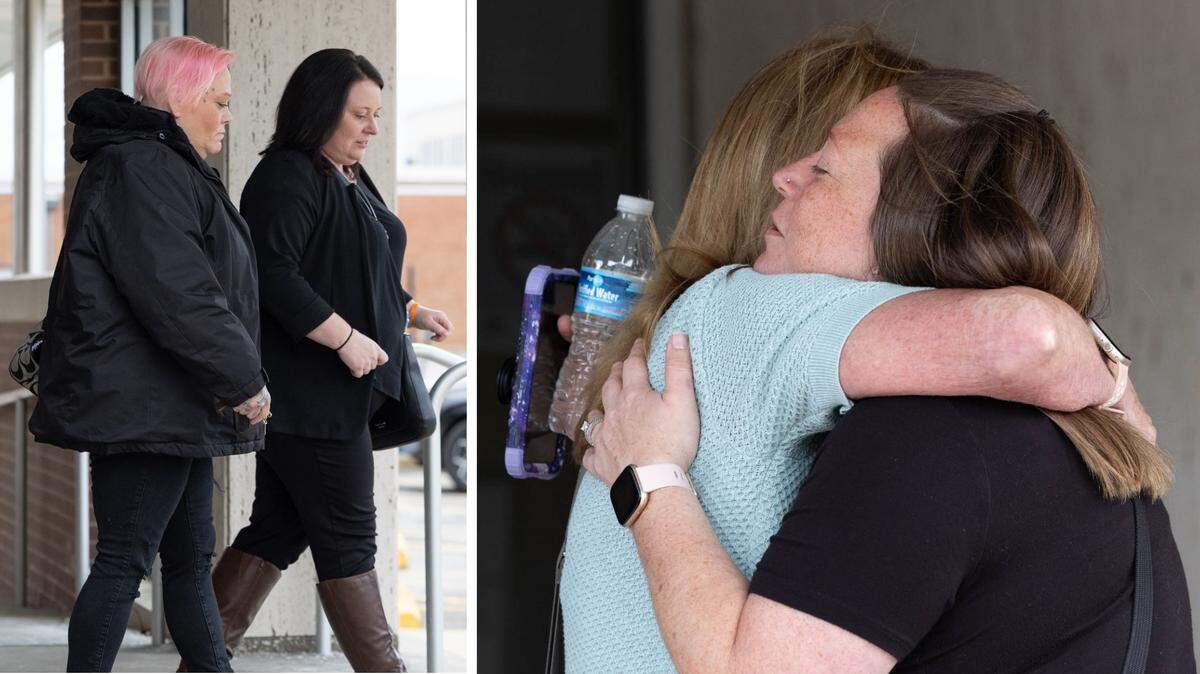
Neil Howard’s murder case has been marked by human tragedy, family drama, legal twists and lurid details about the 2023 death of his mother, a beloved waitress and widow of a former Troy mayor.
The intrigue continued at a Madison County Circuit Court hearing on Tuesday, when defense attorneys argued for a new trial, partly based on alleged misconduct by a juror and “outrageous” behavior by a prosecutor during Howard’s six-day trial in Edwardsville.
Judge Amy Maher rejected the defense motion and sentenced Howard to 30 years in prison with no possibility of early release.
“I believe the jury verdict was properly reached,” she said.
In February, a jury convicted Howard, 46, of killing Norma Caraker by strangling her with a bungee cord in her Troy home, shortly after her date with a St. Louis man she had connected with online.
The office of State’s Attorney Tom Haine had asked for a 45-year prison sentence. Assistant State’s Attorney Luke Yager pointed to Howard’s previous arrests for incidents involving family members.
“It is clear that the defendant is a violent individual, and he’s especially violent toward women,” Yager said.
On Tuesday, Maher outlined what went into her sentencing decision: Evidence presented at Howard’s trial, his childhood trauma, substance abuse, health issues, domestic-battery convictions and drunken state on Sept. 13, 2023, when police found Caraker’s body.
Maher said she didn’t consider the 2005 accusation that Howard fatally shot his father in Texas. In that case, he had claimed self-defense, and prosecutors couldn’t persuade enough grand jurors to indict him.
At one point, Maher acknowledged the divide among Howard’s siblings and other family members. His sister, Andrea Hall, insists that he’s innocent. His half-sister, Jenny Hosler, believes he’s guilty.
“I hope that you can find your way through this and (reach) reconciliation,” the judge said.
Howard attended Cahokia High School, lived in Collinsville, Maryville and Hillsboro, Missouri, and formerly worked at Pilot Travel Center in Troy, court records show. He has three grown children.
Howard was represented in the murder case by Edwardsville attorneys David Fahrenkamp and Jeremy Sackett, who stated in court filings that they weren’t being paid because their client had no money.
On Tuesday, Fahrenkamp said he was certain that Howard’s case would be appealed to a higher court.
“It will be handled by the appellate defender,” he said, speaking of the state office whose attorneys represent indigent people appealing criminal cases. “It should be handled by them. They’re very good.”
Daughter gives statement
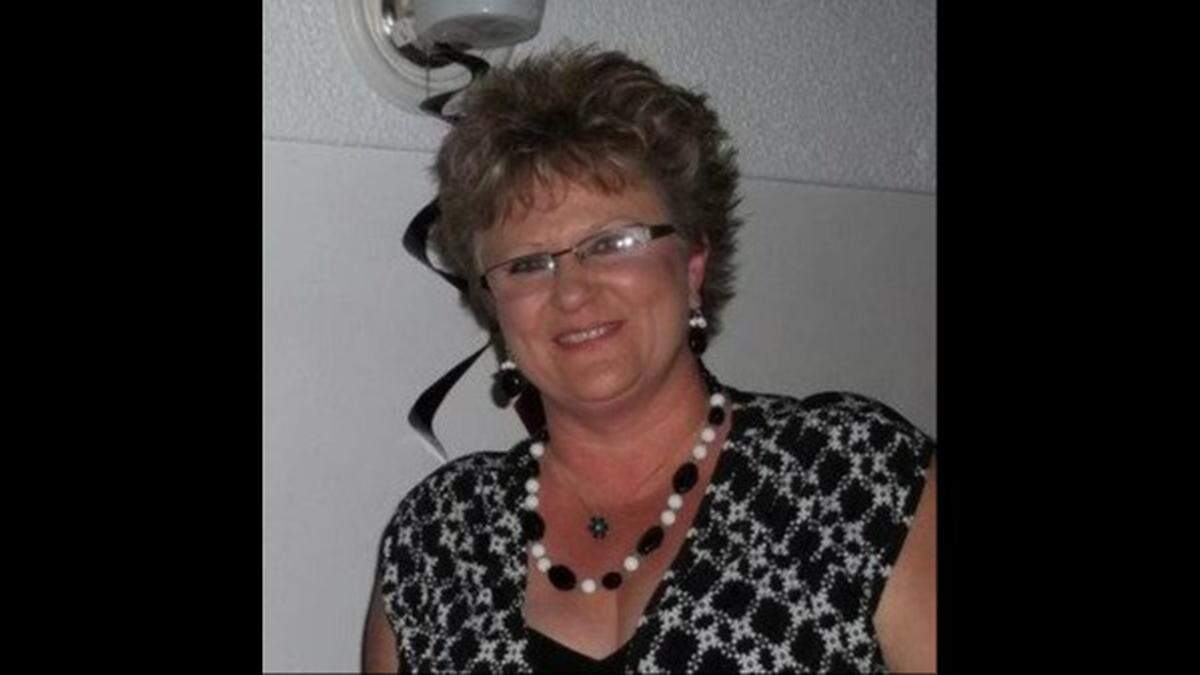
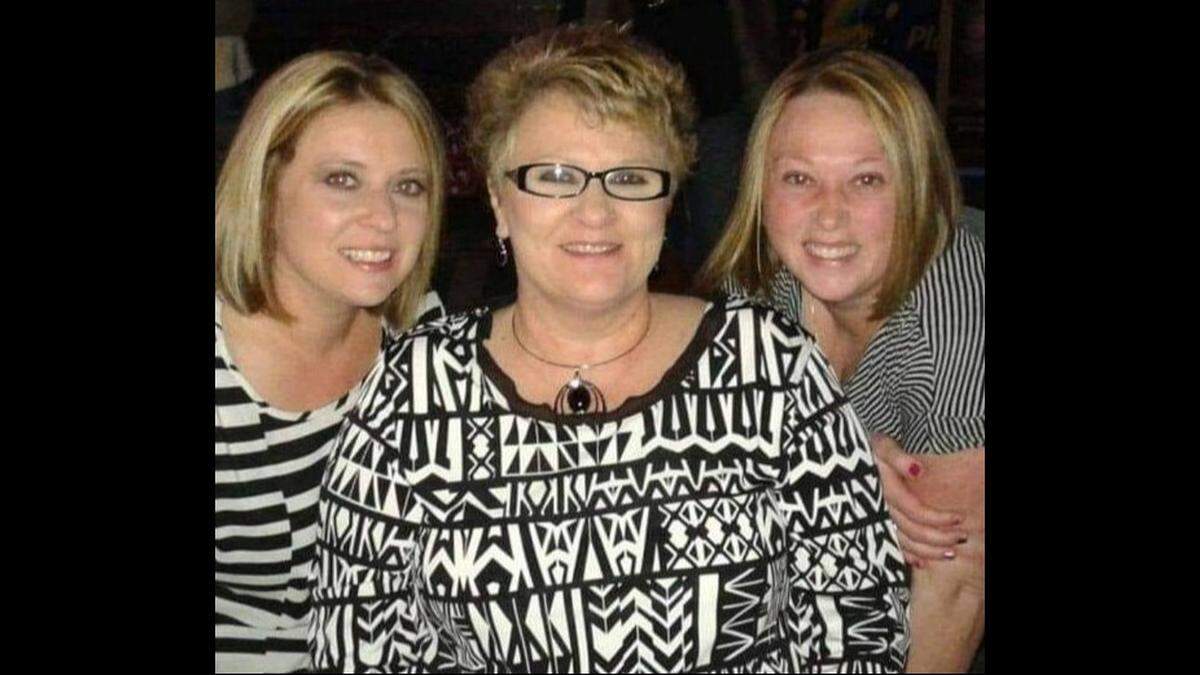
Norma Caraker, 60, was a waitress at Troy Family Restaurant and The Lucky Rooster Pub & Eatery in St. Jacob and widow of former Troy mayor Charles “Tom” Caraker, who died in 2018. She had three children from a previous marriage, two stepchildren, grandchildren and great-grandchildren.
Hosler took the stand at Howard’s sentencing hearing on Tuesday to give a victim-impact statement. She described her mother as kind, loving, hard-working, generous, warm, compassionate, supportive and always willing to help others, whether family, friends or strangers.
Hosler said Caraker’s “senseless murder” had left a void not only in her life but in the community.
“I struggle to find the strength to move forward because I no longer have her to encourage and guide me through the tough times,” she said. “But I’m trying, because that’s what she would want. She was my rock, my support, my everything. Her death has taken away a huge part of who I am.”
Hosler didn’t mention Howard in her statement. He sat silently at the defense table, except when he answered, “Yes, your honor,” to questions on whether he understood his legal rights.
Hosler avoided speaking publicly during the murder investigation and trial so as not to “jeopardize” the prosecution’s case against her brother, she said. That changed after sentencing.
Hosler told the BND on Tuesday that Howard had “victimized” her and her family for decades. In 2010, she and her husband obtained an order of protection against him after he allegedly threatened violence.
“He’s never been held accountable for anything,” Hosler said, adding that the prison sentence finally brought “justice.”
Hall also was in the courtroom on Tuesday. She left quickly after learning that her brother would spend 30 years in prison. When reached later in the day, she declined comment.
Hall told the BND last year that she believed Troy police had “jumped the gun” by arresting Howard, put too much weight on his past legal problems and conducted a sloppy investigation.
Police Chief Chris Wasser largely declined to comment during the investigation and trial.
“We did a complete investigation,” he said Tuesday, after the sentencing. “Obviously, the jury believed that (Howard) was guilty. We believe justice was served, and we hope that the family is able to heal from this.”
Trial focuses on date
At Howard’s murder trial, Yager and Assistant State’s Attorney Ryan Kemper characterized him as an angry, unemployed man with a history of domestic violence who lived in Caraker’s basement.
They maintained that he tried to cover up his crime by throwing suspicion on James Carter, the St. Louis man that Caraker met at a local bar on the evening of Sept. 12, 2023, before taking him back to her house for sex.
A Madison County detective testified that an analysis of Carter’s cellphone signals showed that he left Caraker’s home about 11 p.m. and drove back to St. Louis. Fahrenkamp argued that such data could be unreliable.
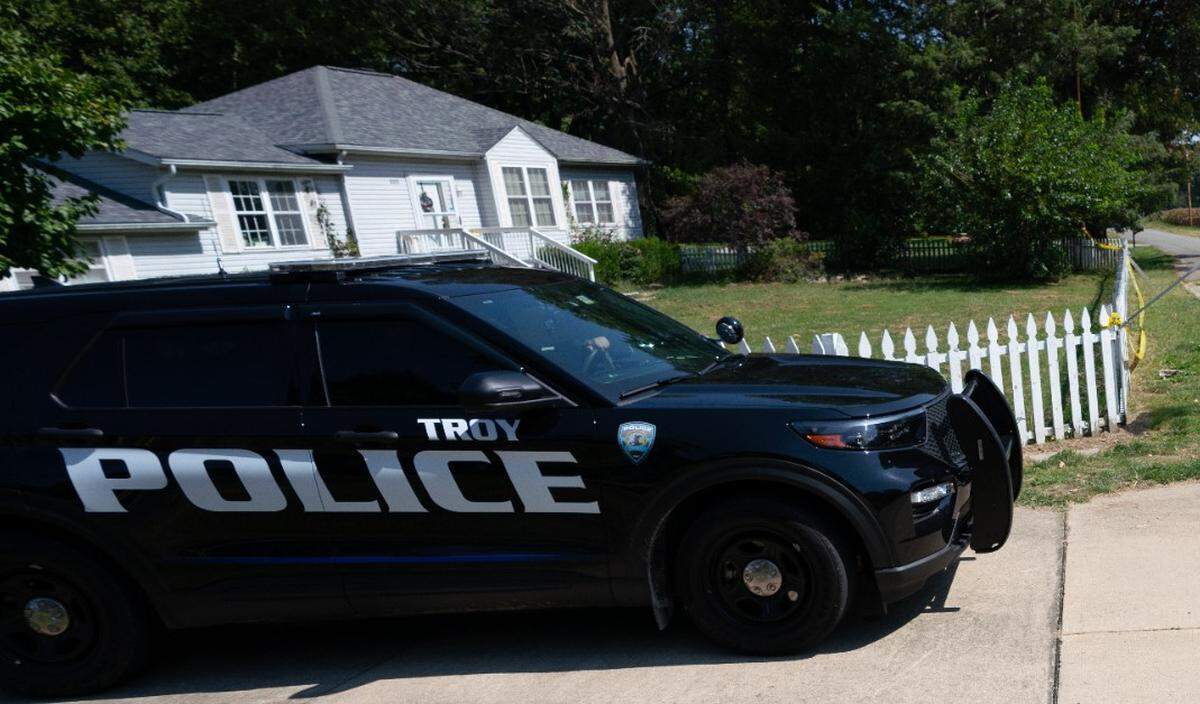
In his closing argument, Yager emphasized that Howard was the only person in Caraker’s home at 600 Lower Marine Road when police found her body about 1:30 a.m. on Sept. 13, 2023.
“This defendant had had enough of his mother,” Yager told jurors. “He’d had enough of her sleeping around. He’d had enough of her not giving him money.”
Fahrenkamp and Sackett argued that Troy police focused too heavily on Howard as a suspect initially and ignored other leads, notably failing to get a DNA sample from Carter until 15 months after the murder.
Carter had refused to meet with prosecutors until after they gave him “use immunity,” which prohibited them from using his statements against him in court, according to one defense motion.
Fahrenkamp spent much of his closing argument talking about a report by a crime-lab technician, who testified that she had found DNA from Carter, but not Howard, on the bungee cord and under Caraker’s acrylic fingernails, including some that were ripped off.
“The gold standard of evidence ... The gold standard of forensic evidence is DNA,” Fahrenkamp told jurors.
Prosecutors maintained that Howard was wearing latex gloves at the time of Caraker’s strangulation and that his DNA wasn’t under her fingernails because she was grabbing the bungee cord and trying to pull it away from her neck instead of clawing at her attacker.
Yager pushed back on the defense argument that investigators decided in the “first 20 minutes” that Howard was the killer, telling jurors that they collected evidence throughout the home, used a drone and canine unit outside, conducted interviews and viewed video footage.
Defense asks for new trial
Fahrenkamp and Sackett filed a motion for a new trial on March 12, about a month after a jury deliberated for three hours and found Howard guilty of first-degree murder in Caraker’s death.
In the motion, they made the following claims:
- The court prohibited defense attorneys from using certain exhibits in closing arguments, including one that supported their theory that “law enforcement was tainted by investigative bias and refused to do a complete investigation.”
- The court denied a defense request for funds to retain an independent DNA expert, depriving an indigent defendant of due process.
- The evidence presented at trial was legally insufficient to support a conviction.
- Yager behaved in an “outrageous” manner by calling Fahrenkamp “unethical” in front of jurors, asking the judge to remove him from the courtroom, making “faces” during a defense cross-examination and mistakenly displaying a photo of his family at a Cardinals baseball game on a screen at the end of the trial.
- Prosecutors chose not to analyze Carter’s internet-dating activity, despite the fact that it contradicted statements he made before and during the trial, and they didn’t record his use-immunity agreement.
- Prosecutors directed their cellphone-tower expert to interpret a specific route for how they believed Carter would have returned to St. Louis instead of presenting one to him without that bias.
Finally, the motion for a new trial argued that a juror had violated the judge’s admonishments and orders related to accessing the internet and posting on social media during the trial.
Fahrenkamp called the juror to the stand on Tuesday. Under questioning, she acknowledged that she had announced in a Facebook post that she was Juror No. 4 in a Madison County murder trial, adding an emoji that he described as “screaming with fear.”
On the day the jury reached a verdict, the juror posted, “GUILTY!! Killed his mother. Sicko,” according to Fahrenkamp.
Yager responded that none of the defense arguments were grounds for a new trial, and Judge Maher agreed.
As for the alleged juror misconduct, Yager asked why the defense didn’t bring up the social-media post during trial so that an alternate juror could step in. Fahrenkamp said he didn’t know about it at the time.
In a press release after sentencing, Haine commended the prosecution team, Troy Police Department, Illinois State Police Division of Forensic Services, Collinsville Police Department, O’Fallon Police Department, Madison County Sheriff’s Office and other agencies that assisted in the case.
“If (Howard) ever steps foot outside a prison, he’ll be an elderly man,” Haine said.
“We continue to hold the family and loved ones of Norma in our prayers. They have exhibited true grace and poise throughout these difficult proceedings. Our hope is that this resolution allows them to begin to heal.”
This story was originally published May 21, 2025 at 5:30 AM.