
There aren’t enough candidates filed to fill school board seats in St. Clair County
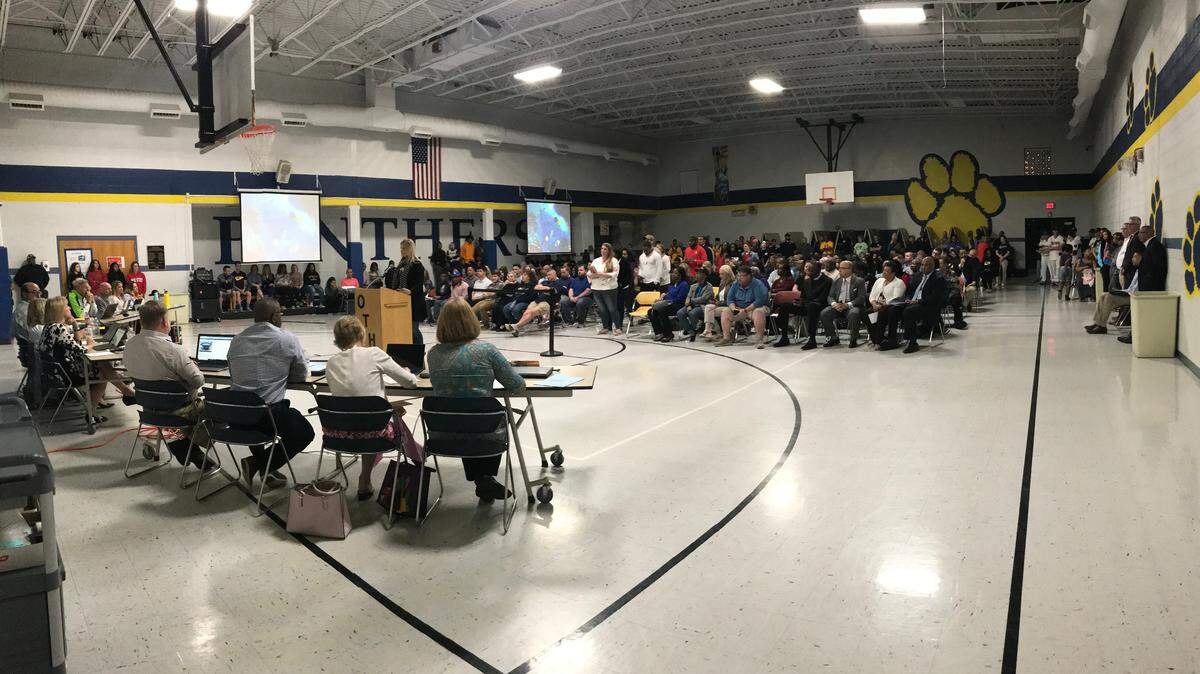
They manage the largest percentage of your local property tax bill and make decisions that directly impact the safety and future of our youngest citizens.
And despite the added pressures from needy faculty, petulant parents and weary taxpayers, school board members do their jobs for free.
More and more, those pressures are leaving elected seats unfilled.
Many local incumbents have made the decision not to run again in the April 6 municipal election. In many metro-east districts, no one’s stepping up to replace them.
Some school districts, like East St. Louis 189 and O’Fallon Township High School 203, have consistently drawn interested candidates to school board seats, but that’s becoming increasingly rare. In St. Clair County, more than a quarter of the districts had just one or two candidates file petitions to be on the ballot this spring.
County Clerk Thomas Holbrook said it’s common for local seats to be left without a candidate to run for them, but it’s especially common for school boards.
“In the last couple decades, it’s become more and more an issue,” he said. “People shy away and don’t want to be involved in government because of all the harassment they face, to be quite honest.”
Tiffany Baldwin was appointed to the Grant Central Consolidated School District 110 school board in 2005, after a board member moved out of the district. She said the fiduciary responsibility of school boards has gotten tougher since the 2008 recession.
When making tough decisions, she said “you get all the blame and none of the glory.”
Still, Baldwin has stayed on the board for more than 15 years. Her youngest child is graduating this year, so she said she won’t run again when her term is up in 2023.
Baldwin had considered not running in a previous election, but she knew there there was no line behind her to fill her seat. She said she’d feel bad leaving the board short a member.
The vast majority of Illinois school boards have seven members with staggered four-year terms. Elections are typically on the first Tuesday of April, for either three or four seats. Locally, most board members are at-large, which means they represent the whole district, rather than a specific geographic area within the district.
Candidates running on the ballot must gather signatures on their nominating petition, which are to be filed in December. The final day to file a declaration of intent as a write-in candidate is Feb. 4.
A line for a write-in candidate isn’t automatically included on the ballot along with the registered candidates. If no one files a declaration of intent to be a write-in candidate by the deadline, a write-in option isn’t available at all.
Holbrook said this decision was made before his time, to keep people from “chaotically” writing down random, and often ridiculous names like former President Donald Trump or President Joe Biden.
Typically, would-be write-in candidates don’t file.
“We get very few that do it,” Holbrook said. “If there’s very little interest to be a school board candidate, there’s very little interest to be a write-in.”
Without the line on the ballot, Holbrook said it doesn’t matter if 50 people write down someone’s name anyway.
If a school board has a vacant seat after the election, it’s filled by appointment.
While write-in candidates might be rare, Baldwin said districts are sometimes more likely to garner interest for an appointment than an election.
“People think running for school board is much harder than it actually is,” she said. “ … It never really occurred to me to run for the school board, but when the opportunity arose, I knew it was something I would enjoy doing, and I’d do well at.”
Until the appointment, the incumbent would retain their seat, though the Illinois Supreme Court has recognized the common law rule that a vacancy occurs when the term of office expires, according to the Illinois Association of School Boards.
An appointed member of the board would have to be elected on the next ballot to serve out the remainder of the term, unless there’s either fewer than 868 days left in the term or fewer than 88 days before the next-regularly scheduled election.
Many appointed board members, including Baldwin, go on to serve for multiple terms.
School boards may have their own processes for picking who to appoint, but there are few general eligibility requirements. In most cases, a teacher can’t serve on the board for the district they work in, but there’s no requirement that members be a parent or have any connection to the school at all.
“My goal has always been to stay on for as long as it stays valuable,” Baldwin said. “Sometimes, it’s just atrophy. It’s routine. Sometimes you need new blood and different voices.”
In some states, like Kentucky and Florida, school districts are split by county, each with a board, usually with five or seven school board members. St. Clair County, meanwhile, has 27 districts — the county needs 189 people willing to serve as school board members.
Holbrook said that many people are dedicated to serving their school community, but still aren’t interested in sitting on the board.
“They have no interest in putting their families under that kind of scrutiny,” he said. “They care about their communities, but they care more about their families.”
This story was originally published February 13, 2021 at 5:00 AM.