St. Clair County school district is tackling decades-long budget trouble. Here’s how
In Reality Check stories, BND journalists dig deeper into questions over facts, consequences and accountability. Read more. Story idea? newsroom@bnd.com.
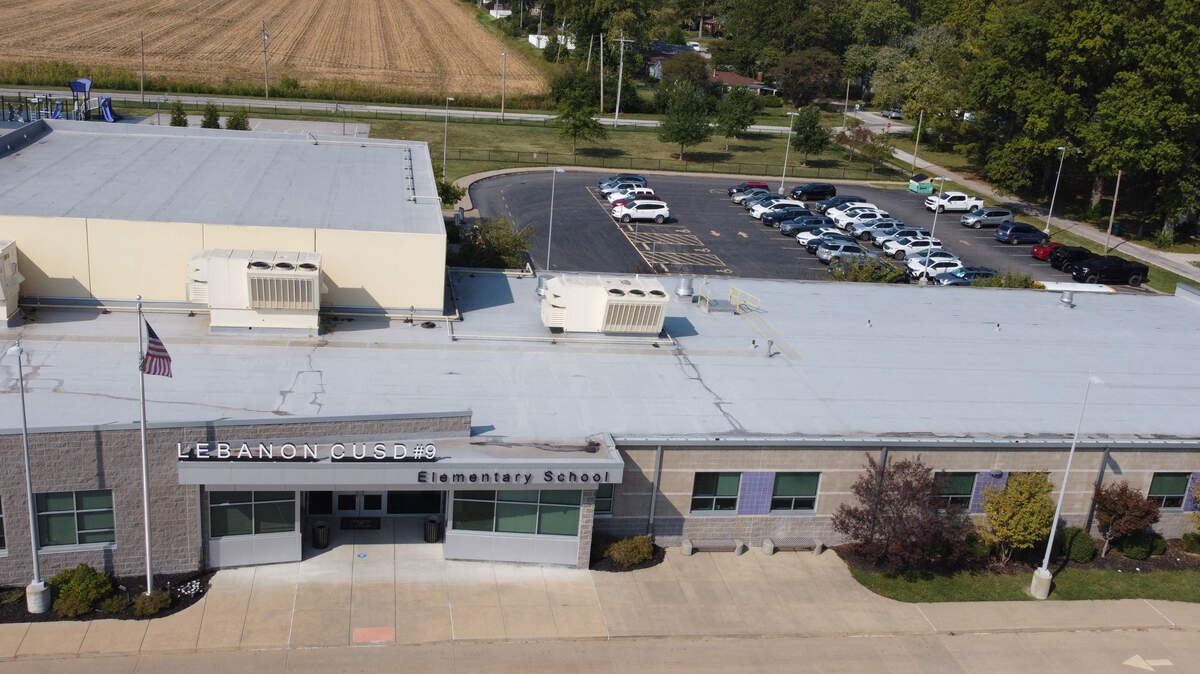
Lebanon Community Unit School District 9 has been spending at a deficit for years. Now, with the looming end to pandemic-era federal funding of public schools and a potential tightening of state funding, a new superintendent is looking to course-correct and improve the district’s financial outlook.
“The foundation of your house is your finances, and you can’t rebuild a house without your foundation being firm,” Superintendent Amanda Ganey said. “That’s really why we decided as a district and a board to work together and try to navigate getting our finances back on track for the sake and the well-being of the district.”
In an effort to balance the budget, the Board of Education has already approved cutting two probationary teachers at the end of the school year, and more will ultimately be needed for the district’s long-term financial health, according to officials, but the district is looking to find savings without making program cuts while expanding two programs to develop those revenue streams.
Lebanon District 9 was on the Illinois State Board of Education’s “financial early warning” list for fiscal year 2022 and the “financial watch list” — the lowest designation a school district can receive on its financial profile — the two years prior. The district’s 2023 annual financial report shows that it is estimated to be back on the financial watch list for fiscal year 2023.
The St. Clair County district has had a deficit in its operating funds for 13 of the past 20 fiscal years, according to its annual financial reports. In fiscal year 2023, its operating funds had a deficit of $93,174, and the district’s financial projections show the deficit worsening in the coming years.
Additionally, the operating funds had a balance of $38,331 at the end of the fiscal year on June 30, 2023. Since the deficit is greater than one-third of the ending fund balance, the district must adopt and submit a “deficit reduction plan” to the state board of education that shows a balanced budget within three years.
Ganey, who joined the school district in July 2023 and has a doctorate in educational leadership from Saint Louis University, said the district is currently working on its deficit reduction plan, but that the first step has been getting the district’s finances organized, especially since an amended fiscal year 2023 budget hadn’t been completed last spring.
When she was brought on board as superintendent, Ganey said she was asked to improve financial transparency and share certain finance-related things with the school board that members had been wanting to know.
The district was going through an audit with the state board of education, and that’s where the deficit spending came to light, she said.
School district budgets are broken up into different funds. The operating funds — which consist of the educational, operations and maintenance, transportation and working cash funds — make up the largest chunk of the budget. Money can be transferred between them by board resolution.
Restricted funds, like the capital projects and tort funds, are typically smaller, and money within these funds cannot be shifted elsewhere in the budget.
Ganey said she first dove into the operating funds because the biggest deficits are in the educational and operations and maintenance funds. At the end of fiscal year 2023 last June, Lebanon 9’s educational fund had a deficit of about $830,000, and its operations and maintenance fund had a deficit of about $200,000.
The school board didn’t have a finance committee prior to Ganey’s tenure and formed one in August consisting of board and community members as well as school staff.
“When you start talking about finances, sometimes there’s fear, and I didn’t want fear. I wanted transparency, like this is where we’re at and together we’ve got to figure out how we want to move forward,” Ganey said. That’s what the finance committee is doing based upon the audits, deficit spending and operating budget needs.
The committee has also identified and started working toward short- and long-term financial goals, she said.
Financial goals
One of the short-term goals was to get the educational fund out of the red. To do so, the district put some of the district’s money from the third and final wave of COVID-19 federal funding in the educational fund to pay for salaries as a temporary fix, Ganey said.
Lebanon District 9 is in a multi-year contract with the teachers union that includes annual raises, which presents an additional challenge since the district has been deficit spending for years in the educational fund, from which teachers’ salaries are paid, she added.
To further alleviate some of the stress on the educational fund, she said the district has worked with its attorney to update its risk management plan, allowing for the salaries of staff who maintain the buildings and their safety to be paid out of the tort fund.
For the long-term goals, the district began discussing possible reductions in staff, which has entailed looking at class sizes, student needs and financial projections based on different reduction scenarios.
At its February meeting, the board approved resolutions to lay off two probationary teachers at the end of the school year.
Ganey said those reductions in staff will not be enough to bring the district’s finances into good health long-term and that more may need to come.
“What’s important to note is even though reductions may need to come more to put us in a healthier standpoint with our finances, we need to be cognizant of our current students and the needs,” she said. “It’s got to be a combination of working together, seeing the students and the enrollment, and where we can whittle a little bit to bring in the revenue but yet give the best education for our students.”
The need for more staff reductions to reach a balanced budget is something Carl Holman, a retired Illinois State Board of Education financial consultant who now serves as a community member on Lebanon 9’s finance committee, has stressed to the board in recent months.
Other long-term goals include growing the district’s preschool and special education programs, which could bring additional revenue, Ganey said.
‘Domino effect’ of debt
Lebanon District 9 — like many other school districts across the state — has a working cash fund in its budget, which functions like a rainy day fund and internal bank.
While the district’s working cash fund currently has a balance of about $857,000, only $57,000 is available. That’s because $575,000 has been internally loaned to the educational fund and $225,000 has been loaned to the operations and maintenance fund.
Whenever loans are taken from the working cash fund, Ganey explained, they’re supposed to be paid back the next year with the first disbursement of local property taxes. Lebanon 9 can’t pay back the $800,000 in loans because of its deficit.
“Not only are we externally borrowing, we’re internally borrowing and we can’t pay back our internal loans due to the external loans, so it’s kind of a domino effect,” Ganey said.
At its March board meeting, the board approved a $1 million temporary line of credit with Farmers & Merchants Bank. Ganey said the line of credit will act as a cushion that the district can pull from throughout the rest of the year to help funds that are creeping toward a deficit.
The line of credit is like a credit card, she explained, and the district will only take from the $1 million what it needs and as needed. Interest will accrue only on what the district borrows from the $1 million.
She said turning around the district’s finances will continue to require compromise, conversation and creative thinking to create an amazing school district and environment for students while managing the district’s financial health.
“It’s because of my love of kids and my passion for education that I truly feel like Lebanon can change this trajectory of their finances to make it healthier, and the longevity of the district will be positively impacted,” Ganey said.