
Is your child ready for kindergarten? Metro-east educators offer this guidance
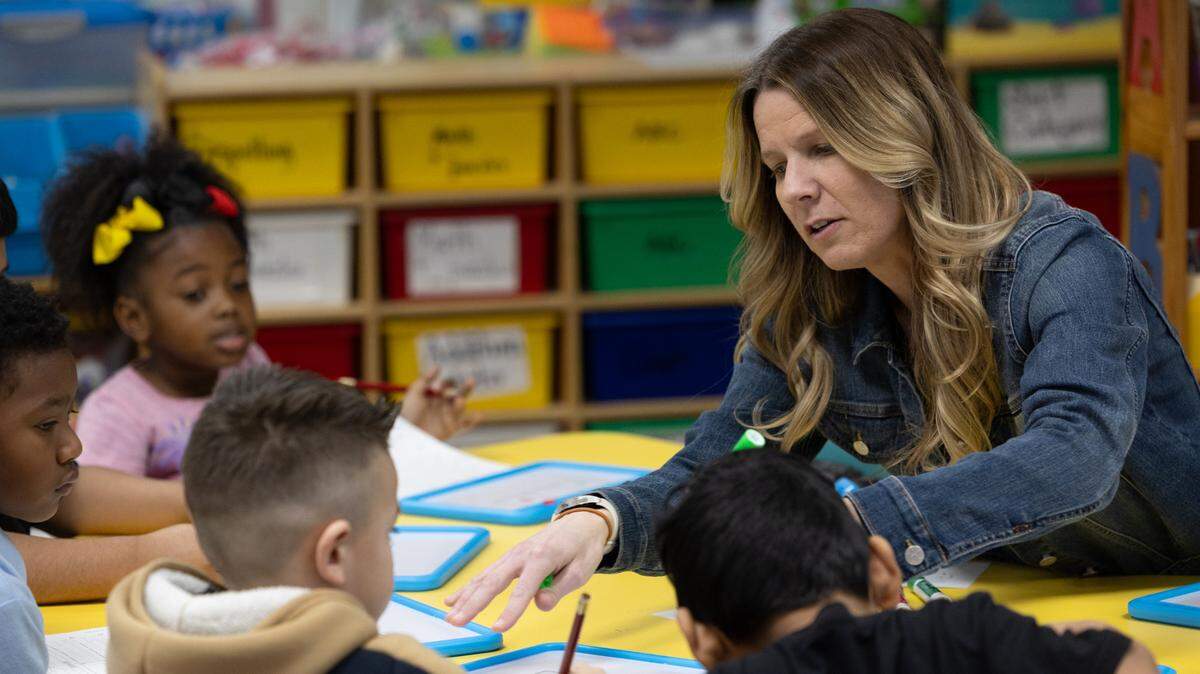
With the next school year just a few months away, parents across the Metro East will find themselves facing a big question: “Is my child ready for kindergarten?”
In general, to attend kindergarten in Illinois during the 2025-26 school year, a child must be 5 years old on or before Sept. 1, 2025. Kindergarten is not mandatory in Illinois, and children are not required to attend school until they’re 6 years old, hence the “to send or not to send?” dilemma.
When making this decision, each family has its own needs and circumstances to consider, said Evan Krauss, the executive director of East Side Aligned, which is the backbone organization for the Greater East St. Louis Early Learning Partnership.
He said the key is to have children in a safe, supportive, high-quality learning environment. This includes kindergarten, child care, and preschool programs. It also can include a family’s home if they have adequate time, resources, and support, Krauss said.
He drew from his own experience as an example. Krauss’ fifth birthday was just before the cutoff for kindergarten eligibility. Instead of sending Krauss to kindergarten right away, his parents opted to keep him at their trusted Montessori program for another year.
“For those on the cusp, that’s the difference maker — what is going to happen in that year,” Krauss said. “(In the Montessori program), I had social interaction, I had some level of learning, and I was in an environment that supported my development and prepared me for a classroom environment.”
Amber Knight, president of the Illinois Association for the Education of Young Children, said enrolling children in kindergarten or another high-quality early education program can connect families with professionals who help guide their development. That’s guidance they may not get if they decide to hold their child back a year.
“Even if a child is behind, if they are put into kindergarten, they will get the support they need through special education,” said Knight, who is also a special education teacher in Tuscola. “So, holding a child back thinking that they’re not ready could be holding them back from receiving support.”
There’s no one list that guarantees if a child is “ready” to start kindergarten, Metro East experts say. In some ways, it’s not so much a question of readiness, but how to set your young student up for success in kindergarten, Knight said.
Here are some ways to ensure your child enters kindergarten with confidence:
Focus on social-emotional skills
Shelley Lumas, a pre-K teacher at Vivian Adams Early Childhood Center in East St. Louis, said this is one she “cannot stress enough.”
“In kindergarten, play is a central part of learning and social development,” Belleville School District 118’s Assistant Superintendent for Curriculum Tracy Gray said.
“Do they understand what appropriate play looks like — how to take turns, share, use kind words, and resolve small conflicts? Are they able to engage with others in a way that is respectful, inclusive, and safe for everyone?”
Most of these skills come naturally in preschool or child care, but these environments aren’t necessary to learn these skills. Libraries and YMCAs are a gold mine for opportunities for littles to interact with peers, suggested Lumas and Erin McMullen, a kindergarten teacher at East St. Louis Districts’ James Avant Elementary School.
Parents can also work one-on-one with their child to build such skills, Gray said. She suggested practicing taking turns when playing and modeling how to use respectful language. Simply including children in conversations can teach them how to listen, express themselves, and respond appropriately, Gray said.
McMullen said parents can also talk to their children about what it looks like when somebody is sad, happy, and angry to help them better read and understand the emotions of their peers.
Read with your child
Simply reading to young children for 10-15 minutes can teach so many early literacy skills, Lumas said. These include the parts of a book and how we read from left to right.
“It seems like such a small time, but the impact of consistently reading books aloud, talking about the front cover, the back cover, the title page, discussing the stories, and encouraging children to describe the pictures is priceless,” Lumas said.
Educators often recommend that children work on identifying letters and know how to write their first and last name before entering the kindergarten classroom. Many children go by nicknames at home, so it’s also important that they respond to the name they’ll be using at school, McMullen said.
Embrace everyday ‘teachable moments’ for numbers, colors, and more
In addition to letters, incoming kindergarteners will benefit from being able to recognize shapes and numbers up to 10, Knight said.
Lumas explained families can build these skills in their little scholars in everyday life without buying any special equipment or going out of their way. Some examples: children can help sort laundry by color, familiarize themselves with numbers by reading prices at the grocery store, and counting ingredients when cooking.
“Teachable moments are everywhere,” McMullen said.
Establish routines
Routines are a huge part of kindergarten but can be a challenge for children who are not used to them or have a tough time transitioning from one activity to another. Lumas said it’s important to familiarize your child with routines and following instructions before they start kindergarten.
“Little children thrive off of routines that are consistent and also predictable because it helps them to feel that sense of safety,” Lumas said. “So, I always encourage families to establish consistent routines and assign simple chores also that help to build responsibility and independence.”
Being able to go to the bathroom independently, wash their hands, zip jackets, tie shoes, and other basic self-help skills also go a long way in kindergarten preparation, McMullen said.
Practice fine and gross motor skills
Fine motor skills use small muscles in the hand and wrist. Kids use fine motor skills all the time in kindergarten: from simply properly holding writing utensils and scissors to tracing, cutting out objects, playing with Play-Doh and puzzles, and coloring inside lines, McMullen said. Again, all of these skills can be practiced at home.
Gross motor skills are important, too, Lumas said. Think of what your child will be doing during recess: running, jumping, throwing and catching a ball, hopping, and skipping.
Parents, prepare to be part of a team
Schools stress that a child’s family is a key component of their success.
“Once your child enters kindergarten, I wholeheartedly encourage parents to get involved in the school community — whether that means joining a field trip, attending a PTO event, or simply volunteering in the classroom,” said Krista Lunz, principal of Ellis Elementary School in the Belleville-area Harmony-Emge School District.
“Schools truly are the heart of our community, and it takes all of us working together to create an environment where every child can thrive.”
But parents don’t have to wait until school starts to build a positive relationship with their school, Lunz said. Many schools have kindergarten welcome events, tours, and orientations, all of which are opportunities for children and their families to get to know the staff, building, and overall school community, Lunz said.
Parents should feel empowered to take an active role in their child’s education, Lumas said. This means coming to their child’s teacher with questions or concerns or contacting the school about additional resources.
“We want to make sure that parents know that they are always their child’s first teacher,” Lumas said. “All of us here at Vivian Adams stress that parents need to be partners in this journey.”
Take advantage of developmental screenings
Krauss said developmental screenings are a valuable tool for all families — not just those who have concerns about their child’s development, as they’re a great way to chart growth.
Each district handles these developmental screenings differently. Check with your local school district to learn what’s available. Additionally, there are a variety offered within the community, Krauss said. Brightpoint Child Care Resource and Referral can be a great place to find such resources, Krauss said.
“The assessments are not only a tool to identify support needs, they (also) provide space to celebrate a child’s growth,” Krauss said.
This story was originally published June 11, 2025 at 5:00 AM.