
Inclusive playgrounds are coming to metro-east schools. How are they different?
Stephanie Fielder describes her youngest son Steven as “stubborn” — in the most loving way possible, of course.
The third grader at Moye Elementary has muscular dystrophy, a disease that causes muscle weakness and led to him using a wheelchair at school. But he doesn’t let that stop him from enjoying his favorite part of recess — the slide.
For the past few years, the climb to the slide was taxing and he often needed help, Fielder said. Now that Moye upgraded its playgrounds, Steven said he doesn’t have to climb as much to get to the slide, and, if he were to fall, the new soft rubber surfacing protects him from injury.
“He says he’s not scared anymore,” Fielder said. “He just seems more confident.”
Moye and O’Fallon District 90’s other elementary schools had inclusive playgrounds installed over the summer. These playgrounds are designed to serve children with a variety of abilities, including those with physical disabilities and those with neurological or developmental conditions.
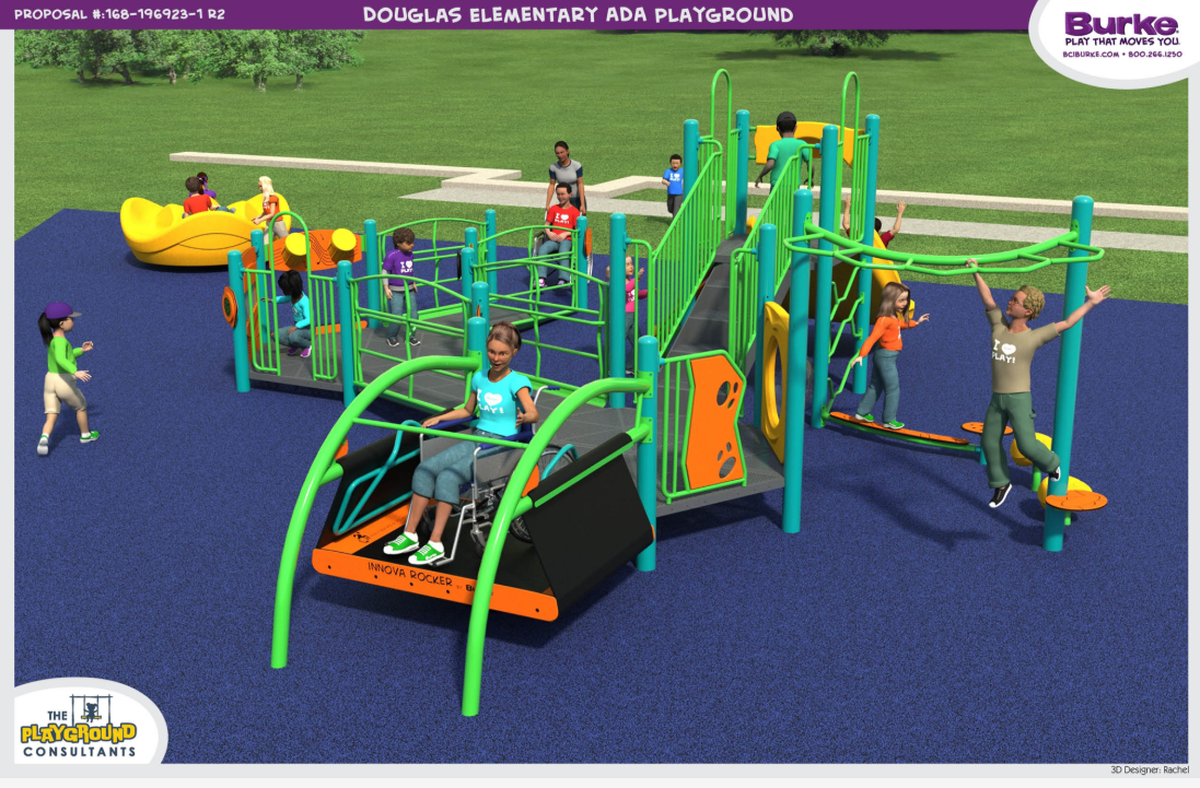
Similar playgrounds are cropping up at other metro-east schools. In a few weeks, Belleville’s Douglas Elementary plans to unveil a new playground that was specifically designed so individuals with mobility needs can easily navigate it. A similar playground is set to open soon near the Millstadt Primary Center.
Here’s what to know about inclusive playgrounds and their increasing prevalence:
What is an inclusive playground?
Mara Kaplan runs a consulting firm called Let Kids Play that works with playground manufacturers, sales representatives, communities and landscape architects to help bring inclusive playgrounds to life.
All newly-constructed and altered playgrounds must comply with the standards set in the Americans With Disabilities Act — it’s the bare minimum. These rules mostly take into account wheelchair accessible routes, but not the needs of people with other disabilities, commercial playground equipment manufacturer Playworld explains on its website.
Accessibility is something else. It means a focus on how easy it is for people with mobility needs to navigate and use the playground, Kaplan explained.
Just because something is ADA-compliant does not mean it’s accessible. Hutchinson Recreation and Design is the playground consultant on O’Fallon District 90’s new playgrounds. The company’s Southern Illinois territory sales manager Greg Haas gave an example: If maintained a specific way, Engineered Wood Fiber is considered ADA-compliant. But this loose material is difficult for people with mobility needs to navigate, and therefore is often not considered accessible.
“Inclusivity” looks beyond just mobility needs and is designed so children of all abilities can play together and doesn’t confine children with disabilities to one spot.
Moye Elementary’s larger playground has uniform rubber surfacing, but also has a communication board, a large sign with pictures that correspond to commonly used words. This helps children who are nonspeaking communicate with their peers and children who otherwise want to express themselves.
“Having an accessible playground doesn’t make it inclusive; it doesn’t make an environment where all of the kids are playing together and that everybody is served,” Kaplan said. “An inclusive playground requires it to be accessible, because we need all of the kids to get (to the playground) in order to be able to play together.”
What equipment do inclusive playgrounds have?
Kaplan and Haas provided a breakdown:
- Poured-in-place rubber surfacing is uniform, and therefore allows people with mobility concerns more seamlessly navigate the playground. It often feels “bouncy,” providing a softer place for all kids to fall.
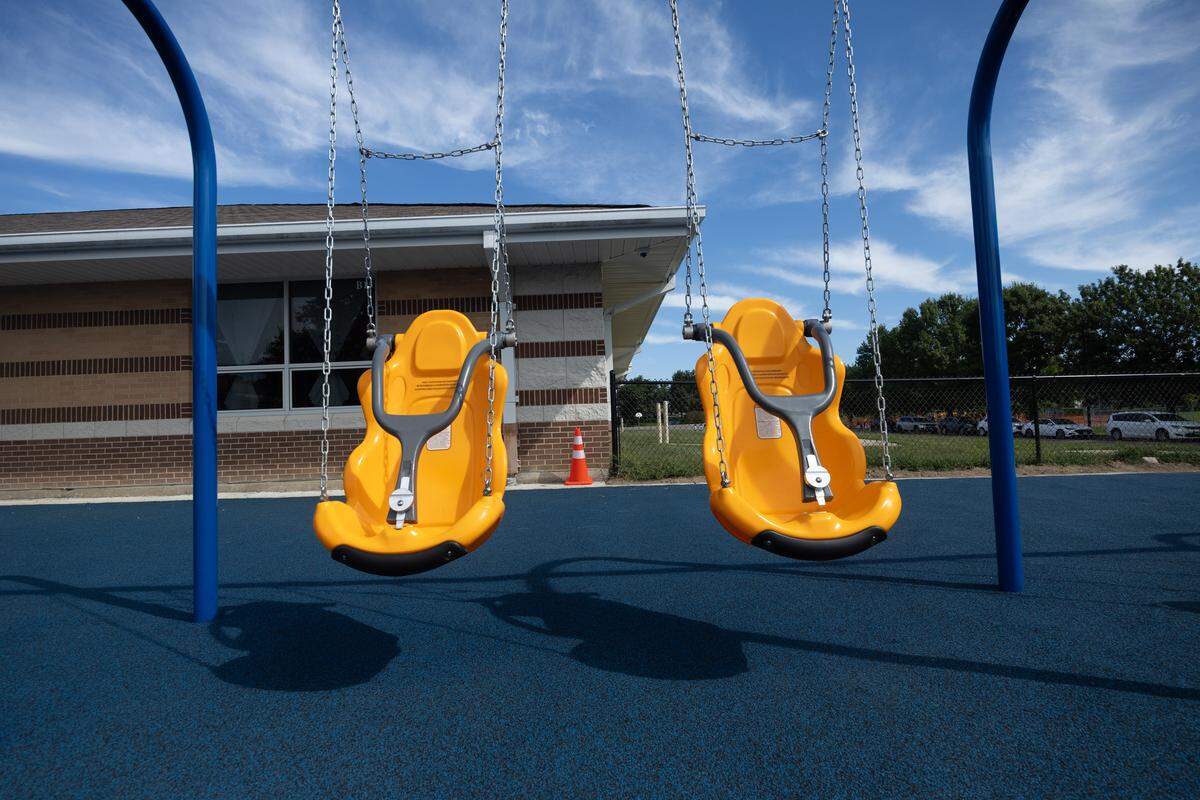
- Accessible swings with a back and harness provide extra support and security.
- Large saucer swings, like the one at Hinchcliffe Elementary in O’Fallon, allow riders to position themselves in whatever way is most comfortable, and can seat multiple friends at once.
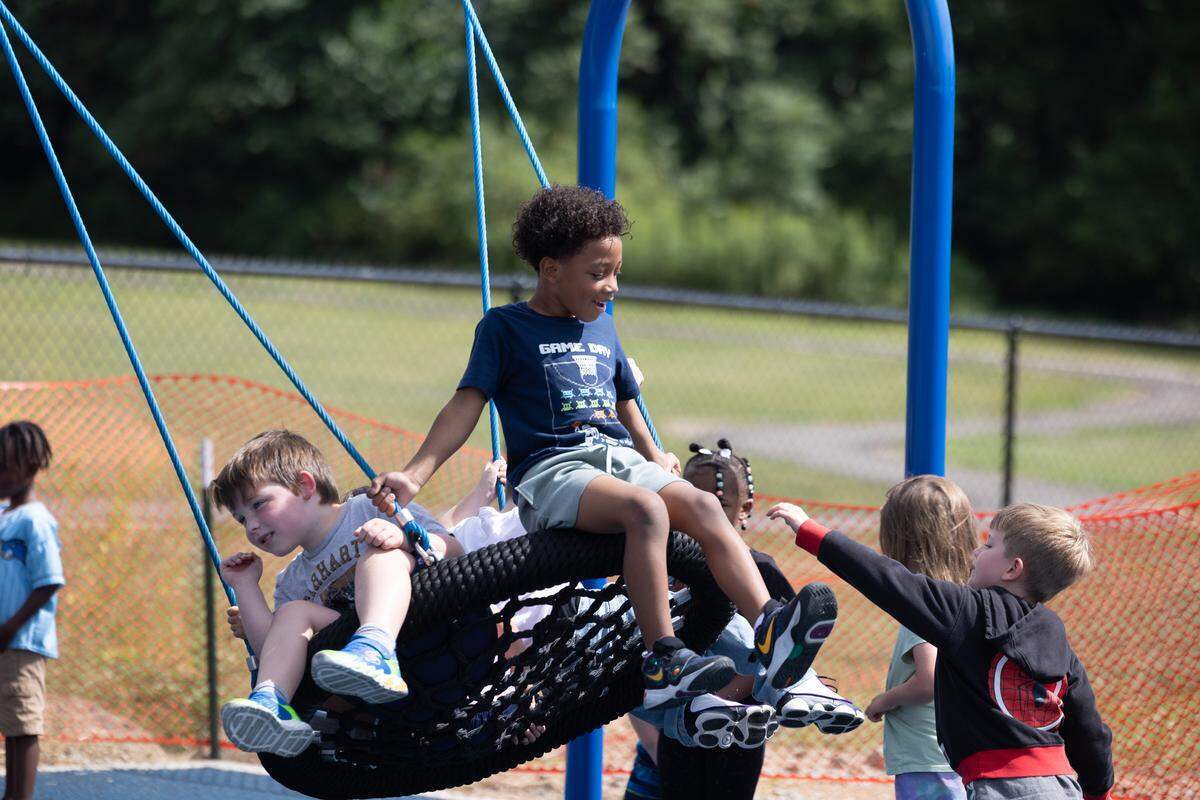
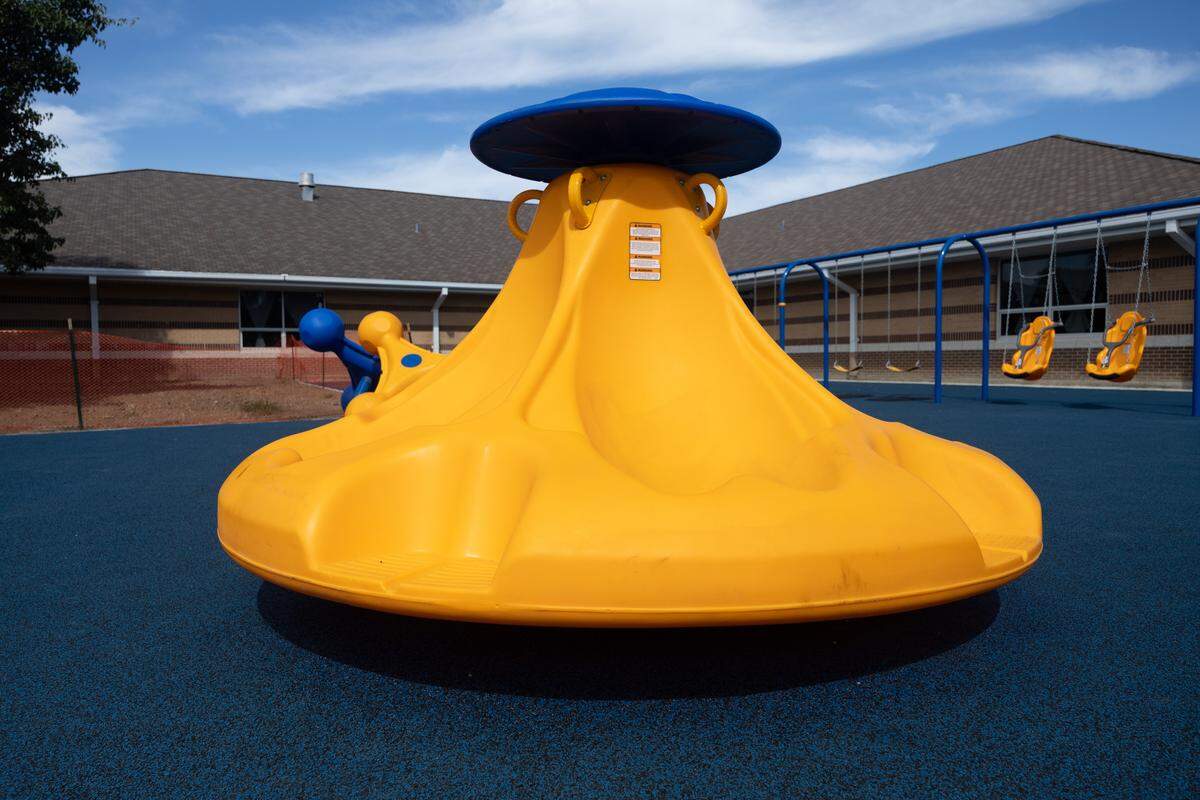
- Easy-access group movement experiences include merry-go-rounds that are flush with the ground, boat-like rockers that have a ramp for children in wheelchairs to roll onto and free-standing spinners that have backed seat and standing options.
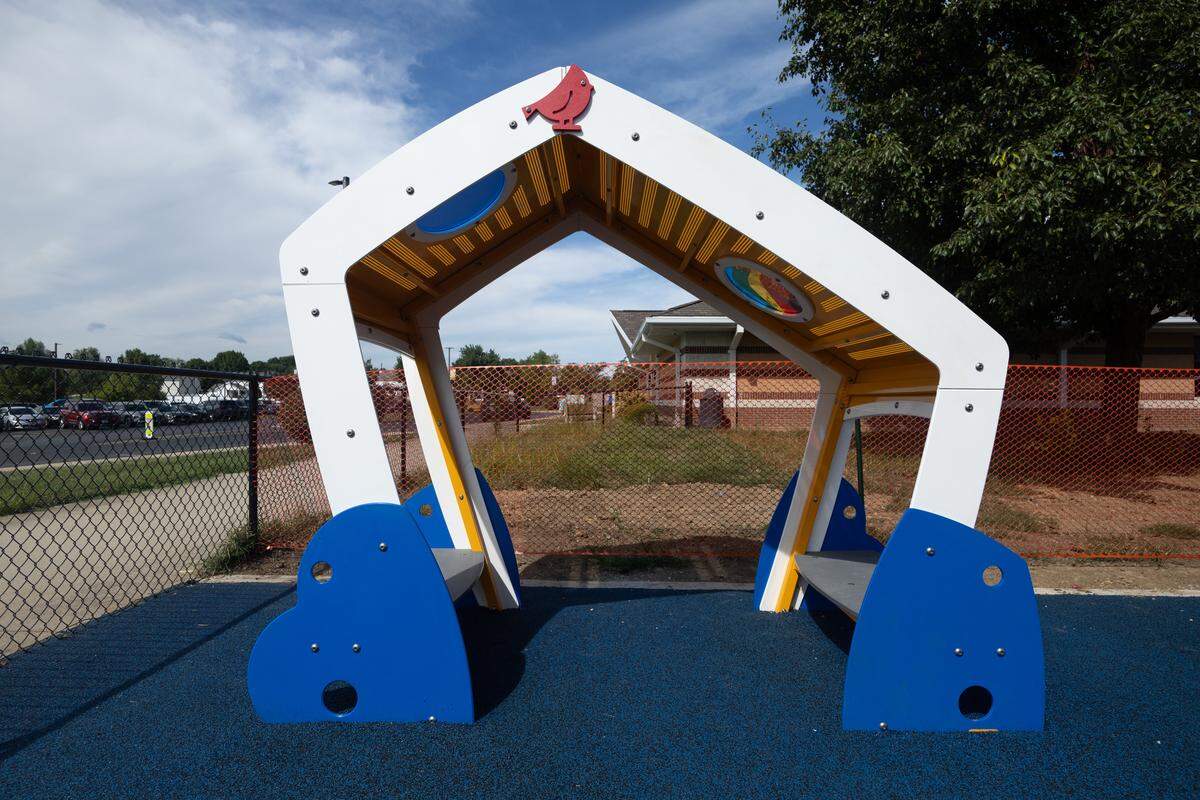
- Features that help prevent children from getting overwhelmed are very important parts of inclusive design and can be particularly meaningful for children with autism and sensory processing disorders, a brochure from playground equipment manufacturer Miracle Recreation says. This can include cozy spaces with sensory activities for children to recover from an over-stimulating playground, benches and shade. The brochure also highlights uniform paths around the playground perimeter that allow children to plan their experience to lessen potential overwhelm.
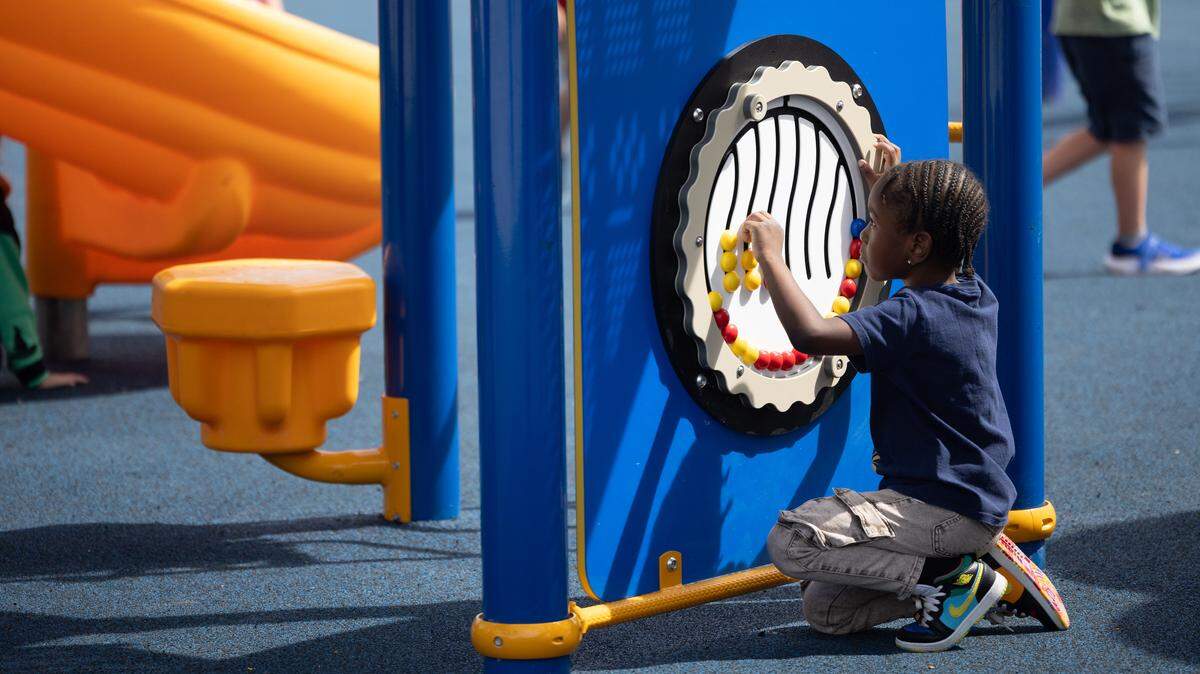
- Other sensory experiences like musical elements, textured surfaces, interactive panels (think gears, mazes, etc.) are beneficial as all children learn through their senses, Kaplan said. The height of these activities are important too, Fielder pointed out, as her son does not need to get out of his wheelchair to play with these tactile elements on his school’s playgrounds.
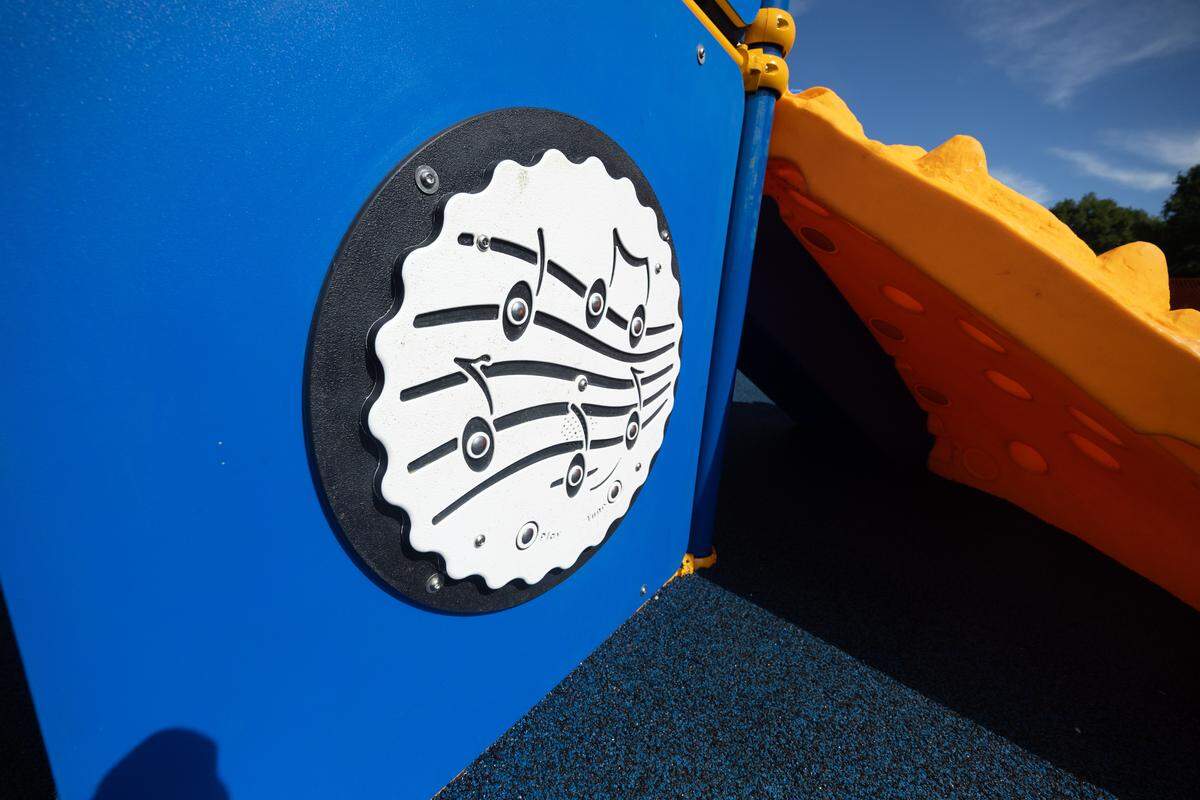
“They go out to the exact same play environment … 180 days a year for 15 minutes everyday,” she said. “What if today I don’t feel like spinning or I don’t feel like climbing, I just want to play some music or I just want a quiet place to read my book? We need to give them choices of different ways to play.”
Not every piece of equipment will be suitable to every child’s needs, Kaplan said. What is important is that each child has multiple choices to suit their particular needs.
“Let’s say you have a child with autism who really needs to climb up high and jump and feel that motion in their legs. Where they’re going to go, somebody in a wheelchair can’t go,” Kaplan said.
“But that same child with autism may have an over-reactive vestibular system, which means they get nauseous on swings and spinners. The kid who is in a wheelchair, all they may want to do is swing. So am I going to take the swings out because it makes one nauseous? Am I going to take out the climber because this one can’t get all the way to the top?”
Why are inclusive playgrounds important?
Carrie Hruby, District 90 superintendent, often says “playgrounds are an extension of the classroom.”
Children learn a lot on playgrounds, Kaplan said. They learn cooperative play when they ensure everybody is situated on the spinner safely and determine who will make it go, and alter game rules so that everybody can play. They take turns, learn patience and how to communicate with their peers. Friendships are built on playgrounds.
“If (a playground) is not designed well to support kids with speech and language (difficulties) and learning disabilities, then those kids may be walking the perimeter and not engaging with their classmates,” Kaplan said. “They’re missing out on sensory learning, social learning, things that are really the soft skills that we need as adults to be able to succeed in this world.”
Sherri Tadlock, a physical therapy assistant with District 90, said that with flat surfacing, it’s less difficult for her students to get to the playground equipment they use for strength and balance exercises. They get to do their work alongside their peers, not in a place where they feel excluded.
Are inclusive playgrounds common?
Haas said over the past two decades, he’s seen the demand for inclusive playgrounds in the St. Louis area increase. It used to be primarily parents of children with disabilities advocating for more inclusive spaces, he said. Now, he sees entire schools and communities banding together to ensure their playgrounds are inclusive.
It’s a positive trend Kaplan has also seen nationwide.
“There’s a lot more equipment for communities to choose from to help them make something inclusive,” Kaplan said. “We’re nowhere near where we need to be, but we are a whole lot further on than we were two decades ago, and there’s a lot more requests for inclusion than there ever was before.”