Centuries-old religious statues emerge from shrinking Yangtze river in China’s drought
Water levels have dropped in rivers across China as the country struggles under a record-breaking drought and heatwave.
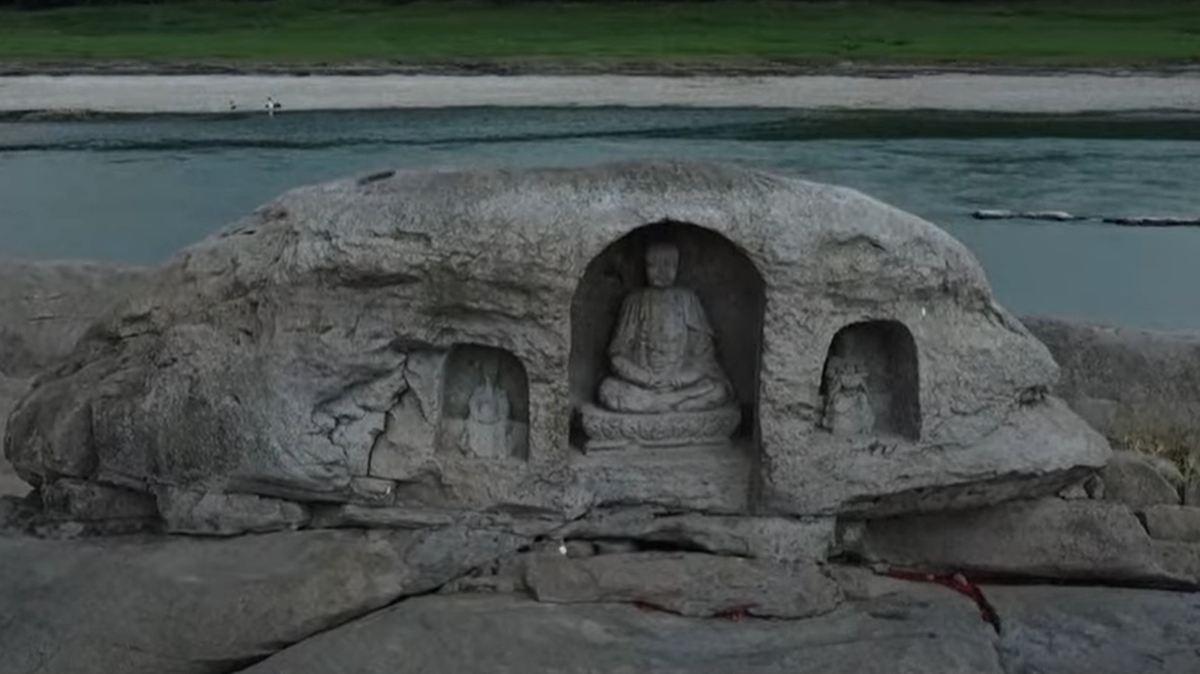
Stretching 23 feet above the water’s surface, a previously-submerged rocky island sits in the middle of the Yangtze River in Chongqing, in southwestern China, the South China Morning Post reported on Aug. 17.
At the top of the island, a trio of religious figures gaze across the area, video footage from NBC News on shows.
The Buddhist statues – estimated to be 600 years old from the Ming and Qing dynasties – are carved into the gray rock, nestled in individual archways, video from the South China Morning Post shows. The largest and center figure sits cross-legged on a lotus pedestal with hands folded, videos show.
Now considered a “rare archaeological find,” the ancient figures were previously considered “a good omen for passing boats,” South China Morning Post reported.
However, the statues have re-emerged from the Yangtze River as it reaches the lowest water level recorded at this time of year in 150 years, CNN reported.
The Yangtze River – the largest river in Asia and third largest in the world – is about half its normal width, NPR reported last week. Rainfall for the river basin has been 45% less than normal since July, NPR reported. The Yangtze River is vital to China, both as a shipping waterway and as a source of drinking water, and its record-low water levels have affected millions of people, The Guardian reported.
In the Chongqing region, 66 rivers have dried up, CNBC reported, citing local news outlets.
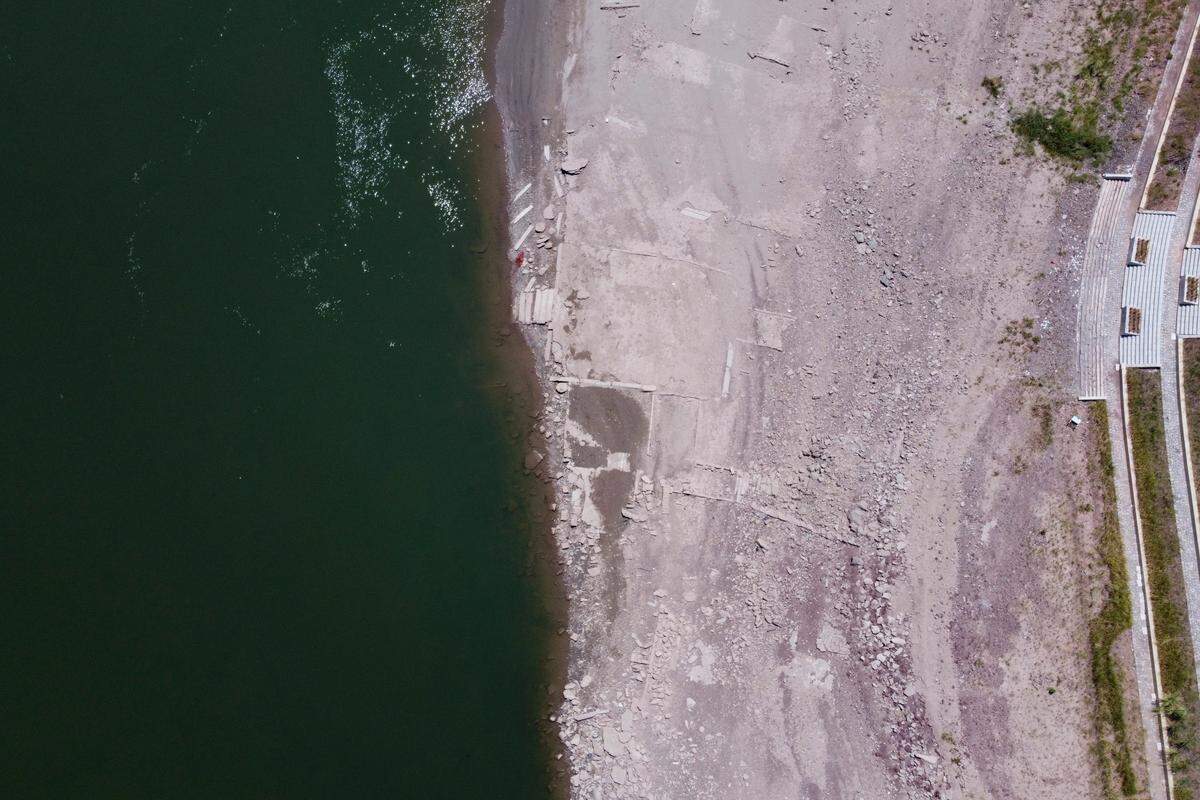
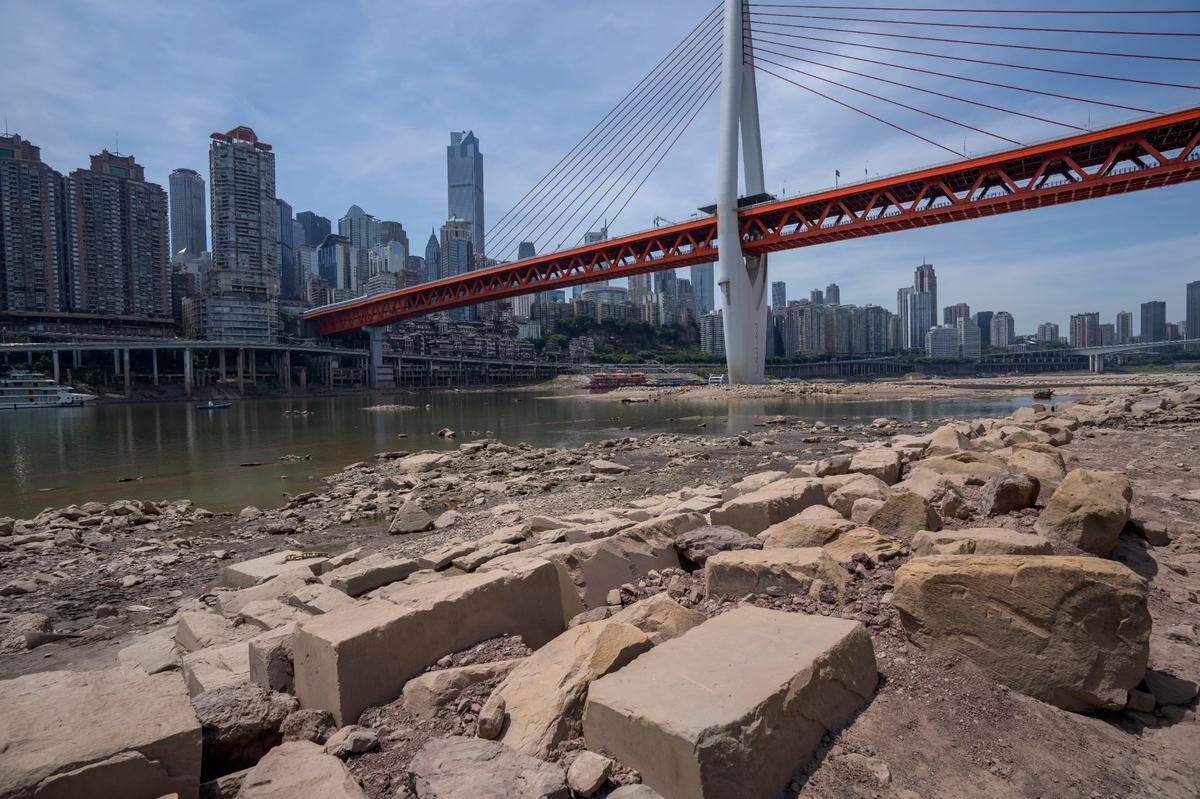
Aerial views of the Jialing river showed a dusty mudflat between the river’s usual bank and its current waterline, Associated Press reported. In other areas, the drying river exposed the foundations of a bridge and wide rocky sections of the riverbed, other photos showed.
The ongoing drought and heatwave – which Chinese officials have attributed to human-induced climate change – is a “pressure cooker” for the country, The Guardian reported.
The World Meteorological Organization said in an Aug. 22 tweet that, “the intensity, impact, scale and duration of the heatwave in China this summer has broken all records.”
The drought and heatwave have disrupted agriculture, shipping, and hydroelectric power, leading some regional authorities to halt industrial production to conserve power for residents, The Guardian reported.
Unfortunately, Chinese authorities have warned that the “severe drought conditions” could continue into September, Channel News Asia reported.
This story was originally published August 22, 2022 at 12:43 PM with the headline "Centuries-old religious statues emerge from shrinking Yangtze river in China’s drought."