Ancient Israeli burial pit reveals remnants of opium — the oldest evidence of drug use
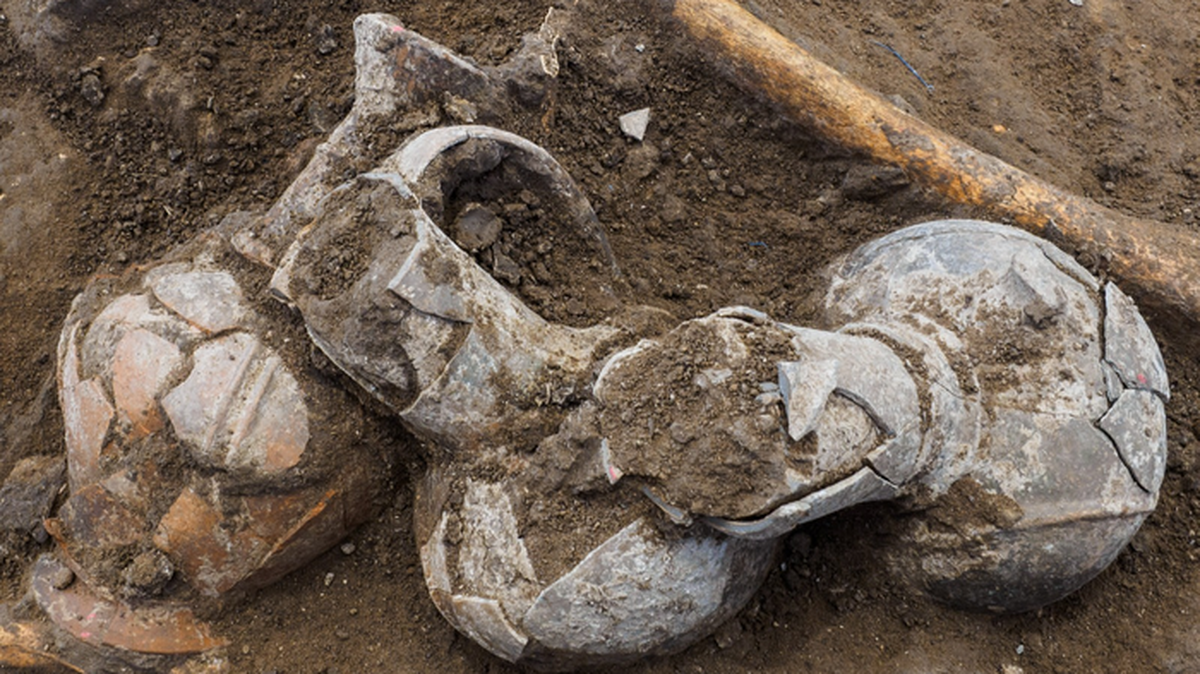
Excavations at an ancient burial pit in Israel discovered the world’s earliest evidence of drug use, experts say.
The hundreds of burials unearthed in Tel Yehud date to the 13th century BC, the Friends of the Israel Antiquities Authority said in a news release.
Individual skeletons lay nestled into the clay graves, arms crossed over their chests and legs bent, researchers wrote in a study published by Archaeometry. Offerings surround the skeletons — imported jars and pottery of all kinds, a few metal pins and the occasional animal bone.
Among these funerary offerings, archaeologists found a collection of pottery vessels with a unique shape. The vessels have a long thin stem and a bulbous base that narrows at the bottom, photos from EurekAlert show. The shape looks similar to an upside-down and closed poppy flower — the same way poppy flowers look when harvested for opium, the release says.
When researchers tested their theory, they found opium residue in eight vessels — half of which had this unusual shape, the study says.
These remnants from the 14th century BC are the oldest known use of “hallucinogenic drug opium, and psychoactive drugs in general, in the world,” according to the release.
Opium is a highly addictive narcotic and is used in making morphine, codeine and heroin, according to the U.S. Department of Justice’s Drug Enforcement Administration.
Experts immediately began speculating about how people used the opium, the release from Sept. 20 says. Perhaps the opium was placed in burial pits under the belief that the deceased person would need it in the next life. Alternatively, maybe living relatives or a local priest consumed the opium during a ceremony to attempt to speak to the dead. Or maybe it had another use entirely.
Researchers also concluded that the unique shape of the vessels probably indicated their contents to people, a means of branding or marketing the opium that was initially grown in modern-day Turkey and traded throughout the region.
For now, “we can only speculate what was done with opium,” one expert said in the release.
The vessels were initially found in Tel Yehud — about 10 miles east of Tel Aviv — in 2012, but the opium-related discovery was not published until July 2022.
This story was originally published October 7, 2022 at 11:24 AM with the headline "Ancient Israeli burial pit reveals remnants of opium — the oldest evidence of drug use."