
Are leopards’ roars as unique as their spots? Take a listen to new audio from Tanzania

Most people have heard the saying, “A leopard never changes its spots.”
It means someone is resistant to changing something about themselves, just as a leopard can’t change its iconic black splotches.
Like a fingerprint, leopard spots are unique and one-of-a-kind, making them a good way to tell one leopard from another.
But what if there was another way to identify individual animals, and what if this technique could help save them from extinction?
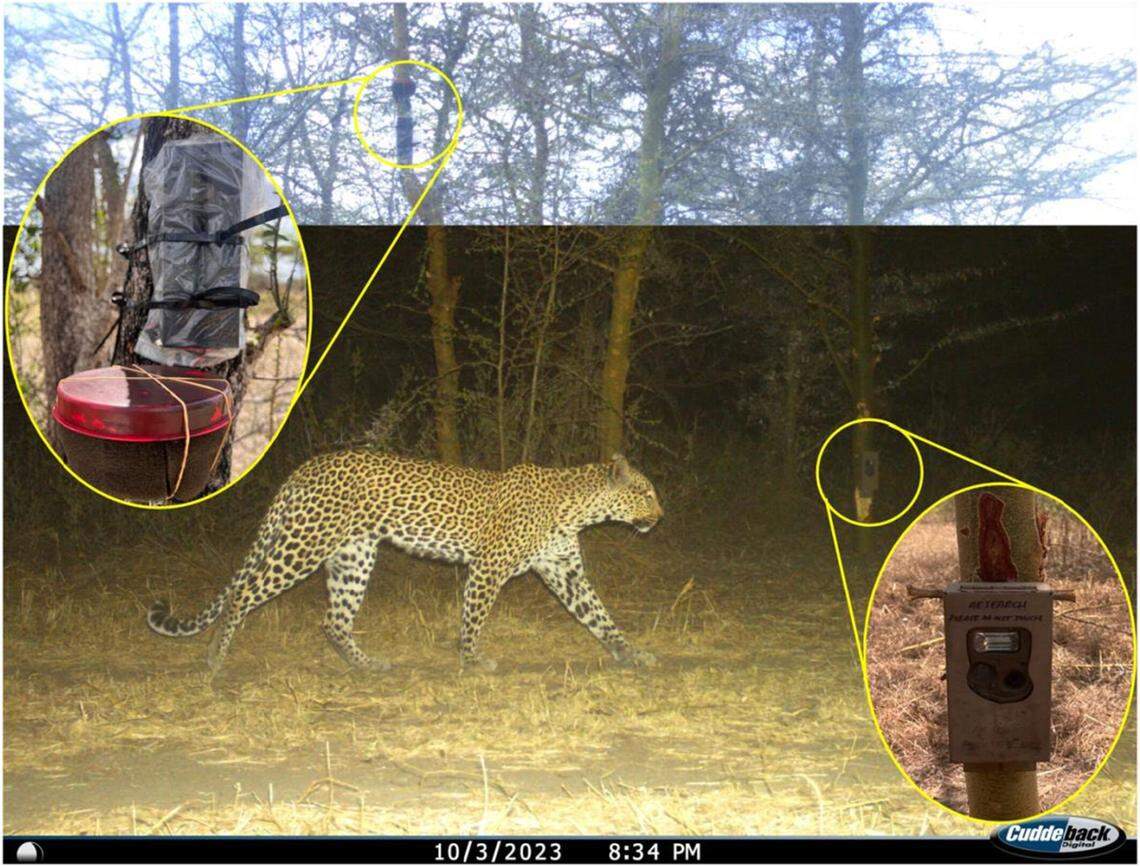
“Conservation requires accurate information about species occupancy, populations and behavior, but gathering these data can be challenging for elusive, solitary species, such as leopards (Panthera pardus),” the Wildlife Conservation Research Unit said in a Jan. 3 Facebook post. “A new study led by Jonathan Growcott tested whether leopards could be individually distinguished by their roars, which could provide a new method to estimate leopard populations.”
The findings were published Dec. 22 in the peer-reviewed journal Remote Sensing in Ecology and Conservation.
Collecting data and recordings of leopard roars has proven difficult in the past, according to the study, making the study of their vocalizations and communication challenging.
“Leopard calls consist of a repeated pattern of strokes which produce the iconic ‘sawing roar’ used for mate attraction, defense and marking territory,” the Wildlife Conservation Research Unit said.
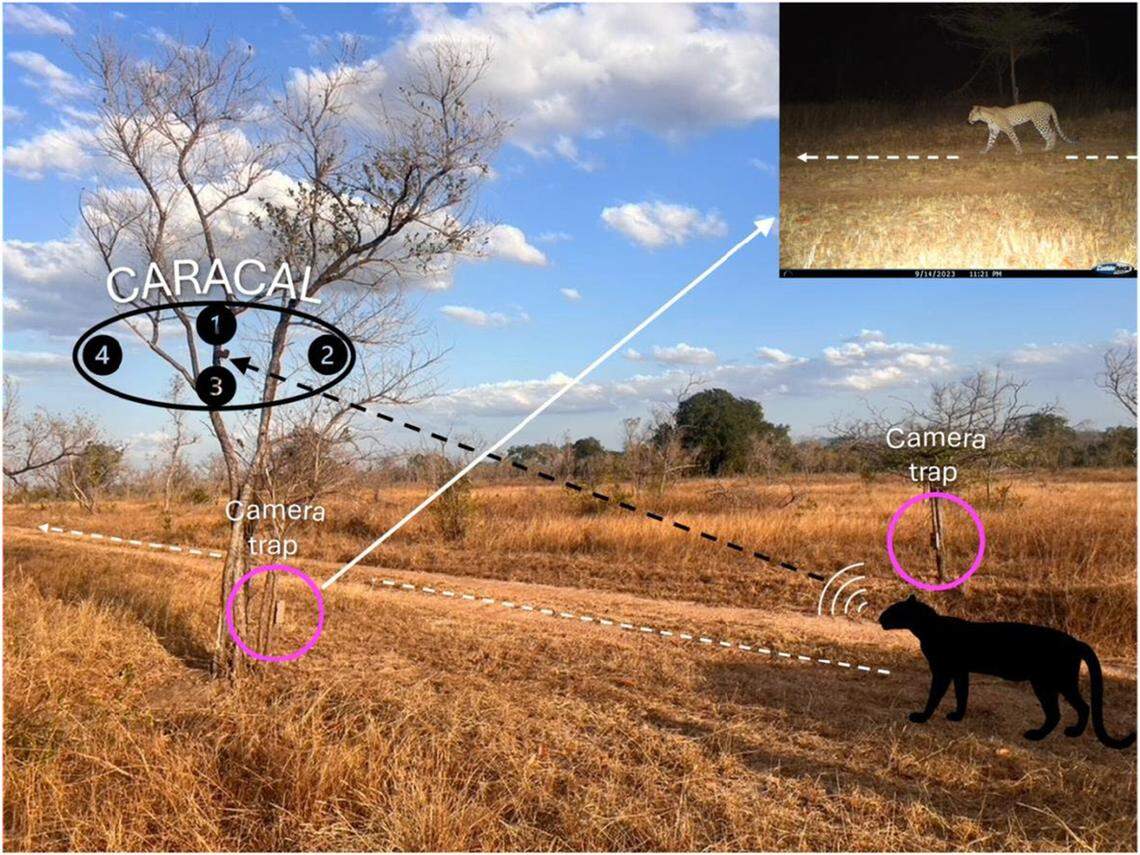
Using trail cameras and microphones, researchers set out to discover whether the individual calls could be used to identify specific leopards just as well as a spot pattern in Tanzania’s Nyerere National Park.
“In total, we deployed 64 stations comprised of paired xenon white-flash camera traps to maximize the chances of capturing both flanks of animals passing by,” researchers said. “... At 50 of the stations, we also installed autonomous recording units.”
Using the images, researchers could identify 42 unique leopards in the park, according to the study. Some of these images aligned with recorded roars, including 217 individual roars that could be directly attributed to individual leopards.
“The accuracy of identifying individual roars varied between 20.5% and 92.9% depending on the number of features analyzed within the vocalizations,” the research unit said. “Higher accuracies occurred when the entire leopard roar was used to identify individuals.”
From a distance, it may sound like someone is cutting down a tree, but the chopping sounds are the unique leopard roars, as heard in a video shared by the conservation group.
“We demonstrate that leopard vocalizations can be recorded, and because not all leopard roaring bouts were recorded directly in front of the camera and (recorder), leopard presence can be inferred at a greater detection range than that provided by camera traps,” researchers said. “As leopards are a cryptic, elusive species, that can inhabit home-ranges as large as ... (300 square miles), an increased detection range harnesses great potential for occupancy or behavior studies.”
The data can also be used to direct conservation plans, according to the study.
Leopards are considered a vulnerable species by the IUCN Red List, with decreasing numbers across southern Africa and southern Asia.
African leopards are slightly more successful, with as many as 700,000 left in the wild, according to Britannica.
“Whilst leopards harbor one of the largest geographic distributions of any big cat, this is still only at 20% of their historic range,” researchers said. “Moreover, across Africa, there has been a continental decline in populations.”
Nyerere National Park is in southeastern Tanzania.
The research team includes Growcott, Alex Lobora, Andrew Markham, Charlotte E. Searle, Johan Wahlström, Matthew Wijers and Benno I. Simmons.
This story was originally published January 3, 2025 at 3:51 PM with the headline "Are leopards’ roars as unique as their spots? Take a listen to new audio from Tanzania."
