
17th-century castle defenses — the first ever found — discovered in UK. See the find
Sheffield, England, in the mid-1600s was in the middle of a civil war.
Part of the British Isles supported Charles I for the monarchy, while the rest of the kingdom was divided on who should lead their united kingdom.
Battles took place between 1642 and 1651, and Sheffield Castle prepared its walls to defend against invaders.
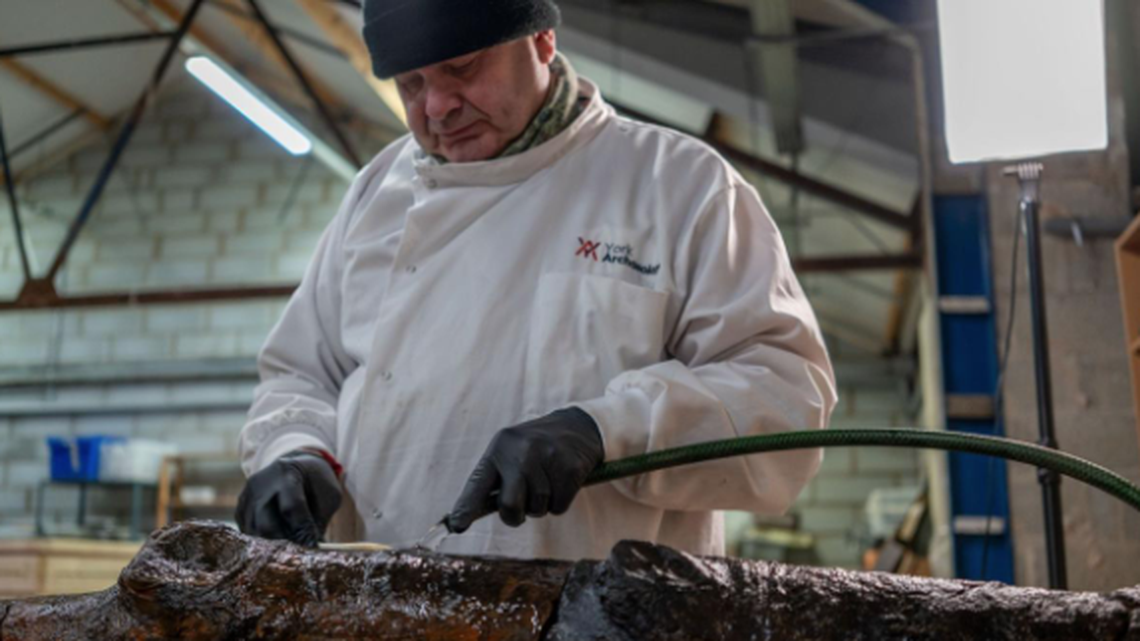
Now, archaeologists working on excavating the castle have discovered defensive stakes known as an “abatis” in the castle’s moat, according to a Feb. 28 news release from Wessex Archaeology, a private organization working on the project.
It is the first time 17th-century abatises have been recovered, archaeologists said.
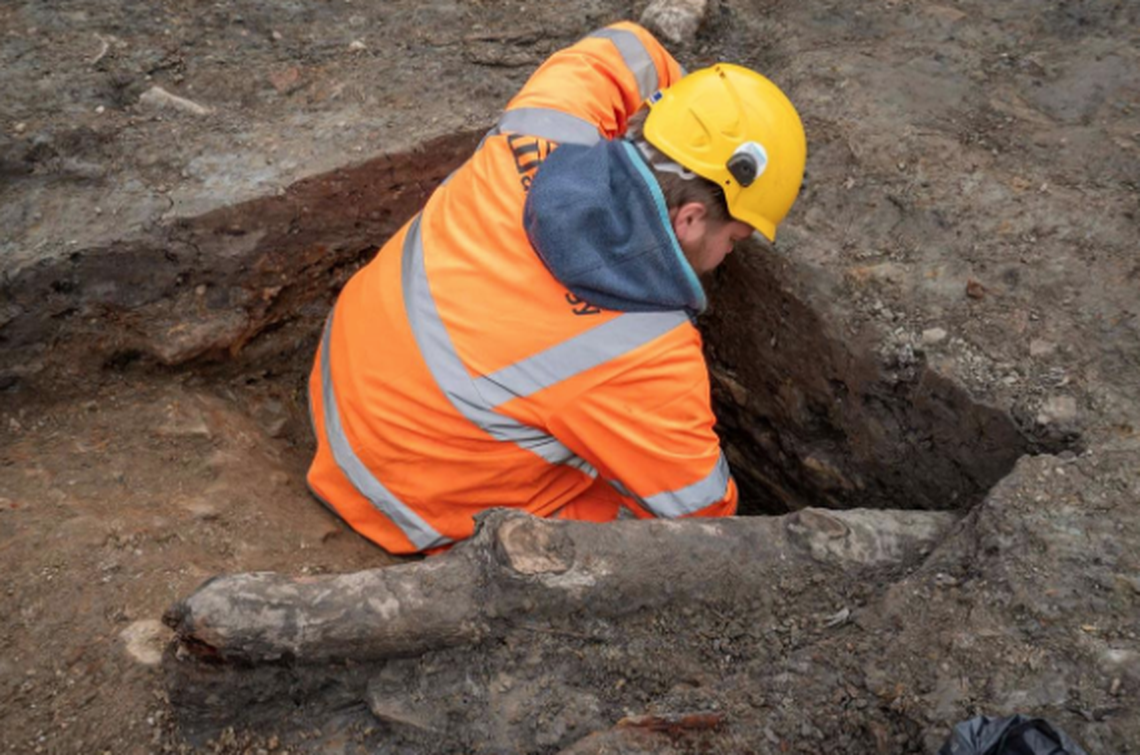
“Four stakes around (3 feet) in length were carefully excavated from the moat,” according to Wessex Archaeology. “It was clear to the dig team that these were not merely fallen branches but worked timbers that had been shaped into a point and driven into the partially silted-up moat.”
Abatises were well-known in historical contexts, but because they are made of wood and can appear like branches, they are rarely, if ever, recovered centuries later, archaeologists said.
The pieces were built from large tree branches and carved on one side into a point, Wessex Archaeology said. Then, they were “arranged chaotically” by digging them into the ground and pointing the sharp end outward toward intruders.
“This barrier was designed to impede attackers and hold them at bay for longer, creating a ‘killing zone’ where defenders of the castle could dispatch them,” archaeologists said.
The abatises were found in front of the medieval gatehouse of Sheffield Castle, a strategic point.
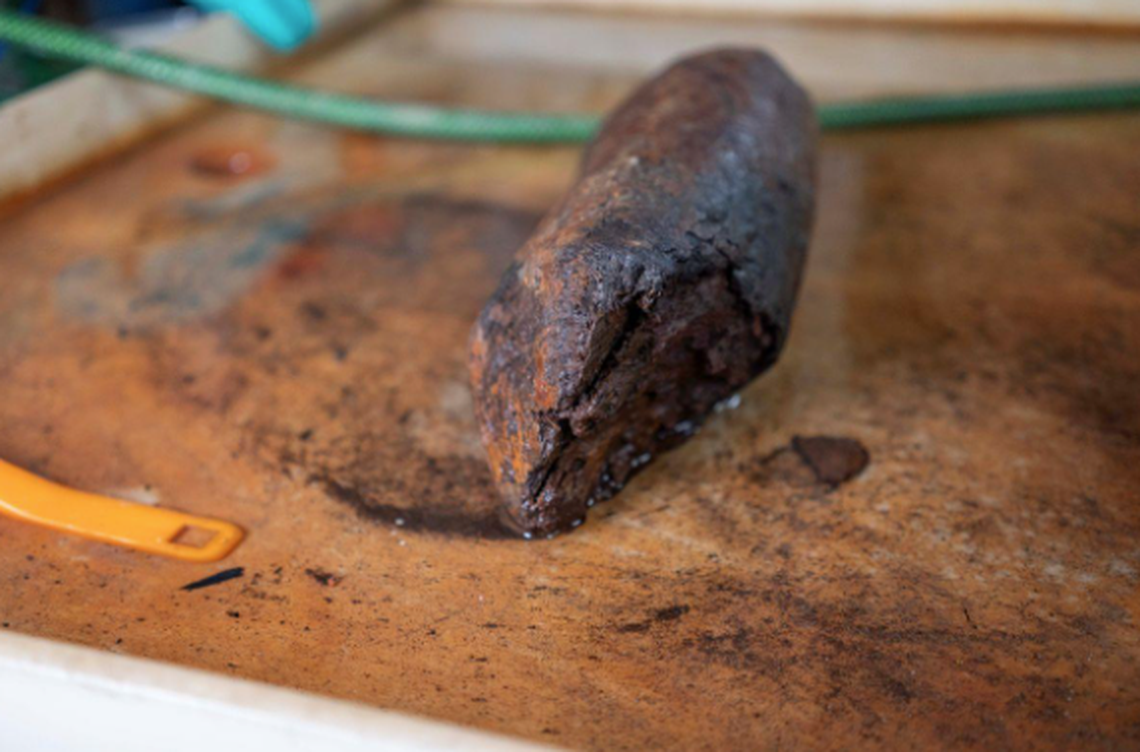
These pieces can likely attribute their preservation to being buried in the wet, muddy moat surrounding the castle, archaeologists said.
Sheffield Castle underwent a siege in 1644 as part of the civil war, and after 10 days of fighting, the castle was overrun with Parliamentarian forces, and the castle was slighted, or destroyed, according to Wessex Archaeology.
In the plundering of the castle, the abatises were tossed into the moat.
“The waterlogged ground provided the ideal conditions for their preservation, meaning that they survived for almost 400 years to reveal further insight into this dramatic period in Sheffield’s fascinating past,” archaeologists said.
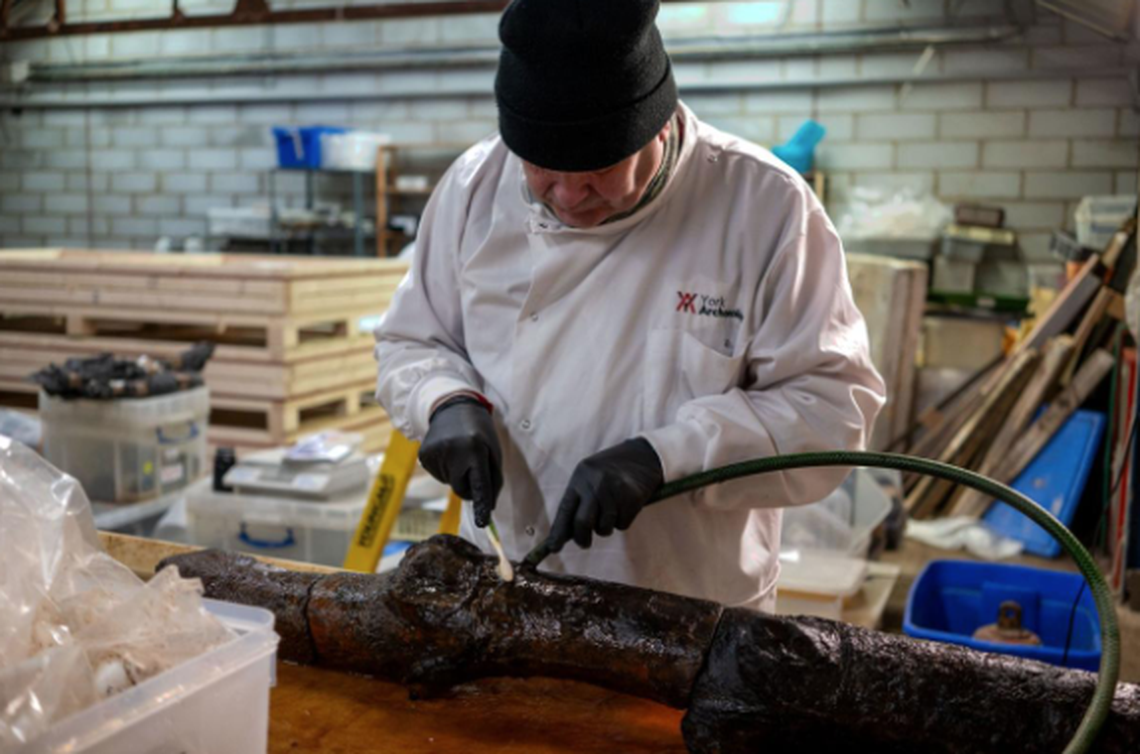
The pieces are made of ash and elm trees, native to the United Kingdom, according to Wessex Archaeology. In examining them more closely, archaeologists saw they were cut crudely and with rough edges and ax marks, suggesting they were built very quickly.
Those at Sheffield Castle may have known an attack was imminent, archaeologists said.
The castle had stood for centuries before the attack by the Parliamentarians as the “birthplace” of Sheffield and a “symbol of power,” archaeologists said. After the attack, the power in the region had shifted.
“So often we are told about civil war defenses like abatises being used at historical properties across the country, but usually there is little to see of these important features,” Ashley Tuck, lead archaeologist on the site, said in the release. “To be able to hold the very wood to which the defenders of Sheffield Castle trusted their lives is extraordinary.”
Previous discoveries at Sheffield Castle include a “hidey-hole” left behind by a steelworker in a cellar as well as medieval tokens and newly discovered castle walls as the site “keeps revealing its secrets,” McClatchy News reported.
The castle was originally built as a royal fortress before it transitioned into a place for the trades and later earning Sheffield its nickname as “Steel City” in the Industrial Revolution, according to the University of Sheffield.
Sheffield is in central England.
This story was originally published March 5, 2025 at 5:27 PM with the headline "17th-century castle defenses — the first ever found — discovered in UK. See the find."
