
Your MetroBus route may be eliminated. Transit District aims to streamline service.
A new plan hoped to grow transit use in the metro-east could bring an end to some bus routes in St. Clair County that have lower ridership.
For the past several years, the St. Clair County Transit District has seen shrinking ridership on buses throughout the county. According to study data from the agency, annual MetroBus ridership has declined by 16.6% since 2014 and. On average, MetroBus ridership clocks in at 9,500 during the week, 6,500 on Saturdays and 3,900 on Sundays.
The beginning of 2019, however, marked a leveling off, St. Clair County Transit District Managing Director Ken Sharkey said.
“We feel like we’ve bottomed out and we’re at the point where we’re actually going to be able to build and grow ridership,” he said.
Transit Vision 2020, a $235,000 study and redesign of the transit district that proposes big changes, including adding new routes, ending routes with low ridership, bringing in a fleet of new buses, creating new “service tiers” and developing a completely new rideshare program, is hoped to reverse the trend.
This week the first draft of a reenvisioned system was presented to stakeholders at one of SCCTD’s many meetings on the project. Sharkey said it reflects a survey of 1,235 people from the St. Clair County area, 80% of whom are regular users of transit and 20% people who don’t regularly use public transit.
Sharkey said the major findings have been somewhat expected but informative for the district going forward. The study found most riders are looking for more simple-to-understand, direct, all-week transit networks in the area with longer run hours and added frequency.
The new proposed network would introduce service tiers, a new classification for service that designates its frequency, hours of operations and even the type of vehicle used for transportation.
In the new proposed draft network, SCCTD would introduce service tiers, a new classification for service that designates its frequency, hours of operations and even the type of vehicle used for transportation.
The four tiers — frequent, local, commuter and community mobility zones — would provide varied services for different areas with different needs.
▪ “Frequent” lines would provide service along major corridors with transfer points to other routes and would run from 4 a.m. to midnight. Fifteen-minute service would run from 6 a.m. to 6 p.m. and have 1/4- to 1/3-mile stop spacing.
▪ “Local” lines would provide circulation within neighborhoods while connecting them to “frequent” lines and would run on a weekday from 5 a.m. to midnight and on weekends from 6 a.m. to 11 p.m. These lines would run every 20 to 60 minutes.
▪ Commuter lines would be offered at peak times only, from 5 a.m. to 9 a.m. and 3 p.m. to 7:30 p.m. on weekdays with a 30-minute frequency. These buses would connect key transfer hubs with important job centers.
▪ Community mobility zones would be areas where users can request rideshare options to help them get to other transit, jobs and schools for a low cost.
Sharkey said, if projections are correct, new lines and changes are expected to grow ridership by at least 11%.
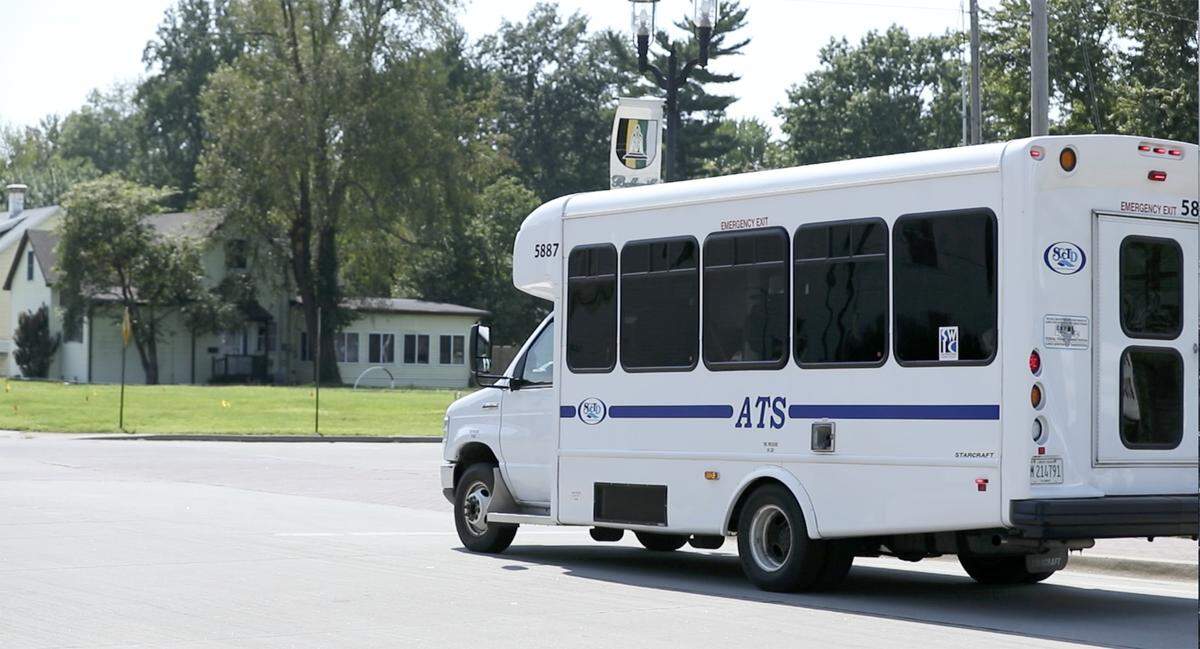
Routes with low ridership may end
The proposal also would cut several routes that have low ridership, including the No. 17 from Carlyle Plaza to 17th Street, the 17x from Lebanon to Mascoutah, the 2x from Waterloo to Columbia and the 7 to Fairmont City and other smaller routes.
Underused routes were a major focus of the SCCTD’s preliminary study. The study showed that currently, most of its routes are carrying 20 or fewer passengers an hour and only two routes carry more than 20 riders an hour.
Express and shuttle routes make up a large amount of the lowest-performing routes, while MetroBus Route 1, Main Street to State Street, accounted for 31% of SCCTD’s total weekday system ridership.
For the riders who use the routes that may be discontinued, however, Sharkey said SCCTD doesn’t want to “leave riders in the cold.” He said the transit district needs to identify who is losing transit and help them find alternatives without increasing costs.
“We really don’t want to negatively impact people without knowing who they are and trying to provide them another option or alternative,” he said. “We don’t want to just cut them loose and say ‘thank you and goodbye.’ We want to keep them in transit.”
Under Transit 2020’s new plan, some riders would have the option of calling rides if they reside in “community mobile zones.” Earlier in October, SCCTD announced a pilot program in East St. Louis that offers $3 ridesharing options aimed to get riders to transit stations.
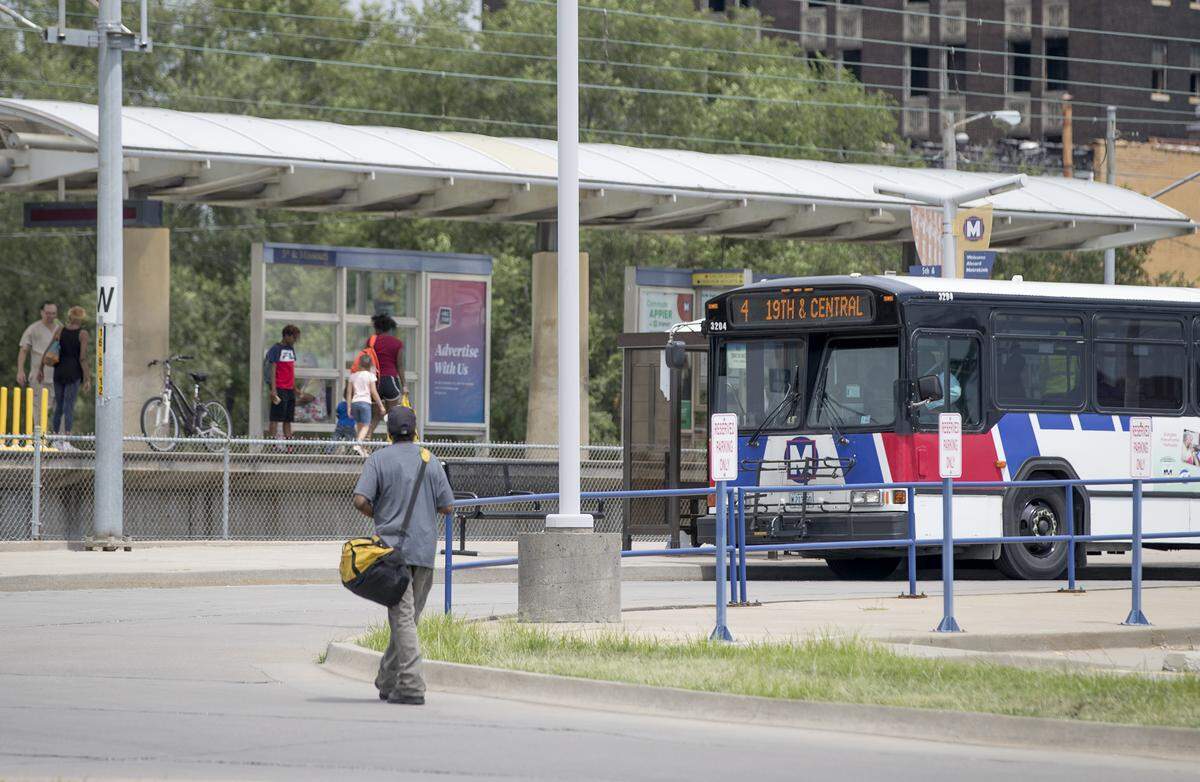
Sharkey said the program is hoped to grow and eventually become the backbone of the newly imagined transit system, making up for routes that were canceled due to low ridership. People searching for a ride can call a number and for $3 be picked up by a smaller SCCTD bus.
He also said partnerships with surrounding counties transit districts, like Madison or Monroe counties, could work as alternatives for riders who may be losing SCCTD service. However, he said, those discussions are in an early stage.
In general, Sharkey noted, the entire project is aimed at adjusting to the needs of the county. The last time the system was studied or majorly redesigned was more than 20 years ago, he added.
“We’re trying to align the routes to where people need to go,” he said. “Some neighborhoods have hollowed out and population has shifted.”
For instance, he said, more service will be added to Dupo, where there wasn’t enough before. He said population shifts and new job centers are being kept in mind as the new system takes shape.
Survey reveals patronage, concerns
The latest information from the ongoing study of the transit system, which is roughly halfway done, has identified those areas and more. Sharkey said it has helped identify who uses the system, where they live, their concerns and the reasons some avoid using the system altogether.
Results from polling showed commuters, seniors and “need-based” residents were the largest customers in St. Clair County and that riders would be more likely to use transit if there were better connections to other services and if service was offered more frequently and for longer time spans.
It also found 38% of the surveyed riders listed safety concerns as a major deterrent for using transit. Twenty-four percent said the district’s limited hours of service played a major factor. Sixteen percent said a lack of access to transit kept them from using the service and 14% said they avoided transit due to the length of trips.
The largest percentage of riders worried about safety comes as no surprise, as public perception of transit systems throughout the St. Louis Metropolitan area has taken a hit over the past several years.
This draft for a new proposed route comes just days after the transit district announced a new lighting project at the 11 area MetroLink stations hoped to increase safety. The $571,415 project will install new LED lighting at each station, providing more light while saving money.
Sharkey and SCCTD Board Chairman Herb Simmons said the lights are the start of meeting customer demands and reflect some of the findings from the Transit Vision study.
In 2018, a Belleville News-Democrat investigation found there was less than one violent crime — such as homicide or robbery — on MetroLink for every 100,000 boardings in 2016, and 1.4 violent crimes per 100,000 boardings in 2017.
A study conducted by New York-based firm WSP USA Inc. also found crime rates on the MetroLink aren’t a major problem and that if customer experience and service improved, the public’s perception would improve with it.
Simmons said building confidence and gaining new customers is a big part of what will make the study and redesign a success. He said perception is a big issue for transit in all of the St. Louis Metropolitan area.
“There are some people who aren’t happy with the system but a lot of people haven’t given it an opportunity,” he said. “We can get the confidence built back up.”
BEHIND THE STORY
MOREWhy we did this story
Our aim is to bring residents the latest information about mass transportation in the region, which includes MetroBus and MetroLink.
This story was originally published October 25, 2019 at 10:35 AM.