Expect to see a big jump on your Ameren Illinois bill beginning next month. Here’s why.
The average Ameren Illinois residential customer’s monthly bill could go up by as much as $40 or more in June due to a perfect storm of unfavorable market conditions, according to the Citizens Utility Board, a consumer advocacy group.
There are a two main reasons for the increase, which Ameren estimated could reach as much as $580 per year:
Natural gas prices have skyrocketed in part due to the war in Ukraine and restrictions on Russian fuel. Natural gas costs are tied to electricity costs. When natural gas prices are higher, the cost of electricity also increases.
Fossil fuel plants are closing faster than renewable energy infrastructure can come online. This imbalance sends demand higher than supply, driving up costs.
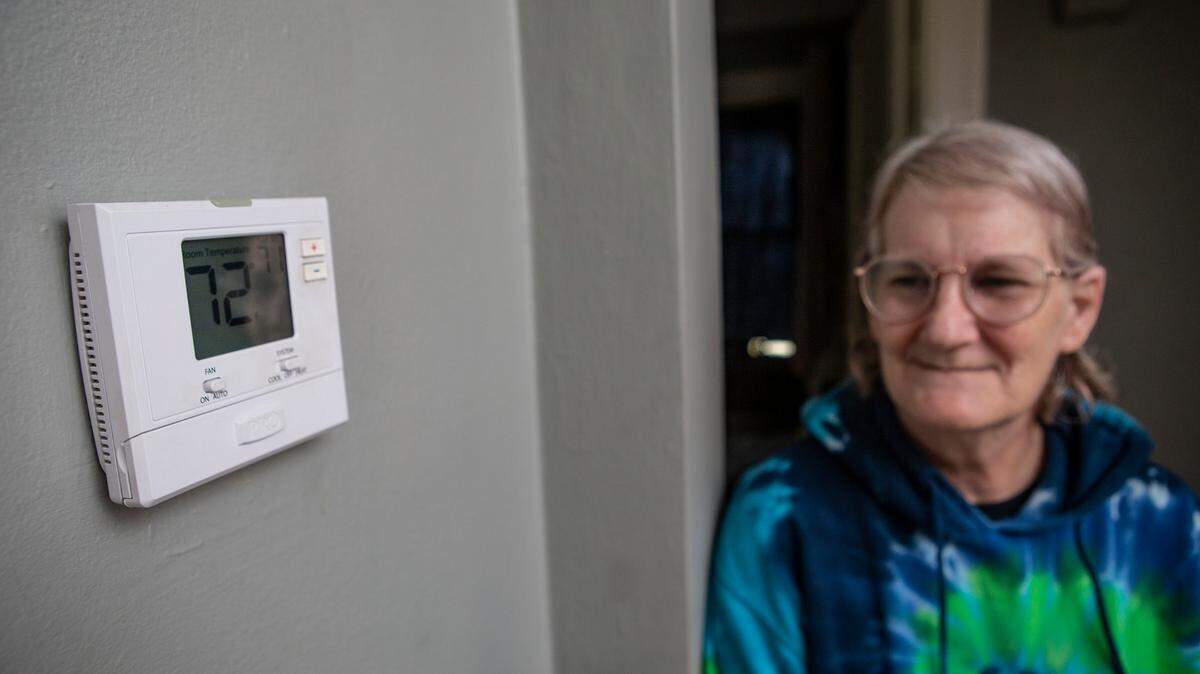
Doris M. Davis, 66, lives in Fairview Heights and says the higher bills means she’ll be keeping the temperature set high in her house this summer and buying less at the grocery store. The retired medical transcriptionist lives on a fixed income and her energy bills usually amount to $150-$200.
“I just pay what I have to pay,” Davis said. “I’ll only eat one meal if I have to. I did that for years because we didn’t have enough for groceries.”
Ameren Illinois and consumer advocacy groups such as the Citizens Utility Board have resources for people struggling to pay their utility bills. They recommended people begin applying for help as soon as possible to prepare for higher bills in June.
Here are some options for assistance:
Ameren’s Warm Neighbors Cool Friends is for low- and moderate-income customers who are having trouble paying for their bill. Customers may inquire about the program by calling Ameren’s customer service hotline at 1-800-755-5000.
Illinois is using federal COVID-19 stimulus money to help customers with their energy bills. Assistance through the Low-Income Home Energy Assistance Program is available through May 31 for customers whose incomes are at or below 200% of the Federal Poverty Level. For instance, a family of four which earns less than $4,417 per month may qualify. Visit HelpIllinoisFamilies.com or call 1-833-711-0374.
Ameren is offering payment arrangements through July 31 for eligible customers. A down payment could be required to set up an agreement.
The Citizens Utility Board consumer advocacy group has a list of energy efficiency and assistance tips on its website at citizensutilityboard.org/welcome-cubs-help-center/
Reducing energy usage through efficiency programs is one of the best ways to lower monthly bills. Ameren offers smart thermostats that can make your energy usage more efficient. The utility’s Peak Time Rewards programs gives bill credits for reducing energy usage during peak demand. Visit amerenillinoissavings.com.
There’s no way to tell when energy prices will go back down, said Anthony Star, director of the Illinois Power Agency. The agency buys energy for utility companies such as Ameren.
The agency doesn’t buy all its energy at once in an effort to “smooth over” volatility in prices, Star said. But there was no avoiding the higher costs this summer.
The Illinois Power Agency will buy more energy in May and again in September. Prices could be lower by then, but there’s no telling, Star said. It depends on what happens in Ukraine and a number of other market forces.
“People did not expect this to happen this year,” Star said.
Did Illinois’ clean energy law cause this?
Advocates of Illinois clean energy reform passed last year say the law is the solution to a failing coal industry, while opponents say the policies will spell an early end to coal and worsen the disparity between fossil fuel and renewable energy.
Coal has rapidly become less financially viable for producing energy, said David Kolata, executive director of the Citizens Utility Board. The coal-fired plants that have closed down in Illinois were going to close anyway and were slated to do so long before Illinois passed clean energy legislation last year, he said.
To compensate for the loss of fossil fuel energy, southern Illinois has to “ramp up clean energy as quickly as we possibly can,” Kolata said. The Climate and Equitable Jobs Act, or CEJA, helps do that by incentivizing renewable energy infrastructure development downstate, he said.
But moving too quickly away from fossil fuels will worsen supply and demand issues, said Jim Blessing, Ameren’s vice president of regulatory policy and energy supply. It’s too soon to tell if CEJA is directly impacting energy prices, Blessing said, but the law emphasizes a move away from coal over the next few decades.
Energy prices are also going up for other Midwest states, Blessing said, but states such as Missouri own their own power plants. Ameren Missouri residents are unlikely to see a significant increase in their bills because the state has a portfolio of energy they’ll be able to sell at high prices. Ameren Illinois does not own any power supply generators and don’t control the cost of buying energy.
But Ameren Illinois could have avoided passing on such high prices to customers if it had participated in a program written into CEJA, Kolata said.
“Ameren chose not to and that’s to the detriment ultimately of their customers,” Kolata said.
ComEd, a utility in northern Illinois, took part in the Carbon Mitigation Credit program. ComEd gets much of its power from nuclear energy. When the amount of money a nuclear plant gets from selling energy exceeds a locked amount, the surplus goes back to the customers, Kolata said.
“Had Ameren joined, you’d still see upward pressure. It wouldn’t be the case that the carbon mitigation program would zero out the Ameren bill increase, but it would reduce it significantly,” Kolata said.
Ameren didn’t have the opportunity to participate in the program, Blessing said.
“We were not at the table. We were not invited to come help negotiate this bill. This was done behind closed doors without Ameren,” Blessing said. “We were never asked to be part of this program and the program was developed and drafted and approved by the legislature with no option for Ameren to participate.”
The program was designed to keep “existing carbon-free, nuclear generation facilities” open when they might otherwise retire, according to a news release from Gov. J.B. Pritzker’s office.
The Illinois Clean Jobs Coalition, which advocated for the law, said Ameren was invited in May last year to participating in negotiations.
“They lobbied specifically to exclude Ameren customers by only allowing utilities with 3 million customers or more into the carbon mitigation credit program,” the coalition said in an emailed statement. “Ameren doesn’t deny that they lobbied against being included, and instead point out the final legislative language of the law that excludes them.”
Ameren says they were not invited to participate in “any legislative working group meeting related to preserving the nuclear assets in northern Illinois,” according to spokesperson Marcelyn Love.
“The only aspect of the bill we were invited to participate in discussions on was the ratemaking section, a small portion of the nearly 1,000 page law passed last year,” Love wrote in an email. “We saw the detailed provisions of the carbon mitigation program for the first time in late May and it already limited the program to utilities with more than 3 million customers. Ameren Illinois never lobbied to be excluded from that program.”
The politics don’t make much of a difference to Davis, the Fairview Heights retiree. Her main priority is figuring out how she’ll pay her bills this summer.
“I just work it out, always have,” Davis said.
This story was originally published May 5, 2022 at 5:00 AM.