Is Illinois ready for an influx of out-of-state patients seeking abortions?
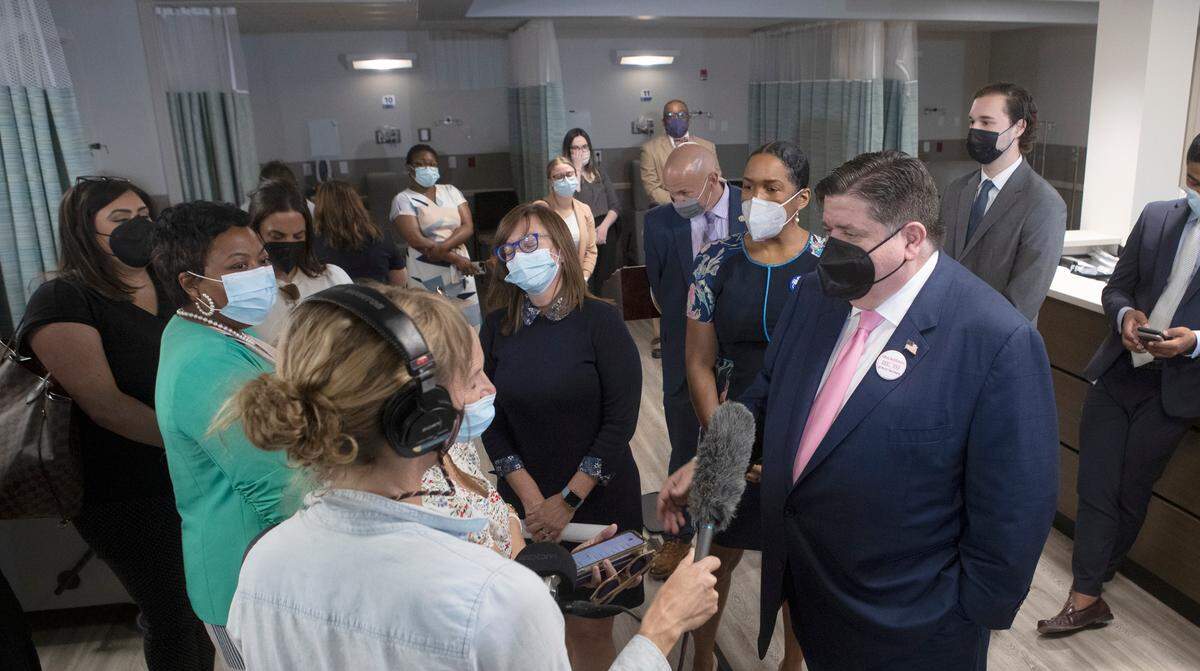
Illinois is preparing for an increase of out-of-state patients seeking abortions if Roe v. Wade is overturned this by the U.S. Supreme Court summer, Gov. J.B. Pritzker said in a news conference Wednesday.
In the week since Politico published a leaked draft opinion written by Justice Samuel Alito indicating that the Supreme Court had voted to overturn Roe v. Wade, abortion providers have been in a frenzy. The 1973 case — as well as the subsequent 1992 case, Planned Parenthood v. Casey — maintained that abortion is a constitutionally protected right. Without it, legal abortions would immeditely end in many states.
Illinois already fields patients from around the country to provide abortions. It’s one of 16 states to codify the right to an abortion in state law, and the only one in the Midwest. Four of the five bordering states — Wisconsin, Kentucky, Missouri and Iowa — have pre- or post-Roe laws on the books that would ban abortions. Indiana would be likely to ban abortion, according to U.S. News & World Report.
Pritzker, who signed the state law codifying abortion in 2019, said he was in favor of expanding abortion services to help with the likely influx of patients. He and Yamelsie Rodríguez, president and and CEO of Planned Parenthood of the St. Louis Region and Southwest Missouri, mentioned options such as expanding who is able to provide an abortion, such as nurse practitioners and increasing funding for clinics.
While funding that goes directly to abortion providers indirectly benefits patients from outside of Illinois, Pritzker said they were looking at whether state dollars could be used to directly help those people.
Since 2015, the number of out-of-state patients seeking abortions has more than tripled, Pritzker said during the news conference at Planned Parenthood in Fairview Heights.
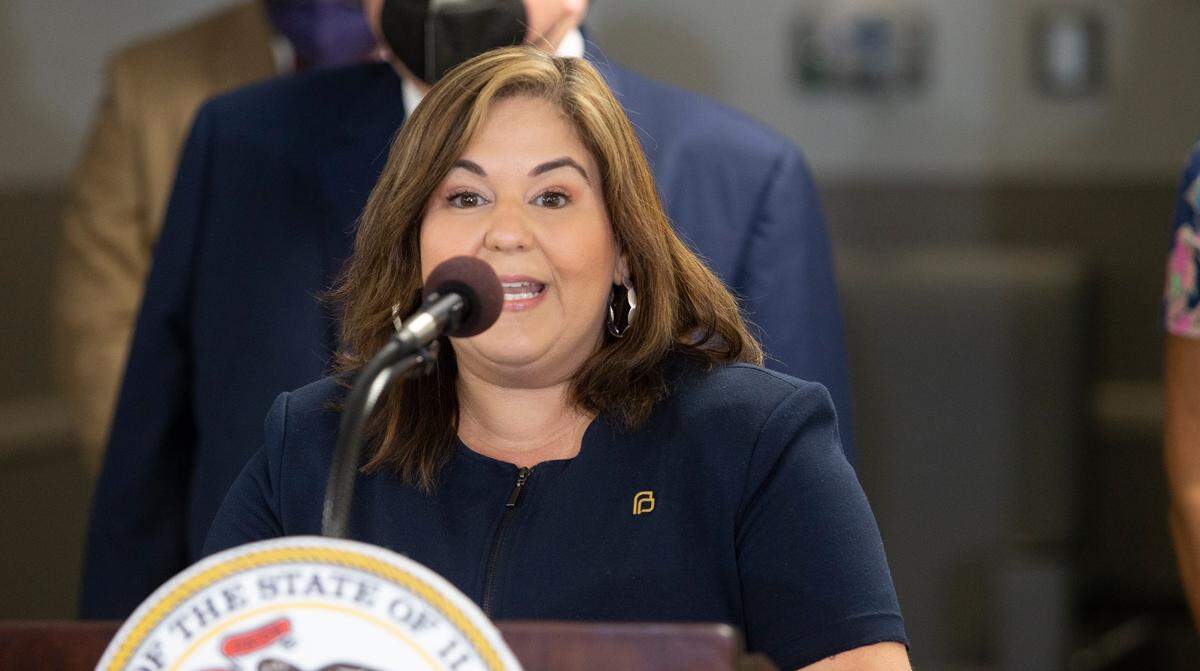
Since January, 1,000 patients from seven states have traveled to southern Illinois for an abortion, according to Rodríguez. She said case managers help out-of-state patients with the logistics, including travel, lodging and financial aid.
In September, Texas banned abortion after six weeks, which is earlier than most people are even aware they’re pregnant. Following that decision, Illinois saw an influx of out-of-state patients.
Since then, Rodríguez said abortion providers in southwest Illinois have been preparing for Roe to fall and urged congress to make a federal law protecting the right to an abortion.
The U.S. Senate is voting on the Women’s Health Protection Act of 2022 on Wednesday, which would codify the right to an abortion as federal law. The Senate is split evenly between Republicans and Democrats, and the proposed bill is not expected to get the 60 votes necessary to pass, according to CNBC.
“There is no archaic rule, no parliamentary maneuver, no matter what, that is more critical than protecting the lives and bodily autonomy of more than 160 million people,” Pritzker said. “ … If it takes overhauling the filibuster, then overhaul the filibuster. If it requires constant hours of pleading and deliberation, get to work. If it takes courage, find the courage.”
Some states are looking not just to ban abortions within their borders, but to criminalize travel to another state to seek an abortion. Some proposed laws might involve action against the patient, anyone who helps the patient travel, or abortion providers.
Pritzker said that he’s engaged with both the attorney general’s office and his own general counsel’s office about possible legislation that would protect abortion providers from being sued or held criminally liable, though he thought it would ultimately be litigated in the courts.
Missouri tried to extend its abortion law that required pregnant minors to have permission from a parent or judge beyond state borders in 2005, according to Bloomberg Law. The law could have created a civil law cause of action against anyone who helped a minor get an abortion without either of those permissions, even if the abortion took place in a state without those requirements. The state Supreme Court overturned it in 2007.
“It’s ridiculous to me that you could have this kind of cross-border attack on people in the state of Illinois,” he said. “We’re going to do everything — everything — to protect our providers and to protect people who are seeking to get services.”
This story was originally published May 11, 2022 at 1:54 PM.