Which Illinois water systems have high amounts of PFAS, and how can exposure be avoided?
A harmful chemical linked to cancer and other illnesses was detected above state guidance levels earlier this year in six southwestern Illinois areas: Collinsville, East St. Louis, Eldred, Hardin, East Alton and Wood River.
The Illinois Environmental Protection Agency released multiple health advisories related to PFAS in 2021. The guidance aims to help local officials and community water supply operators assess toxicity and risk in any given system, though it is not enforceable.
The state is working to develop PFAS requirements, but in the meantime it’s up to residents, municipalities and water suppliers to decide if they will take action.
Environmental groups have long called for more governmental regulation and academic research related to PFAS chemicals, but challenges abound as harmful effects are difficult to attribute with 100% accuracy.
What are PFAS, and where are they found? Here’s information from the Illinois EPA, as well as from a safety advocacy group, about how to assess and avoid PFAS risk and exposure.
What are PFAS?
PFAS stands for per- and polyfluoroalkyl substances, which refers to a group of thousands of human-made chemicals, according to the Illinois EPA. They are manufactured for their water- and oil-resistant properties and are present in many consumer products.
The prevalence of PFAS is exacerbated by their long-lasting quality. Most of the chemicals break down very slowly.
How do you know if you’re at risk of PFAS exposure?
Ingestion of PFAS-infected water may be the most common source of exposure, the IL EPA website says. Unfortunately, everyone is at some risk of exposure because of how wide a variety of sources contain PFAS.
An interactive map from the Illinois EPA shows the systems where PFAS have been detected. It includes water samplings from Illinois systems and shows where a system stands on PFAS levels compared to minimum reporting levels and guidance levels.
Populations who may be at a higher risk of PFAS exposure include firefighters, industrial workers who are involved in creating PFAS-containing materials and people who are pregnant or lactating because they drink more water per pound of body weight than the average person.
Children are also at an increased risk because they drink, eat and breathe more per pound of body weight than the typical adult. Additionally, infants and toddlers are likely to crawl on the floor and put things in their mouths, increasing exposure to PFAS found in carpets, dust, toys and cleaning products.
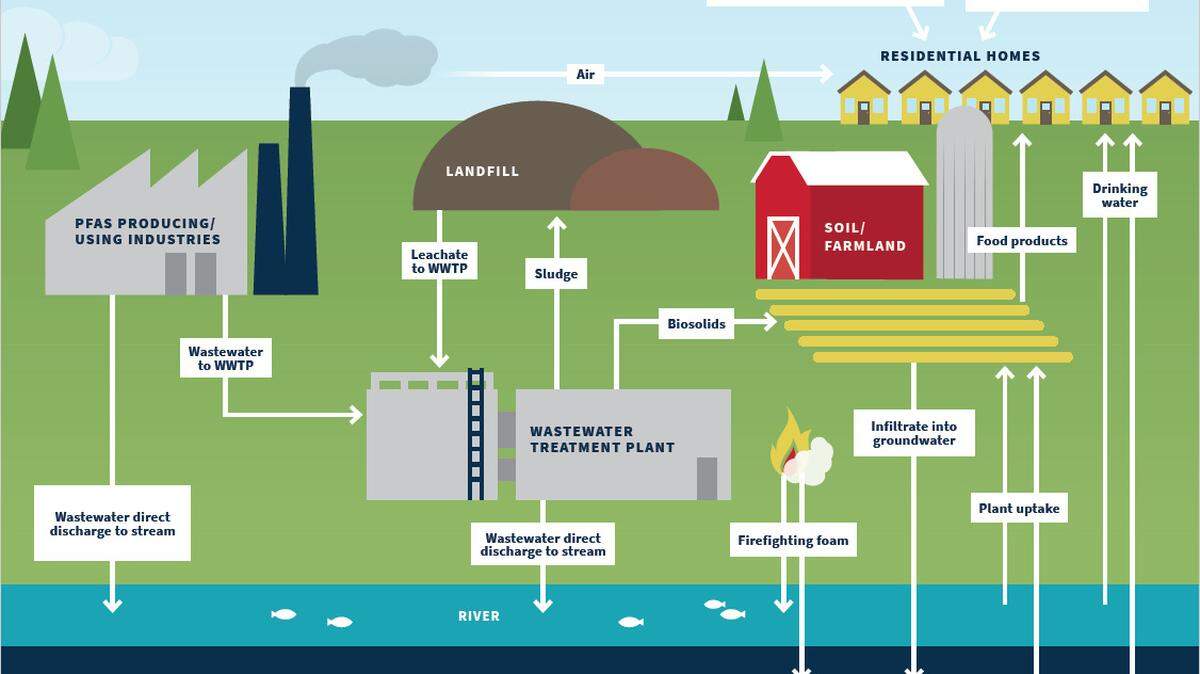
Here’s the Illinois EPA’s list of where PFAS can be found:
Drinking water
Soil and water at or near waste sites
Fire extinguishing foam
Manufacturing or chemical production facilities using or producing PFAS
Food (For example, fish caught in contaminated water and dairy products from livestock exposed to PFAS)
Food packaging (Specifically, grease-resistant paper, fast food wrappers, microwave popcorn bags, pizza boxes and candy wrappers)
Household products and dust (Non-stick cookware, paint, varnishes, stain remover, upholstery, clothing, etc.)
Personal care items such as some shampoo, floss and makeup
Fertilizer
People who live on or near military bases may face increased risk of PFAS exposure. A 2020 Pentagon report found that firefighting foam may have contaminated groundwater in 651 military sites. Scott Air Force Base officials said its water may have been contaminated, and they contacted possibly affected residents.
What are the risks of PFAS exposure?
Ayesha Khan is a Nantucket, Mass.-based member of the National PFAS Contamination Coalition. Her husband was diagnosed with testicular cancer at the age of 38 in 2019 after serving 15 years as a firefighter. Khan started researching cancer in firefighters and came across information about PFAS.
According to the Illinois EPA, peer-reviewed research has found exposure to certain levels of PFAS may lead to increased risk of some cancers, including prostate, testicular and kidney cancers.
The Illinois EPA has also identified the following possible adverse health outcomes:
Reproductive effects such as decreased fertility, high blood pressure in pregnant people
Developmental effects or delays in children, such as low birth weight, accelerated puberty, bone variations and behavioral changes
Reduced ability of the body’s immune system to fight infections; reduced vaccine response
Interference with the body’s natural hormones
Increased cholesterol levels; risk of obesity
This is not an all-inclusive list of the possible harmful effects of PFAS. The effects are difficult to study in part because people are exposed to PFAS in so many different ways in varied life stages, and there are thousands of PFAS chemicals to consider.
How can you avoid PFAS chemicals?
After her husband’s diagnosis, Khan became a community advocate for increasing awareness about PFAS. Khan said she looks for a few key marketing words when shopping that could indicate a product contains PFAS:
A variation of the stem “fluoro” as in “per- and polyfluoroalkyl substances”
Nonstick
Waterproof or water-resistant
Stain-proof or stain-resistant
Grease resistant
PFOA-free or PFOS-free (could indicate an alternative PFAS chemical was used instead)
Long-lasting (cosmetics)
Katie Pelch, a professor of biostatistics and epidemiology at the University of North Texas, said she wouldn’t rush to throw out every rug, shoe or product you own that might contain PFAS. Rather, replace things as the opportunity comes available, she suggested.
“Slow change, on a personal level is easier and especially financially,” Pelch said. “You don’t have to go out and replace everything all at once.”
Pelch said she wishes the government would regulate PFAS use further so the burden isn’t placed on consumers.
“At the end of the day, we should not be expected to be finding alternatives for our products. Products sold to us should all be evaluated for safety,” Pelch said. “We should not have toxic chemicals in our couch.”
Yet consumers can “affect the marketplace” if they demand change, she added.
There are also at-home water treatment units that can remove some PFAS, though many of the chemicals can “slip through,” said Erik Olson, who directs health, food and drinking water protection policy for the Natural Resources Defense Council, an environmental advocacy group.
There are two types of filters that can remove two types of PFAS – PFOA and PFOS, according to the Michigan State University Extension.
Either granular activated carbon or reverse osmosis filters marked with “NSF P473 or NSF Certified to Standard P473” may work, but they can be costly.
“You have to step back back and ask yourself, ‘Why is it I am having to pay for this?’” Olson said. “It shouldn’t be the individuals drinking the water paying for the cleanup. Polluters are using your drinking water as their toilet.”
Clean Water Action is an advocacy group aiming to promote clean water and human health. Here’s what the organization said about avoiding PFAS chemicals:
Use stainless steel or cast iron cookware in lieu of nonstick options. Even pans that say “PFOA-free” may still have other PFAS chemicals, which can cause flu-like symptoms when heated at high temperatures and even kill pet birds.
If you can’t replace your cookware, reduce the heat and do not use steel wool to clean the pan.
Avoid pre-bagged microwave popcorn. The bags are typically PFAS-coated on the inside, causing contamination to your snack. Buy loose popping corn and cook it on the stove or in a covered bowl/paper bag in the microwave.
Bring your own container for takeout food. Grease-resistant packaging frequently contains PFAS chemicals.
Search online for PFAS-free dental floss before purchasing. Exposure through floss can be significant. Tests indicate the following brands may have PFAS: CVS Health EaseBetween SuperSlip Dental Floss Waxed, Oral-B Glide Pro-Health Mint and Glide Pro-Health Original, Crest Glide Deep Clean Cool Mint Floss, Safeway Signature Care Mint Waxed Comfort Floss and Colgate Total Dental Floss Mint.
Ask for non-treated carpet. Clean Water Action recognizes there are limited consumer options for non-treated carpet at this time, but still encourages people to ask because it helps demonstrate demand.
Avoid stain-resistant coatings.
Read the label. Avoid products that list PTFE or “perfluor” in the ingredient list.
Avoid fabrics with a Scotchgard or GORE-TEX coating.
John Scott, a senior chemist with the Illinois Sustainable Technology Center, told the University of Illinois News Bureau that steps the government could take to reduce PFAS exposure include reducing the amount of PFAS produced and finding safer alternatives.
He added that consumer education is important, and requiring the labeling of PFAS chemicals in products could help buyers make informed decisions about their health.
This story was originally published May 16, 2022 at 5:00 AM.