With end of cash bail in Illinois, when can and when can’t police make an arrest?
Starting next year, a state law will make sweeping changes to the criminal justice system from arrests to cash bail.
The law is known as the Safety, Accountability, Fairness and Equity-Today Act, or SAFE-T Act.
It gives police officers, prosecutors and judges new criteria for taking people into custody before they’ve been convicted of a crime.
Supporters of the law say it will make the system more fair while opponents say they fear it will make communities less safe.
A common refrain from critics of the changes affecting cops is that under the SAFE-T Act, a trespasser could “move into your shed” and all law enforcement officers could do is write a ticket. But is that true?
Here’s a look at what the law says about arrests:
Who can — and can’t — police arrest starting Jan. 1?
The SAFE-T Act establishes a cite-and-release procedure for nonviolent crimes. It states that, generally, police should issue a citation rather than arresting someone if they are accused of the following crimes:
Class B or C misdemeanors
Traffic offenses
Petty offenses
Business offenses
Someone deciding to live in a homeowner’s shed could be accused of criminal trespass, which is a Class B misdemeanor.
However, police can still arrest people accused of Class B misdemeanors and the other crimes listed if they don’t provide an officer with identification or if they pose an “obvious threat” to themselves or to others, according to the law.
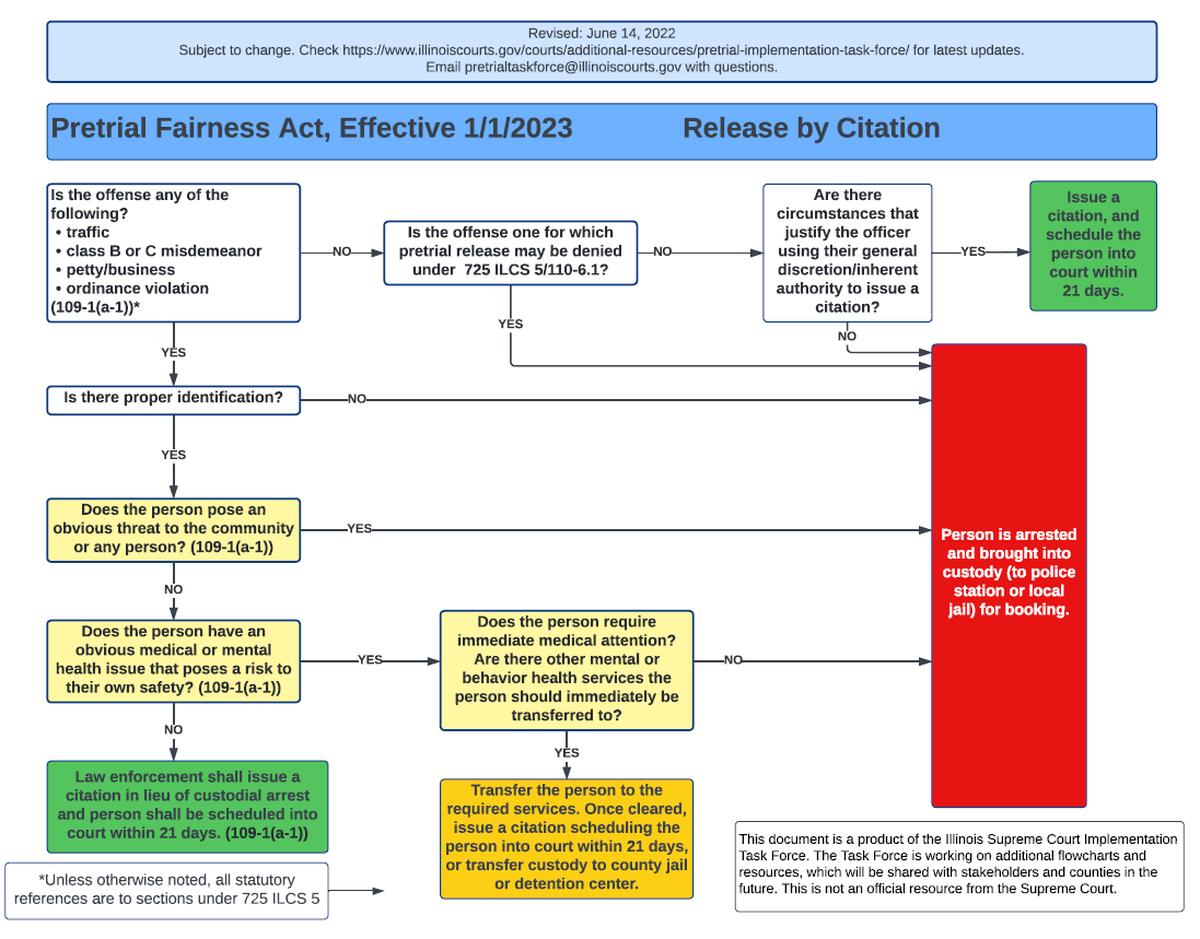
A nonpartisan task force helping to implement the changes suggested that law enforcement organizations develop guidelines for what rises to the level of an “obvious threat” in materials it shared with them and the public online.
The group is called the Illinois Supreme Court Pretrial Implementation Task Force.
The task force also states in the materials that officers have discretion to remove people from the location of alleged criminal activity before citing and releasing them from another location.
It’s a more serious crime for someone to trespass inside your house. At minimum, that can be classified as a Class A misdemeanor.
If the trespasser knows someone is home, it becomes a Class 4 felony. If the trespasser has a weapon, such as a gun, it becomes a Class X felony.
BEHIND THE STORY
MOREWhat questions do you have?
We looked into questions about how the SAFE-T Act would affect arrests because we saw citizens and state officials alike discussing it. And we’ll continue seeking answers to major questions in the public discussion.
What questions do you still have about the end of cash bail and other changes to the criminal justice system? Send them to investigative reporter Lexi Cortes at acortes@bnd.com or 618-239-2528.
Why were these changes made to the criminal justice system?
The Pretrial Implementation Task Force highlighted research on the effects of detaining someone in jail in answer to this question during a town hall meeting on the SAFE-T Act.
“Even if a person is only arrested and goes in for a day or two days, that can be very disruptive and in some cases can result in a person losing their job. It can result in somebody not being able to see their kids,” Kane County Chief Judge Clint Hull, a task force member, said during the July town hall.
“And ultimately, what the research has demonstrated over time is that people who end up detained, even for a limited period of time, are likely to have worse outcomes that are worse for them but are also worse for us. The data shows that when a person is detained, it actually increases the risk that the person is going to commit new offenses, not decrease.”
This story was originally published October 21, 2022 at 5:00 AM.