Judge rules on lawsuit seeking to stop IL from ending cash bail. What does it mean?
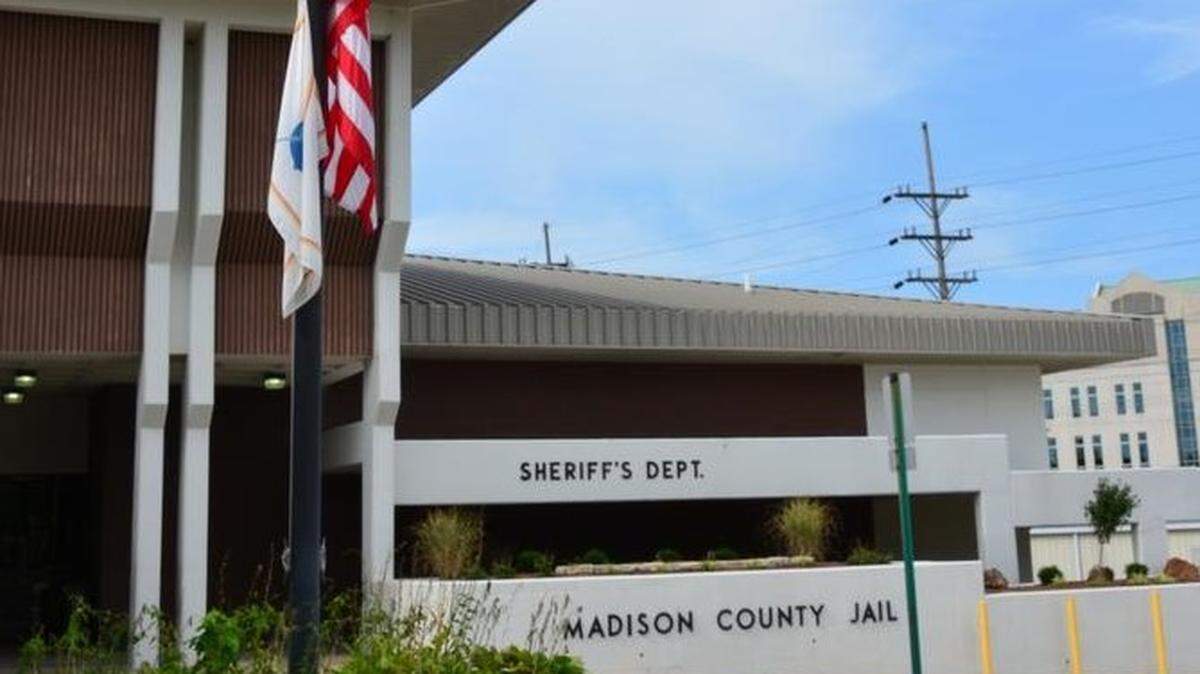
A judge decided Wednesday that the law ending Illinois’ cash bail system in three days is unconstitutional.
Kankakee County Chief Judge Thomas W. Cunnington issued the ruling in a lawsuit involving prosecutors and sheriffs from 64 counties, including Madison, Clinton, Monroe, Randolph, Bond and Washington.
The plaintiffs’ litigation team says the ruling means the law won’t go into effect in the counties involved in the lawsuit.
But Attorney General Kwame Raoul’s office interrupts the impact more narrowly. It says the ruling only applies to the prosecutors and sheriffs named as parties in the lawsuit and not to judges or criminal defendants anywhere in Illinois.
The Attorney General’s office plans to file an appeal with the Illinois Supreme Court.
Bail reform is part of a law known as the Safety, Accountability, Fairness and Equity-Today Act, or SAFE-T Act. Changes to bail take effect Jan. 1.
Prosecutors and sheriffs had argued the SAFE-T Act violates the state Constitution. Their complaints were consolidated into a single lawsuit in Kankakee County Circuit Court.
The SAFE-T Act makes other changes to the criminal justice system, but Cunnington’s ruling concerned the changes to bail.
Under the current system in Illinois, people charged with a crime can be released from jail to await trial from home if they can pay an amount of money set by a judge.
The intent of the SAFE-T Act is to detain people accused of crimes only if evidence shows they are a danger to others or a flight risk. Supporters of the law note that, with a cash bail system, people could be unnecessarily jailed because they can’t afford to pay their bond.
Raoul said in a statement that bail reform will still go into effect Jan. 1 statewide. People charged with a crime in any county can ask to be released from jail without having to pay, according to Raoul.
“Illinois residents in all counties should be aware that the circuit court’s decision has no effect on their ability to exercise their rights that are protected by the SAFE-T Act and the Illinois Constitution,” he wrote in the statement.
In order for the Kankakee County ruling to apply more broadly, the judge would have had to issue an injunction prohibiting state officials from enforcing the law, according to the Attorney General’s office.
Lawmakers approved the SAFE-T Act in a January 2021 lame duck session and have amended it three times since.
Opponents criticized the law during 2022 election campaigns as a threat to public safety.
The state’s attorneys and sheriffs who sued to block the SAFE-T Act argued:
The SAFE-T Act doesn’t align with the Illinois Constitution, which they say suggests bail — the conditions of release before trial — has a monetary component.
It violates the separation of powers by restricting judges.
The Kankakee County judge agreed with them on those arguments.
They raised other legal concerns that the judge did not agree with, including:
The SAFE-T Act is unconstitutionally vague.
It violates the constitutional requirement that bills be confined to a single subject.
Legislators passed the SAFE-T Act in an unconstitutional manner.
This story was originally published December 29, 2022 at 8:12 AM.