Will Trump’s tariff pauses help Illinois? How soon you could pay more for groceries & gas
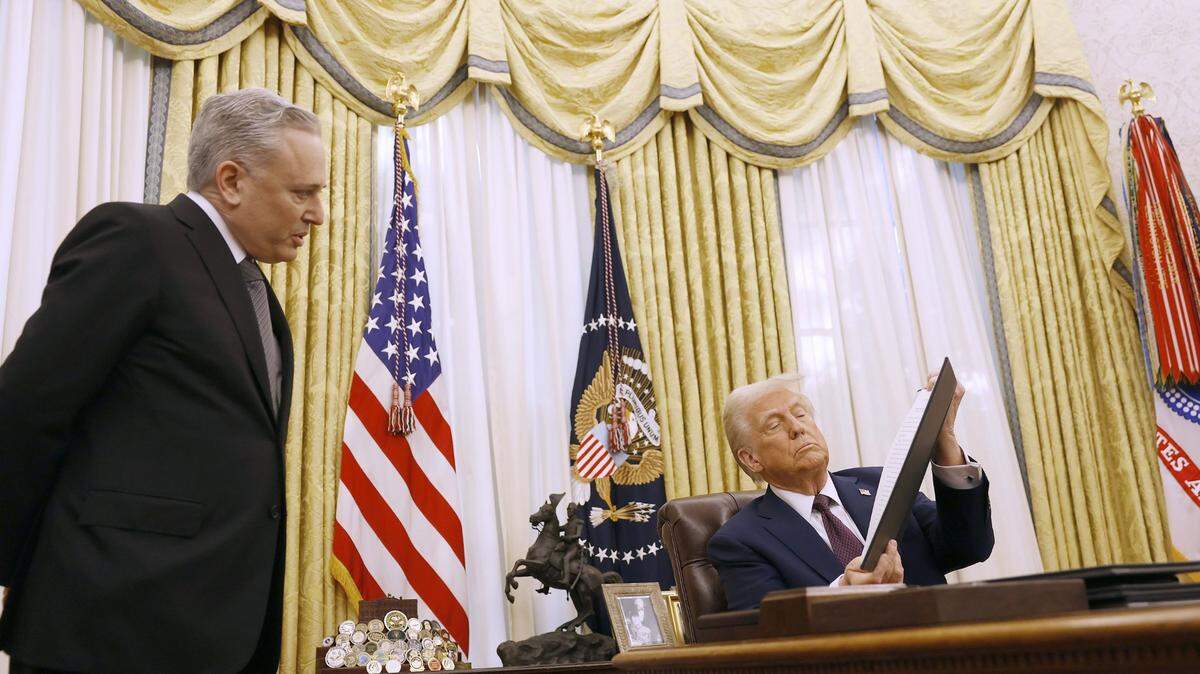
Update: President Trump announced Thursday afternoon he would also put a one-month pause on tariffs from Canada that fall under the United States-Mexico-Canada Agreement. The tariffs are scheduled to go into effect April 2.
President Trump announced in a Thursday social media post he would pause tariffs on Mexican goods that fall under the United States-Mexico-Canada Agreement until Wednesday, April 2, but tariffs against Canada and China have gone into effect.
Illinois residents can expect to pay more for groceries and gas soon after Trump imposed a 25% tariff on imports from Canada and doubled the tariff on Chinese products to 20% Tuesday.
A tariff is a tax on food, goods, energy and manufactured parts brought into the U.S. from other countries. The taxes are paid by the companies that purchase the imports — not the companies or countries of origin — and are typically passed on to consumers.
In addition to the recently announced pause on some tariffs against Mexico, other limitations and delays are in place, such as a lower 10% tariff on Canadian energy and a one-month delay on the implementation of auto tariffs against Canada and Mexico.
The delay on auto tariffs isn’t expected to relieve much pressure from the Illinois economy, however, Frank Manzo IV, an economist with the Illinois Economic Policy Institute, wrote in a March 5 email to the News-Democrat.
“A one-month pause is unlikely to have much of an effect, other than cause uncertainty and create opportunities for market manipulation,” Manzo said.
If and when the pause on tariffs for Mexican goods ends, Illinois residents will see higher prices for some items quickly, including avocados, tomatoes, jalapenos, mangos and limes, Manzo said, while gas price increases could follow soon after. Additionally, prices for common imports from Canada, such as grain, wheat, chicken, lumber and gas, may increase sooner as those tariffs are already in effect.
Other products, such as appliances, laptops and cars will take longer to see price hikes, according to Manzo, due to assembly times and inventory levels.
How will tariffs affect Illinois residents?
The average Illinois household can expect to pay roughly $2,000 to $3,000 more each year if Trump’s proposed tariffs go into effect in full, Manzo said in a Feb. 5 interview.
Half of Illinois’ imports come from Mexico, Canada and China, and lumber, grains, meats, chicken, fruits, vegetables and beverages are among the most commonly imported items.
“For Illinois, these tariffs mean tax hikes on over $100 billion in goods and commodities from Canada, Mexico, and China every year and would cost our businesses and families nearly $18 billion annually. For perspective, that’s more than the State of Illinois collects in annual sales tax revenue,” Manzo said.
Officials in Mexico, Canada and China have all issued retaliatory tariffs in the “trade war,” AP News reported. Beijing issued tariffs of up to 15% on a variety of U.S. farm imports, Canadian Prime Minister Justin Trudeau said Canada would issue tariffs on more than $100 billion of U.S. goods and Mexican President Claudia Sheinbaum also has plans to institute retaliatory tariffs, ABC News reported March 4. Mexico’s plan for retaliatory tariffs may potentially change based on the pause Trump announced Thursday.
Even before the new tariffs, U.S. residents have already seen a reduction in purchasing power over the last year, with a 3% inflation rate for all items, according to the U.S. Bureau of Labor Statistics.
Do you have a question about the Illinois economy for our service journalism team? We’d like to hear from you. Fill out our Metro-east Matters form below.
This story was originally published March 6, 2025 at 12:18 PM.