With proposed Medicaid cuts, southern Illinois hospitals may be forced to slash services
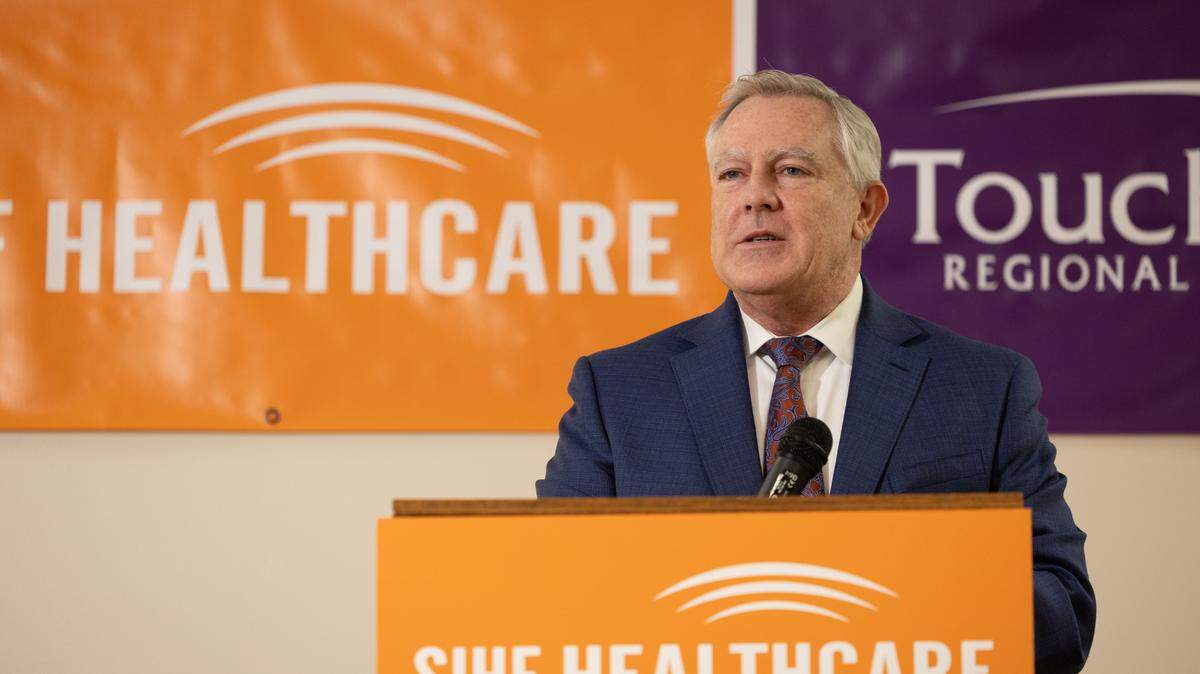
Southern Illinois Health Care Foundation leaders worry they would have to cut services or close clinics and medical centers in the metro-east if Congress slashes billions of dollars from Medicaid, officials said at a news conference Thursday.
SIHF provided care to more than 103,000 people in 2024, including over 60,000 people who receive Medicaid. Touchette Regional, the hospital in SIHF’s system, relies on Medicaid more than any other local hospital. It accounts for 78% of its revenue, according to the most recent data from 2023.
But the health care insurance program for families and individuals with very low income may be on the chopping block as Republicans, who control both the House and Senate, look for places to make $880 billion in federal spending cuts over the next decade.
Analysts say it would be a politically risky move to target Medicaid, because of the “desperate situation” it could cause for wide swaths of people. That includes not only those who need help covering a hospital bill, but nursing home care and addiction and mental health counseling, according to U.S. Sen. Dick Durbin, D-Illinois.
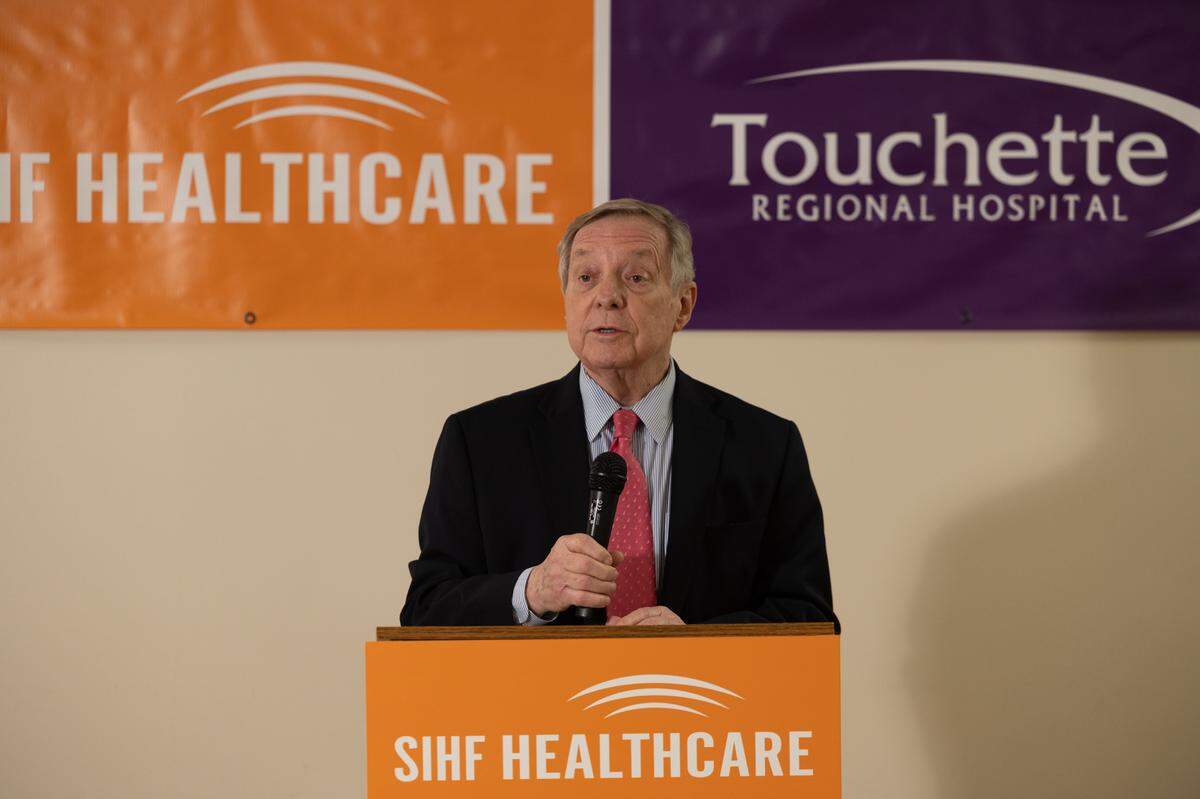
Durbin traveled to Cahokia Heights for Thursday’s news conference to draw attention to the possible impact cuts would have on SIHF, Touchette and small rural hospitals in southern Illinois. He’ll return to Washington, D.C. next week to debate the future of Medicaid.
“There have been proposals to cut at least 15% of the coverage of Medicaid,” Durbin said.
Such cuts could have a $5 million to $10 million impact on SIHF’s budget, said President and CEO Larry McCulley.
“How do you cut that? Well, the only thing you can do is close locations, eliminate service lines like dental, obstetrics, end partnerships that raise and lift up future providers. We’re looking at having to close partnerships like our two family medical residencies in Alton and possibly in O’Fallon,” McCulley said during the news conference.
SIHF would specifically look at closing facilities in Red Bud, Olney, Salem, Belleville, Granite City and O’Fallon, McCulley said.
Durbin encouraged hospitals and constituents in the metro-east to call their Republican representatives in Congress. Because of the slim majority in the House, Durbin said opposition from the three Republicans from Illinois in the House of Representatives — U.S. Reps. Mike Bost, R-Murphysboro; Mary Miller, R-Hindsboro; and Darin LaHood, R-Peoria — along with Democrats could take Medicaid cuts off the table.
Bost, Miller and LaHood did not immediately respond to a request for comment on Thursday about their position on Medicaid cuts.
Gov. J.B. Pritzker and U.S. Rep. Nikki Budzinski, D-Springfield, also traveled the state Wednesday to discuss their concerns about the impact Medicaid cuts could have on healthcare in Illinois. They may force some small rural hospitals to close, they said during a public roundtable with agriculture leaders at a farm in Urbana.
Republicans are looking for cuts in the budget so they can extend President Donald Trump’s 2017 tax cuts, which Pritzker said benefit the wealthy — “people who don’t need them,” he said. Durbin echoed that sentiment on Thursday, saying 60% of the tax cuts go to people making over $400,000 a year.
About a quarter of Illinoisans — more than 3 million people — receive Medicaid, according to one-year estimates from the U.S. Census Bureau’s 2023 American Community Survey.
Medicaid recipients usually don’t have to pay anything for medical expenses under the program.
Rural hospitals fear long-term sustainability without Medicaid
Sparta Community Hospital CEO Joann Emge and Washington County Hospital President Brian Monsma said in interviews Thursday that they worry about long-term sustainability for their hospitals without Medicaid revenue.
In 2023, Medicaid accounted for 17% of Sparta Community Hospital’s revenue and 7% of Washington County Hospital’s revenue.
Emge said the loss of funding could potentially affect the specialty services they currently offer to keep patients from having to travel to St. Louis, where their Medicaid plan may not be covered. Having access to specialty services in Randolph County also benefits patients because transportation can be a struggle, Emge said.
Randolph County patients’ options for care are other small rural hospitals or those 45-60 minutes away in other communities. Washington County patients would also have to travel at least 25 minutes away.
At Thursday’s news conference, Durbin noted that distance between patient and care may be just inconvenient most of the time, but it could make a life-or-death difference in an emergency.
“How about when you’re delivering a baby, you’re going through a heart attack, you just had some serious trauma?” Durbin said. “You want a hospital quickly.”
Emge also spoke at Thursday’s news conference about the possible impact on her hospital, which has over 100,000 visits annually. Washington County Hospital has about 34,000 outpatient visits a year.
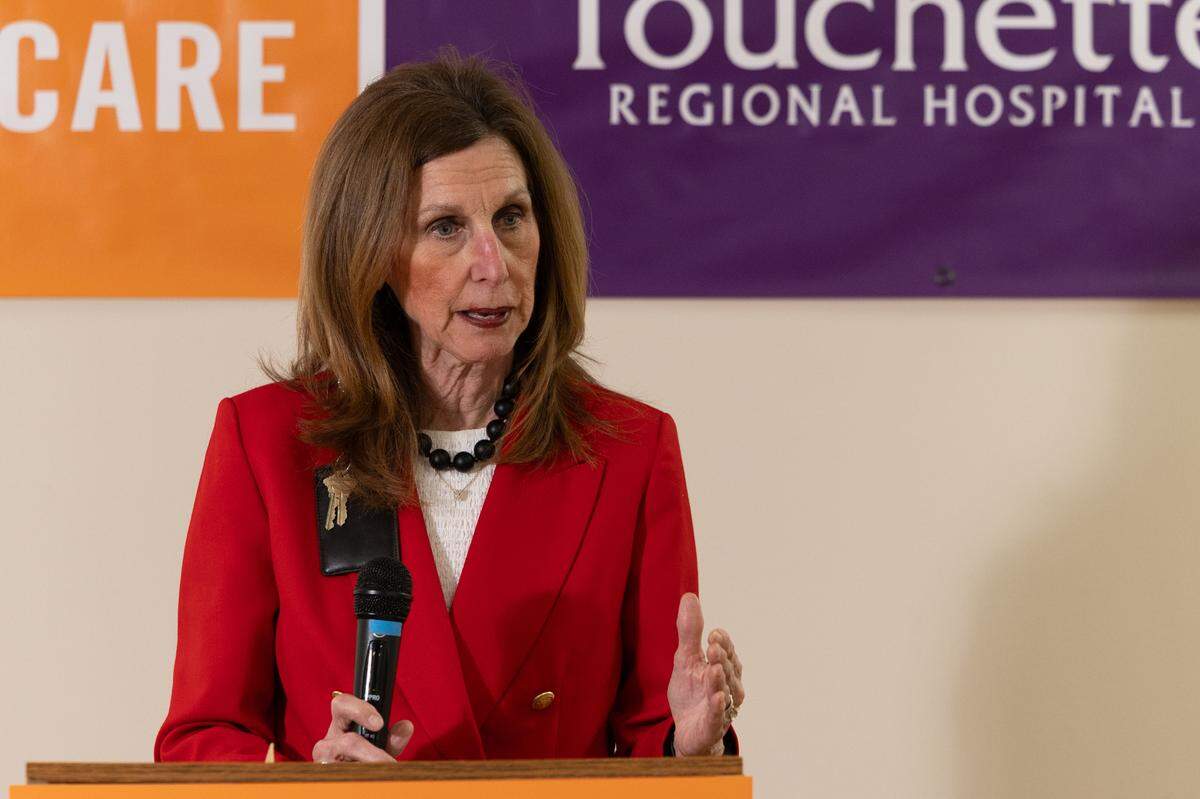
Kevin Goss, CEO of Jersey Community Hospital in Jerseyville, 54 miles north of Belleville, said at the news conference that a lot of hospitals operate at low profit margins of between 2% and 5%.
“It’s easy math, right? If about 15% of our revenue is from Medicaid and that gets cut substantially and we’re on that 2-5 range just like most other hospitals are, obviously we’re in the negative and we’re closing before you know it,” Goss said.
Jersey Community Hospital serves over 30,000 residents in Jersey, Greene and Calhoun counties.
Tracy Warner, executive director of the Illinois Critical Access Hospital Network, said during the news conference that more than a quarter of small rural hospitals — 29.4% — operate on thin or negative margins.
In response to a question Wednesday about what Illinois could do to fill the gaps from federal cuts with state funding, Pritzker said the state doesn’t have enough money to cover what it’s already lost and what is being scrutinized for future cuts, which he estimated to be billions of dollars. He said the state will have to prioritize “taking care of people as best we can” within its budget.
“In a world where we’ve got to worry about keeping our rural hospitals open, if we lose what I think we may in Medicaid, I mean, it’s gonna be triage,” Pritzker said.
This story was originally published March 21, 2025 at 5:00 AM.