
Native American and Freeburg mascot bills stall in IL Senate, but could return
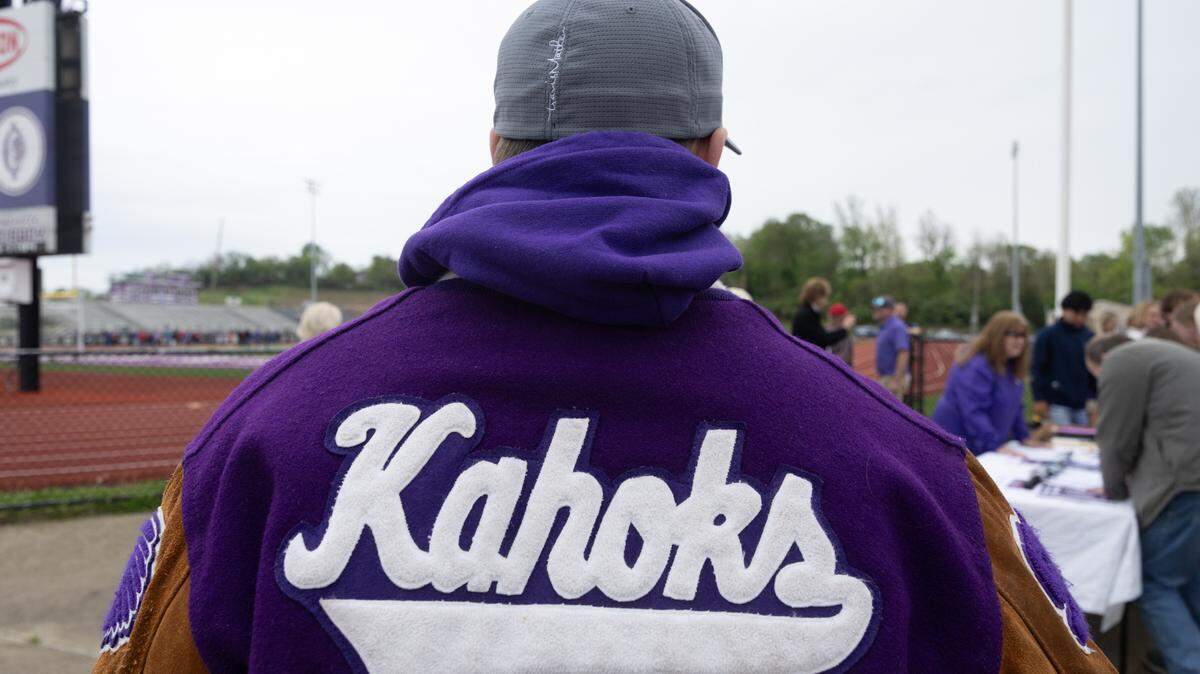
Two bills in the Illinois General Assembly that would require districts to change their mascots, logos and names have stalled in the Senate — but still have paths forward.
The first bill, HB1237, would prohibit the use of Native American mascots across the state, and HB3527, which would bar references to those with disabilities, passed the House earlier this year. However, lawmakers did not meet last Friday’s deadline to pass the bills out of committee and onto the Senate floor.
If the first bill passed, at least 11 schools in the metro east — like the Collinsville Kahoks, Granite City Warriors, Mascoutah Indians and Cahokia Comanches — may be required to phase out their Indigenous mascots. The Freeburg Midgets would be forced to change by the second bill.
Because neither bill passed through committee on time, opponents declared a temporary victory. Collinsville and Granite City’s superintendents both said the stall is a testament that the communities’ voices were heard.
“We deeply appreciate everyone who took the time to reach out, share their perspectives and make their voices heard,” Granite City Superintendent Don Harris said. “We remain hopeful that the decision regarding our school mascot will continue to be made at the local level.”
But, to claim a complete win would be premature because the bill isn’t officially “dead” yet.
That leaves hope for Robin Deguzman, a supporter of the Indigenous mascots bill from O’Fallon. He said he feels the bill is a way for communities to recognize the longstanding injustice inflicted on Indigenous people in America.
“(These) mascots are an attempt to override history with a rendition that gives no respect or honor to what it was further back,” Deguzman said.
Andrew Johnson, executive director the Native American Chamber of Commerce of Illinois and citizen of the Cherokee Nation of Oklahoma, said phasing out Indigenous mascots is a public health issue because those images can have negative psychological effects on students.
“Why do we want to hold on to something if the science and research shows it’s harmful?” Johnson said.
The Senate sponsor of the bill centered around Freeburg High, Sen. Karina Villa, D-West Chicago, has already requested an extension on the bill in hopes to get a committee hearing later this month, according to her office.
As of Monday morning, the offices of Sen. Erica Harriss, R-Glen Carbon, and Rep. Kevin Schmidt, R-Millstadt, said they hadn’t seen an extension request for the bill about Native American mascots, logos and names. The senate sponsor, Sen. Suzy Glowiak Hilton, D-Western Springs, declined to comment.
“If it follows the traditional process, it should be dead,” Harriss said.
Even if the bills are not passed before adjournment of the Illinois General Assembly on May 31, state lawmakers will have other opportunities to work on the legislation. Both bills could be addressed during the fall veto session, attached as amendment to another bill and put into an omnibus bill.
If the bills don’t get passed this year, lawmakers would need to hold new committee hearings next year.
What do the bills say?
Proponents of the bill argue that Native American mascots, imagery and names can be harmful, racist and offensive, although local districts contend their mascots are a way to honor their area’s Indigenous history. If signed into law, schools would be required to change:
Names of federally recognized tribes and historical Native American people.
Mascots depicting Native Americans.
Imagery associated with Native American people, such as feathered headdresses, tomahawks and arrowheads.
Terms like Braves, Chiefs, Tribe, Indians “or any synonymous term, logo or mascot depicting Native Americans.”
Schools can continue using uniforms or other materials purchased before the legislation’s effective date that feature the name, logo or mascot until September 2030 so long as they don’t acquire any more of such materials. They must also have chosen a new name, logo or mascot by July 1, 2026.
There is an exception under which schools that use the name of a federally recognized tribe can continue to do so with permission of the tribe.
The other bill would prohibit public schools from using references to disabilities as name, logo or mascots and require them to change by Sept. 1 2028. Currently, Freeburg High’s Midgets is the only applicable mascot in the state. People with dwarfism equate the mascot to a slur and find it offensive. Those who support the mascot say it’s not meant to be demeaning. The mascot goes back 90 years when an undersized basketball team defeated a favored opponent.
This story was originally published May 12, 2025 at 2:27 PM.