Pritzker says Illinois working to soften impact of SNAP cuts imposed by Trump
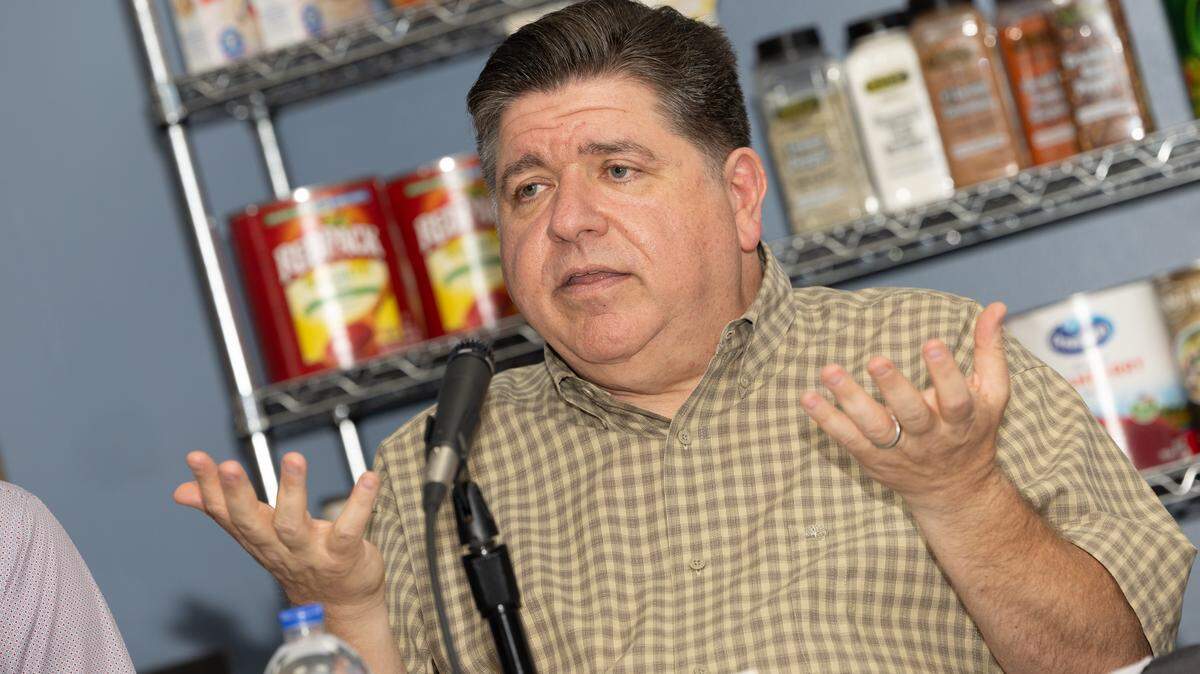
Gov. JB Pritzker spoke at an East St. Louis food shelter on Tuesday to talk about his administration’s plans to alleviate the impact spending cuts to federal benefits programs, specifically the Supplemental Nutrition Assistance Program, or SNAP, will have on Illinois residents who use the aid to buy groceries.
Some of the plans Pritzker’s administration are floating include making the application process smoother and funding private or local grocers to keep them from falling through the cracks. However, he did not say if there are any planned policies to generate more revenue to fund the costs of the federal cuts, and noted it will be difficult to manage economically.
“The federal government gets to print money, we can’t,” Pritzker said. “It’s like they’re cracking holes in our boat from Washington D.C., and we can only hold so many boards together. There’s gonna be a leak.”
Pritzker said his administration is still working to try and figure out the best route possible to fix the economic issues caused by the cuts.
President Donald Trump signed the cost-cutting One Big Beautiful Bill Act into law on July 4. Capitol News Illinois reports changes to SNAP include moving some costs for the program to the states, increasing work requirements to include people between the ages of 18 to 64, which previously cut off at 54, and mandating they must do at least 80 hours of paid, unpaid, or volunteer work a month to receive the benefits.
Pritzker warned that a year from now, the effects of the cuts would be felt by the 1.9 million Illinois residents who depend on SNAP, which includes about 47,000 people in St. Clair County.
Pritzker said 10,000 people in St. Clair County could immediately lose their benefits. This would be over 21% of the 47,000 residents currently getting SNAP benefits.
Over 1.8 million Illinoisians received $4.7 billion of SNAP benefits in the 2025 fiscal year, according to state statistics published by Capitol News Illinois.
First Assistant Deputy Governor for Health and Human Services Ryan Croke said the administration is examining ways to alleviate the impact of these cuts, but doesn’t have any specific plan at the moment to generate new revenue to fund programs like SNAP.
“This is a day by day operation that will require a lot of creativity and strategic thinking,” Croke said.
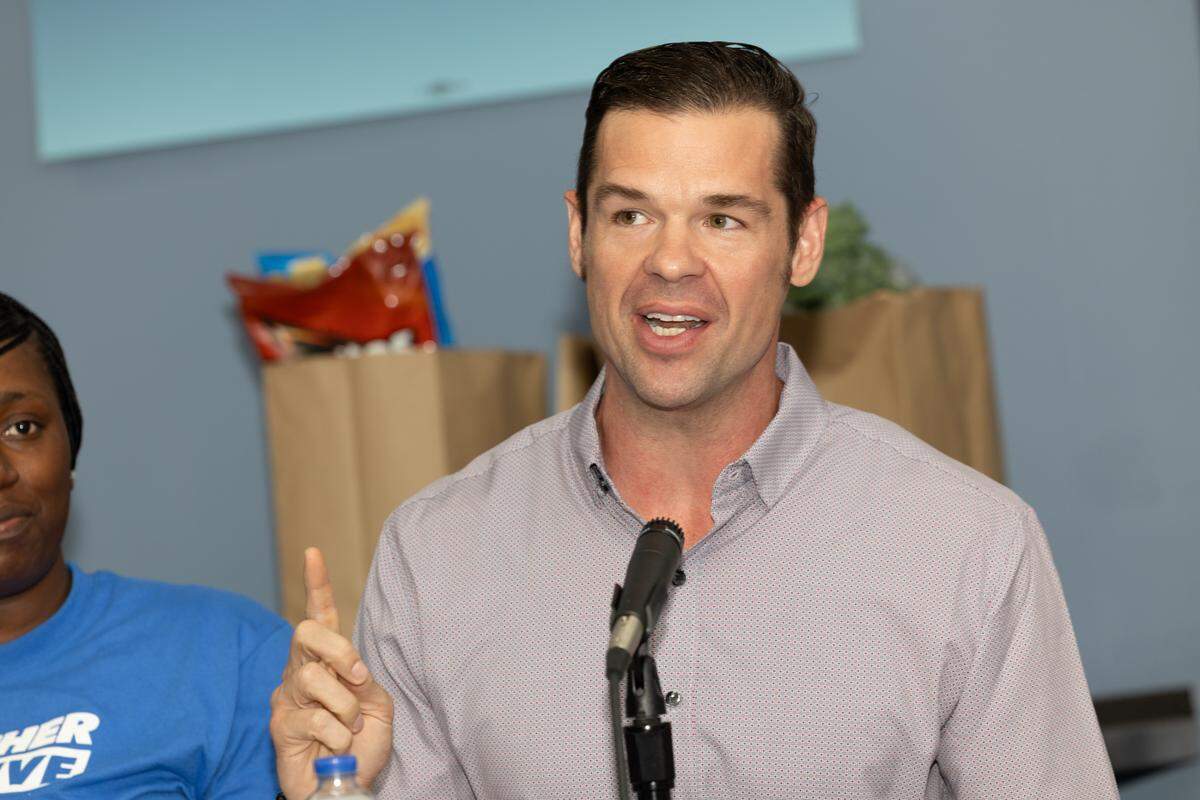
Dulce Quintero, secretary of the Illinois Department of Human Services, said the changes to SNAP are purposefully bureaucratic to discourage people from applying. Quintero said it will cost the state $800 million each year to handle the changes.
Croke said Quintero’s office is handling the changes by making sure they have the right staff, are up to date on necessary technology, and are reviewing policies to refine and revise.
Pritzker was asked if his administration considered opening state-run grocery stores similar to those proposed by New York City mayoral candidate Zohran Mamdani. Pritzker said no, and that the focus would be on propping up existing private companies or local co-ops.
Pritzker said SNAP puts money back into the economy, which sustains local grocery stores. Without SNAP, some grocery stores may close, he said. He added that a similar issue may happen with cuts to Medicaid, which could result in some hospitals shutting down.
One East St. Louis resident, Tony Russell, 67, criticized Trump’s cuts.
“If (Trump) takes away too much stuff from the people, then he’s starting a war,” Russell said. “If you go cutting people’s stuff down, it doesn’t take long for them to get mad.
“Doesn’t make any sense, man,” Russell said. “Now you’re making everybody hungry. Now you’re gonna have people killing each other over food — over nothing.”
Russell said he and people he knows have already been hit by the cuts, specifically navigating hurdles to get back the aid he received for years prior. His house burned down recently, so he lost his birth certificate, which he needed to get back on Social Security benefits.
The Trump administration has responded to criticism of cuts to the SNAP program by saying in a news release the cuts are necessary so the program can “serve the truly needy.”
“The mission of the program has failed,” states the Trump news release. “SNAP was intended to be temporary help for those who encounter tough times— we are strengthening this program to serve those who need it most.”
The Trump administration states the work requirements are needed because almost 75% “of able-bodied adults without dependents on SNAP have no earned income.”
The Associated Press reports the Supplement Nutrition Assistance Program began in 2008 and previously was called “food stamps.” This federal program to help low-income people pay for groceries traces its roots to 1939 during the Great Depression.
Belleville News-Democrat reporter Mike Koziatek contributed information for this article.
This story was originally published July 29, 2025 at 4:02 PM.