COVID-19 rules left IL nursing home residents isolated. Families want that to end — now
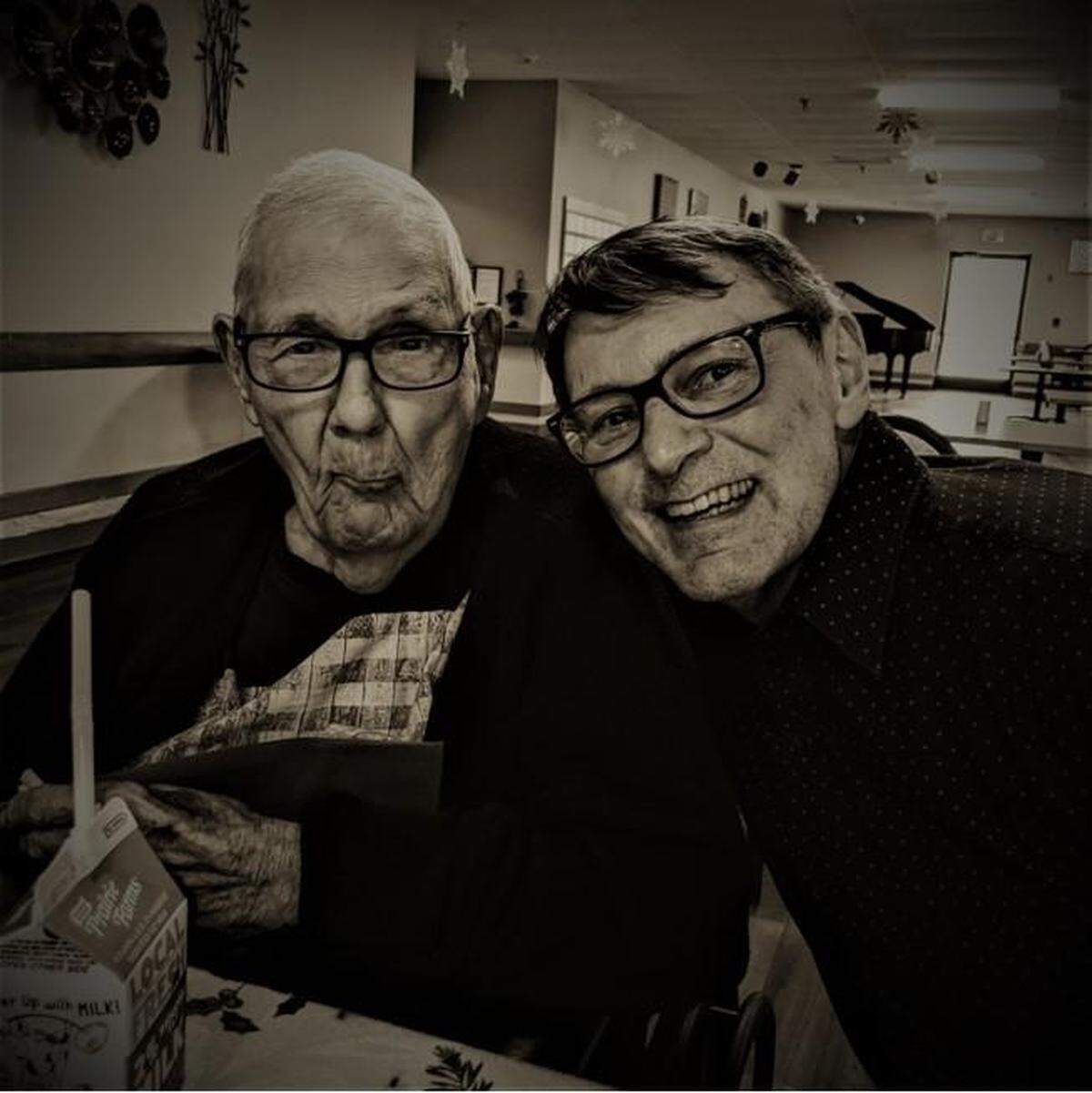
Steve Baker said goodbye to his father through two masks and a face shield. Then, he couldn’t attend the funeral.
William Baker, a 96-year-old World War II veteran and a father to 12, died of complications related to the coronavirus at a nursing home and rehabilitation center.
The Bakers’ visit on April 27 was the only time William had seen a family member since long-term care centers across Illinois locked down more than a month earlier to help prevent the virus from spreading.
“In my dad’s case, as I’m sure many residents felt, he just felt abandoned and neglected by us,” Steve Baker said. “... It’s tough because we were dad’s voice, and we were dad’s mind for reasoning. When you’re cut off, it just throws you into this vacuum.”
Thousands of residents at long-term care centers haven’t been able to see their families in person since around March 9, when the governor called on facilities to put visitor restrictions in place. State and federal officials have no clear answer about when family visits will restart.
Reasons for their caution became clear as public health officials released data and discussed the status of the pandemic over the past several months. One statistic stands out: More than half of the state’s coronavirus deaths are from nursing homes and other residential facilities.
As of June 12, the latest date information was available, about 55% of the state’s coronavirus deaths were long-term care residents.
An even larger percentage of the deaths in St. Clair, Madison and Clinton counties were connected to long-term care centers: from 63% up to 100%.
Illinois has started relaxing restrictions on businesses and activities after a statewide stay-at-home order. But nursing homes may be among the last to see restrictions lifted, the governor has said.
Federal agencies have offered guidance that state and local officials could use to make plans for families to see each other again.
Some long-term care centers are getting ready, trying to figure out the safest way for families to be together. An association for hundreds of facilities in Illinois is pushing the state for outdoor visits.
Families say visits are important not only to keep residents company but also to advocate for their care like only a mother, son, husband, daughter or grandchild can. While they wait for an answer, many family members only see their relatives on video calls, through the windows of a facility or dressed in protective gear when their loved ones are close to death.
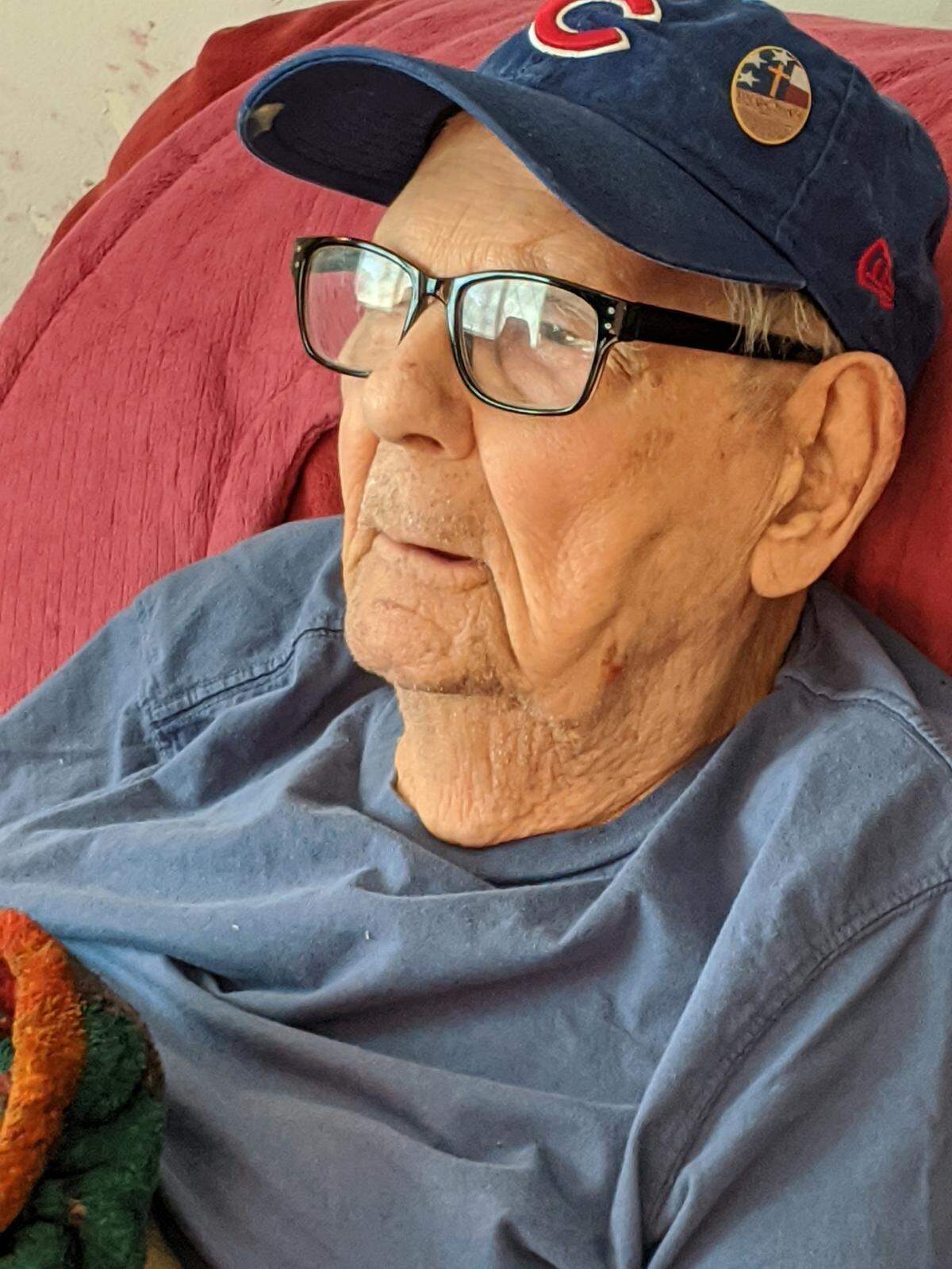
William Baker contracted the coronavirus at Edwardsville Care Center, where he had been going through rehabilitation since May 2019 after a fall at home, according to his son Steve. His large family — 165 children, grandchildren, great-grandchildren and great-great grandchildren — took turns visiting him daily until March 2020, when visitors were no longer allowed.
Steve Baker said he was allowed to visit one last time on April 27 as the staff saw his father’s condition worsening. William died four days later.
An outbreak of the virus had infected at least 54 residents at the 120-bed facility when Steve Baker visited, according to Department of Public Health data at the time. Afterward, Steve self-quarantined so he didn’t risk spreading the virus to the family at his father’s funeral.
Edwardsville Care Center’s outbreak has grown to 94 people, with 22 deaths, state data shows.
Why did Illinois restrict visitors at long-term care centers?
Over 100,000 people live in long-term care centers in Illinois, according to the Department of Public Health.
The state restricted visits to protect residents, because they have a greater risk of severe illness or death from COVID-19, which is caused by the coronavirus. Their age and chronic illnesses make them more vulnerable.
“COVID-19 doesn’t live in a facility. It comes in with somebody, and then it spreads,” Gov. J.B. Pritzker said during a May 27 news conference.
Dr. Ngozi Ezike, director of the Illinois Department of Public Health, said during an April news conference that employees probably brought the virus into long-term care centers since there are almost no visitors.
Facilities used screening questions and temperature checks to keep sick staff from coming to work, but those measures wouldn’t catch someone who was asymptomatic. Only a coronavirus test could do that, and the state is still working to bring widespread testing to every facility.
Guidance from the Centers for Medicare and Medicaid Services, which regulates the industry, suggests waiting to relax restrictions on visitors until there have been no new diagnoses for 28 days. In St. Clair, Madison and Clinton counties alone, there are 25 locations that have not met that benchmark because they have active outbreaks, according to a Belleville News-Democrat analysis of state and local data.
‘They don’t have forever to wait to get back to normal’
For months, residents in facilities where the virus is present have been largely confined to their rooms, according to families who spoke to the BND.
Belleville resident Jean Weier said her 84-year-old father Roscoe was more anxious and depressed after the lockdown. Weier asked that his last name remain private.
Roscoe has Parkinson’s disease. He moved into Cedarhurst of Shiloh four days before visits stopped, and then group activities were canceled.
“All the things we hoped he would gain, like socialization, none of that was possible during this shutdown,” Weier said. “These people are at the end of their lives. They don’t have forever to wait to get back to normal.”
Charlotta Smith, of Belleville, had wanted her 74-year-old mother and her 96-year-old grandmother to move back in with her after they completed therapy at Four Fountains, a Belleville long-term care center. She took care of each of them before they went to Four Fountains. But they both died after contracting the coronavirus, according to Smith.
Smith said a third member of her family was also diagnosed with COVID-19: her uncle, another resident at Four Fountains.
Inside the 156-bed facility, 104 people have been infected, and 26 have died, according to the health department.
Smith’s mother, Evelyn Otis, died April 28, and her grandmother, Leora Smith, died May 26, according to the family.
“I used to tell my grandmother, ‘If you can walk, you can come back home,’” Charlotta Smith said. “... My mother only went in there for rehab because she had had a stroke. That was it; she never came out.
“I had to bury my mother. Two weeks later, now I gotta bury my grandmother. It’s a hard pill to swallow.”
New normal for long-term care residents, families
While the restrictions are in place, some families have still tried to see their relatives, even if they can only look through the windows in their rooms at long-term care centers.
“It’s not the same thing,” said Carrie Leljedal, a mother. “Not when you have a child with a complex medical history, not when you’ve spent every day of their life making sure they’re OK and alive.”
Leljedal’s 32-year-old son Lynn Ray Jr. is receiving care at Clinton Manor Living Center in New Baden. At least 29 residents and employees from the center have been infected by the coronavirus, and one person has died, according to state data. Leljedal said Ray has not contracted the virus.
Ray has Sturge-Weber syndrome, a condition that affects his brain and causes seizures.
The longest Leljedal and her son had been apart before the coronavirus pandemic was nine days. Now, it has been three months since they were in the same room.
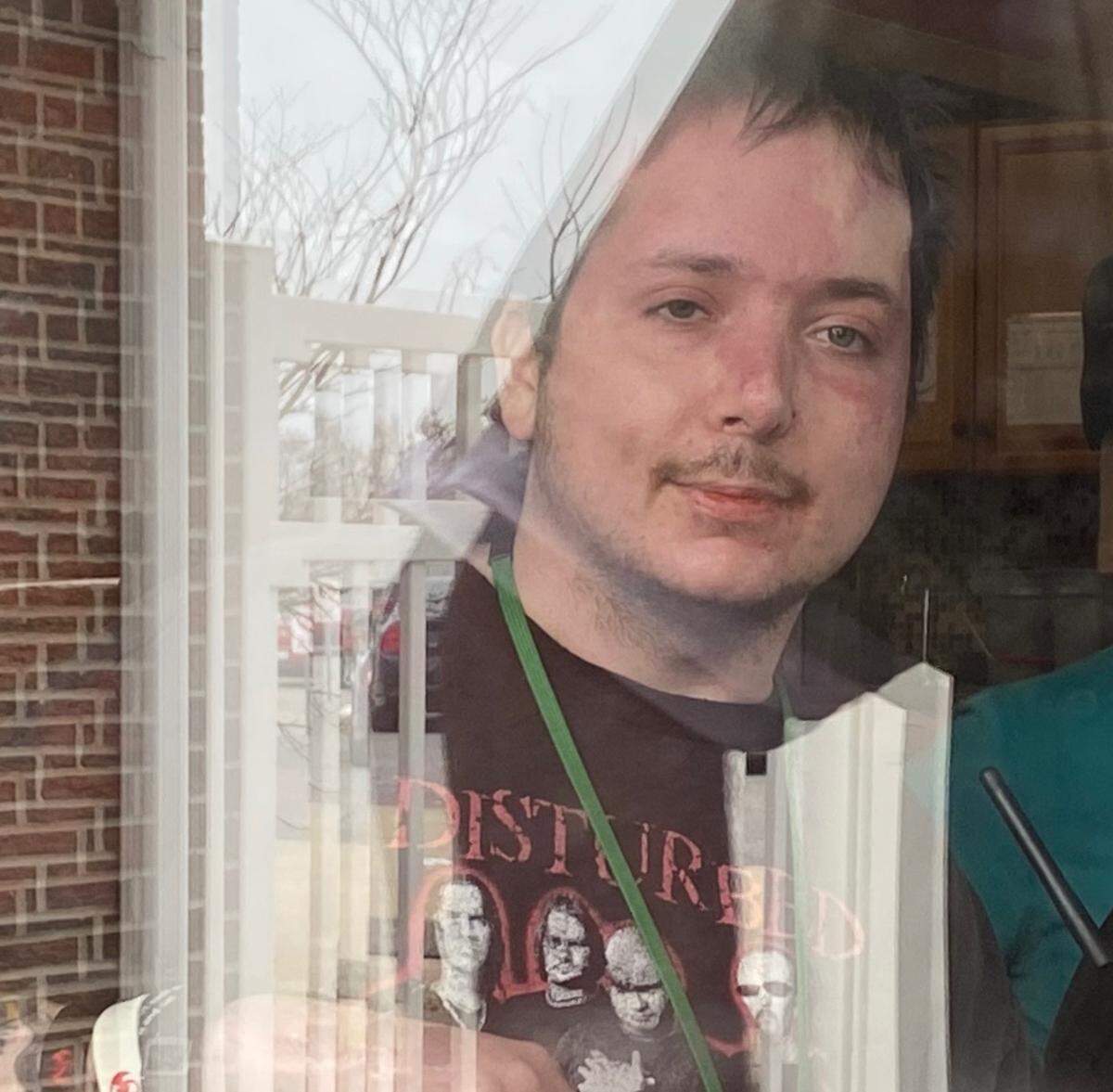
“I’m a control freak when it comes to my son,” she said. “Parents have no control right now.”
Leljedal thinks visits could happen safely outside with precautions that people in the rest of the state are required to use when they go out: face masks and a 6-foot distance between them and others. “There’s gotta be ways for families to be able to see each other,” she said.
Jean Weier said she hopes to be able to schedule an outdoor visit with her father Roscoe soon after having only phone calls and trips to his window.
For now, he is still recovering from the damage that Jean believes COVID-19 caused. Since he was diagnosed in May as part of the outbreak at Cedarhurst of Shiloh, he’s had at least two negative test results, according to Weier. The assisted living facility has reported 12 coronavirus cases to the health department to date.
Weier said her father is making progress at another facility that offers the physical, occupational and speech therapies he now needs.
“The first time I saw him at the window, he actually cracked a smile,” she said. “He said to me that he really didn’t think he was going to come out of this. … I think he was glad to be here.”
What visits might look like when they restart
A statewide long-term care center association said this week that it is promoting outdoor visits as an option to Illinois officials who are considering the federal guidance on relaxing restrictions now. In a video update Wednesday, Illinois Health Care Association leaders said the state was waiting for “the green light” from the federal Centers for Medicare and Medicaid Services.
“We understand the depression that’s happening in buildings, and that’s one we’re going to fight on,” said Matt Hartman, the Illinois Health Care Association’s executive director.
Before anyone at Cedarhurst of Shiloh was diagnosed with COVID-19, Jean Weier said the staff brought her father Roscoe just outside the facility’s door to see his granddaughter Jessica in her wedding dress April 18, the day she got married.
The Weiers provided video from the visit to the BND. It offers a glimpse of what outdoor visits might look when they are allowed.
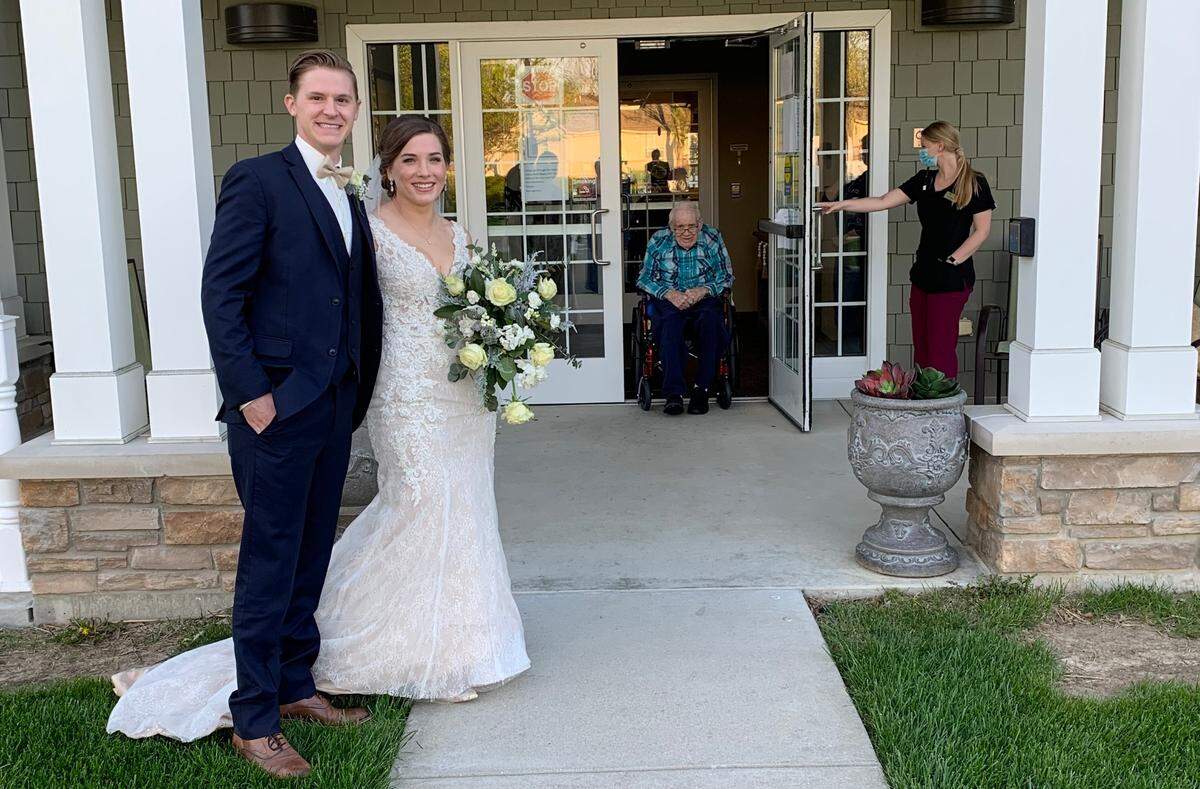
Jessica Weier and her husband, David Newgent, stand several feet away from Roscoe, not close enough to touch or hug. The distance and Roscoe’s difficulty speaking because of his condition meant the couple sometimes had trouble understanding him.
“Hey, Papa. … Do you approve?” Jessica Weier asked her grandfather in the video.
Roscoe’s reply was quiet. “Why, sure,” he said.
“I love you, and I miss you,” Jessica Weier said.
This story was originally published June 11, 2020 at 12:17 PM.