Illinois restaurants cleared to reopen for indoor dining on Friday, but not all will
Metro-east restaurant owners seem cautiously upbeat.
Capacity limitations aren’t as low as some feared they would be for Phase 4 of the Restore Illinois plan for recovering from the coronavirus shutdown. The state on Monday released rules and guidelines for the phase, which allows indoor dining beginning Friday.
There’s no set maximum for number of customers allowed in sit-down restaurants, as long as tables are spaced 6 feet apart, parties are limited to 10 people or less and standing areas, such as bars, reach no more than 25% of normal capacity.
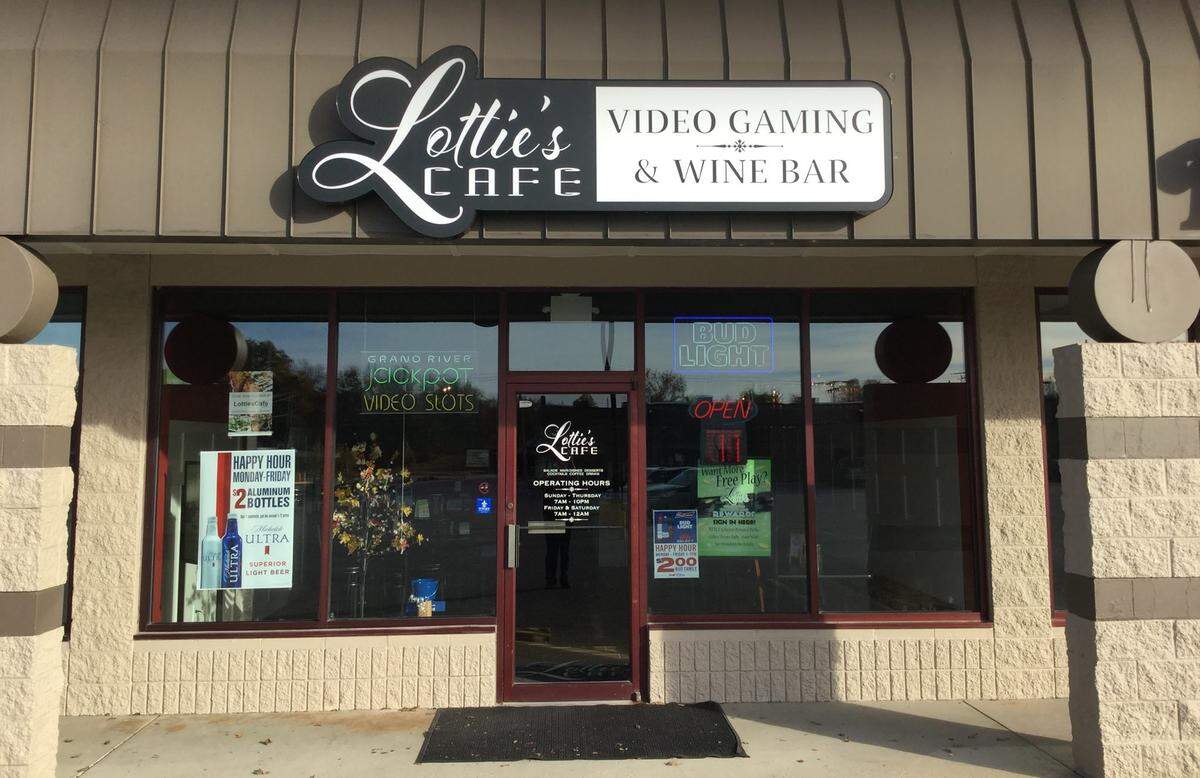
“This is great news,” said Rick Frey, owner of Lottie’s Cafe in Collinsville. “I’m hoping we can get open (Friday) and just continue to grow so we can get back to where we were, and that we don’t go through a second wave or a second shutdown.”
Lottie’s strongly focuses on video gaming, but Frey said he offers blue-plate specials, pizza and other menu items that have attracted non-gaming customers and boosted food sales to more than 50% of total revenue.
The business normally has a 32-person capacity, so if the state had reduced it to 25% overall, Frey could have invited only eight customers inside at a time, forcing others to wait outside until someone left. Now he figures he can serve 15 to 18.
“I’m going to put up some social-distancing signs in the bar area,” he said. “That’s going to be the hot spot at my place. But I think I can remove half the bar stools and still have six people sitting at the bar and keep them 6 feet apart.”
Frey said he wouldn’t have considered reopening if the Illinois Gaming Board hadn’t also agreed to turn gaming machines back on during Phase 4.
The Geoppo family is tentatively planning to reopen for indoor dining on Friday at all four of its Papa Vito’s Italian restaurants, including two in Belleville, one in Waterloo and one in Millstadt. But they want to make sure it’s safe and cost-effective based on floor layouts and other factors, said Jamie Geoppo, who co-owns the business with his parents and two siblings.
There are many questions to answer: Should reservations be required? Where will people wait? Is it best to use disposable menus or non-disposable ones that can be sanitized? What other steps are needed to ensure social distancing?
“It’s something I think everybody is a little nervous about,” Geoppo said. “You don’t know what’s going to happen until it happens.”
All restaurants will have to ask customers for patience and understanding as they move into uncharted territory, he added.
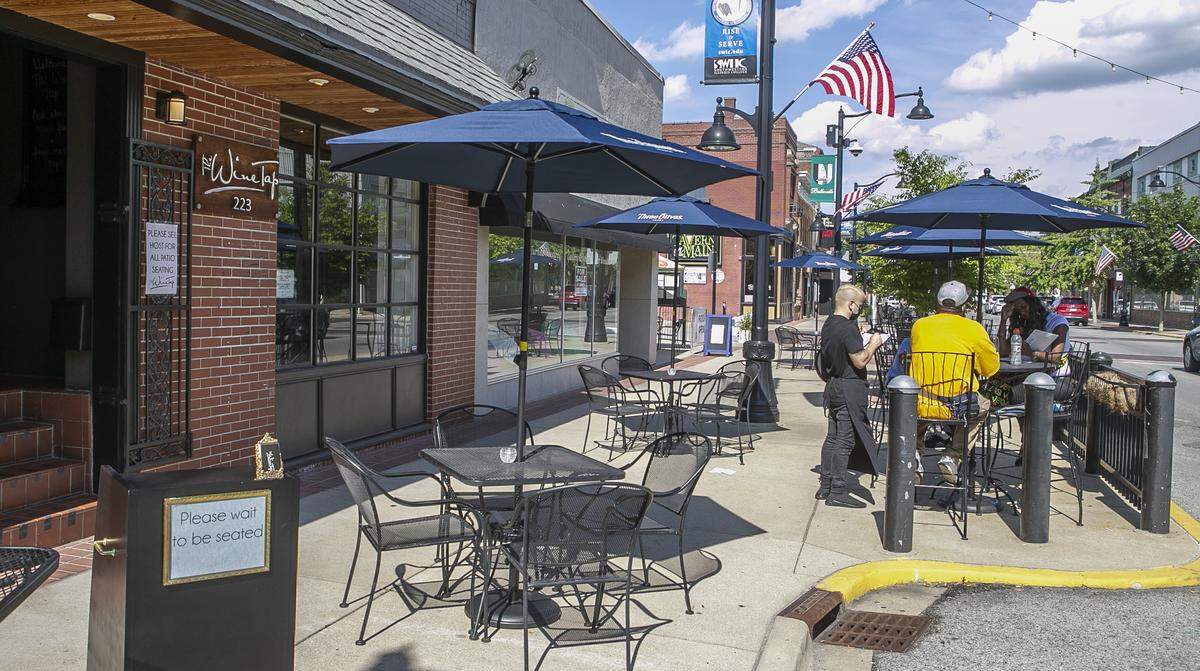
The Wine Tap staying outside for now
The Wine Tap in Belleville is choosing not to reopen for indoor dining on Friday. It had waited nearly three weeks before reopening for outdoor dining on June 16 when it could have done so on May 29.
“As far as our plan to go inside, we again are playing it safe,” said co-owner Robbie Fogarty-Hayden. “We’re going to hold off a little bit, especially being that we are such a small location. We’re going to continue to kind of evaluate things, especially see what the first week in numbers look like. But we’ll probably be waiting at least two weeks until we do indoor dining.”
The 25% capacity limit in standing areas provides a bigger challenge for bars, particularly those geared toward socializing and live music. At The Wine Tap, which is known for both food and drink, Fogarty-Hayden said reopening indoors might make more sense when it could allow 50% capacity.
Valentine’s Restaurant in Freeburg also will delay reopening for indoor dining until early to mid-July, but for a different reason. Workers are installing new floors.
The restaurant doesn’t have outdoor seating, but it will continue to fill carryout orders.
“It’s been doing well,” said Lani Parker, co-owner with her mother, Silulu Brown. “We’re really thankful and grateful for the orders that we’ve gotten. We had a few glitches in the beginning, but we’ve kind of gotten a routine down where it’s working out.”
Parker was concerned when she first saw the 25% capacity figure in the Phase 4 rules and guidelines for restaurants and bars released Monday, then she realized that applied only to standing areas.
Valentine’s normally seats 62 customers in its two dining rooms. Parker thinks she can move tables 6 feet apart and still seat 20 people in front and 20 in back for a total of 40, which would make reopening worthwhile from a financial standpoint.
Illinois Gov. J.B. Pritzker closed restaurants and bars to indoor and outdoor dining on March 17 to slow the spread of the coronavirus, which causes the respiratory disease COVID-19. Services were limited to carryout, delivery and drive-thru until outdoor dining returned on May 29.
Restore Illinois Phase 4 allows for the operation of schools and child-care centers, parks and outdoor-recreation facilities, manufacturing plants, health clubs, restaurants and bars, theaters, retail stores and other businesses with safety precautions and reduced capacities. Meetings and other gatherings are limited to 50 people, but that doesn’t affect sit-down restaurants.
“The (50-person) cap applies largely to indoor social gatherings where seating isn’t assigned or restricted,” according to Lauren Huffman, spokeswoman for the Illinois Department of Commerce and Economic Opportunity.
Phase 4 rules and regulations for restaurants and bars list multiple procedures for social distancing. The state also requires employees to wear face coverings and recommends that customers wear them when they’re not seated at tables.
Buffets are OK, as long as sneeze guards protect food, people line up 6 feet apart and hand sanitizer is placed at either end. Also allowed are pool tables, darts and live music. For the latter, barriers are recommended between musicians and customers.
“Capacity restrictions will be reassessed based on the latest science and public health metrics on an ongoing basis throughout (Phase 4),” according to the Restore Illinois plan.
Infectious disease specialist weighs in
Dr. Jason Newland, a Washington University infectious disease specialist at St. Louis Children’s Hospital, suggests that people consider three important factors before eating inside a restaurant at this stage of the COVID-19 pandemic.
Tables should be spaced at least 6 feet apart, preferably further, he said. All employees must be wearing face coverings at all times, and there must be ample opportunities for handwashing, particularly before eating a meal and before and after using the bathroom.
“It would be even better if they had an outdoor place to eat,” Newland said.
It doesn’t make much difference if a restaurant uses disposable or non-disposable menus, dishes or utensils as long as the latter are washed or sanitized properly, he said.
Newland has been supporting small businesses by ordering carryout food, but he has personally declined to dine at restaurants, even though the city of St. Louis has allowed it for more than a month. He prefers to eat with people he knows instead of strangers who may not be taking precautions.
If Newland were going to dine at a restaurant, he would choose one with outdoor seating, he said.
“I am just not ready to be inside with a bunch of people who don’t have masks on yet,” he said. “We know the virus is present in the community. Are people going to be too close to someone who is sick and doesn’t know it and could potentially cough? I’m just not ready for the risk.”
Newland’s position falls in line with 511 epidemiologists surveyed by the New York Times on when they would feel comfortable doing 20 everyday activities. As for eating at dine-in restaurants, 16% would do it this summer, 56% would do it in three to 12 months and 28% percent would wait a year or more, according to results published in early June.
The Restore Illinois rules and regulations for restaurants and bars during Phase 4 are 12 pages long. Here is a partial list of things that owners must ensure:
- Tables are spaced 6 feet apart.
- Tables are 6 feet from other service areas, such as carryout lines.
Individual parties are limited to 10 people.
- People in standing areas, such as bars, are limited to 25% of normal capacity.
- Employees are wearing face coverings and gloves.
- Social-distancing guidelines are being followed.
- Queue points are used for carryout or buffet lines.
- Surfaces are cleaned and disinfected as recommended by health officials.
- Handwashing sinks are accessible.
- Hand sanitizer is available in key locations.
- Signs are posted to inform people how to stop COVID-19 spread.
- Ventilation systems are working properly with new filters.
- Non-disposable dishes and utensils, if used, are washed properly.
- Non-disposable utensils, if used, are rolled in napkins or slid into paper sleeves.
- Multi-use menus, ink pens or check presenters are cleaned between customers.
- Disposable paper menus are thrown away after each use.
- Employees are trained on proper hand-washing techniques.
- Paper towels are available in bathrooms so people can use them to open doors.
- Employees are undergoing health screenings before work.
- Employees are serving condiments in single packages or small containers.
- Employees aren’t using coasters or serving shared snacks, such as peanuts or popcorn.
- Customers aren’t refilling fountain drinks with used cups.