Southwest Illinois counties step up planning for distribution of COVID-19 vaccine
Editor’s note: This story was updated on Monday morning to include information about preliminary results from clinical trials for a COVID-19 vaccine candidate being developed by the biotechnology company Moderna.
The Nov. 9 announcement that a Pfizer vaccine candidate may be more than 90% effective at preventing COVID-19 offered hope to people all over the world.
It also gave county health departments a few more clues on how to prepare for distribution of a vaccine — whether it’s developed by Pfizer or another pharmaceutical company — to hundreds of thousands of metro-east residents in the coming months.
Some factors are clearly known.
“The vaccine won’t be available for everybody at the same time,” said Barb Hohlt, executive director of St. Clair County Health Department based in Belleville. “There will be (U.S. Centers for Disease Control and Prevention) and Illinois Department of Public Health guidelines on the priority populations that will have the first chance to get the medication.”
Those populations will likely include doctors, nurses and other medical workers; staff and residents in long-term care facilities; police officers, fire fighters and other first responders; and eventually people in high-risk groups due to age, illness or underlying health conditions, according to federal, state and local sources.
Other factors are unknown.
It’s anybody’s guess how many Illinoisans will agree to get vaccinated. Some worry that politicians have pressured researchers to rush development of COVID-19 vaccines while skimping on safety precautions. Others are part of an anti-vaccination movement that started long before the coronavirus hit.
The state’s goal is to vaccinate 80% of its 12.6 million residents to achieve herd immunity, following U.S. Centers for Disease Control guidelines.
Linda Joiner, spokeswoman for East Side Health District based in East St. Louis, thinks it will be vital to disseminate accurate and consistent information about a vaccine, once it’s approved by the U.S. Food and Drug Administration.
“Thank God (the scientists) are doing their due diligence, and I believe they are doing their due diligence,” she said. “When the vaccine comes out, I am pretty confident that Dr. Fauci and the experts in public health fields ... Before they roll it out, they will have done everything humanly possible to safeguard the welfare of the public.”
Joiner was referring to Dr. Anthony Fauci, longtime director of the National Institute of Allergy and Infectious Diseases and member of the White House Coronavirus Task Force.
Hohlt and Amy Yeager, spokeswoman for Madison County Health Department based in Edwardsville, agree that communication will be key in persuading a skeptical public that being vaccinated will benefit individuals and society as a whole.
“This is like lightning speed for vaccine development,” Yeager said. “But we don’t want that to scare people. This is probably the first time in modern history that public health (organizations) across the globe have been pouring resources into the same thing.”
Race to develop a vaccine
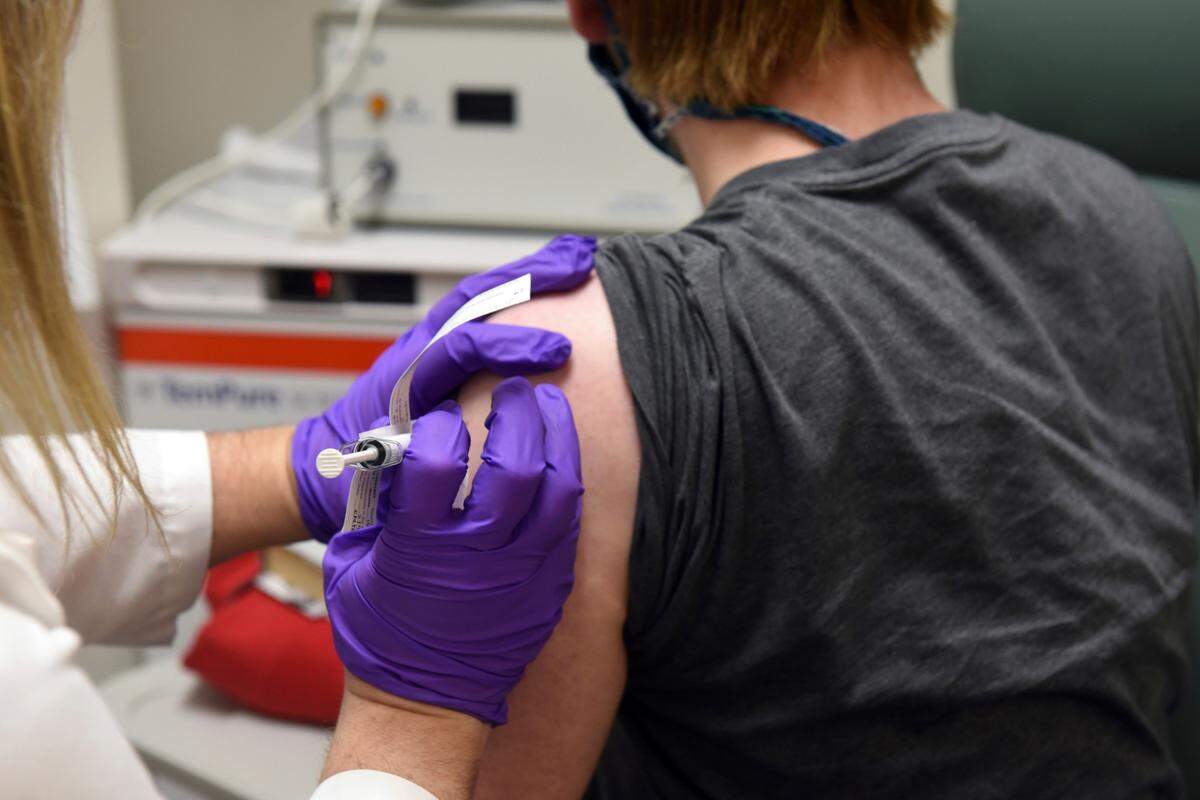
Pharmaceutical companies and research institutions all over the world started working to develop coronavirus vaccines in March, when COVID-19 was declared a global pandemic. Two months ago, nine jointly pledged to “stand with science” and thoroughly vet candidates for safety and effectiveness.
It’s widely believed that more than one vaccine will be available to the American public, possibly by the end of the year for those in priority populations.
“Some people think a vaccine will be a miracle cure, and it’s not a cure,” Yeager said. “But it will be a huge step forward in slowing the spread.”
More than 53.2 million people had tested positive for the coronavirus worldwide and more than 1.3 million had died from COVID-19 as of Friday, according to a database maintained by Johns Hopkins University & Medicine in Maryland.
Numbers are now surging in the United States, which has seen more than 10.7 million cases and more than 244,000 deaths.
Pfizer, a U.S. pharmaceutical company with a research facility in St. Louis, is partnering with Germany-based BioNTech. Their vaccine candidate was found to be more than 90% effective at preventing COVID-19 in Phase 3 clinical trials involving nearly 44,000 people who received two doses or placebos, according to a news release Monday.
“We are a significant step closer to providing people around the world with a much-needed breakthrough to help bring an end to this global health crisis,” stated Dr. Albert Bourla, Pfizer chairman and CEO.
Massachusetts-based Moderna reported Monday that its COVID-19 vaccine candidate may be 94.5% effective based on preliminary results of late-stage clinical trials. The USDA has indicated it will give emergency approval to candidates shown to be safe and at least 50% effective.
No one knows exactly when a COVID-19 vaccine will be approved, manufactured or distributed in the United States. But this week Fauci presented a possible timeline, saying one could be available for medical workers and first responders in December, vulnerable populations in early 2021 and the general public by spring or early summer.
Centralized distribution system
The federal government will oversee a centralized system for ordering, distributing and tracking vaccines, working with state and local jurisdictions and private partners such as national pharmacy chains, according to the U.S. Centers for Disease Control and Prevention.
The Illinois Department of Public Health has posted a Draft Mass Vaccination Planning Guide on its website. In addition, county health departments from the metro-east serve on state planning teams.
“There’s been a lot of conversation and planning for several months now, but it’s definitely kicked up in the last two months,” Yeager said.
That’s because information about the progress of clinical trials on promising vaccine candidates have expanded the ability of health officials to consider different scenarios, anticipate challenges and identify needs.
But many questions will remain unanswered until the U.S. Food and Drug Administration gives final approval to one or more candidates.
“We are far from a protocol as it relates to the vaccine because everything is so fluid,” Joiner said.
As supplies of a COVID-19 vaccine become available in Illinois, officials will allocate them to county health departments, hospitals, clinics, Walgreens, CVS and other approved providers. This will be based on “population size and disease burden, while ensuring equity,” according to the state’s planning guide.
East Side serves a fourth of roughly 260,000 residents in St. Clair County, including those in Canteen, Centreville, East St. Louis and Stites townships. Madison County Health Department serves about 263,000 people.
Vaccination providers must enroll in the Illinois Comprehensive Automated Immunization Registry Exchange (I-CARE), a database listing who has been vaccinated and which shots they’ve received.
“This one’s going to be unique and harder (than distribution of flu vaccines) because there are going to be two shots required,” Hohlt said. “The second shot has to be 21 to 28 days later, and it must be the same type you get the first time.”
Vaccine candidates being developed by both Pfizer and Moderna involve two doses.
Hohlt envisions county health departments in the metro-east hosting mass-vaccination clinics in school gymnasiums and other public places, where people can show up with proper identification and get shots.
“I think (vaccine distribution) will be a well-oiled machine, that they will be able to execute it in a very, very seamless manner,” Joiner said.
Free for Illinois residents
The Coronavirus Aid, Relief, and Economic Security (CARES) Act — passed by Congress and signed by President Donald Trump in March — requires the cost of COVID-19 vaccinations to be covered by private health-insurance polices for Americans who have them.
Last month, the U.S. Centers for Medicare and Medicaid Services announced that Medicare and Medicaid would cover the cost for beneficiaries of those programs.
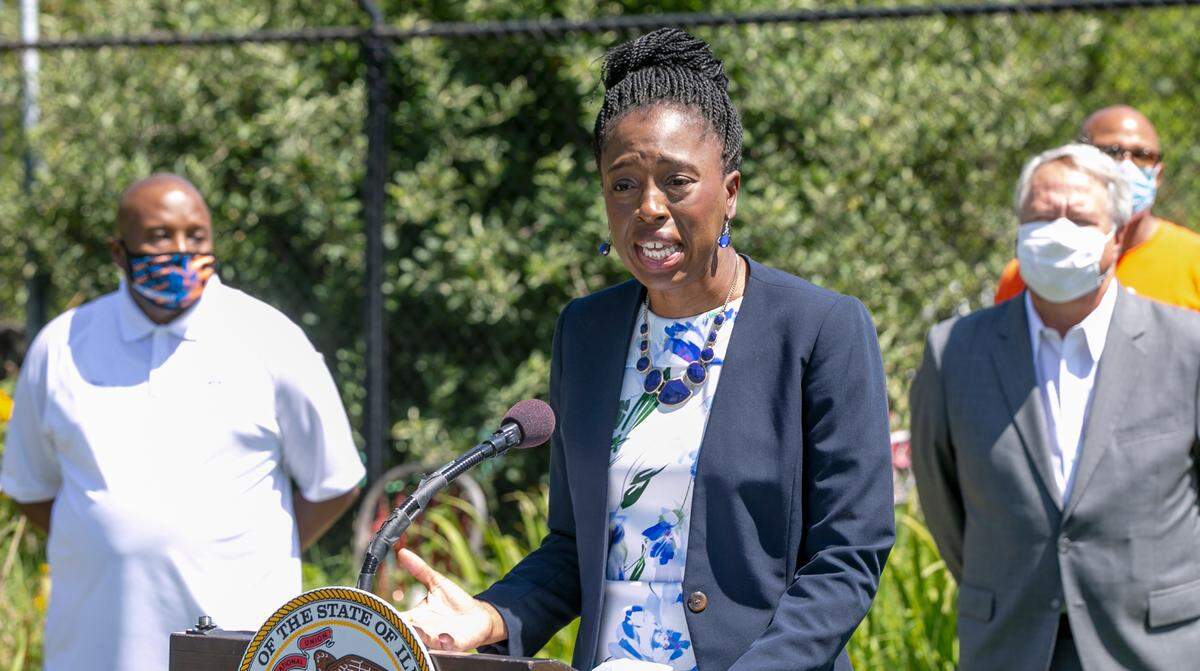
Dr. Ngozi Ezike, director of the Illinois Department of Public Health, promised at an Oct. 21 news conference that all Illinoisans will be able to get vaccinated for free through county health departments or hospitals.
“There will not be a cost to individuals for the vaccine, although providers may charge a small fee to administer the vaccine, which will go towards insurance,” she said. “But no one will be turned away from getting a vaccine due to any inability to pay.”
One unresolved issue is how COVID-19 vaccines will be transported and stored by county health departments and other providers. Some must be kept at ultra-cold temperatures, 94 degrees below zero in the case of Pfizer’s candidate.
Joiner hopes that federal grant money will be made available for states and counties to purchase the necessary equipment.
“I doubt seriously if any local health departments have that type of storage on hand,” she said.
Another big question is how vaccine distribution will be affected by the U.S. political transition. Trump has refused to concede that President-Elect Joe Biden won the presidential election in November, and party control of the U.S. Senate won’t be determined until January, when two Georgia senators will be chosen in run-off elections.
The outcomes of these political struggles could lead to changes in federal policy related to the coronavirus.
“We’ve got to get on the same page for (the pandemic) to be handed expertly,” Joiner said. “We’ve got to start at the top. ... COVID is now worse than it’s ever been for us as a nation. People need to know that.”
This story was originally published November 14, 2020 at 7:00 AM with the headline "Southwest Illinois counties step up planning for distribution of COVID-19 vaccine."