Southern IL road closes to allow 20-plus snake species to cross. How to see it
Less than a two-hour-drive south of Belleville, you can spot more than 20 species of snakes on a hike shorter than 3 miles.
“I don’t think you can do that anywhere else in North America,” Mark Vukovich, wildlife biologist at Shawnee National Forest, said in a recent interview with the News-Democrat.
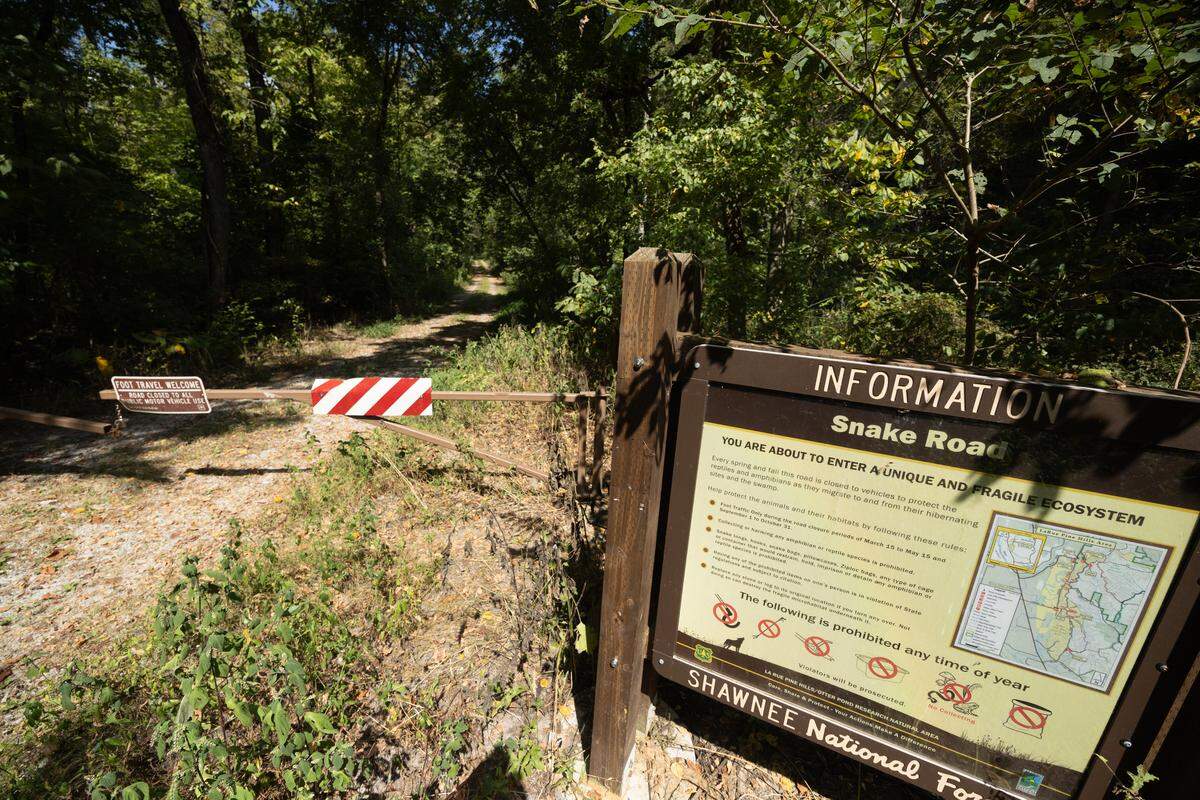
A roughly 2.5-mile stretch of Shawnee National Forest’s LaRue-Pine Hills hiking area, popularly referred to as “snake road,” closes to vehicles and bicycles twice each year to allow safe passage for snakes. The road’s official name is Forest Service Road No. 345.
“The road closure started in 1972, and it was mostly about mitigating vehicle collisions with snakes,” Vukovich said.
The snakes spend the winter in limestone cliffs that overlook the road, and many of them summer in LaRue Swamp across the road. Some likely go farther, possibly down to a nearby river, Vukovich said, but more research is needed to know exactly how far and where the snakes are traveling.
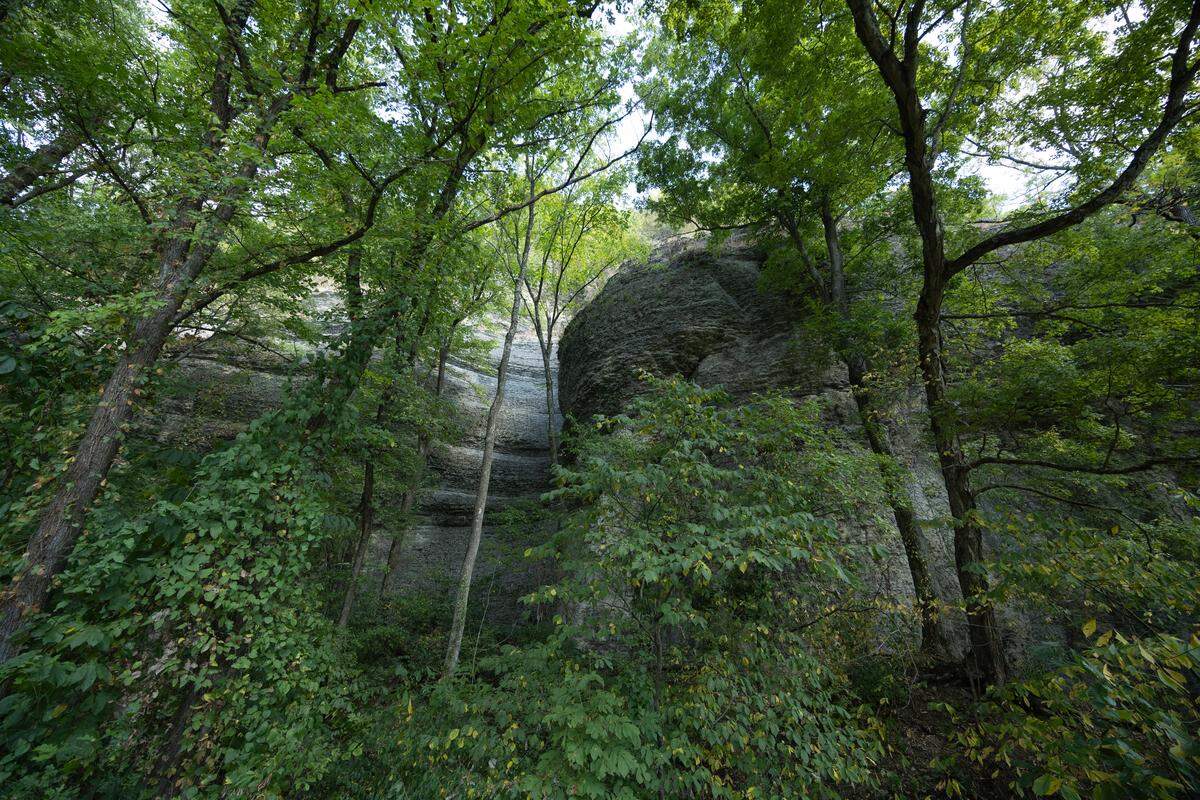
Because the snakes likely aren’t traveling long distances, it’s more accurate to call it a snake “movement” than a migration, Vukovich said.
“Thousands of people each season come here to see it and just walk,” Vukovich added.
In addition to those visiting in hopes of spotting snakes, the area sees a lot of bird watchers, botanists and general nature enthusiasts. There’s a Facebook group called “LaRue Pine Hills Snake Road” with about 5,900 members who post trail conditions, snake sightings and more.
It’s important for visitors to stick to the road and avoid venturing off into the woods, Vukovich said. You’ll also want to keep a close eye on your feet as you walk, as some of the species found on snake road are very small.
The most common species found at snake road is venomous.
“So 90% of the observations, or more, is the northern cottonmouth. Very, very abundant species here,” Vukovich said.
The northern cottonmouth is black and dark with some patterning, and it opens its mouth to show the distinctive “cottonmouth” from a distance. They’re pretty easy to spot, Vukovich said, and wildlife staff have not seen any issues with visitors being bitten by them.
Northern cottonmouths are typically found off the road, usually on a log or around the water.
Plain bellied-water snakes, rough green snakes and Western ribbon snakes are also commonly found on snake road. In all, you can see 21 to 22. Other venomous species found at the site include the northern copperhead and the timber rattlesnake, though those are less common.
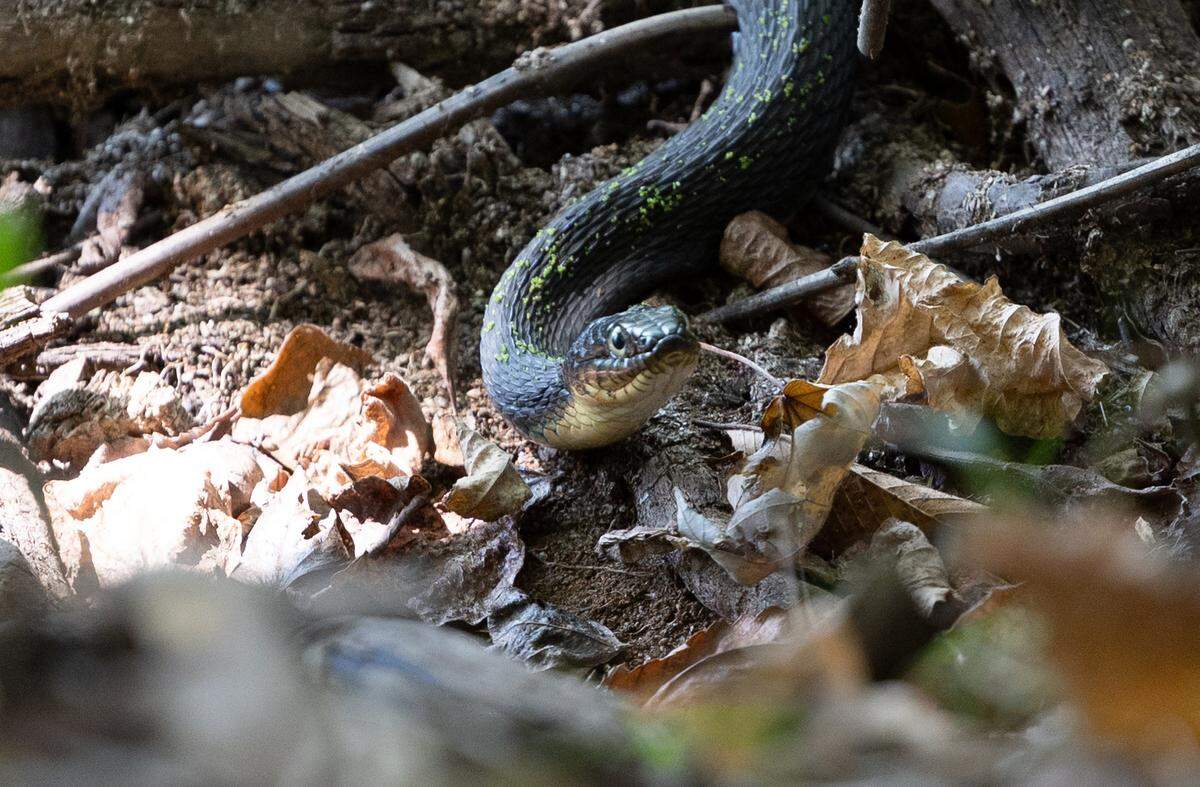
October is one of the best times to explore snake road, Vukovich said. The snakes are most active in their movement when high temperatures are around 70 to 80 degrees and the low temperatures at night hover in the 50s.
Visiting snake road
Snake road closes to vehicles and bicycle traffic from Sept. 1 to Oct. 30 and March 15 to May 15 each year, although the closure dates can vary if the snake movement trends early or late.
The trail is about 2.5 to 2.6 miles long, with parking available at each end. The north entrance is the most popular and has more parking, but locals tend to prefer the south entrance, Vukovich said.
There’s no official rule banning dogs from joining their humans on snake road, but they are required to be leashed, and Vukovich said owners should use their best judgment. Venomous snake bites to dogs can be serious and sometimes fatal, and not all veterinarian offices stock antivenom.
Handling snakes on snake road is against the law, Vukovich said. In addition to the risks picking up a snake could cause to the human, snake handling can also spread snake fungal disease, which can be detrimental to several of the species found at snake road.
Fortunately, Vukovich said issues with snake road visitors trying to handle snakes are very rare, and the vast majority of people who come out are respecting those rules.
When heading out on snake road, Vukovich recommended people bring water and insect repellent and check the forecast for any severe weather as it’s not uncommon for storms to cause trees to fall on the road.
Vukovich also recommended people have realistic expectations in mind when checking out snake road.
It’s possible you could see zero snakes on your hike, though that’s more likely if you’re moving too quickly. You can better your chances of spotting snakes by walking slowly and keeping a close eye on the grass in the center of the road, as well as both edges of the road.
On a particularly active day, Vukovich said he’s spotted as many as 44 snakes in two hours.
Do you have a question about the environment or critters in Illinois for our service journalism team? We’d like to hear from you. Fill out our Metro-east Matters form below.
This story was originally published September 19, 2025 at 4:45 AM.