Here’s when lunar eclipse prime time will hit St. Louis area and where to catch a glimpse
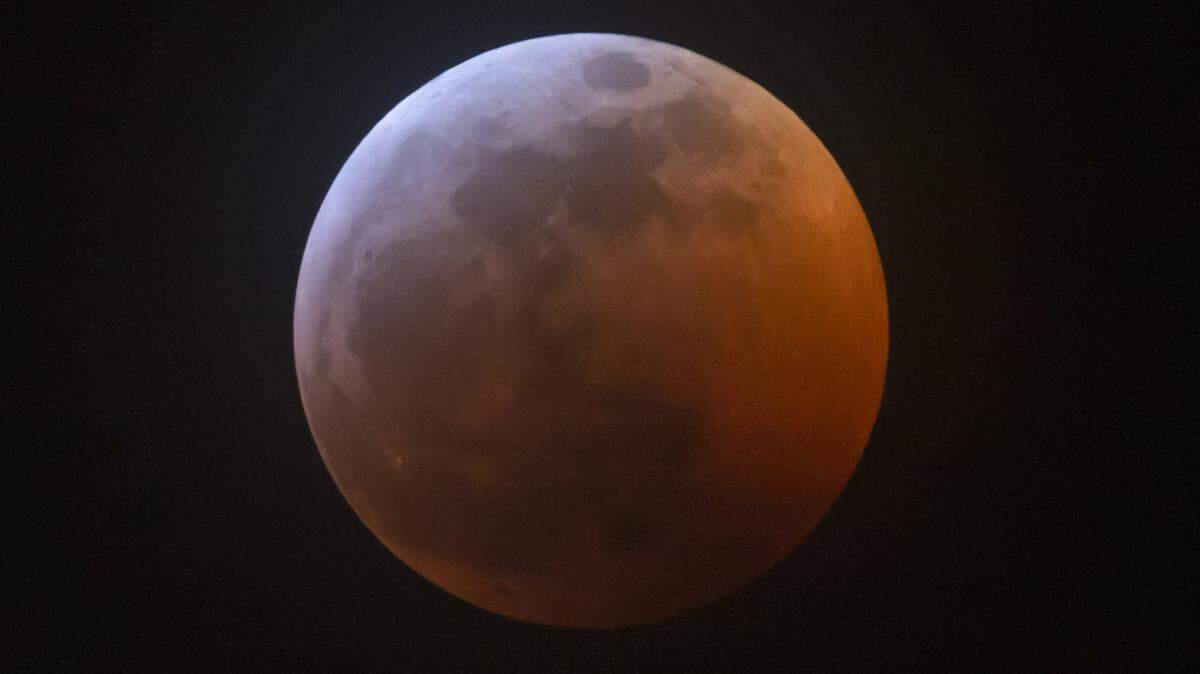
If you’re looking to catch a blood moon lunar eclipse, Sunday might be your chance.
Those in the St. Louis area can expect an optimum view of the event between 9 and 11 p.m.
The celestial event has been called the “super flower blood moon.” The flower portion of the name is attributed to the Indigenous Algonquin peoples, who are from what is now the northeastern U.S.
Alternate names include the Corn Moon, Corn Planting Moon and Milk Moon.
The definition of a “supermoon” is interpreted uniquely by various publications, NASA’s website says, but some groups are recognizing Sunday’s eclipse as a supermoon.
A blood moon refers to a total lunar eclipse, which will occur Sunday.
Where can I watch the eclipse in the St. Louis area?
The St. Louis Astronomical Society and Jefferson College are hosting a viewing event from 8 to 11:59 p.m. Sunday at the Jefferson College Observatory. The event is open to the public, and telescopes will be provided to catch the best eclipse views.
Participants are encouraged to bring chairs, blankets, flashlights, bug spray, snacks and drinks. If you have binoculars, telescopes or cameras, feel free to bring those, too.
Here’s the astronomical society’s schedule for St. Louis eclipse views. The astronomers recommend attending from 9 to 11 p.m. if you have limited time, as the eclipse will be seen best between these hours.
- 8:07 p.m.: Sunset
- 8:33 p.m.: Moon begins to enter the Earth’s penumbra
- 9:28 p.m.: Moon begins to enter the Earth’s umbra, partial eclipse begins
- 10:30 p.m.: Total eclipse begins, as moon is fully within Earth’s umbra
- 11:12 p.m.: Eclipse midpoint
- 11:54 p.m.: Total eclipse ends, as moon begins to leave the Earth’s umbra
- 12:55 a.m.: Partial eclipse ends. Moon is fully outside Earth’s umbra
- 1:51 a.m.: Moon leaves the Earth’s penumbra
If you’d like to enjoy the eclipse but can’t make it to a viewing, you can check out NASA’s livestream on YouTube.
You can see another kind of supermoon June 14, with the strawberry moon making an appearance.
This name gets its origins from the Algonquin, Ojibwe, Dakota and Lakota peoples, according to the Farmers’ Almanac. It was coined to mark the ripening of “June-bearing” strawberries.
This story was originally published May 12, 2022 at 3:33 PM.