St. Louis-area book bans mirror many across the US. Here’s some titles being challenged
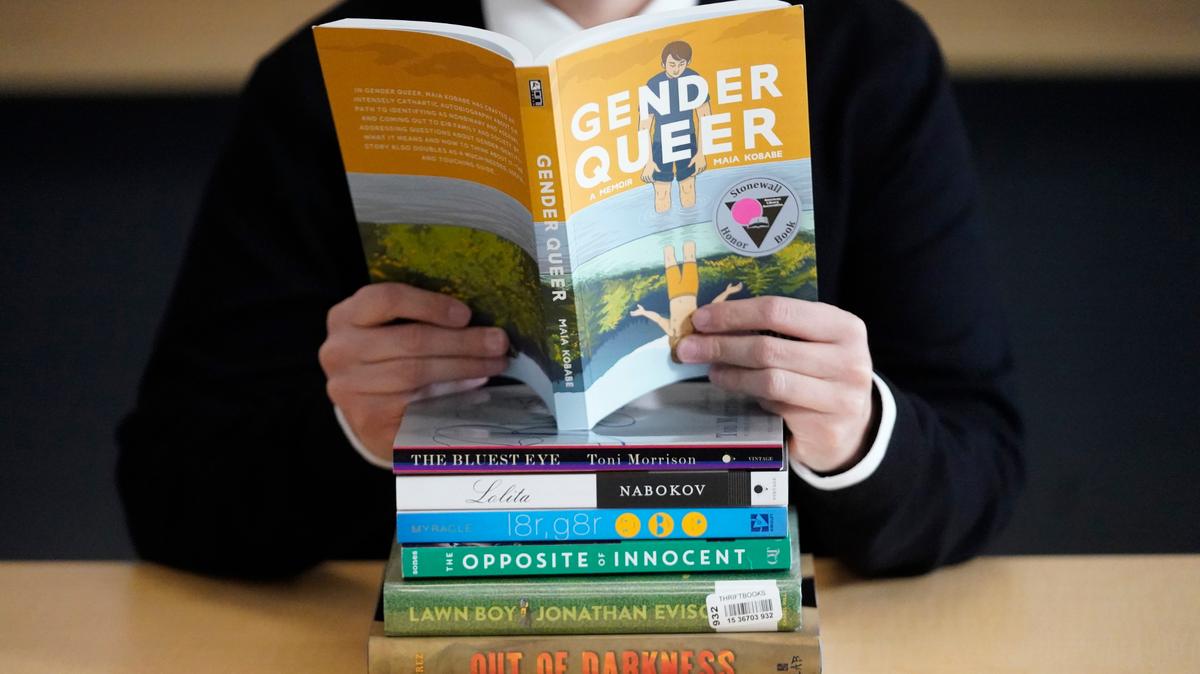
Sept. 18 to 24 is Banned Books Week, and U.S. readers are currently grappling with a national surge in book challenges and bans. These challenges especially restrict topics relating to marginalized groups such as Black and Indigenous people of color and LGBTQ+ individuals.
Missouri readers are restricted by state legislation and bans in certain school districts. The News-Democrat spoke with Claudia Young, president of the Missouri Library Association and director of Missouri River Regional Library, about local challenges and what advocates of literature access can do. Here’s what to know.
Book challenges, bans in Missouri
Book challenges have become increasingly popular in the St. Louis area and across the country this year, Young said, but not all topics are scrutinized equally.
“The challenges seem to revolve around LGBTQ titles, books about people of color and people, sometimes, with disabilities,” Young said, “but I would say the most challenged books center around LGBTQ (topics).”
Individuals who argue in favor of banning books, particularly concerning LGBTQ+ characters or topics, typically cite children’s impressionable nature, Young said.
“I think the bottom line is they do not want children to be indoctrinated with ideas that are not their own,” Young said. “You have to realize that you cannot speak for everyone’s children, and in so many cases that’s exactly what they’re doing. They’re saying a certain title is bad for everybody, that it introduces ideas that perhaps they’re maybe too young to understand or shouldn’t be exposed to.”
One book that’s been challenged in the Wentzville School District is Toni Morrison’s “The Bluest Eye.” Joe Kohlburn, 2022 chairperson of the Missouri Library Association’s Intellectual Freedom Committee, wrote an open letter to the Wentzville school board president standing against the challenge.
“Challenges such as those to Toni Morrison’s work are on the rise nationally, and part of an organized effort to undermine the civil and intellectual rights of students, particularly those from historically marginalized groups (e.g., BIPOC and LGBTQ+ students). Whereas we recognize the right of parents to choose what their own children read, we reject the notion that one parent or group of parents should be able to choose what all students in a district read by having items removed or censored,” Kohlburn wrote in the letter.
The Missouri Library Association also spoke out against book challenges and bans in Nixa School District, where 17 books were presented for potential removal earlier this year. Some of the books were retained, but others were marked for removal or restricted.
“The books that were marked for removal, Fun Home, and All Boys Aren’t Blue, are both memoirs by prominent and celebrated Queer artists and authors,” the MLA’s letter to the Nixa school board’s president read.
In addition to books challenged in school districts, Missouri legislation also plays a role in the restriction of reading certain materials.
Senate Bill 775, which went into effect Aug. 28, makes it a class A misdemeanor for school officials to knowingly supply “explicit sexual material,” with certain exceptions for sexual education, science courses, anthropology studies and art. The misdemeanor can carry a $2,000 fine and one-year jail sentence.
Young said she found it unfortunate, but not surprising, the legislation specifically targets graphic novels, which can be a more accessible form of literature.
“And we do find that troubling because graphic novels have their own place in the reading world and students gravitate to them,” Young said. “They often are popular among readers who English may not be their first language, and struggling readers as well.”
While people have the freedom to not check out books they’re not interested in, Young said she’s experienced people pushing back at even the display of books (specifically LGBTQ-related titles) they disagree with at Missouri River Regional Library.
“The mom came to me and said ‘I don’t mind that you have this book, but I don’t want you to put it on the new book display. I don’t want it out there.’ And I said ‘You know, I’m sorry, but it’s one of our new books and that’s where it’s going to be and there might be somebody else who would be interested in it, and if we go put it where it would normally be past the new book time they just might not notice it,’” Young said.
The person who complained about the LGBTQ-focused book being on the new titles display said she would no longer visit the library if librarians continued to display such titles.
“And I told her it made me very sad to lose her as a patron, but I wasn’t going to bypass the new bookshelf just because it was a subject matter she didn’t like,” Young said.
It’s important for people to have access to literature focusing on a variety of subjects, Young said, especially when a book features ideas or experiences readers may not otherwise be familiar with.
“In our profession, we espouse the freedom to read and to explore and engage any idea that we choose to and to be informed about the world around us,” Young said. “It’s so important to be able to read about people who are different than you because it increases empathy, understanding and helps us all navigate this complicated world that we live in.”
Parents, educators or students who are concerned about book challenges or bans in their school district can contact the Missouri Library Association’s Intellectual Freedom Committee at intellectualfreedom@molib.org for support in the form of educational workshops or potentially writing a letter to their school board.
“Use your voice,” Young said. “Don’t lose sight of how important our freedoms are. We take them for granted.”
Which books are most often challenged in the U.S.?
The American Library Association’s Office for Intellectual Freedom compiles a annual report of the 10 most frequently challenged books in the U.S., based on media stories and voluntary reports.
The ALA office tracked 729 challenges to library, school and university materials and services in 2021, and 1,597 books were targeted that year. Five of the 10 most challenged books were targeted at least in part based on their focus on LGBTQ+ issues, according to the ALA.
Here are the 10 most often challenged books nationally in 2021, the most recent year available:
“Gender Queer” by Maia Kobabe. Reason: “Banned, challenged, and restricted for LGBTQIA+ content, and because it was considered to have sexually explicit images.”
“Lawn Boy” by Jonathan Evison. Reason: “Banned and challenged for LGBTQIA+ content and because it was considered to be sexually explicit.”
“All Boys Aren’t Blue” by George M. Johnson. Reason: “Banned and challenged for LGBTQIA+ content, profanity, and because it was considered to be sexually explicit.”
“Out of Darkness” by Ashley Hope Perez. Reason: “Banned, challenged, and restricted for depictions of abuse and because it was considered to be sexually explicit.”
“The Hate U Give” by Angie Thomas. Reason: “Banned and challenged for profanity, violence, and because it was thought to promote an anti-police message and indoctrination of a social agenda.”
“The Absolutely True Diary of a Part-Time Indian” by Sherman Alexie. Reason: “Banned and challenged for profanity, sexual references and use of a derogatory term.”
“Me and Earl and the Dying Girl” by Jesse Andrews. Reason: “Banned and challenged because it was considered sexually explicit and degrading to women.”
“The Bluest Eye” by Toni Morrison. Reason: “Banned and challenged because it depicts child sexual abuse and was considered sexually explicit.”
“This Book is Gay” by Juno Dawson. Reason: “Banned, challenged, relocated, and restricted for providing sexual education and LGBTQIA+ content.”
“Beyond Magenta” by Susan Kuklin. Reason: “Banned and challenged for LGBTQIA+ content and because it was considered to be sexually explicit.”