
Here’s what the winter storm will bring to southwest IL through the rest of Thursday
The metro-east area can expect to see more wintry precipitation throughout the afternoon and into Thursday evening.
Jared Maples, a meteorologist with the National Weather Service of St. Louis, said over the next several hours, the region will see pockets of sleet at varying intensity. He said lightning strikes even could accompany these pockets.
“From what I’m seeing is you’re going to get these pockets where sleet falls heavily and then 5-10 minutes later, there’s nothing at all,” Maples said. “What I’m particularly interested in is over Rolla (Missouri) a system tracking northeast with a pretty moderate and broad area of sleet. Conditions (in the metro-east) will continue to deteriorate into the afternoon.”
Maples, in turn, cautioned people about driving. He said roads that only appear wet are misleading and still dangerous. Maples advised that people should stay home.
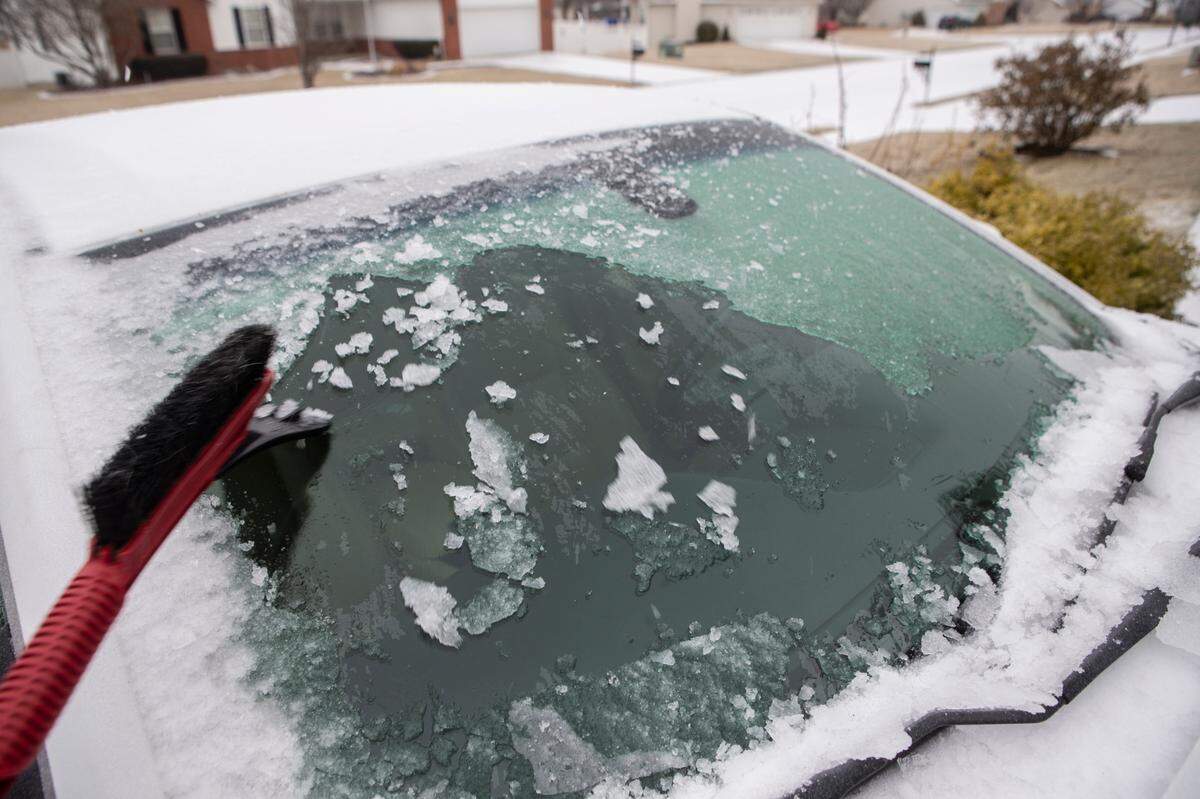
“People are getting overconfident on the roads and that’s why we’re having wrecks all over the area, ” he said. “The roads are pretty slick. ... Side streets are even worse. If people can stay home, I’d highly advise it. It’s going to get worse in the afternoon as pockets of heavier stuff roll through.”
Overall, Maples said the metro-east could see up to 1/2 inch of sleet while adding, “But some of these pockets are looking pretty impressive. Some areas could see up to an inch. But fairly representative for most of the area is 1/2 inch of sleet. We also could see some snow mixed in or a bit of freezing rain.”
Maples said the sleet should be out of the area between 4-6 p.m. However, freezing drizzle Maples described as light, fine and misty may follow the sleet later this evening.
“I would not let your guard down because we could get into the freezing drizzle scene again later this evening,” he said. “If you see that, you know the roads are ice. You’ll see issues extend into the morning especially on side streets and rural areas.”
Maples said the Friday morning commute likely will be hazardous. He noted the colder it gets, the less effective road treatments become. Temperatures are forecast for the low 20s Thursday night into Friday morning.
“What’s on the ground isn’t going to go anywhere until we get to above freezing and we get more roads treated,” Maples said. “Interstates probably will have that wet look again and the situation will be one of those where you hit patches of slush or ice and things can quickly change within a matter of feet. When you’re traveling at a high rate of speed, it’s too late to do anything about it at that point.”
“So take it slow — even if it’s not precipitating at the time.”
The National Weather Service recommends keeping plugged into the forecast as it develops, www.weather.gov.