
Why you should pay attention to the new air quality alert on your weather app
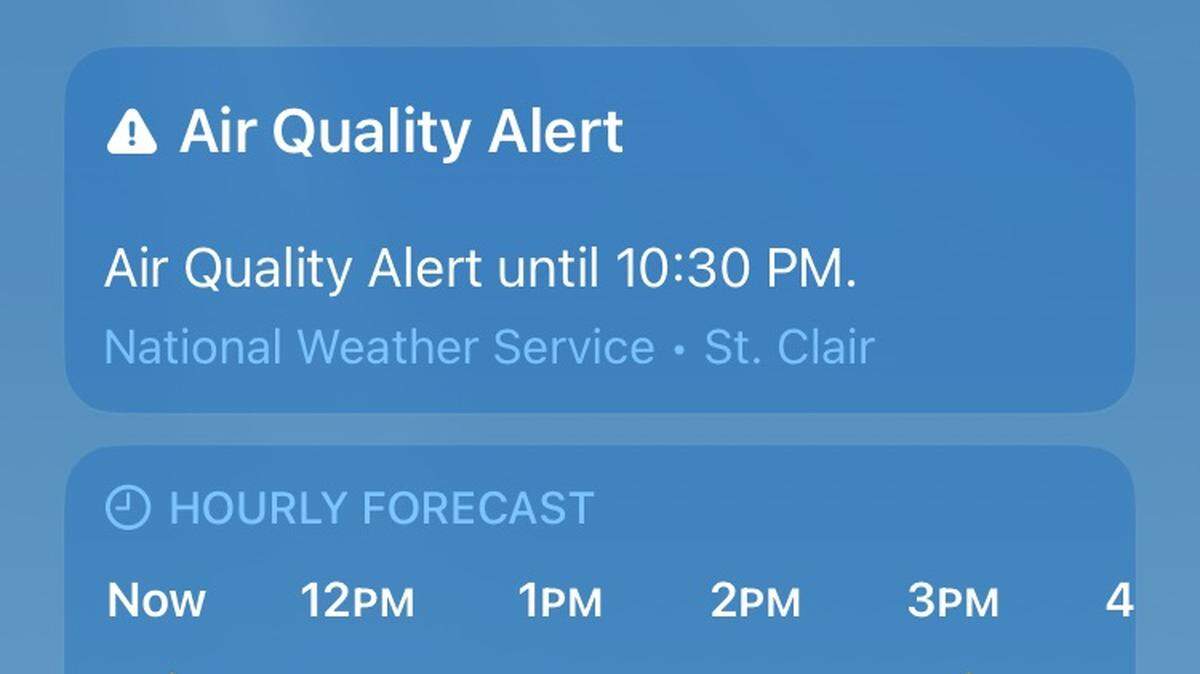
If you’ve noticed a new weather alert on your phone, you’re not alone.
The National Weather Service of St. Louis has started issuing alerts to inform metro-east residents about the quality of the air they’re breathing and the potential dangers they face.
According to Matt Beitscher, a meteorologist with the National Weather Service of St. Louis, these alerts are only issued if the air quality is unhealthy, categorized as orange or higher.
“An air quality index of orange primarily impacts people who are sensitive to pollution in the air,” he said. “So people with asthma, older folks who have difficulty breathing. That’s really the biggest groups of folks we’re trying to target that they should probably stay inside or limit their time outdoors.
“When we get to red, all groups will experience some type of adverse health effects if they’re outside too long. So you’ll want to limit your outdoor activity and strenuous activity regardless of age or underlying conditions when the air quality index is at red.”
Like Tuesday and Wednesday, when Air Quality Alerts were issued for St. Clair County.
Beitscher stressed people should take these alerts extremely seriously.
“Orange and red alerts are not issued frivolously,” he said. “When these are issued, especially if your exposed for a prolonged period, the effect on the body can take a toll. Again, if we’re talking orange, if you’re in one of those groups, you need to take the precautions necessary and limit your time outdoors and limit your strenuous activities.
“When a red alert is issued, everyone needs to pay attention to it. Just make sure you listen to your body and make sure you’re making smart choices and limit your activity and exposure outside.”
How does the Air Quality Index work?
According to www.airnow.gov, the higher the Air Quality Index value, the greater the level of air pollution and the greater the health concern. For example, an Air Quality Index value of 50 or below represents good air quality, while a value over 300 represents hazardous air quality.
. AQI values at or below 100 are generally thought of as satisfactory. When AQI values are above 100, air quality is unhealthy: At first for certain sensitive groups of people, then for everyone as the index values get higher.
The index is divided into six categories. Each category corresponds to a different level of health concern. Each category also has a specific color. The color makes it easy for people to quickly determine whether air quality is reaching unhealthy levels in their communities, the website stated.
- Green: Air quality is good; values of index 0-50; air quality is satisfactory and air pollution poses little to now risk.
- Yellow: Air quality is moderate; values of index 51-100; air quality is acceptable. However, there may be a risk for some people, particularly those who are sensitive to air pollution.
- Orange: Air quality is unhealthy to sensitive groups; values of index 101-150; members of sensitive groups may experience health effects. The general public is less likely to be affected.
- Red: Air quality is unhealthy; values of index 151-200; some members of the general public may experience health effects; members of sensitive groups may experience more serious health effects.
- Purple: Air quality is very unhealthy; values of index 201-300; health alert — the risk of health effects is increased for everyone.
- Maroon: Air quality is hazardous; values of index 301 and higher; health warning of emergency conditions — everyone is more likely to be affected.
The danger colors people in the metro-east generally will contend with most often are orange and red, Beitscher said.
Beitscher added the Air Quality Alerts are new to the metro-east but other offices across the country have issued these in the past.
Beitscher said the National Weather Service partnered with the St. Louis Clean Air Partnership and East-West Gateway Council of Governments to issue these air quality alerts “when certain air quality index criteria is met.” They started in May.
“We don’t actually forecast the air quality index ... another independent group with the Clean Air Partnership does that,” he said. “We’re just helping spread the word on the effects of it through the air quality alerts issued.”
This story was originally published May 30, 2023 at 3:00 PM.