
Drought in southwestern Illinois counties likely to get worse. Here’s an update
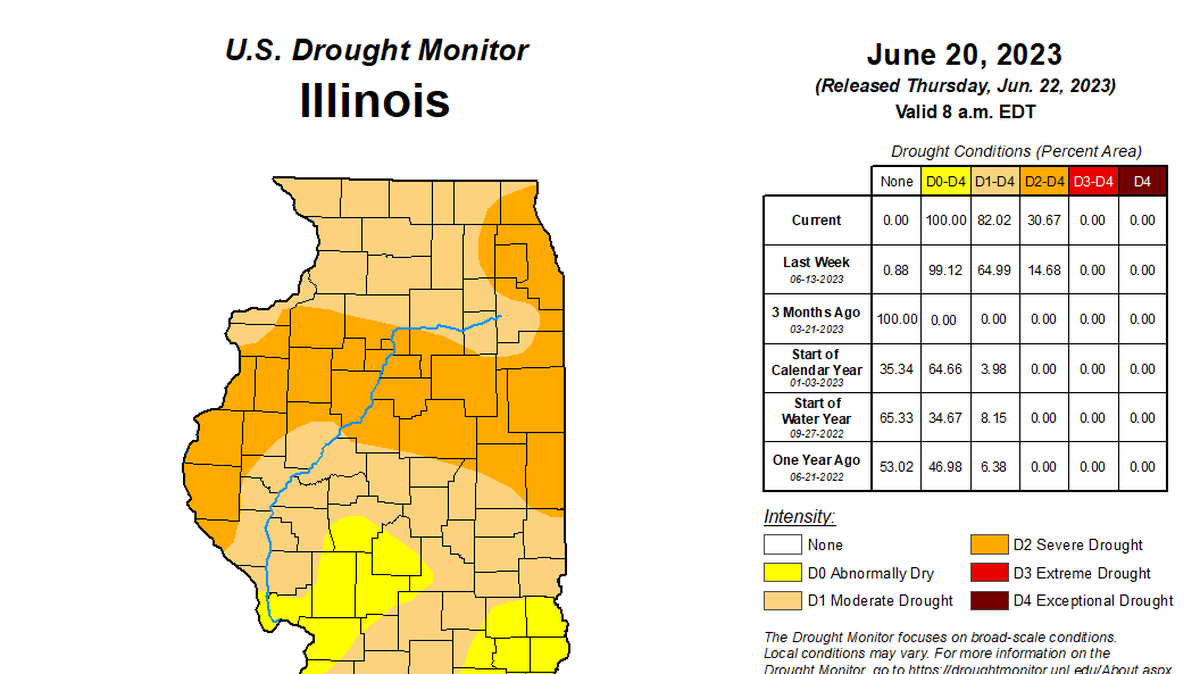
Metro-east counties are experiencing moderate drought conditions — and the situation is expected to get worse.
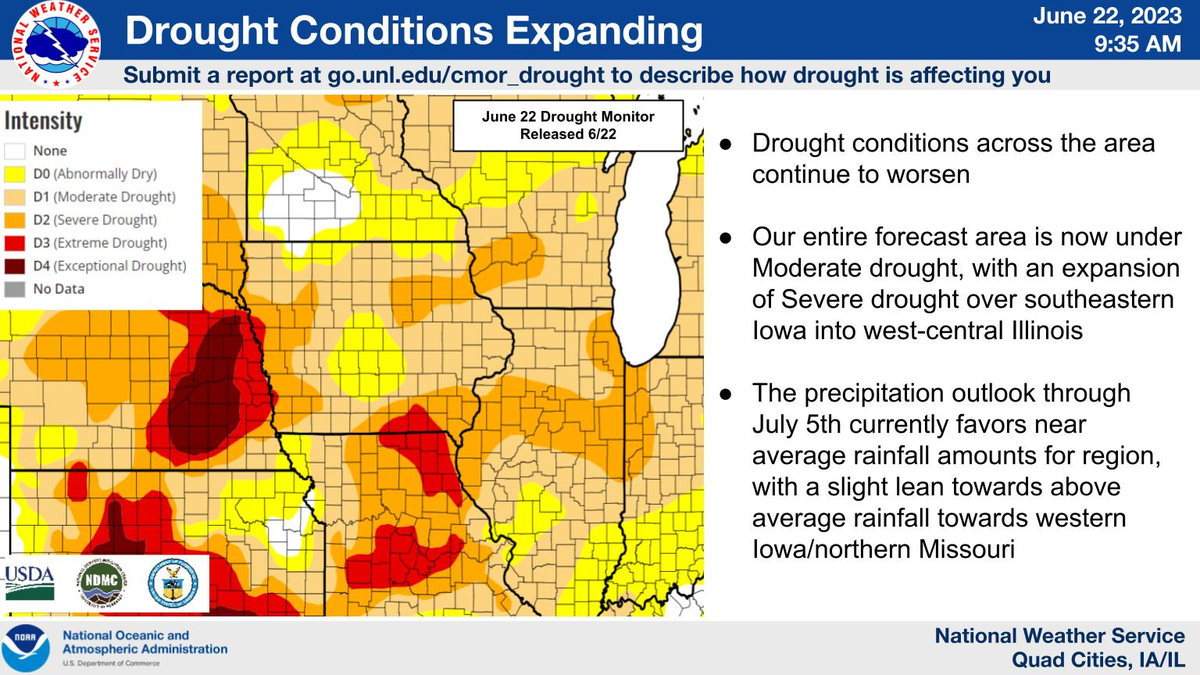
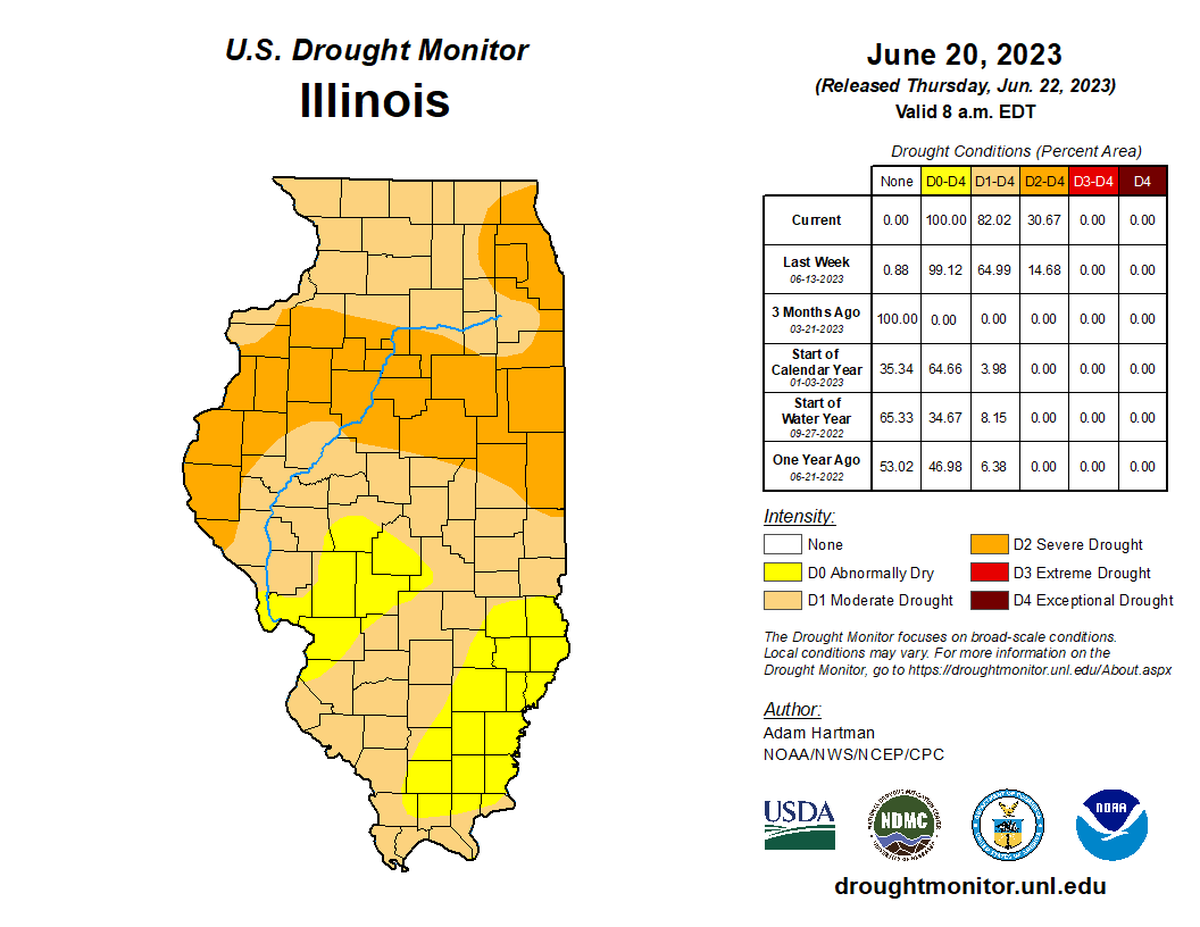
The U.S. Drought Monitor as of Monday afternoon showed moderate drought conditions for all of Clinton, Monroe, Randolph and Washington counties and most of St. Clair County. So far, only a small portion of Madison County has avoided moderate drought conditions, but the vast majority of the county remains in the abnormally dry classification.
And Mark Fuchs, a hydrologist with the National Weather Service, expects those conditions to only worsen.
“Things are definitely rapidly deteriorating in this area and across southwest Illinois and the dryness wasn’t accounted for in last week’s drought monitor,” he said Monday. “Any time you have no rain and dry conditions in one of warmer weeks of the year, conditions will deteriorate.”
“Most areas really didn’t get any rain last week. It’s been a dry week for everybody for the most part. The most anybody got within 50 miles of St. Louis was a quarter of an inch.”
Regarding St. Clair County specifically, Fuchs said, “The northwest quarter of St. Clair County is in abnormal dryness, but the southeastern portion, or approximately 2/3 of the county, is in moderate drought.”
Here is the official classification system of the U.S. Drought Monitor:
- None: Normal or wet conditions, -0.49 inches or above
- D0: Abnormally dry, -0.5 to -0.79 inches
- D1: Moderate Drought, -0.8 to -1.29 inches
- D2: Severe drought, -1.3 to 1.59 inches
- D3: Extreme drought, -1.6 to -1.99 inches
- D4: Exceptional drought, -2.0 or less
With only a slight chance of rain this week with temperatures — according to the National Weather Service — projected to reach near or at triple digits Thursday and Friday, conditions are trending toward a severe drought.
“We’re in the process of re-evaluating the drought monitor right now as we do every week and we release that every Thursday,” said Fuchs, who added the metro-east might see close to an inch of rain Saturday. “It looks like there are some opportunities out there for rain, so we’ll see how it pans out. We’re optimistic about the weekend and getting some rainfall, but, still, it won’t be drought-busting rainfall.”
On Tuesday, Fuchs provided a specific breakdown of rainfall amounts in these metro-east communities in June through Monday, June 26:
Belleville: 1.95 inches
Breese: 0.28 of an inch
- Edwardsville: 2-2.25 inches
- Fairmont City: 1.65 inches
- Granite City: 2.77 inches (the highest amount in the metro-east, Fuchs noted)
- Mascoutah: Less than 1 inch
- Millstadt: 1.21 inches
- O’Fallon: 1.61 inches
- Waterloo: 1.27 inches
On average, normal rainfall for June would be closer to 4.3 to 4.5 inches, according to Fuchs, who said he doesn’t have normal averages for individual communities.
Fuchs also did not have specific normal rainfall amounts for each county, stating, “Most of those counties are pretty rural ... we could guesstimate their averages.”
By comparison, Columbia, Missouri, to the west, has seen 2.86 inches of rain in June compared to a normal amount of 3.53 inches.
Yearly rainfall amounts
As of Monday morning, since Jan. 1, the metro-east region has received 16.95 inches of rain, compared to the average of 21.67 inches. Columbia, meanwhile, has received 14.04 inches or rain to date in 2023, below the normal amount of 20.39.
Further to the north in Quincy, the numbers become more alarming, with only .82 inches of rain for June, well below the normal of 3.82 inches. For the year, Quincy has received 10.15 inches compared to a normal average of 17.98 inches.
“For people living there, they have to try to conserve the water they have. There’s no guarantee of replenishment in the near future — at least not enough to do them a lot of good,” Fuchs said.
Drought tips
As far as tips, Fuchs recommended watering the grass, watering vegetable plants and even watering trees.
“There’s no restrictions of water use here locally,” he said. “You see the grass not getting nearly as green as you’d expect this time of year, so watering the grass is a pretty good idea. Watering your tomato plants in the vegetable garden ... those types of things need water. And it’s probably a good idea to make sure trees have an adequate water supply.”
Fuchs also offered grass cutting guidance, specifically to avoid cutting it short. He said people often make the mistake of lowering their blade in the spring to cut the taller grass but forget to raise it in the summer when the grass doesn’t grow as long.
“People don’t adjust their blade and suddenly they find out they’ve cut it too short,” he said. “You’re losing grass already because of the dryness and if you cut it too short, you don’t leave what’s there for protection that the height of that taller grass would provide. Then, the grass burns out quickly because there’s not as much of it to burn and it doesn’t have that protection from the sun.”
This story was originally published June 27, 2023 at 1:35 PM.