Tornado watch or warning? Weather terms to know as metro-east under storm threat
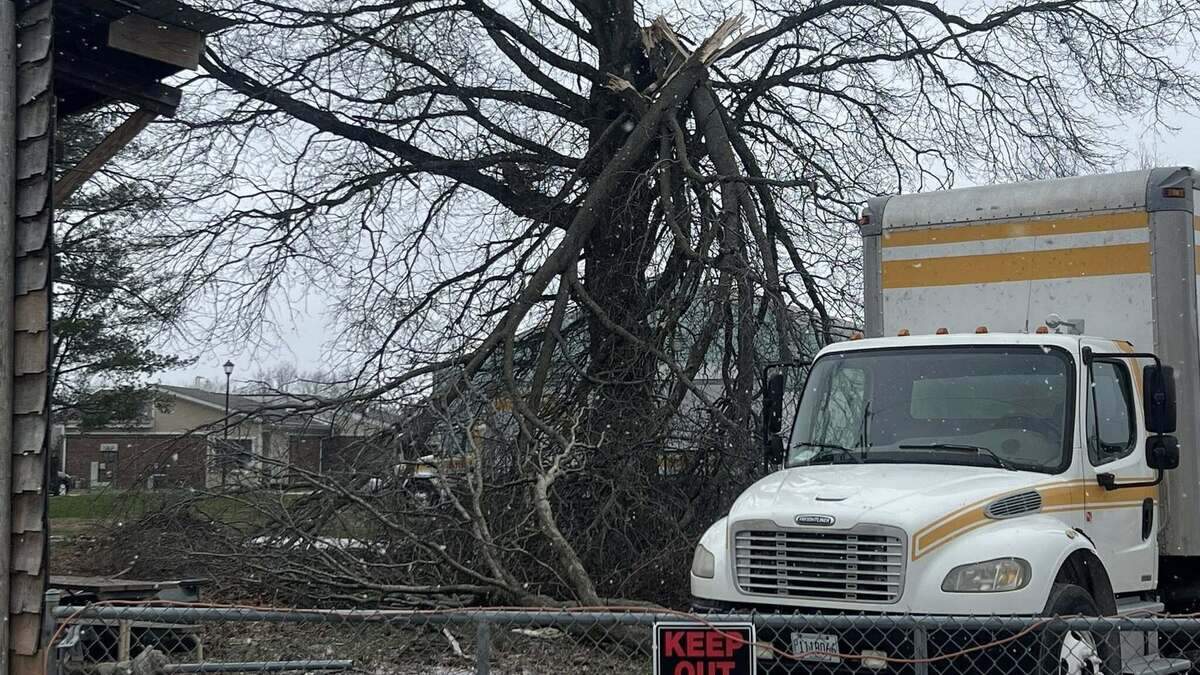
As strong tornadoes, straight-line winds and large hail are possible in southwest Illinois and the greater St. Louis area Monday, it’s a good time to brush up on storm-related weather terms.
A tornado watch indicates weather conditions could lead to the formation of funnels or severe storms, the National Weather Service reports, while a tornado warning means a tornado has been sighted or indicated by weather radar, and you should immediately seek shelter.
“Although there is no completely safe place during a tornado, some locations are much safer than others,” a Michigan NWS office reports.
The safest place to seek shelter during a tornado warning is in the interior of a basement. If you don’t have a basement, officials recommend moving to an interior room on the lowest level of a sturdy building and avoiding windows.
Key weather terms to know
Tornado: One of nature’s most violent storms, tornadoes can rip through neighborhoods in seconds with top wind speeds reaching 300 mph.
The NWS describes them as rotating columns of air that connect with the ground and are often attached and associated with thunderstorms.
While some tornadoes are visible, many are not, and they can often be obscured by low-lying clouds or walls of rain. They develop rapidly and disappear just as quickly; most tornadoes are only on the ground for 15 minutes or less.
Just before a tornado hits, the air may die down and become still. That’s followed by a roar that many have described akin to the rumble of a passing freight train.
EF scale: The EF scale, or Enhanced Fujita scale, is used to measure a tornado’s strength.
According to the NWS, it’s used to assign ratings to tornadoes based on their estimated wind speeds and the damage they cause. The ratings range from EF0 to EF5.
Severe thunderstorm: These are notable for their connections to tornadoes and flash flooding, but they also can be dangerous storms in their own right.
Severe thunderstorms are defined by their powerful wind gusts of 58 mph or greater, dangerous lightning and ability to generate large-size hailstones that can damage property.
Some severe thunderstorms can produce softball-sized hail and wind speeds of more than 100 miles mph.
Flash flood: According to the NWS, a flash flood is defined by excessive or heavy rainfall over a short period of time, typically less than six hours.
Flash floods are characterized by seething torrents of water that burst through riverbeds, mountain canyons and even urban streets, sweeping away everything in their path.
They can occur within just a few hours or even minutes after a heavy downpour. They also can occur without rainfall, such as when a levee or dam bursts.
Turn around, don’t drown: It’s a phrase that meteorologists and government officials often repeat when there’s a risk of flooding in the forecast. While it may sound like a cliche to some, it’s worth keeping in mind if you’re driving in rain-soaked weather.
The NWS warns against driving or walking through floodwaters. While you might be tempted to chance it, it’s worth remembering there’s no way to know the condition of a flooded road, or even if the road is still there.
It only takes 12 inches of rushing water to sweep away most vehicles and just 2 feet to carry off SUVs and trucks. It’s often difficult to tell how deep floodwaters are just by eyeballing them.
State of emergency: In Illinois, a state of emergency allows the governor to mobilize disaster relief and response. It enables the governor to recommend evacuation and
It enables the governor to deploy the state’s National Guard, issue evacuation orders and call on the federal government for assistance, as outlined by state law.
Advisories, watches & warnings
The NWS draws distinctions between severe weather watches, warnings and advisories based on their likelihood, severity and immediacy.
Advisories: The NWS issues advisories when a hazardous weather event is occurring, imminent or likely. Advisories are less serious than warnings and are intended for conditions that can cause “significant inconvenience,” but not necessarily life-threatening situations or property damage.
Watches: The NWS issues a severe weather watch when the risk of hazardous weather is elevated, though its exact occurrence, location and timing are still uncertain. According to the NWS, “It is intended to provide enough lead time so those who need to set their plans in motion can do so. A watch means that hazardous weather is possible.”
If a severe weather watch is in effect, people should make a plan they can act on should conditions worsen. They also should pay attention to any severe weather warnings that could follow. Warnings: A severe weather warning is the most immediate alert the weather service issues.
Warnings: A severe weather warning is the most immediate alert the weather service issues.
It means weather conditions pose a clear and imminent risk to life or property and signals the need to take immediate action.
A flash-flood warning, for example, means that people in the area should head for higher ground as soon as possible. If you are under a tornado warning, seek shelter immediately.
Former McClatchy reporter Aaron Mudd contributed to this report.
Do you have a question about the weather or the environment in Illinois for the News-Democrat? We’d like to hear from you. Fill out our Metro-east Matters form below.
This story was originally published April 27, 2026 at 12:45 PM.